
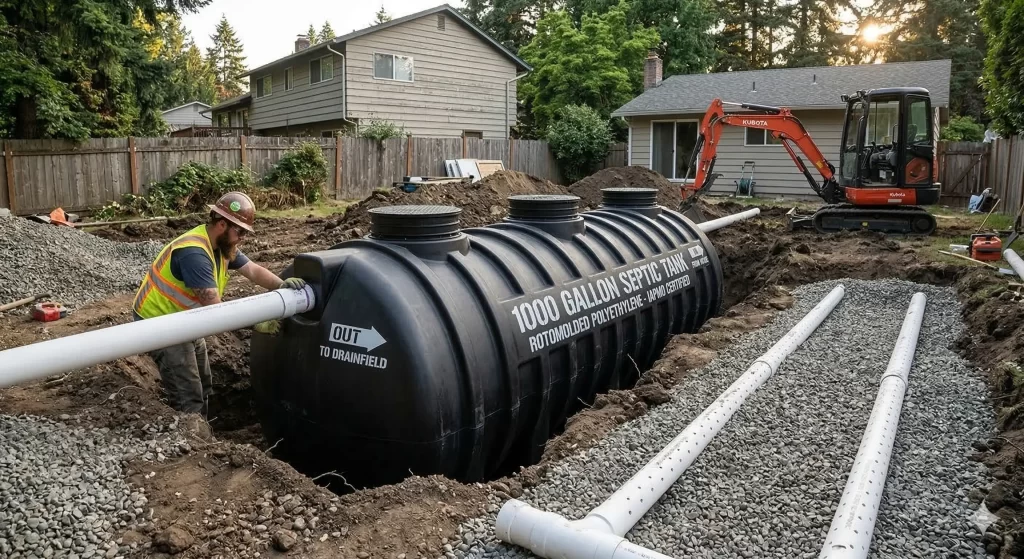
If you own a typical 3-bedroom home in the United States, there is a very high probability that an enormous, 1,000-gallon concrete or poly tank is buried somewhere in your backyard. The 1,000-gallon capacity is the undisputed gold standard for residential on-site sewage facilities. But because it sits out of sight, homeowners rarely think about it until the drains slow down—leading to the inevitable search: what is the average 1000 gallon septic tank pumping cost?
In 2026, the estimated national average to pump a 1,000-gallon septic tank ranges between $350 and $550. However, treating this as a flat rate is a mistake. Your actual out-of-pocket expense is heavily influenced by regional disposal fees, the depth of your access lids, the thickness of the sludge layer, and how many people currently live in your household.
If your home has 4 or more bedrooms, or if you need prices for 500, 1,250, or 1,500-gallon tanks, be sure to read our complete 2026 Comprehensive Septic Tank Pumping Cost Guide for a full breakdown of all residential sizes.
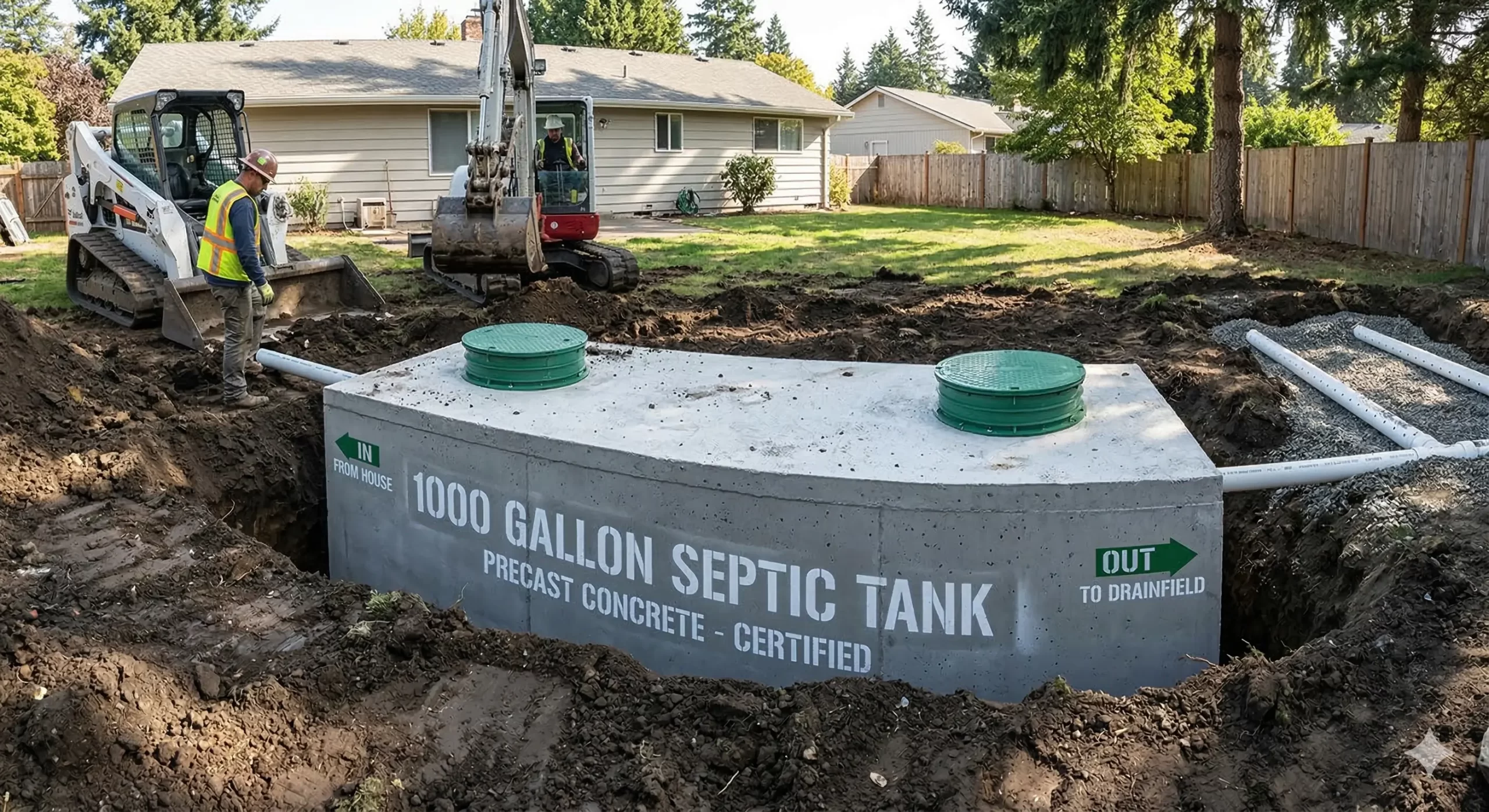
A typical 1,000-gallon two-compartment septic tank requires complete evacuation to remove both floating scum and bottom sludge.
1. The Baseline Cost for a 1,000-Gallon Tank
When a professional vac-truck operator quotes you a base price of $400 to pump your 1,000-gallon system, you are paying for three distinct elements of the service:
- Labor & Equipment: Dispatching a $150,000 vacuum truck and a licensed technician to your property.
- Extraction: The physical process of breaking up the dense sludge layer (often using a "crust buster") and suctioning all 1,000 gallons of liquid, scum, and solids.
- Municipal Disposal Fees: Pumping companies must legally transport and dump your raw sewage at a state-approved wastewater treatment plant. These plants charge the pumper a "tipping fee" per gallon, which is passed directly onto you.
Some discount operators may offer to pump your 1,000-gallon tank for $150. In many cases, they only pump the liquid "clear zone" out of the middle, leaving the dense, hard sludge at the bottom. This means your tank will fill up with solids twice as fast, eventually destroying your leach field. Always ensure your contract states a "complete pump-out" of all 1,000 gallons.
2. The Pumping Frequency Matrix: How Often Do You Need It?
A 1,000-gallon tank has a fixed volume. Therefore, the frequency of your pumping schedule is purely a mathematical equation based on how much wastewater your household produces and how quickly the natural bacteria inside the tank can break down solid waste.
The Environmental Protection Agency (EPA) and local health departments generally recommend pumping every 3 to 5 years. However, here is the exact 1,000-Gallon Pumping Frequency Matrix based on household size:
| Household Size (People) | Tank Size | Estimated Pumping Frequency |
|---|---|---|
| 1 Person | 1,000 Gallons | Every 12.4 Years |
| 2 People | 1,000 Gallons | Every 5.9 Years |
| 3 People | 1,000 Gallons | Every 3.7 Years |
| 4 People | 1,000 Gallons | Every 2.6 Years |
| 5 People | 1,000 Gallons | Every 1.9 Years |
| 6+ People | 1,000 Gallons | Every 1.5 Years |
Note: If you utilize a garbage disposal heavily, you must pump your tank 20% to 30% more frequently, as garbage disposals introduce dense, non-digestible organic matter that rapidly fills the sludge layer.
3. The Anatomy of a 1,000-Gallon Tank
Understanding where your money goes requires understanding what exactly is inside that massive concrete box. When a technician opens your tank, they aren't just looking at dirty water. A healthy 1,000-gallon tank separates waste into three distinct layers:
-
1. The Scum Layer (Top)
Fats, oils, grease (FOG), and soaps float to the very top. This layer must be physically broken down by the technician's vacuum hose. -
2. The Effluent / Clear Zone (Middle)
This is the semi-clear liquid wastewater. As new water enters from your house, this liquid is pushed out through the outlet baffle into your drain field. -
3. The Sludge Layer (Bottom)
Heavy, solid waste that bacteria cannot fully break down sinks to the bottom. Over the years, this layer compacts and turns into a thick mud. Removing this bottom sludge is the primary reason you pay for professional pumping.
4. Regional Price Variations Across the US
The cost of living and local environmental regulations heavily dictate your final bill. Coastal states with strict environmental protection agency (EPA) guidelines charge pumping companies higher disposal fees, which increases your cost. Here is an estimated look at how 1000 gallon septic tank pumping costs vary by geography.
Estimated 1,000-Gal Pumping Cost by Region
How Terrain and Climate Affect Pricing
Beyond broad regional averages, specific state terrain and weather conditions drastically impact your final bill. For example, homes in mountainous regions face unique logistical challenges. Technicians performing septic pumping in Colorado often have to navigate rocky soil, steep inclines, and deep frost lines, which can significantly increase excavation fees if your tank lids are buried.
Similarly, East Coast states have highly stringent environmental regulations combined with harsh winters. If you need septic service in Connecticut, expect elevated municipal tipping fees and cold-weather extraction protocols to push the average cost of a 1,000-gallon pump-out toward the higher end of the national spectrum.
5. Hidden Fees & Upcharges to Watch Out For
When you are quoted "$400" on the phone, that implies the lid is exposed, the tank is accessible, and the job is routine. If your property presents challenges, expect to see the following surcharges on your final invoice:
| Potential Surcharge | Estimated Cost | Why You Are Being Charged |
|---|---|---|
| Lid Location & Digging | $50 - $200+ | If your lids are buried under grass/dirt, laborers must hand-dig to expose them. Digging deeper than 12 inches increases the price rapidly. |
| Filter Cleaning | $25 - $50 | Pulling and hosing off the effluent filter located in the outlet baffle (crucial for protecting your drain field). |
| Emergency / After-Hours | $150 - $300 | Dispatching a truck on weekends, holidays, or late at night due to a sudden sewage backup in the home. |
| Excessive Hose Length | $50 - $100 | If the truck cannot park close to the tank (due to fences or landscaping) and the driver must pull over 100 feet of heavy vacuum hose. |
| Heavy Sludge / Crust Busting | $100 - $250 | If it has been 10+ years, the sludge turns to stone. The tech must use special mechanical agitators to break it up for suction. |
6. How to Lower Your Future Pumping Costs
You cannot change the size of your tank, but you can absolutely manage how much you pay to maintain it. Smart homeowners take proactive steps to eliminate extra fees.
- Install Riser Pipes: If your tank lids are buried, pay a contractor to install PVC or polyethylene risers that bring the access ports to the surface. You will never pay a digging fee again.
- Ditch the "Flushable" Wipes: Despite the marketing, these wipes do not dissolve. They form massive grease mats in your 1,000-gallon tank, forcing you to pump more often and risking clogs that require expensive hydro-jetting.
- Stagger Laundry Days: Pushing 5 loads of laundry through the system on a single Saturday flushes the tank with too much water at once. This stirs up the sludge layer and pushes solids into the drain field. Spread water usage out over the week.
1000-Gallon Septic Tank FAQ
Is a 1000-gallon septic tank big enough for a 4-bedroom home?
In most jurisdictions, a 1,000-gallon tank is permitted for homes with up to 3 bedrooms. For a 4-bedroom home, building codes generally require a 1,200 to 1,250-gallon tank. While a 1,000-gallon tank can physically handle the water flow of a 4-bedroom home, you will need to pump it much more frequently (every 2.5 years) to prevent solids from overloading the system.
How long does it take to pump a 1,000-gallon tank?
Assuming the lids are already exposed and accessible, the physical extraction process for a standard 1,000-gallon tank takes approximately 30 to 45 minutes. If the technician needs to dig for the lids, break up hardened sludge, or inspect baffles, expect the service visit to last 1.5 to 2 hours.
Should I put additives in my 1,000-gallon tank to avoid pumping?
No. The EPA and most wastewater engineers strongly advise against using biological or chemical additives to replace physical pumping. While bacterial additives claim to eat away solids, human waste leaves behind dense, non-biodegradable sludge (grit, toilet paper fibers, minerals). Only a powerful vacuum truck can physically remove this accumulation.
Septic Intelligence AI: USA
Do different states have drastically different rules for septic tank pumping?
Septic Tank Pumping Regulations Across US States: A Definitive Guide
As a global expert in wastewater management, I can definitively state that yes, different states in the USA, and more importantly, various local jurisdictions within those states, do have drastically different rules and requirements for septic tank pumping and overall system maintenance. There is no singular federal mandate dictating septic pumping frequency or methodology, leaving the regulatory framework largely to state and local authorities.
The Nuance of Septic System Governance in the USA
While the Environmental Protection Agency (EPA) provides guidelines and recommendations for effective wastewater management, the actual enforcement and specific regulatory mandates for individual homeowner septic systems are typically delegated. This multi-tiered approach means:
- State-Level Frameworks: States often establish overarching environmental and public health codes that govern on-site wastewater treatment systems. These codes might set minimum standards for system design, installation, and general maintenance principles.
- County and Local Health Departments: This is where the most pertinent and enforceable rules for homeowners are found. Local health departments (at the county, city, or district level) are usually responsible for issuing permits, conducting inspections, and enforcing specific regulations tailored to their unique geographical, geological, hydrological, and population characteristics. Their rules can vary significantly even between adjacent counties within the same state.
Key Areas of Regulatory Divergence
The differences you might encounter across various jurisdictions include, but are not limited to:
- Mandatory Pumping Frequencies: Some localities mandate pumping every 3-5 years, regardless of tank levels. Others require it only when sludge and scum layers reach a certain thickness (e.g., 25-33% of the tank's liquid depth), as determined by a professional inspection. Still others have no explicit pumping frequency mandate but require periodic inspections.
- Inspection Requirements: Mandatory periodic inspections (e.g., every 1-3 years) are common in some areas, particularly in environmentally sensitive regions or those with high water tables. Some jurisdictions also require an inspection at the time of property sale.
- Permitting and Licensing: Requirements for obtaining permits for septic system repairs, modifications, or even routine pumping can vary. The licensing requirements for septic pumpers and inspectors are also state or locally determined, ensuring professionals meet certain standards.
- Reporting and Documentation: Many jurisdictions require licensed septic professionals to submit reports after pumping or inspection, detailing the system's condition, pump-out volume, and any issues found. This data helps local authorities monitor system health.
- System Repair and Replacement Triggers: The criteria for deeming a septic system "failing" and the mandatory actions (e.g., repair within a certain timeframe, complete replacement) can differ significantly.
- Environmental Protection Zones: Properties located near sensitive water bodies (lakes, rivers, coastal areas) or in aquifer recharge zones often face much stricter regulations, including more frequent inspections, advanced treatment requirements, and specific pumping protocols.
Why the Discrepancies?
These variations are not arbitrary. They stem from a complex interplay of factors:
- Geology and Soil Types: Different soil compositions affect how well effluent is treated and absorbed.
- Hydrology and Water Tables: Areas with high water tables or flood plains require more stringent controls to prevent contamination.
- Population Density: Densely populated areas may have stricter rules to protect public health.
- Environmental Sensitivity: Proximity to critical ecosystems, drinking water sources, or shellfish beds dictates more rigorous oversight.
- Local Resources and Infrastructure: The capacity of local health departments to monitor and enforce regulations also plays a role.
Your Imperative as a Homeowner: Practical Steps
Regardless of specific local mandates, proactive maintenance is universally the most effective strategy for septic system longevity and emergency prevention. Here's what every homeowner should do:
- Know Your Local Rules: This is your absolute first step. Contact your county or local health department (often under "Environmental Health" or "Wastewater Management") to inquire about specific regulations for septic systems in your exact location. They can provide definitive answers on mandatory pumping schedules, inspection requirements, and any permitting needed.
- Understand Your System: Know the location of your tank and drain field, the type of system you have, and its age. Keep records of all maintenance.
- Regular Professional Inspections: Even if not mandated, schedule a professional inspection every 1 to 3 years. A qualified inspector can assess sludge and scum levels, check for leaks, inspect baffles, and identify potential issues before they escalate into costly emergencies.
- Pump Based on Need (but Generally Every 3-5 Years): While professional assessment of sludge and scum levels should dictate the exact timing, a general guideline for typical households is to pump the septic tank every 3 to 5 years. High water usage, garbage disposal use, or a larger number of occupants may necessitate more frequent pumping.
- Conserve Water: Reduce the amount of wastewater entering your system. This lessens the burden on your tank and drain field.
- Proper Waste Disposal: Do not flush non-biodegradable items (wipes, feminine hygiene products, cat litter) or dispose of harsh chemicals, excessive grease, or medications down drains. These can kill beneficial bacteria and clog your system.
- Protect Your Drain Field: Do not park vehicles or construct anything over your drain field. Avoid planting trees or shrubs with aggressive root systems nearby.
Preventing Emergencies and Ensuring Longevity
Proactive septic system maintenance is not just about compliance; it's about significant cost savings and environmental protection. An ounce of prevention (regular pumping and inspection) is worth a pound of cure (a failed drain field or a sewage backup in your home). Failing to adhere to local regulations can result in fines, environmental damage, and extremely expensive system repairs or replacements.
In summary, while the core principles of septic system function are universal, the regulatory landscape for pumping and maintenance in the USA is highly localized. Your county or local health department is your most authoritative resource for precise information.
Get an Accurate Estimate for Your Tank
Connect with verified local professionals who know the local disposal rates and soil conditions in your specific area. Get transparent, upfront pricing today.