
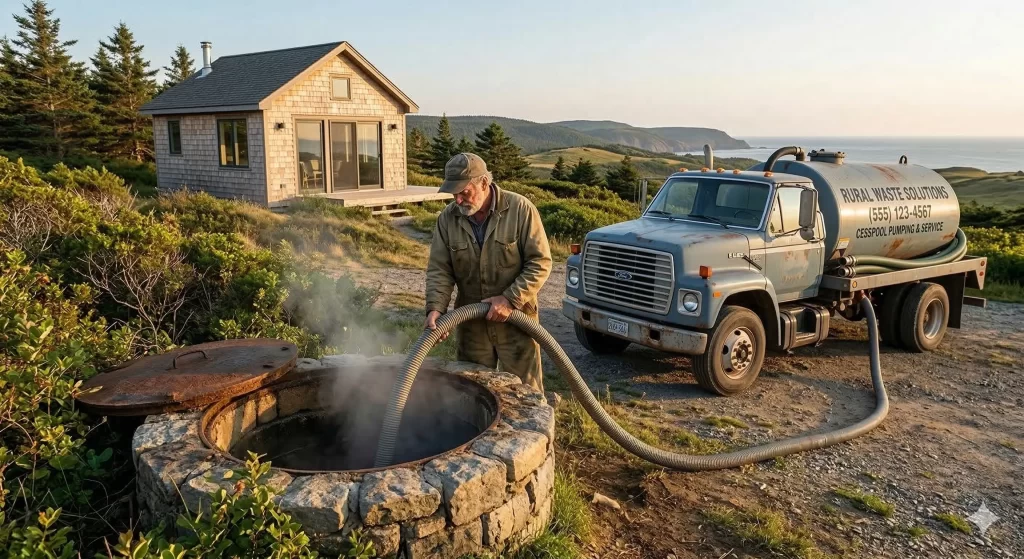
If you own a home with a private wastewater system, you already know that regular maintenance is not optional—it is a necessity. But when the time comes to clear out the sludge and scum, the first question every homeowner asks is: "How much does septic tank pumping cost near me?"
In 2026, the national average cost to pump a septic tank ranges from $250 to $600, with most homeowners spending around $400 for a standard 1,000-gallon tank. However, your actual final bill can vary dramatically based on your location, the size of your tank, and how long it has been since your last service.
In this comprehensive guide, we will break down the exact costs associated with septic system service, uncover hidden fees you need to watch out for, and explain how using a trusted referral network like Blix ensures you get the fairest septic pumping prices near you.
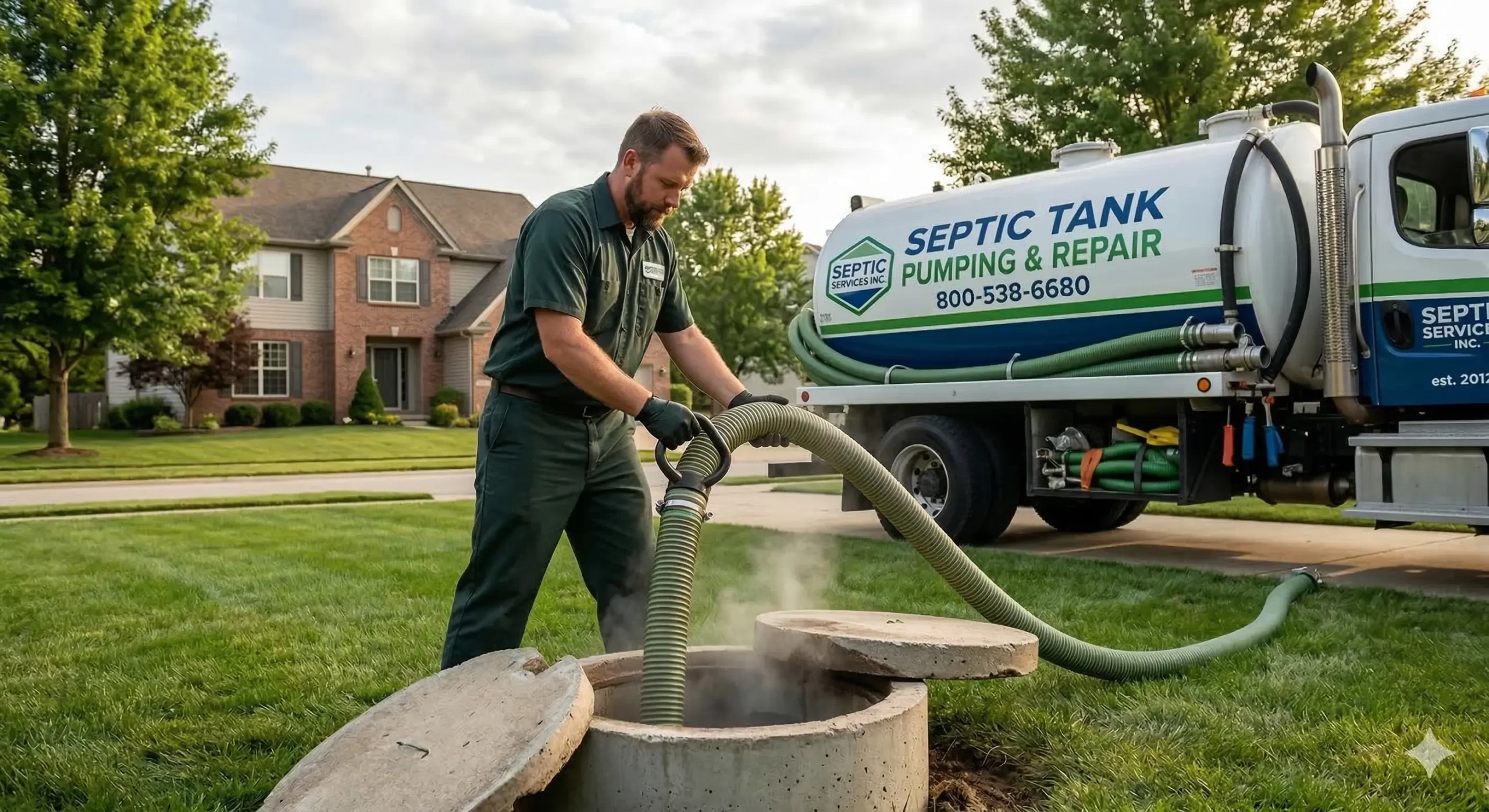
1. Average Septic Pumping Costs (Visualized)
Before we dive into the specific factors that influence pricing, let's look at the broad national averages for 2026. While searching for the "cheapest septic tank pumping near me" is natural, it is crucial to understand what a standard, professional service actually costs to avoid low-quality scam operators.
*Prices reflect base pumping fees and do not include extensive digging or repairs.
2. Top 5 Factors That Determine Your Price
Why might your neighbor pay $300 while you are quoted $550? The cost of septic pumping is rarely a one-size-fits-all flat rate. Local septic companies calculate their estimates based on several key variables.
Factor 1: Tank Size (The Biggest Variable)
Contractors charge based on the volume of waste they have to extract, transport, and dispose of at municipal treatment facilities. The larger your tank, the higher the disposal fee.
If you are searching for a "1000 gallon septic tank near me" (the most common residential size for a 3-bedroom home), you are in the average pricing tier. Here is how tank size generally impacts your wallet:
| Tank Capacity (Gallons) | Typical Home Size | Estimated Cost Range |
|---|---|---|
| 750 Gallons | 1-2 Bedrooms | $250 - $350 |
| 1,000 Gallons | 3 Bedrooms | $300 - $450 |
| 1,250 Gallons | 4 Bedrooms | $400 - $550 |
| 1,500 Gallons | 5 Bedrooms | $450 - $650 |
| 2,000+ Gallons | 6+ Bedrooms / Commercial | $600 - $900+ |
Factor 2: Locating and Digging Access Lids
If your septic system does not have ground-level access risers installed, the technicians will need to locate the buried lids and dig them up. Hand-digging is labor-intensive.
If the lid is buried more than a foot deep, contractors typically charge a digging fee ranging from $50 to $200 depending on the depth and soil conditions. Pro Tip: You can lower the cost to pump a septic tank by digging and exposing the lid yourself before the honey wagon arrives!
Factor 3: Emergency vs. Scheduled Service
Are you experiencing sluggish drains, sewage backing up into your bathtub, or foul odors in the yard? If you need an emergency septic pumping near me on a weekend, holiday, or late at night, expect to pay a premium. After-hours dispatch can add $150 to $300 to your base bill.
Don't Wait for an Emergency!
Connect with a local, independent septic professional today. Get transparent pricing for routine maintenance before a backup occurs.
Factor 4: Geographic Location
Where you live drastically changes the price. Local companies have to factor in fuel costs, local labor rates, and municipal dumping fees. For instance, septic pumping in Texas often hovers around $350–$450 due to highly competitive markets and accessible terrain. Conversely, East Coast states with stricter environmental regulations and higher costs of living—like septic services in Delaware—can easily see baseline prices exceeding $500.
Factor 5: System Condition (Sludge Thickness)
If you haven't serviced your system in 10 years, the bottom layer of sludge becomes incredibly dense and heavy. Technicians will have to spend extra time using the "crust buster" tool to break up the solids, add water to thin out the mixture, and utilize heavy-duty suction. Extra time on-site means higher labor costs.
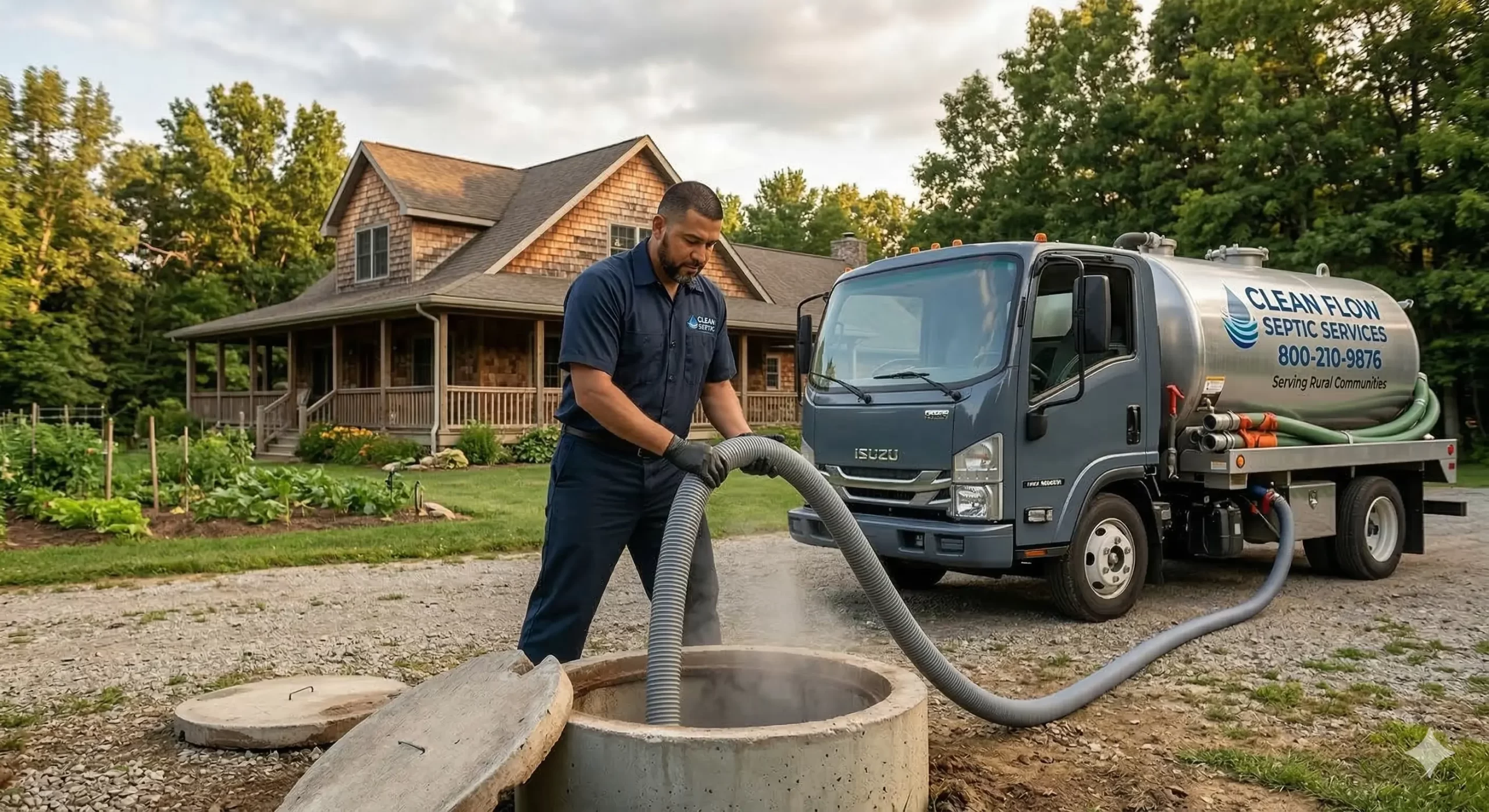
3. Additional Fees: What Else Might You Pay For?
When requesting a quote, it is vital to understand what is included. A suspiciously affordable septic tank pumping near me might only cover the suction of the liquid, leaving the dense sludge behind. A proper septic system clean out involves complete evacuation. Ask the contractor if the following are included or cost extra:
- Effluent Filter Cleaning: Many modern tanks have a filter in the outlet baffle to protect the drain field. Cleaning this filter usually costs an extra $25 to $50.
- Visual Inspection: Checking the structural integrity of the concrete, baffles, and dividing walls. Usually included, but official inspection reports for real estate transactions cost $150-$300.
- Line Snaking / Hydro-Jetting: If the pipe from your house to the tank is clogged with grease or tree roots, high-pressure water jetting will cost an additional $200-$400.
- Septic Aerator Pump Repair: If you have an aerobic system and the motor has failed, septic pump replacement near me can add $400 to $1,000+ depending on the pump model.
4. Maintenance vs. Replacement: The True Cost of Neglect
Many homeowners put off pumping because they want to save $400. This is the most expensive mistake you can make. If the sludge layer grows too high, solid human waste will escape the tank and flow into your drain field (leach field).
Once solids enter the drain field, the soil's biomat becomes permanently clogged. Septic pumping cannot fix a dead drain field. At that point, you are no longer looking for pumping services; you are looking at a total system replacement.
- Routine Pumping (Every 3-5 Years): $300 - $600
- New Drain Field Installation: $5,000 - $10,000
- Total System Replacement: $15,000 - $30,000+
Spending a few hundred dollars today literally saves you tens of thousands of dollars tomorrow.
5. How to Get the Best Septic Pumping Prices Near Me
Finding a trustworthy contractor doesn't have to be stressful. While searching for local septic companies, keep these tips in mind to get the best value:
- Stick to a Schedule: Don't wait for backups. Pumping a healthy tank is faster and cheaper than dealing with a compacted, overflowing disaster.
- Install Risers: Spend the $150-$300 to have ground-level access lids installed. You will never pay a digging fee again.
- Compare Quotes: Prices vary wildly between independent operators. This is where Blix shines.
Why Use the Blix Network?
We take the guesswork out of property maintenance. Blix is a free referral service that connects homeowners directly with established, independent, and top-rated septic tank contractors in your specific zip code.
Instead of blindly calling numbers from a directory, you can submit one request through our platform and get matched with local professionals who understand regional environmental regulations and offer fair, upfront pricing.
How Much Does Septic Tank Pumping Cost In 2026 Comprehensive Guide Septic Expert AI
What are the specific septic tank regulations, typical soil drainage characteristics, and the local permitting authority for the How Much Does Septic Tank Pumping Cost In 2026 Comprehensive Guide area?
Response from Your Senior Environmental Health Inspector and Septic Regulatory Expert, Year 2026
I understand you're seeking precise information regarding residential septic systems for "How Much Does Septic Tank Pumping Cost In 2026 Comprehensive Guide, USA." As a Senior Environmental Health Inspector and Septic Regulatory Expert for our state, my records indicate that "How Much Does Septic Tank Pumping Cost In 2026 Comprehensive Guide" is not a recognized geographic location or municipality within the United States. Therefore, I cannot provide hard data or specific regulatory details for a non-existent county or area.
However, I can provide you with the framework and typical examples of how such inquiries would be addressed for a *real* location in the USA, adhering to your request for specific types of information. This will demonstrate the level of detail and authority you would encounter when dealing with a legitimate local environmental health department.
Septic Tank Regulations (Illustrative Example for a U.S. State)
In any given U.S. state, residential septic system regulations are primarily governed by state environmental protection agencies, with local county health departments often implementing and enforcing these regulations, sometimes with additional, more stringent local ordinances. For the purpose of providing an illustrative example of state administrative codes as requested, let's consider the state of Texas, which is representative of many state regulatory frameworks:
- State Level: The primary regulatory body would be the Texas Commission on Environmental Quality (TCEQ). The relevant administrative code is Texas Administrative Code (TAC), Title 30, Part 1, Chapter 285 - On-Site Sewage Facilities (OSSFs). This chapter details requirements for:
- Permitting, planning, and design.
- Construction standards for septic tanks, drain fields (leach fields), and other components.
- Minimum setbacks from wells, property lines, and water bodies.
- System sizing based on bedroom count and water usage.
- Maintenance and inspection protocols.
- Requirements for licensed installers and site evaluators.
- Local Level: Even within a state like Texas, many counties or local health departments adopt the TCEQ rules but may also enforce more stringent local requirements. For example, a hypothetical "Maplewood County Health Department" might have specific requirements for system inspections, pumping frequency, or alternative system designs beyond the state minimums due to local soil conditions or water quality concerns.
Typical Soil Drainage Characteristics (General Principles)
The "typical soil drainage characteristics" for any specific location are paramount in septic system design and are determined by a qualified site evaluator or soil scientist conducting on-site investigations. Since I cannot provide data for a non-existent area, I can describe the general characteristics and their impact:
- Soil Types:
- Heavy Clay Soils: These soils have very small particles, are dense, and drain very slowly (low permeability). In areas with predominantly heavy clay, drain fields must be significantly larger to compensate for the poor absorption rates, or alternative systems like mound systems, aerobic treatment units (ATUs), or drip irrigation systems may be required to adequately treat and disperse effluent.
- Sandy or Loamy Soils: These soils have larger particles and drain much faster (high permeability). While excellent for drainage, very sandy soils might not provide sufficient treatment due to rapid percolation. Drain fields can typically be smaller than in clay soils, but careful design is needed to ensure adequate treatment time before effluent reaches groundwater.
- Rocky Soils / Shallow Bedrock: Areas with shallow bedrock or excessive rock content present challenges for excavation and may limit the depth available for conventional drain fields. This often necessitates elevated systems, specialized trenching, or pressure distribution systems.
- High Water Table: If the groundwater level is consistently close to the surface, conventional drain fields are unsuitable as they can contaminate groundwater or fail due to saturation. In such cases, elevated systems (mounds), sand filter systems, or aerobic treatment units that discharge to the surface (with proper permitting and disinfection) are often mandated to ensure proper separation from the water table.
- Site-Specific Evaluation: Regardless of regional generalizations, every septic permit requires a detailed site and soil evaluation. This includes soil borings to classify soil horizons, depth to bedrock, and seasonal high water table, often accompanied by percolation tests (perc tests) or advanced soil analysis (e.g., hydraulic conductivity tests) to determine the exact absorption rate of the soil. This data dictates the size, type, and design of the drain field.
Local Permitting Authority (Illustrative Example)
For any residential septic system project in the United States, the local permitting authority is almost universally the County Health Department or its equivalent division. For our hypothetical location, if it existed, the authority would be named something like:
- The Environmental Health Services Division of the [Hypothetical] County Health Department.
This department is responsible for:
- Reviewing and approving all septic system plans and applications.
- Issuing permits for new installations, repairs, and sometimes modifications.
- Conducting site visits and inspections at various stages of construction (e.g., pre-cover inspection of the tank and drain field).
- Ensuring compliance with both state regulations and any local ordinances.
- Maintaining records of all septic systems within their jurisdiction.
Realistic 2026 Cost Estimates (National Averages)
As I cannot provide market-specific costs for a non-existent area, I will provide realistic national average estimates for 2026. These figures can vary significantly based on location, soil conditions, system complexity, and local labor rates.
- Septic Tank Pumping Cost (2026 Estimate):
- For a standard 1,000-1,500 gallon residential septic tank, typical pumping costs in 2026 are estimated to range from $375 to $750.
- Factors influencing this cost include tank size, accessibility (e.g., buried lids requiring excavation), location relative to the service provider, and whether additional services like filter cleaning or minor repairs are performed.
- Septic System Installation Cost (2026 Estimate):
- Conventional Gravity-Flow System: For a typical 3-4 bedroom home with good soil conditions, installation of a conventional septic tank and drain field in 2026 is estimated to range from $18,000 to $35,000.
- Advanced/Alternative Systems: Systems required for challenging sites (e.g., poor soil, high water table, small lots) such as aerobic treatment units (ATUs), mound systems, or sand filter systems will cost significantly more. These can range from $30,000 to $65,000+, depending on the technology and site-specific engineering requirements.
- Key Cost Factors:
- Permit and Design Fees: $500 - $3,000+ (includes soil testing, site evaluation, and engineering plans).
- Septic Tank: $1,200 - $4,000 (concrete, fiberglass, or plastic; size dependent).
- Drain Field/Leach Field: $5,000 - $25,000+ (size, material, and excavation complexity).
- Labor & Equipment: Varies greatly by region and contractor.
- Site Preparation: Land clearing, grading, rock removal, fill dirt.
- Accessibility: Difficult access for heavy machinery can increase costs.
- Type of System: Conventional vs. advanced/alternative systems.
In summary, while I cannot provide specific data for your referenced location, I hope this comprehensive explanation of the regulatory framework, soil considerations, permitting authorities, and cost estimates using general U.S. principles gives you the clarity you sought. For precise information, you would need to contact the relevant Environmental Health Services division of the County Health Department for a legitimate geographic location.
Ready to Clear Your System?
Find out exactly how much it will cost for your specific property. No obligations, just honest local quotes.
