Top Septic Pumping in
Round Rock
Round Rock Pumping Costs & Data
Here are the critical statistics defining the state of infrastructure in the area:
- ATU Reliance: Due to the incredibly poor percolation rates of both the Blackland clay and the shallow limestone, over 80% of new decentralized systems installed in the expanding off-sewer subdivisions are mandated to be mechanical Aerobic Treatment Units (ATUs).
- Watershed Protection Link: Failing septic systems over the Edwards Aquifer recharge zone or near Brushy Creek are treated as a severe public health hazard, prompting ultra-strict TCEQ oversight.
- The “Wipe” Epidemic: In rapidly growing suburban areas, local service data indicates a 40% higher rate of system backups caused entirely by non-biodegradable “flushable” wipes clogging ATU inlet baffles and destroying aeration impellers.
The mathematics of septic maintenance in rocky terrain and expansive clay are unforgiving. Routine, scheduled vacuum pumping and mechanical maintenance is the only scientifically valid method to protect your property and the local aquifer from a biohazard disaster.
The final invoice for your specific pump-out will be dictated by these localized variables:
- Advanced ATU Maintenance: Because local geology forces the use of engineered ATUs in nearly all new off-sewer builds, servicing is frequently more complex than pumping a simple gravity tank. Technicians must evacuate multiple chambers (trash, aeration, pump), clean fine-micron filters, verify dosing pumps, and check control panels.
- Extreme Excavation (Rock vs. Clay): Finding the tank and manually digging to expose the access lids adds significant manual labor time. On the east side, the clay is heavy and sticky; on the west side, it often requires chipping through limestone. We highly recommend paying for PVC surface risers to permanently eliminate this grueling future cost.
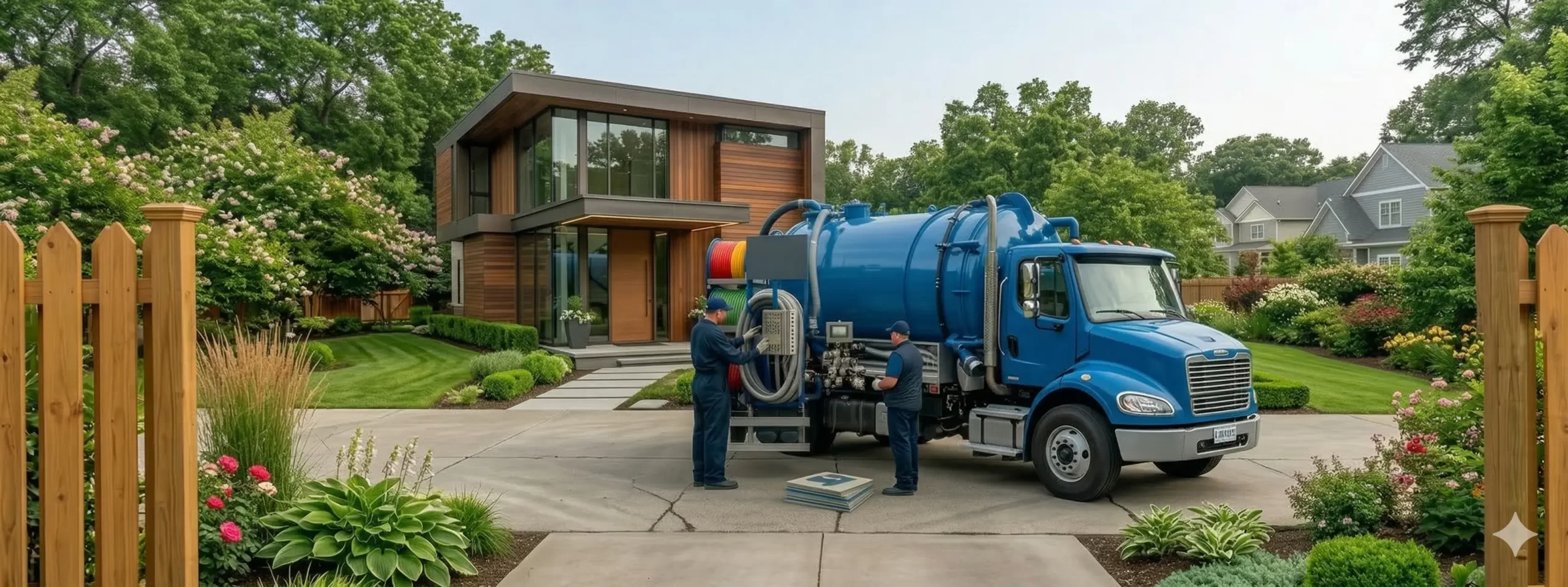
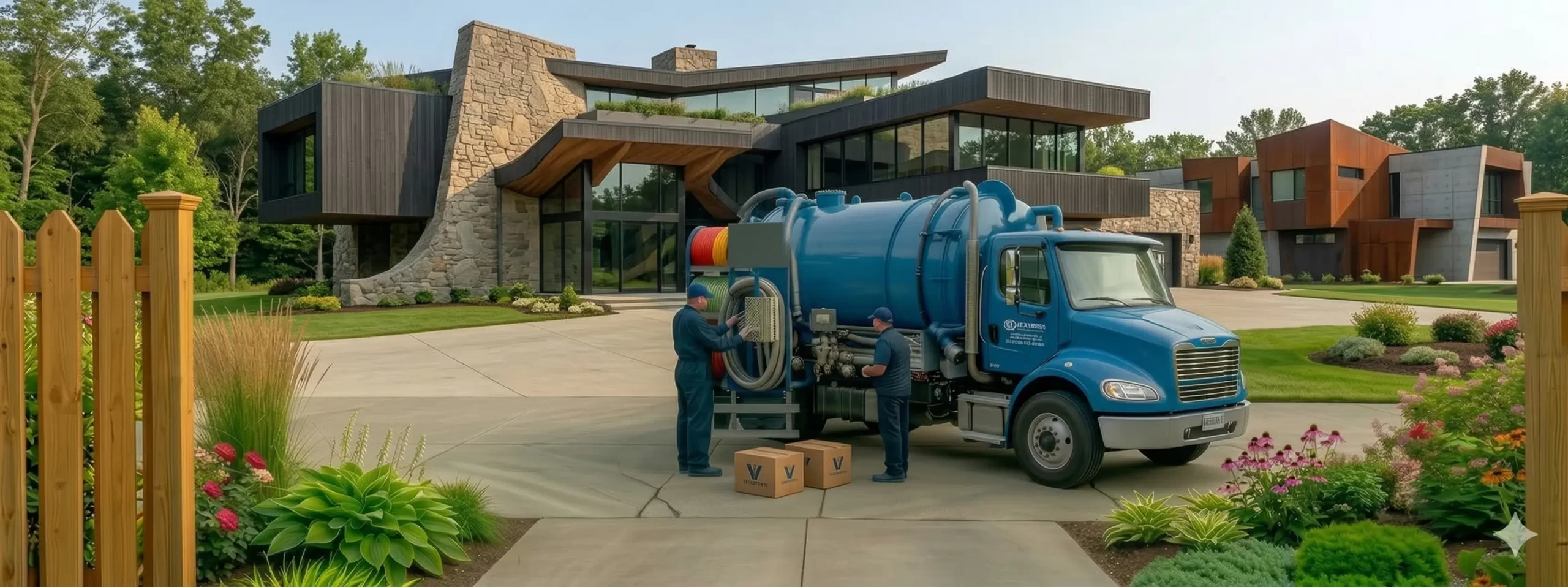
- White-Glove Hose Deployments: Pumping tanks located in deep backyards or behind sprawling luxury homes requires staging the heavy vacuum truck carefully in the street to protect custom driveways and pristine lawns. Technicians frequently deploy 150 to 250+ feet of heavy industrial hose.
- Hydro-Jetting / Wipe Remediation: Extracting dense, concrete-like blockages caused by years of “flushable” wipe usage requires heavy-duty hydro-jetting to clear the inlet baffles and lateral lines, adding a manual labor surcharge.
Furthermore, Williamson County’s specific soil profiles dictate maintenance frequency:
| Round Rock Terrain / Soil | Drainage Capacity | Impact on Wastewater Systems | Maintenance Need |
|---|---|---|---|
| Blackland Prairie (Expansive Clay – East) | Extremely Poor | Shrink-swell action breaks PVC pipes. Forces the use of mechanical ATUs. Severe hydraulic lock during storms. | High (Strict ATU servicing schedules) |
| Hill Country (Shallow Limestone – West) | Extremely Poor / High Risk | Forces the use of ATUs. High risk of groundwater contamination into the Edwards Aquifer if untreated sewage hits bedrock fissures. | High (Strict engineered servicing) |
Cost Estimation by System Profile in Round Rock:
| Service Description | Estimated Range | Primary Labor Factors |
|---|---|---|
| Aerobic Treatment Unit (ATU) Pump-Out | $390 – $650 | Multi-tank evacuation, mechanical checks, diffuser cleaning, and complex “white-glove” staging. |
| Legacy Conventional Pump-Out | $380 – $550+ | Manual excavation in rock or dense clay, major oak root extraction, structural checks for soil-shift damage. |
| Hydro-Jetting / Root Removal | +$150 – $350 | Deploying high-pressure water to obliterate scale, “flushable” wipe clogs, and severe root blockages. |
Our platform guarantees that you connect with transparent, elite professionals who understand the uncompromising demands, engineered systems, and strict environmental codes of Williamson County properties.
⚙️ Local Service Details
When a certified vac-truck arrives at your Williamson County estate, you can expect a rigorous, exhaustive service protocol:
- Elite Low-Impact Equipment Staging: Strategically parking heavy 30,000-gallon vacuum trucks on the street or solid driveways, deploying up to 250 feet of industrial hose to navigate custom driveways and protect delicate landscaping and soft clay lawns from crushing weight.
- Electronic Tank Locating & Extreme Excavation: Utilizing flushable sondes to locate buried tanks. Technicians carefully hand-dig through heavy, sticky clay or chip through rocky limestone to expose the lids safely without destroying your immaculate yard.
- Complete Evacuation & ATU Servicing: Engaging high-CFM vacuum power to entirely empty the tank. For engineered ATU systems, technicians evacuate all necessary chambers, clean fine-micron diffusers, verify dosing pump functionality, and check chlorination systems.
- Structural Geological Diagnostics: Performing a critical visual inspection of the emptied tank to detect structural fractures caused by shifting expansive clay soils, shallow limestone bedrock, or heavy construction equipment.
This comprehensive, premium approach guarantees that your Central Texas property is protected against catastrophic backups and environmental code violations.
🌱 Local Environmental Status
When a septic system is neglected in the Round Rock area, the localized consequences are distinct and hazardous:
- Blackland Clay “Shrink-Swell” Damage (East): The expansive clay on the east side of the fault line moves dramatically. When wet, it swells and hydraulically locks, forcing raw sewage back into homes. When dry, it contracts, easily shearing off PVC inlet pipes and crushing older concrete tanks.
- Edwards Aquifer Contamination (West): On the rocky west side, water cannot percolate through solid limestone. If a system fails, untreated effluent can enter Karst fissures, dropping straight into the Edwards Aquifer or running off into Brushy Creek, threatening local drinking water and aquatic ecosystems.
- Engineered System (ATU) Failure: Because traditional gravity fields fail in both the shallow rock and the dense clay, a massive majority of homes outside the municipal sewer grid are mandated to use mechanical Aerobic Treatment Units (ATUs). If these complex systems are not regularly pumped and serviced, the expensive dosing pumps burn out rapidly.
- Suburban Sprawl Compaction: As ranch land is rapidly converted into booming subdivisions, heavy construction equipment often accidentally drives over shallow drain fields, instantly compacting the soil and destroying the system’s ability to process effluent.
To protect their high-value properties and the Williamson County ecosystem, homeowners must enforce uncompromising maintenance protocols:
- Strict Pumping & ATU Maintenance: Schedule a professional vacuum pump-out every 3 to 5 years. If you operate an ATU, Texas Commission on Environmental Quality (TCEQ) regulations require a continuous, active maintenance contract to ensure the aeration motors are functioning properly.
- Protect the Biomat: Clearly mark your drain field. Heavy landscaping vehicles, pool construction equipment, or delivery trucks driving over shallow, rocky or clay terrain will instantly crush the PVC lines.
- Storm Preparation: Pumping your tank *before* the heavy spring storm season provides critical emergency holding capacity when the dense clay saturates.
Consistent, environment-aware pumping is the absolute baseline of stewardship for homeowners in Round Rock.
📍 Coverage & ZIP Codes
🏡 Real Estate Transactions
Navigating a property transfer involving an OSSF in Williamson County requires meticulous attention to documentation:
- TCEQ & Conventional Loan Inspections: A basic visual check is never enough for the fast-paced Austin metro market. Lenders demand the tank be fully pumped and structurally inspected by a licensed professional to secure funding.
- Aerobic Plant (ATU) Compliance: For the vast majority of newer homes utilizing mechanical treatment plants (ATUs), the Williamson County Engineer’s Office and lenders demand proof of a transferrable, active maintenance contract and recent pumping records. A failing ATU will immediately halt a title transfer.
- Geological Diagnostics (Clay vs. Rock): Appraisers will demand a full vacuum pump-out and a high-definition structural camera inspection to ensure the concrete tank is not actively collapsing from shifting Blackland clay (East) or damaged by shallow limestone bedrock (West).
- Appraisal Value Protection: A failed drain field requiring a new engineered ATU system can easily cost $12,000 to $25,000+ to install in the challenging local soils. Providing a potential buyer with a flawless pumping log neutralizes their ability to demand massive price concessions.
Protect your Williamson County property’s equity. Securing a professional pump-out and a clean bill of health from our vetted, elite technicians is the most profitable step you can take before listing your Round Rock home.
⚠️ Local Regulatory Warning
Homeowners, builders, and real estate professionals are legally bound by the following uncompromising mandates:
- TCEQ ATU Maintenance Mandates: The Texas Commission on Environmental Quality (TCEQ) and Williamson County dictate that homes operating an Aerobic Treatment Unit (ATU) must maintain an active, continuous service contract with a licensed provider. Bi-annual inspections and reporting are mandatory.
- Licensed Pumping Regulations: All septic and ATU pumping must be performed exclusively by state-licensed sludge transporters. The waste must be legally manifested and disposed of at approved treatment facilities.
- Surface Discharge Penalties: Failing systems that leak raw effluent onto immaculate suburban lawns, into public drainage ditches, or directly into Karst fissures trigger immediate health citations, massive fines, and forced system condemnation.
- System Expansion Permitting: Upgrading a drain field, adding a home addition, or building a luxury pool without filing engineered blueprints with the Williamson County Engineer’s Office will result in massive retroactive fines and stop-work orders.
Consequences of Regulatory Non-Compliance in Round Rock:
| Environmental Violation | Enforcing Agency | Potential Penalty |
|---|---|---|
| Illegal Surface Discharge / Aquifer Threat | TCEQ / Williamson Co. | Emergency fines up to $1,000 per day until mitigated; forced system condemnation. |
| Lapsed ATU Maintenance Contract | Williamson County | Permit revocation, Class C Misdemeanor, blockage of property sales. |
| Unpermitted Pool/Deck over Drain Field | Local Code Enforcement | Stop-work orders, forced demolition of unpermitted structures over the OSSF. |
Protect your finances and your legal standing. Our network only provides access to elite, fully insured, and TCEQ-compliant professionals who protect your property legally and environmentally.
Round Rock Repair Alternative
Why dig up your entire yard? See the financial impact of maintaining the system you already have.
Base Drain Field Replacement in Round Rock: $12,544
The Flow Formula
To get the longest life out of your pipes, monitor your strain index closely during Round Rock winters.
Time-Restricted Pumping
When you pump is just as important as how you pump. Here is the golden season for Round Rock residents.
Truck Proximity Map
Getting your tank emptied fast is crucial. See the active dispatch route designated for Round Rock residents.
Drainage Health Environment
The soil in Round Rock impacts your biomat barrier. Dense, wet dirt stops wastewater from filtering properly.
Aging System Movement
The shift from ignoring tanks to actively servicing them in Round Rock is accelerating. Here is the 12-month trajectory.
Homeowner Feedback