

Top Septic Pumping in
Peñitas
Peñitas Pumping Costs & Data
| Peñitas Terrain / Soil Profile | Drainage Capacity | Impact on Wastewater Systems | Maintenance Need |
|---|---|---|---|
| Rio Grande Bottomlands / Alluvial | Extremely Poor / High Risk | High water tables cause tank buoyancy. High risk of immediate drain field saturation during floods. Forces ATU usage. | High (Flood mitigation & buoyancy checks) |
| Hidalgo Expansive Clay | Very Poor | Saturates rapidly during tropical weather, shrinks violently during droughts. Extremely difficult to manually excavate. | Standard (Interval pumping & structural checks) |
Cost Estimation by Service Profile in Peñitas:
| Service Description | Estimated Range | Primary Labor Factors |
|---|---|---|
| Highway 83 Commercial / RV Remediation | $550 – $800+ | Pumping multiple high-capacity lift stations, deploying hydro-jetters to destroy dense grease/wipe clogs for businesses. |
| Engineered ATU / Flood Recovery Pump-Out | $440 – $660 | Multi-chamber evacuation, cleaning fine-micron diffusers, checking for water damage on compressors, and floatation mitigation. |
| Deep Hidalgo Clay Excavation & Pumping | $450 – $625 | Intense manual labor using pickaxes and breaker bars to dig through heavy baked clay to locate and unseal buried lids without risers. |
⚙️ Local Service Details
- Hydrostatic Buoyancy Assessment: Technicians evaluate the local water table before pumping riverfront properties. If the ground is saturated from recent storms, they will strategically leave a small amount of liquid ballast in the tank to prevent it from floating out of the mud.
- Post-Flood ATU Diagnostics: A thorough inspection of all wiring, control panels, and submersible pumps after heavy rain events, ensuring they are elevated above flood lines and functioning properly in saturated RGV clay.
- Clay Excavation & Riser Retrofitting: Utilizing heavy digging equipment to break through dense, wet clay to access legacy tanks, followed by the highly recommended installation of PVC surface risers to permanently protect the homeowner from future digging fees.
🌱 Local Environmental Status
When a septic system fails in the Peñitas area, the localized consequences are distinct and severe:
- Rio Grande Floodplain Saturation: Properties bordering the Rio Grande contend with a dangerously high water table. A saturated traditional drain field or a leaking tank sends raw, nutrient-heavy effluent directly into these critical waterways, triggering toxic algae blooms, harming local wildlife, and violating strict state and international ecological protections.
- RGV Clay Saturation: Hidalgo County clay is infamous for its poor percolation. During the heavy Gulf Coast rain events or hurricane remnants that frequently hit Peñitas, traditional gravity drain fields become instantly saturated. The effluent cannot drain downward, forcing raw sewage to back up directly into home plumbing or pool on the flooded lawn.
- Suburban Sprawl & ATU Reliance: As Peñitas experiences rapid residential growth along the Expressway 83 corridor, developers are replacing agricultural tracts with high-density subdivisions. Because traditional systems fail completely in the coastal clay, the vast majority of new builds are mandated to use mechanical Aerobic Treatment Units (ATUs). However, frequent flooding often submerges the ATU control panels, causing massive electrical shorts.
- Storm Flooding & Tank Buoyancy: During severe tropical downpours, the ground completely saturates. Pumping a tank entirely empty during a flood event can cause immense hydrostatic pressure to pop the fiberglass or concrete tank out of the mud like a boat, destroying all attached plumbing.
To protect their investments and navigate Hidalgo County’s demanding environment, homeowners must enforce uncompromising maintenance:
- Flood-Proof ATU Maintenance: Ensure all ATU control boxes, wiring, and air compressors are securely elevated well above the base flood elevation to survive inevitable heavy rain events and river swells.
- Weather-Aware Pumping: Schedule routine maintenance vacuum pumping, but never pump a tank completely empty immediately following a tropical storm to avoid buoyancy issues.
📍 Coverage & ZIP Codes
🏡 Real Estate Transactions
Navigating a property transfer involving an OSSF in Hidalgo County demands absolute precision:
- TCEQ Engineered System Mandates: Because traditional drain fields consistently fail in the heavy clay, nearly all new residential construction is mandated to utilize mechanical ATUs. To legally close a sale, buyers must assume an active, continuous maintenance contract, and the system must pass a strict functional inspection.
- Commercial Highway Due Diligence: Investors buying land for RV parks or commercial sites along the highway face extreme scrutiny. Commercial lenders require extensive proof that the OSSF is legally permitted for high-capacity use by the county. A full pump-out and hydro-jetting of the lateral lines is considered mandatory during the option period.
- Flood Zone Verification: Lenders for properties in the flat coastal plains will explicitly check that the septic system’s electrical control panels and access ports are elevated and properly sealed against potential floodwaters. A submerged control box is an automatic red flag.
⚠️ Local Regulatory Warning
Local Failure Rate
Septic backups are no longer a secret. Watch the growing demand for emergency pumping among Penitas residents.
Your Local Service Window
We calculated the optimal environmental window for a resident of Penitas to schedule a vacuum truck.
Regional Tech Radar
Don't wait days for relief. See how close the primary service node is to Penitas right now.
The Penitas Permeability Metric
Waterlogged dirt causes systemic septic failure. Keep an eye on local drainage capabilities.
Post-Holiday Care
Guests mean extra flushes. Monitoring strain properly in Penitas is what prevents disasters.
Smart Maintenance Investment
Do the math. Pumping your tank in Penitas today is financially smarter than paying for a bio-mat failure tomorrow.
Base Drain Field Replacement in Penitas: $12,753
Homeowner Feedback



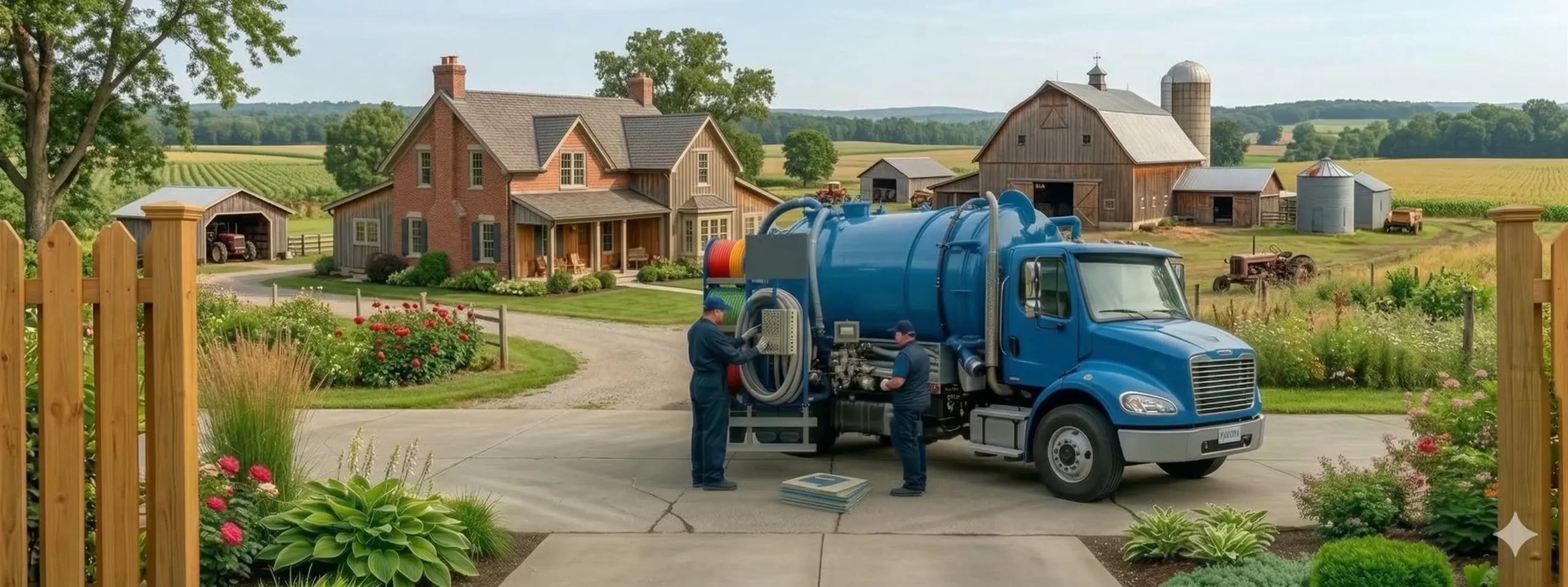
Reliable Septic Services in
Peñitas, TX
Penitas Septic Expert AI
What are the specific septic tank regulations, typical soil drainage characteristics, and the local permitting authority for Hidalgo County?
Greetings from the Environmental Health Inspector's Office,
As a Senior Environmental Health Inspector and Septic Regulatory Expert for Texas, I can certainly provide you with the specific, detailed information you need regarding residential septic systems in Penitas, Hidalgo County, for the year 2026. My goal is to equip you with precise data relevant to your location.
Specific Septic Tank Regulations in Penitas, TX (Hidalgo County)
The primary regulatory framework governing residential On-Site Sewage Facilities (OSSF) in Penitas, as with the rest of Texas, is established by the Texas Commission on Environmental Quality (TCEQ). The foundational rules are codified under:
- Texas Administrative Code (TAC) Title 30, Part 1, Chapter 285 (30 TAC Chapter 285) – "On-Site Sewage Facilities". This comprehensive chapter dictates everything from permitting requirements, design criteria, construction standards, to maintenance and operation for all OSSFs.
Key regulatory points dictated by TCEQ Chapter 285, particularly relevant to areas like Penitas, include:
- System Types: Given the challenging soil conditions often found in Hidalgo County (detailed below), conventional gravity-fed drain field systems are frequently not feasible or require significant engineering. Therefore, aerobic treatment units (ATUs) with surface application, drip irrigation, or low-pressure dosing systems are commonly required. TCEQ rules provide specifications for all these system types.
- Minimum Lot Size: Requirements vary based on the proposed system type and water source. For single-family residences utilizing a public water supply, typically 0.5 to 1 acre is required for conventional systems, but often smaller lots can be permitted for aerobic systems with specific disposal methods (e.g., surface irrigation) if they meet setback and disposal area requirements.
- Setback Requirements: Strict minimum distances must be maintained between OSSF components (tank, drain field) and property lines, water wells, water bodies, structures, and public easements. For instance, a minimum of 100 feet from a private well is generally required, and 5 feet from property lines.
- Site Evaluation: A professional site evaluation, including soil borings, is mandatory to determine soil characteristics, water table depth, and topography, which directly inform the system design.
- Permitting and Inspections: All OSSFs require a permit prior to construction. The permitting authority (see below) conducts multiple inspections throughout the installation process to ensure compliance with the approved design and state regulations.
Typical Soil Drainage Characteristics in Penitas, TX
Penitas, located in the Lower Rio Grande Valley of Hidalgo County, is characterized by its alluvial soils, heavily influenced by the Rio Grande River's historical floodplains and irrigation practices. The typical soil drainage characteristics in this area present significant challenges for conventional septic systems:
- Heavy Clay and Clay Loam Soils: The predominant soil types in Penitas are often deep, expansive clays and clay loams (e.g., Harlingen clay, Raymondville clay loam). These soils have very fine particles, resulting in extremely low permeability rates.
- Poor Drainage: The heavy clay content means water infiltrates very slowly, if at all. This leads to poor internal drainage within the soil profile, making it unsuitable for rapid dispersal of effluent from conventional drain fields.
- High Water Table: Due to the flat topography, proximity to irrigation canals and the Rio Grande, and the impermeable nature of the underlying soils, the seasonal and sometimes permanent water table can be relatively high. A high water table significantly reduces the effective depth of soil available for treatment and can lead to system failure and surfacing effluent.
How these characteristics dictate drain field design: Given these soil conditions, conventional septic systems are often not permissible or would require excessively large drain fields that are impractical for typical residential lots. Therefore, OSSF designs in Penitas frequently necessitate:
- Aerobic Treatment Units (ATUs): These systems treat wastewater to a higher standard (near drinking water quality in some parameters) before discharge.
- Alternative Disposal Methods:
- Surface Application/Spray Irrigation: Common in Penitas, treated effluent from an ATU is disinfected and then sprayed onto a designated landscaped area. This requires specific setbacks and maintenance.
- Drip Irrigation: Treated effluent is slowly applied to the root zone of plants through a network of buried drip tubing.
- Evapotranspiration (ET) Systems: Less common for primary residential systems due to large land area requirements, but can be considered in conjunction with other methods.
- Engineered Fill/Mounds: In some cases, if allowed by the permitting authority and site conditions, a raised mound system constructed with imported, permeable soil may be designed to overcome high water tables or impermeable native soils.
Local Permitting Authority for Hidalgo County
The **Hidalgo County Health and Human Services Department, Environmental Health Division** is the specific and exact local health department responsible for issuing permits for On-Site Sewage Facilities (OSSFs) in Penitas and throughout Hidalgo County.
Their responsibilities include:
- Reviewing OSSF permit applications and proposed system designs.
- Conducting site evaluations and soil tests.
- Issuing permits for new installations, repairs, and alterations.
- Performing required inspections during the construction phase (e.g., pre-cover, final inspections).
- Ensuring compliance with 30 TAC Chapter 285 and any local ordinances.
You would initiate your permitting process by contacting this department directly.
Realistic 2026 Cost Estimates for Penitas Market
Please note that these are estimates for 2026, subject to inflation, specific site conditions, and contractor rates. Always obtain multiple bids from licensed installers.
- Septic Tank Pumping (Standard Residential Tank, 1000-1500 gallons):
- Expected Cost Range (2026): $400 - $750. This includes pumping out the tank, basic cleaning, and proper disposal of septage. Costs can vary based on tank accessibility, size, and specific waste disposal fees.
- New Septic System Installation (Residential, Penitas Market):
- Aerobic Treatment Unit (ATU) with Surface Application/Drip Irrigation: This is the most common and often required system type due to Penitas's soil challenges. These systems involve an aerobic tank, a clarifier, a pump tank, a chlorinator/disinfection unit (often UV in 2026), and a spray or drip field.
- Expected Cost Range (2026): $12,000 - $25,000+. This wide range accounts for variations in system size (e.g., number of bedrooms), complexity of the disposal field (surface spray vs. intricate drip lines), site accessibility, soil preparation, electrical work, and permit fees.
- Conventional Gravity-Flow System (if feasible, rare): If a rare parcel in Penitas somehow qualifies for a conventional system (extremely good drainage, very deep permeable soil), the costs might be lower, but this is highly unlikely given the typical geology.
- Expected Cost Range (2026, if applicable): $8,000 - $15,000. This would involve a septic tank and a much larger, carefully designed drain field.
- Permit Fees: Expect additional costs for the OSSF permit itself, which typically ranges from $250 - $500, paid directly to the Hidalgo County Health and Human Services Department. This fee is separate from installation costs.
- Aerobic Treatment Unit (ATU) with Surface Application/Drip Irrigation: This is the most common and often required system type due to Penitas's soil challenges. These systems involve an aerobic tank, a clarifier, a pump tank, a chlorinator/disinfection unit (often UV in 2026), and a spray or drip field.
For any specific design questions or to initiate the permitting process, I strongly advise you to contact the Hidalgo County Health and Human Services Department, Environmental Health Division directly.