
When you turn on the faucet and nothing happens, your household routine comes to a halt. If your property relies on private groundwater, a failing well pump or pressure tank is an urgent issue. Our service connects you with a network of local, licensed well water professionals who are ready to diagnose the problem, pull the broken pump if necessary, and help restore your water pressure as quickly as possible.
Fast Local Service & Diagnostics
Calls are routed to a licensed local well professional.
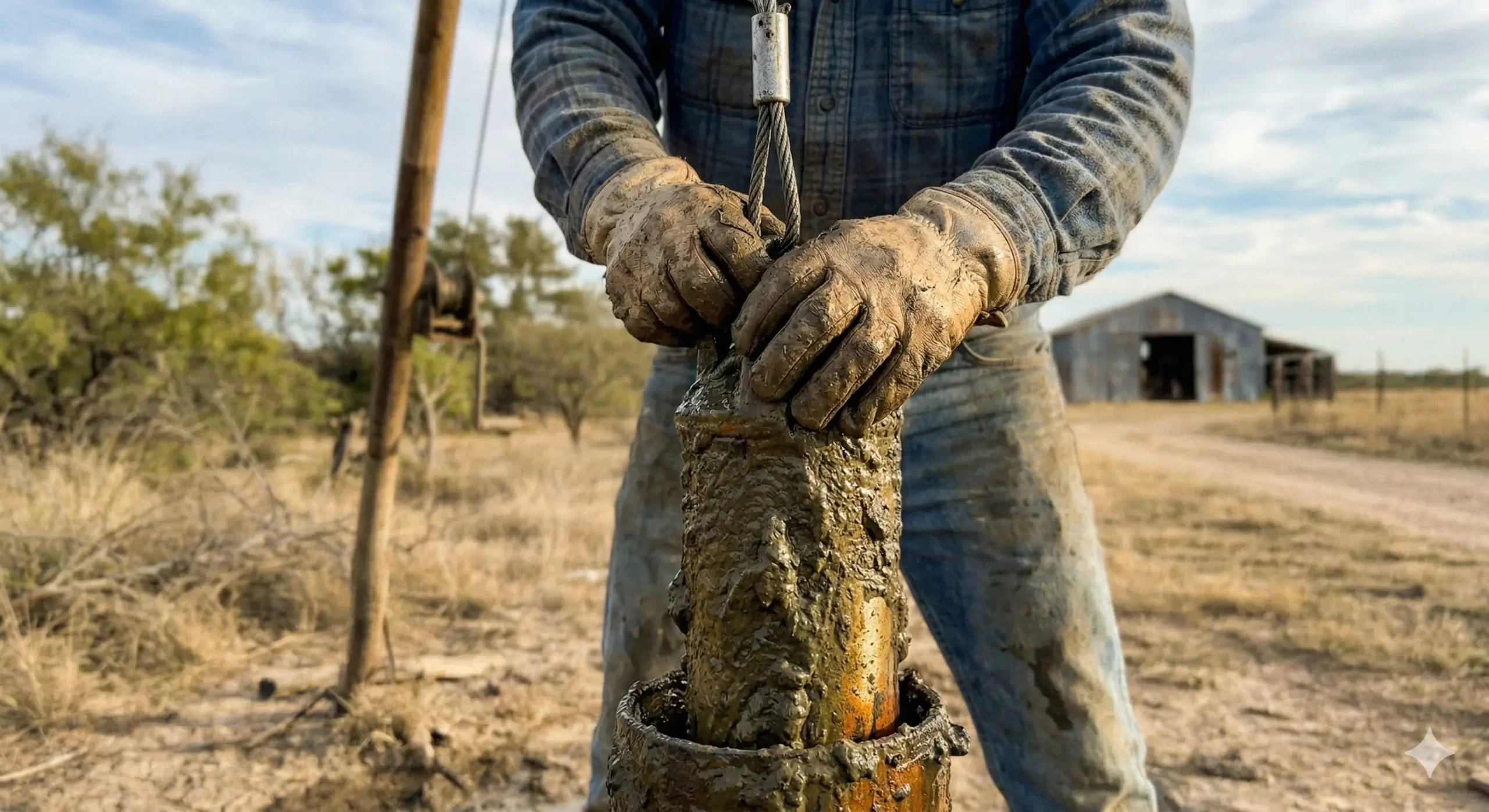
🚨 No Water? Typical Culprits
A "no water" situation doesn't always mean your well has run dry. In fact, it is often a mechanical or electrical issue. Before you panic, local technicians typically check these three main components:
- The Submersible Pump: Located deep underground. It can burn out due to old age, power surges, or hard water calcification.
- The Pressure Tank: Located in your basement or pump house. If the internal bladder ruptures (waterlogged), your pump will short-cycle and eventually fail.
- The Pressure Switch & Control Box: The "brain" of the system. Burned contacts or a blown starting capacitor will prevent the pump from receiving power.
⚠️ Crucial First Step: Turn Off the Breaker
If you suddenly lose water pressure, immediately locate your electrical panel and turn off the breaker dedicated to the well pump. If the issue is a broken pipe or a loss of prime, the pump will continue to run continuously trying to build pressure. A dry-running pump will overheat and completely melt the internal motor in a matter of hours, turning a minor repair into a major replacement.
Average Well Pump Repair Costs (2026 Estimates)
Homeowners often fear the worst when the water stops flowing. While pulling a deep submersible pump is a major job, many repairs are simpler electrical fixes above ground. Here is a general estimate of what you might expect to pay:
| Service Type | Average Cost Range | Typical Service Time |
|---|---|---|
| System Diagnostics (Site visit & electrical testing) | $150 - $250 | 1 - 2 Hours |
| Pressure Switch Replacement | $150 - $350 | 1 Hour |
| Control Box / Capacitor Repair | $250 - $450 | 1 - 2 Hours |
| Pressure Tank Replacement (Standard residential size) | $800 - $1,600 | 2 - 4 Hours |
| Submersible Pump Replacement (Includes pulling pipe) | $1,800 - $3,500+ | Half to Full Day |
Fast Local Service & Diagnostics
Calls are routed to a licensed local well professional.
Submersible vs. Jet Pumps: Knowing Your System
When requesting service, identifying your pump type helps technicians dispatch the right equipment:
- Submersible Pumps: You won't see the pump itself; it is submerged deep inside the well casing in your yard. You will only see the pressure tank and control box inside your home. These are standard for deep wells.
- Jet Pumps: These are mounted above ground, usually resting directly on top of the pressure tank in the basement or in a dedicated pump house. They pull water up through suction and are typically used for shallow wells (less than 25 feet deep).
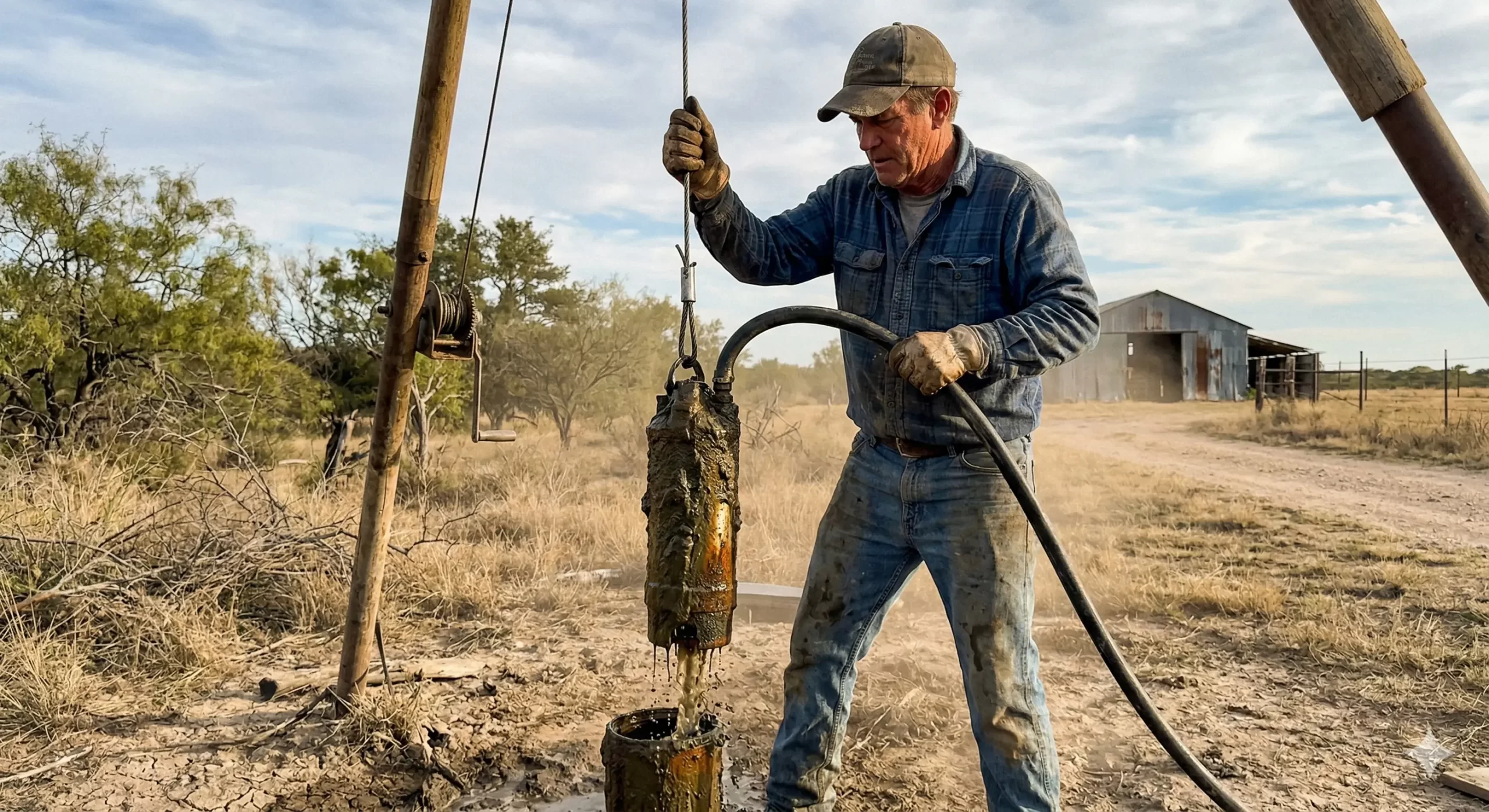
4 Warning Signs Your Well Pump is Failing
It's always best to catch a problem before you completely lose water. Look out for these early indicators of well system failure:
- Fluctuating Water Pressure: The water pressure in your shower drops significantly before surging back up.
- Spitting Faucets: Air is getting into your plumbing lines. This could indicate a crack in the drop pipe or a lowering water table.
- Muddy or Murky Water: Your pump might be sitting too low and pulling silt from the bottom of the well.
- High Electric Bills: If your pump runs continuously without shutting off (often due to a leak or bad pressure switch), your electricity usage will spike.
Ask the Blix Well Pump Expert AI
Not sure what's wrong with your water pressure? Ask our specialized AI assistant about typical problems, local regulations, and component lifespans below:
your city Groundwater Expert AI
What are the specific groundwater regulations, average well depths, and the local conservation district for your city, your county?
Residential Water Well Information for Whispering Pines, Montague County, TX (2026)
As a Senior Hydrogeologist and Local Groundwater Regulatory Expert for Texas, I can provide you with specific information regarding residential water wells in Whispering Pines, Montague County, Texas.
1. Local Groundwater Conservation District (GCD) and Regulatory Body
For your city of Whispering Pines in Montague County, the primary local regulatory authority for groundwater is the Upper Trinity Groundwater Conservation District (UTGCD). The UTGCD is responsible for conserving, protecting, and preserving the groundwater resources within its jurisdiction, operating under the authority granted by the Texas Legislature through Texas Water Code Chapter 36.
- UTGCD Official Website: http://www.uppertrinitygcd.com
Additionally, the Texas Department of Licensing and Regulation (TDLR) oversees the licensing of water well drillers and pump installers statewide, ensuring professional standards for well construction and maintenance under Texas Occupations Code Chapter 1901.
- TDLR Water Well Driller & Pump Installer Program: https://www.tdlr.texas.gov/wwd/wwd.htm
2. Specific Groundwater Regulations for Residential Wells
The UTGCD implements a set of rules and regulations designed to manage groundwater resources. For residential water wells, which are typically classified as "exempt wells" for household use, livestock, or irrigation of up to 10 acres, the following generally apply:
- Drilling Permits: A drilling permit from the UTGCD is required for any new water well construction, even for exempt residential wells. This permit allows the District to track groundwater usage and ensure compliance with construction standards.
- Well Spacing Requirements: The UTGCD rules include minimum setback distances for new wells to prevent interference with neighboring wells and to protect groundwater quality. While specific distances can vary, common requirements typically include:
- At least 50 feet from property lines.
- At least 100-150 feet from septic system components (drain fields, tanks).
- Specific distances from other existing wells to prevent drawdown interference (e.g., 150 feet from a non-exempt well, 50 feet from another exempt well on the same property).
- Greater distances (e.g., 500-1000 feet) from municipal or public water supply wells.
- Well Construction Standards: All wells must be constructed by a TDLR-licensed driller in accordance with Texas Water Well Driller Rules (30 Texas Administrative Code, Chapters 290 and 293) and UTGCD construction standards. This includes proper casing, cementing, and wellhead completion to prevent contamination.
- Well Plugging: Any abandoned or deteriorated well must be properly plugged by a TDLR-licensed driller to prevent contamination of the aquifer and eliminate safety hazards.
- Conservation: While exempt wells typically do not have production limits, the UTGCD encourages responsible water use and may impose drought-related restrictions during extreme conditions.
3. Average Well Depths for Whispering Pines, Montague County
Based on historical well logs and hydrogeological data for Montague County, residential wells accessing the primary aquifer in the Whispering Pines area generally need to tap into the deeper formations. The estimated average well depth for residential use in Whispering Pines, accessing the underlying aquifer, is approximately 475 feet. Depths can range from 300 to over 600 feet depending on specific elevation, topography, and the target formation within the aquifer group.
4. Specific Aquifer Beneath Whispering Pines
The primary groundwater source for residential wells in Whispering Pines, Montague County, is the Trinity Aquifer. This aquifer system in North Central Texas consists of several distinct formations, most notably the Paluxy, Glen Rose, and Hosston Formations. Wells in your area typically draw water from one or more of these formations within the Trinity Group.
5. Useful Resources
- Texas Water Development Board (TWDB) Water Well Data Lookup: To research specific well logs in your area, you can use the TWDB's online tools. This allows you to view details of wells previously drilled in Montague County. https://www.twdb.texas.gov/groundwater/data/gwd.asp
- Texas Water Code Chapter 36 (Groundwater Conservation Districts): https://statutes.capitol.texas.gov/Docs/WA/htm/WA.36.htm
- Texas Occupations Code Chapter 1901 (Water Well Drillers): https://statutes.capitol.texas.gov/Docs/OC/htm/OC.1901.htm