
Emergency Well Pump Repair in Saginaw, TX
Saginaw, sitting just north of Fort Worth, has its own unique challenges when it comes to groundwater. The growth here means more demand, and those water tables in the Trinity Aquifer can fluctuate, especially after a dry summer or periods of heavy pumping. It’s not like the old days when you just dropped a pump in and forgot about it.
Most of the wells around Saginaw tap into the Trinity Aquifer, particularly the Paluxy and Glen Rose formations. This aquifer is reliable but can be deep, and the water quality varies. We see everything from good, clear water to folks dealing with hardness, iron, or even a bit of sand, depending on the well’s specific geology and construction.
When folks try to save a buck on a cheap pump here, they usually pay for it twice. The Trinity water, with its mineral content, combined with the often cycling demands of a home, puts a lot of stress on pump motors and impellers. A pump not built to handle those conditions, especially deep in a well, just won’t last. You need something rugged to stand up to Saginaw’s demands.
Fast Local Service & Diagnostics
Calls are routed to a licensed local well professional.
Well Pump Repair in
Saginaw
Saginaw & Tarrant County Well Stats
Tarrant County has seen significant well development, especially in its northern and western rural fringes, though Saginaw itself is becoming more urbanized. According to Texas Water Development Board data, depths typically range from 200 to 600 feet, primarily drawing from the Trinity Aquifer. Water quality varies widely, with many wells reporting moderate to high hardness (150-300+ mg/L CaCO3) and localized issues with iron (0.3-2.0 mg/L) and manganese, especially in older wells or those not properly screened. Sand intrusion is a common complaint in wells completed in the Paluxy formation if not properly developed or screened.
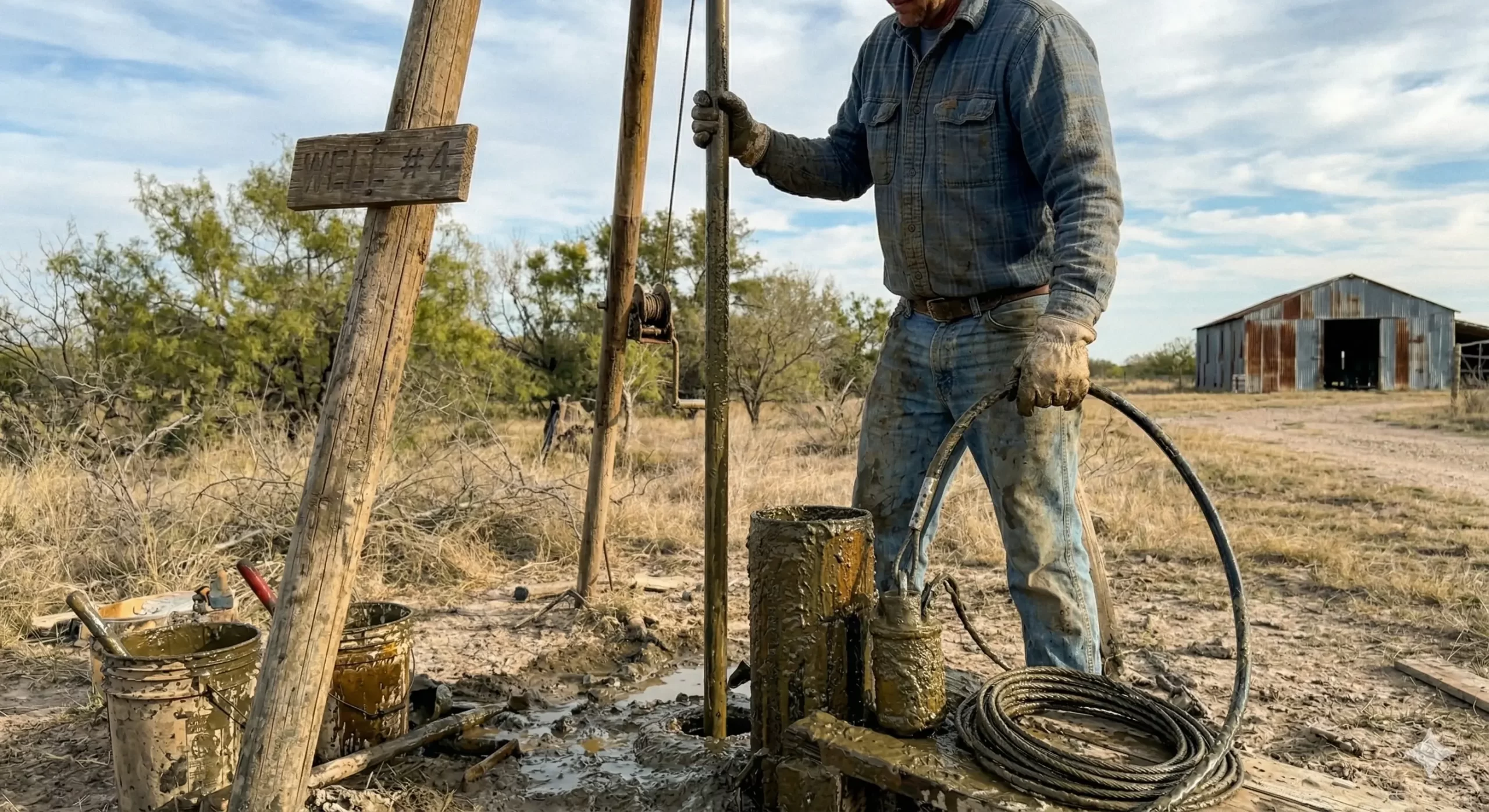
Pulling a pump in Saginaw isn’t a job for a pickup truck and a chain. We’re dealing with deep wells, often hundreds of feet down, and the geology here means rock, sometimes hard limestone, starts fairly shallow. That means specialized pump hoists or full-blown well rigs are essential. Plus, getting a heavy rig into some of the older, tighter properties or newer, landscaped subdivisions can be tricky and requires careful planning & experienced operators.
Beyond the big rig, we carry well cameras to diagnose issues without pulling the pump blind, sonic depth finders, heavy-duty electrical testing equipment, and often need welding gear for old steel casing repairs or custom fittings. It’s a significant investment in specialized tools & parts just to get the job done right and safely, especially when you factor in liability & insurance for working with such heavy equipment and high-voltage electricity.
Spring Well Maintenance in Texas
Heavy spring rains can cause surface runoff to breach well caps. We strongly recommend testing your water for coliform bacteria and inspecting the sanitary seal.
Save $500+ on Replacements
Via the TX Energy Co-op VFD Upgrade Program
85°F in Saginaw
Local Aquifers & Geology
The primary groundwater sources in Saginaw include the Trinity Aquifer. This aquifer is a major groundwater source for much of North Central Texas, including Saginaw. In this area, it’s primarily composed of the Paluxy, Glen Rose, and Travis Peak formations, which are made up of sandstone, limestone, shale, and clay. The water-bearing zones are typically found in the sandstones and limestones. While generally productive, the water can be hard due to high calcium & magnesium content from the limestone layers, and iron can be present, particularly in the deeper, more anoxic zones. Well yields are generally good, but can decline during prolonged drought periods or heavy regional pumping.. Drilling through the local Saginaw’s soil profile is predominantly influenced by the underlying geology of North Texas. You’ll find a lot of clayey soils, particularly dark, calcareous clays like the ‘Houston Black’ series, which are expansive (swell & shrink with moisture changes). Beneath that, you often hit formations like the Eagle Ford Shale and Austin Chalk at relatively shallow depths, then deeper into the Woodbine Group and the Trinity sands. This means digging can be tough due to hardpan clay and rock layers, impacting everything from trenching for lines to well casing stability. means that average well depths range from 250 ft – 550 ft, with some deeper wells exceeding 600 ft depending on exact location & water demand..
Due to these geological factors, local homeowners frequently struggle with Electrical motor failure due to voltage fluctuations or overheating caused by mineral scaling on the impellers & motor housing. Sand intrusion leading to premature wear on impellers & bearings is a very close second..
Drilling Depth Comparison
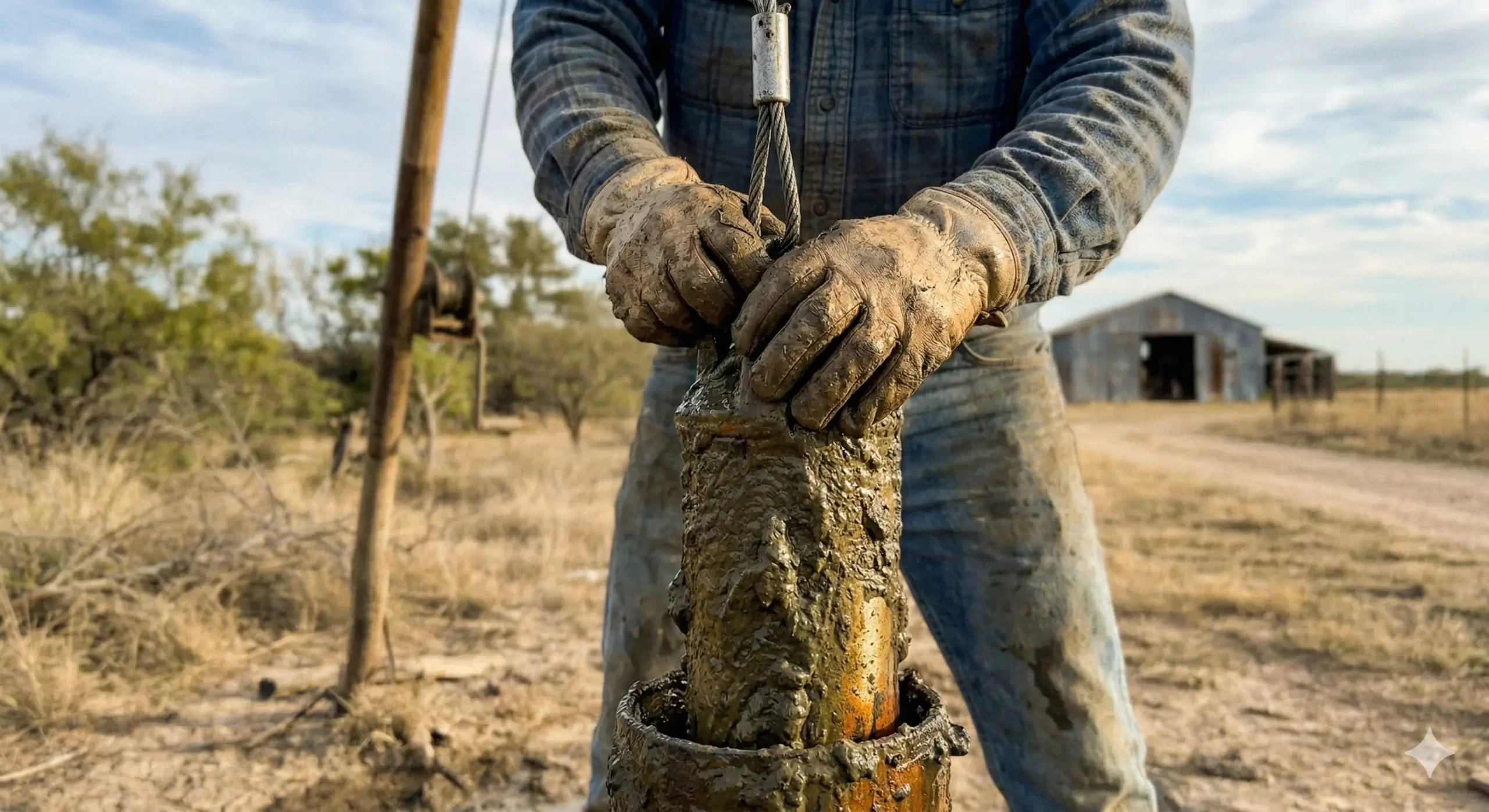
Deeper wells require heavy-duty crane hoists for pump extraction.
Climate & Water Quality
Pump systems in the Saginaw area face severe environmental stressors. The most significant threat is Texas weather is brutal on well equipment. Our scorching summers (often 100+°F for weeks) mean pumps work harder to meet demand, leading to overheating, especially if motors aren’t properly cooled by sufficient water flow. Droughts lower water tables, making pumps ‘suck air’ or run dry, which kills motors quickly. Then you get the sudden, heavy downpours that can flood well pits or electrical conduits, causing shorts. And don’t forget the occasional hard freeze that can burst exposed pressure tanks, lines, or even crack well heads if not properly protected.
Additionally, the raw groundwater often presents issues with High hardness (leading to scale buildup in pumps & plumbing), elevated iron & manganese (staining & sediment), and occasional fine sand intrusion. Sulfur odor is less common but can occur in some deeper wells..
Regional Groundwater Advisory
Known primary contaminant threat to submersible pumps and pipes in this area:
Common Area Systems
VFD Upgrade Savings
Constant Pressure vs StandardReplacing a standard single-speed pump with a Variable Frequency Drive (VFD) eliminates hard starts and drastically reduces energy draw in Texas.
Compliance & Local Permits
Tarrant County Level: While Saginaw is largely developed, any new well drilling or major alteration (like deepening) still requires permits. Within incorporated city limits, you’ll need to check with the City of Saginaw’s permitting department. For properties in unincorporated Tarrant County, the Texas Commission on Environmental Quality (TCEQ) regulations apply, and often local county health departments have oversight. More critically for groundwater usage, the Trinity Groundwater Conservation District (GCD) regulates well spacing & production for wells outside major municipal water systems. While many wells in Saginaw are grandfathered, if you’re drilling new or making significant changes, you *must* check with the City & the Trinity GCD. They have strict rules on well spacing, casing, & sealing to protect the aquifer, and you’ll need a licensed driller & pump installer who understands these local nuances.
Top Pump Brands in Texas
Most frequently installed hardware based on local geology (2026 data).
- Amp & Volt Draw Test on Pump Motor: To diagnose electrical efficiency & potential motor issues.
- Pressure Tank & Switch Inspection: Checking air pre-charge, diaphragm integrity, & switch calibration.
- Water Quality Check: Basic assessment for hardness, iron, & sediment.
- Well Head Integrity & Casing Inspection: Ensuring proper seal, no damage, & pest exclusion.
- Wiring & Conduit Evaluation: Checking for fraying, corrosion, or damage from rodents & elements.
- Flow Rate & Pressure Test: Verifying system performance against design specifications.
Premium Well Pump Brands We Service
Our licensed technicians in Saginaw are certified to repair, replace, and install high-quality groundwater equipment from industry-leading manufacturers, including:
- No water or intermittent water flow.
- Low water pressure throughout the house.
- Pump runs constantly or cycles on & off rapidly.
- Dirty, sandy, or cloudy water suddenly appears.
- Unusual noises coming from the well head or pressure tank area.
- High electric bills without increased usage.
Saginaw Real Estate Well Regulations
Local Dispatch & Response Times
Live Dispatch: Texas
Updated Just Now⚠️ High demand. Call now to secure the next available technician.
- Typically, we aim for same-day response for no-water emergencies within Saginaw if the call comes in before noon.
- If it’s after hours or late in the day, we prioritize getting a diagnostic crew out first thing the next morning.
- Complex issues requiring specialized parts not on the truck might extend the repair to 24-48 hours.
- During extreme weather events (e.g., severe freezes, widespread power outages), response times may be longer due to high call volume across the region.
- Our goal is always to get your water back on safely and efficiently, understanding the critical nature of a well going dry.
⚠️ Tarrant County & State Regulatory Warning: Abandoned Wells
The Cost of Ignoring Symptoms
Fixing a short-cycling pump early saves thousands in Saginaw.
Data reflects average well contractor estimates in Saginaw.
Groundwater Threat Level
Current aquifer and mineral impact on pumps in Saginaw.
Dropping water tables cause pumps to suck air and overheat.
Hard water calcifies pump impellers, reducing lifespan.
Pump Lifespan Estimator
Select household size in Saginaw to see strain impact.
Local Saginaw
Well Pros
Fast Local Service & Diagnostics
Calls are routed to a licensed local well professional.
Septic System Services in Saginaw, TX
Do you have a septic tank on your property? Proper maintenance is critical to protecting your well water quality.
Saginaw Homeowner Feedback
“Had a problem with my old pump, water kept droppin’ pressure. Called ’em up, they were out quick. Fixed it right up, no fuss. Good folks.”

Local Homeowner
✓ Verified TX
“Our well pump started acting real funny, makin’ a screechy noise and then just gave out. Called up the fellas, and they were here faster than I thought possible, given how far out we are from town. Turns out the old pump had been chewing up sand for years, and the motor finally just seized up. They had to pull the whole thing, and let me tell you, that was a big job. The tech, he was a good ol’ boy, explained everything clearly. He even found some faulty wiring a previous guy had done, which was probably part of the problem too. Got a new Grundfos in there, and the water pressure is better than it’s been in ages. Only hiccup was they almost forget to reset the pressure switch, but caught it before they left. Highly recomend these guys, real pros.”

Local Homeowner
✓ Verified TX
“Lost water completely on a Sunday afternoon. Panic set in. Made the emergency call, and they had someone dispatched within an hour. They diagnosed it on site, had the parts on the truck, and had my water back on before supper. Lifesavers! Can’t thank ’em enough for the speed and professionalism.”

Local Homeowner
✓ Verified TX
Expert Saginaw Well System FAQ
My water pressure in Saginaw seems to be getting weaker, but my pump still runs. What could be causing this specific issue in a Trinity Aquifer well?
This is a common complaint for wells drawing from the Trinity Aquifer around Saginaw. Several local factors could be at play. First, sand intrusion is a big one; fine sand can slowly abrade the impellers in your submersible pump, reducing its ability to move water effectively without actually ‘failing’ the motor. Second, mineral buildup (hardness) from the Trinity water can scale up the pump’s internal components, restricting flow and making the motor work harder, leading to decreased pressure. Third, your pressure tank might be losing its air charge, causing the pump to cycle excessively and not maintain consistent system pressure. Finally, fluctuating water levels in the aquifer itself due to drought or increased regional pumping can mean the pump is simply not getting enough water to maintain full pressure, even if it’s running.
I’m buying an older home in Saginaw with a well. What unique well-related risks should I be particularly concerned about here?
For older homes in Saginaw with wells, there are a few specific risks to watch for. Many older wells here might have been drilled before stricter casing & grouting standards were fully enforced, meaning they could be more susceptible to surface contamination or casing collapse. Also, the electrical systems connecting to older pumps might not meet current code, posing safety hazards. The pressure tank, often original to the well, could be nearing the end of its lifespan. And critically, older wells are more likely to have issues with sand intrusion or mineral scale buildup on the pump components and in the well itself, which can significantly reduce efficiency and pump life. Always get a thorough well inspection by a TDLR-licensed professional, including a water quality test for bacteria & nitrates, before closing on any property with a private well in this area.
My well water in Saginaw has developed a reddish-brown stain and sometimes smells metallic. What’s going on?
That reddish-brown staining and metallic smell are classic signs of elevated iron content in your well water, which is common in many parts of the Trinity Aquifer. Iron exists naturally in the aquifer’s geology. When this dissolved (ferrous) iron comes into contact with air, it oxidizes into insoluble (ferric) iron, which forms rust-colored particles that can stain fixtures, laundry, and leave a metallic taste. Sometimes manganese can also be present, causing blackish stains. While generally not a health risk, it’s a nuisance. We’d recommend a comprehensive water test to determine the exact levels of iron & manganese. Based on those results, a suitable water treatment system, such as an iron filter or an oxidation-filtration system, can be installed to remove these minerals and protect your home’s plumbing & appliances.
How does the heavy clay soil and rock layers around Saginaw impact well drilling and pump installation costs?
The heavy clay soils, like the ‘Houston Black’ series, and the underlying rock layers (Eagle Ford Shale, Austin Chalk, and the harder Trinity Group formations) in Saginaw significantly impact drilling and installation costs. Drilling through hard rock requires specialized rotary drilling rigs with carbide or diamond-tipped bits, which are slower and consume more fuel & drill bits compared to drilling through softer formations. This directly increases the time on site and the wear & tear on equipment. Furthermore, the expansive nature of clay soils means careful attention must be paid to casing stability and proper grouting to prevent shifting or damage over time. All these factors contribute to higher operational costs for drillers and pump installers, which are reflected in the overall project price. It’s why experienced, local contractors are essential here, as they understand these specific geological challenges.
Saginaw Groundwater Expert AI
What are the specific groundwater regulations, average well depths, and the local conservation district for Saginaw, Tarrant County?
Groundwater Regulations for Residential Water Wells in Saginaw, Tarrant County, TX (2026)
As a Senior Hydrogeologist and Local Groundwater Regulatory Expert for Texas, I can provide you with precise information regarding residential water wells in Saginaw, Tarrant County, as of 2026.
Local Groundwater Conservation District (GCD)
It is important to note that Tarrant County does NOT currently have an active Groundwater Conservation District (GCD). This means that direct local groundwater management and permitting, as defined by Texas Water Code Chapter 36, is not in effect through a GCD for residential well owners in Saginaw.
In the absence of a GCD, the "Rule of Capture" generally applies, meaning landowners have the right to pump groundwater from beneath their property. However, this right is subject to state-level regulations concerning well construction, drilling, and potential impacts on water quality.
Specific Groundwater Regulations Applicable to Residential Wells
Despite the absence of a local GCD, residential water wells in Saginaw are still subject to several state-level regulations:
- Texas Department of Licensing and Regulation (TDLR): This is the primary regulatory body for the drilling, completion, and plugging of water wells, and the licensing of drillers and pump installers.
- Well Driller and Pump Installer Licensing: All individuals drilling new wells or performing major repairs must be licensed by the TDLR.
- Well Construction Standards: TDLR establishes strict standards for well construction to protect groundwater quality and ensure proper well function. These standards are found in 16 Texas Administrative Code (TAC) Chapter 76, Water Well Drillers and Pump Installers, which implements Texas Occupations Code Chapter 76.
- Setback Requirements: TDLR rules include specific setback requirements to prevent contamination. For instance, a private water well must typically be at least:
- 50 feet from a property line.
- 50 feet from a septic tank (septic system components).
- 100 feet from a septic drainfield or absorption bed.
- 150 feet from an animal feedlot, waste disposal system, or other potential sources of contamination.
- These specific distances can be found in 16 TAC §76.1000 (Setback Requirements).
- Well Plugging: Abandoned or deteriorated wells must be properly plugged by a licensed well driller to prevent contamination of aquifers. Regulations for well plugging are also outlined in 16 TAC Chapter 76.
Official TDLR Resources:
For detailed regulations and to find licensed drillers: TDLR Water Well Drillers and Pump Installers Program
For well plugging information: TDLR Guidance on Well Plugging - Texas Commission on Environmental Quality (TCEQ): While TDLR primarily handles well construction, TCEQ oversees broader environmental protection and water quality.
- Waste Disposal: TCEQ regulates waste disposal and activities that could contaminate groundwater, as outlined in Texas Water Code Chapter 26. This indirectly affects private well owners by protecting the overall aquifer quality.
- Water Well Plugging (for certain scenarios): While TDLR handles most private well plugging, TCEQ might be involved in cases of contamination or specific types of well abandonment, particularly related to industrial or waste sites (e.g., 30 TAC Chapters 304, 331).
Official TCEQ Resources:
For general groundwater information: TCEQ Groundwater Resources
Average Well Depths for Saginaw, Tarrant County
Based on historical state well logs and hydrogeological mapping for the Saginaw area of Tarrant County, residential water wells primarily tap into the Trinity Aquifer System. The Trinity Aquifer in this region consists of several formations, including the Paluxy, Glen Rose, and Travis Peak.
For residential water wells designed to provide reliable yield and water quality, the average well depth in Saginaw is estimated to be approximately 550 feet. This depth allows for penetration into productive zones of the Trinity Aquifer, often targeting the Glen Rose or deeper sections of the Paluxy Formation, sometimes extending into the upper Travis Peak Formation for optimal water availability.
Specific Aquifer Beneath Saginaw
The primary aquifer system supplying groundwater to residential wells in Saginaw, Tarrant County, is the Trinity Aquifer System. Specifically, wells in this area typically draw from the various formations that comprise the Trinity Aquifer, including the:
- Paluxy Formation (Upper Trinity)
- Glen Rose Formation (Middle Trinity)
- Travis Peak Formation (Lower Trinity)
The quality and quantity of water can vary depending on which specific formation and depth a well targets within the Trinity Aquifer system.
I hope this detailed information provides clarity for your inquiries regarding residential water wells in Saginaw, Tarrant County.
Fast Local Service & Diagnostics
Calls are routed to a licensed local well professional.
Blix
provides official
Emergency Well Pump Repair services for the
Saginaw
area.