
Emergency Well Pump Repair in Aransas Pass, TX
Folks down here in Aransas Pass know that groundwater ain’t like the rest of Texas. We’re right on the coast, and that means we’re constantly battling with brackish water intrusion, high mineral content, and the ever-present threat of sand in the system. It’s a harsh environment for any well, and if you’re not careful, your pump won’t last a lick. We’ve seen it all, from corroded impellers to motors burned out by consistent hard use in less-than-ideal conditions.
Our local water comes primarily from the Chicot and Evangeline aquifers, which are part of the larger Gulf Coast Aquifer System. These formations are mostly sand, silt, and clay, laid down over eons. While they can provide decent yields, the closer you get to the bay, the saltier that water can get. Deeper isn’t always better here; sometimes it just means more salinity. It’s a delicate balance to find good, usable water without drilling into a saltwater pocket.
This unique environment is why ‘cheap’ pumps often fail spectacularly around here. A bargain-basement pump motor might not be sealed properly against the high humidity, or its internal components might not handle the corrosive effects of brackish water and high mineral content. And forget about plastic impellers with sand and silt; they’ll be chewed up faster than a dog with a new bone. You need robust construction and materials designed for these specific conditions if you want your pump to last.
Fast Local Service & Diagnostics
Calls are routed to a licensed local well professional.
Well Pump Repair in
Aransas Pass
Aransas Pass & San Patricio County Well Stats
San Patricio County wells are predominantly for domestic and agricultural use, drawing from the Chicot and Evangeline aquifers. Typical well depths vary widely, from 100 ft to over 500 ft, depending on water needs and desired quality. Yields are generally moderate, often ranging from 10 to 50 gallons per minute (GPM), sufficient for most domestic applications. The biggest challenge is water quality, with many wells exhibiting high hardness, elevated iron, hydrogen sulfide (rotten egg smell), and a significant risk of brackish water intrusion, especially closer to the coast or in heavily pumped areas.
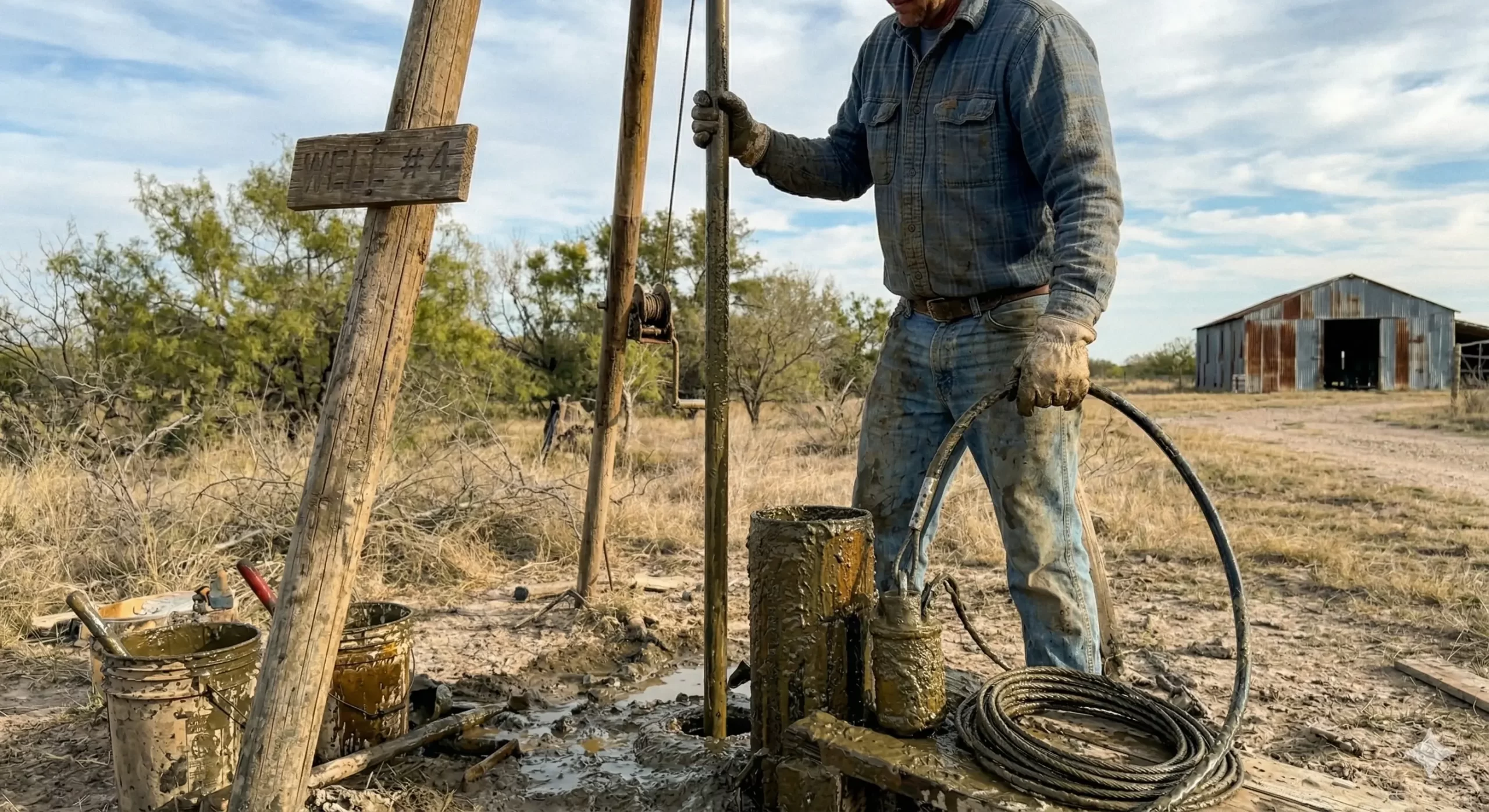
Pulling a pump in Aransas Pass is a whole different ballgame than out west. Our formations are mostly unconsolidated sands and clays, which means the well casing can shift, especially in older wells, making pump retrieval tricky. Plus, with the coastal humidity and salty air, components often corrode and seize. Sometimes, you’re dealing with a deeper well to avoid surface contamination or find less brackish water, and every foot adds to the complexity and labor. Getting a rig set up on some of these smaller coastal lots or navigating soft, sandy ground can also be a challenge, requiring specialized equipment just to get to the wellhead.
To properly pull and service a pump here, we need more than just strong arms. We’re talking about a dedicated pump hoist or full-size well rig for deeper submersibles, especially those that might be stuck. You need pipe wrenches that can handle corroded fittings, electrical meters for diagnosing power issues in humid conditions, and often a well camera to inspect for casing damage or blockages caused by sand. For really tough jobs, a hydraulic pump puller might be necessary to break loose a seized pump or retrieve dropped components.
Spring Well Maintenance in Texas
Heavy spring rains can cause surface runoff to breach well caps. We strongly recommend testing your water for coliform bacteria and inspecting the sanitary seal.
Save $500+ on Replacements
Via the TX Energy Co-op VFD Upgrade Program
80°F in Aransas Pass
Local Aquifers & Geology
The primary groundwater sources in Aransas Pass include the Our primary water source comes from the Chicot and Evangeline aquifers, both integral parts of the Gulf Coast Aquifer System. These are extensive, multi-layered aquifers composed primarily of sands, silts, and clays. The Chicot, being shallower, often provides adequate water for irrigation and domestic use but is more susceptible to contamination and brackish water near the coast. The Evangeline lies beneath the Chicot and generally offers better quality water, though salinity can still be an issue at greater depths or closer to the bays. Both aquifers are unconfined to semi-confined, meaning they are recharged relatively easily but also more vulnerable to surface impacts. The water can be hard due to dissolved minerals.. Drilling through the local The soil profile in Aransas Pass and surrounding San Patricio County is characterized by coastal plain soils. This typically includes sandy loams, silty clays, and clayey sands, often interbedded with marine deposits. These soils are generally unconsolidated, relatively young, and can be prone to shifting, especially after heavy rains or seismic activity. Permeability varies, with sands allowing for good drainage and recharge, while clays can impede it. The proximity to the coast also means a higher prevalence of calcareous (shell-derived) materials, contributing to water hardness. means that average well depths range from 150 ft – 400 ft, but some can be shallower or deeper depending on water quality needs..
Due to these geological factors, local homeowners frequently struggle with Without a doubt, the #1 mechanical failure reason for pumps in Aransas Pass is a combination of sand abrasion and corrosion from brackish water. The Chicot and Evangeline aquifers are naturally sandy, and even with good screens, fine particles get through. This sand acts like sandpaper on impellers and housings. Couple that with the slightly brackish, high-mineral water, and you get accelerated corrosion on metal components, leading to premature pump and motor failure..
Drilling Depth Comparison
Deeper wells require heavy-duty crane hoists for pump extraction.
Climate & Water Quality
Pump systems in the Aransas Pass area face severe environmental stressors. The most significant threat is Our specific local weather is brutal on well equipment. The high humidity and salt-laden air along the coast accelerate corrosion on exposed metal parts of the wellhead, control boxes, and pressure tanks. Power surges and outages are common during our intense summer thunderstorms and especially during tropical storms or hurricanes, which can fry motors and control panels. Furthermore, hurricane storm surge and heavy rainfall can flood wellheads, leading to contamination or damage to electrical connections if not properly sealed and elevated.
Additionally, the raw groundwater often presents issues with Hardness (calcium & magnesium), iron (staining, metallic taste), hydrogen sulfide (rotten egg smell), and absolutely, the presence of sand/silt. The most significant concern, however, is brackish water intrusion, meaning higher-than-normal salt content, which is very common near the bay and can drastically affect water potability and pump lifespan..
Regional Groundwater Advisory
Known primary contaminant threat to submersible pumps and pipes in this area:
Common Area Systems
VFD Upgrade Savings
Constant Pressure vs StandardReplacing a standard single-speed pump with a Variable Frequency Drive (VFD) eliminates hard starts and drastically reduces energy draw in Texas.
Compliance & Local Permits
San Patricio County Level: Here in San Patricio County, the San Patricio County Groundwater Conservation District (SPCGCD) oversees well permitting and rules. Any new well, or significant modification to an existing well (like deepening or re-drilling), requires a permit from the SPCGCD before any work can begin. You’ll need to submit an application, pay a fee, and adhere to their well spacing requirements, which are designed to prevent over-pumping and protect the aquifer. They also have rules regarding proper casing and grouting to prevent contamination. Even for repairs, while a full permit might not be needed, reporting work done to the well can be required, especially if it alters the well’s construction or capacity. Always check with the SPCGCD before starting any significant well work.
Top Pump Brands in Texas
Most frequently installed hardware based on local geology (2026 data).
- Test pump motor amperage and voltage to ensure it’s operating within manufacturer specifications and check for electrical shorts.
- Inspect the wellhead for proper sealing, elevation, and structural integrity, especially for signs of flooding or pest intrusion.
- Check pressure tank pre-charge and function, ensuring proper cut-in/cut-out pressures and no waterlogging.
- Evaluate water quality for visible sediment, clarity, and conduct on-site tests for hardness, iron, and salinity if issues are suspected.
- Assess pipe integrity, looking for leaks, corrosion, or signs of abrasive wear from sand.
- Examine control box components (capacitors, relays) for wear, burning, or signs of electrical stress.
Premium Well Pump Brands We Service
Our licensed technicians in Aransas Pass are certified to repair, replace, and install high-quality groundwater equipment from industry-leading manufacturers, including:
- No water coming out of the faucets, or very low pressure.
- Pump cycles on and off too frequently (short cycling), indicating a pressure tank or pressure switch issue.
- Cloudy or sandy water, especially after the pump runs, indicating screen issues or excessive sand in the aquifer.
- Strange noises coming from the well (grinding, humming, knocking) or the pressure tank.
- Higher-than-usual electric bills without increased water usage.
- Water tastes salty or metallic, a sign of brackish water intrusion or high mineral content.
Aransas Pass Real Estate Well Regulations
Local Dispatch & Response Times
Live Dispatch: Texas
Updated Just Now⚠️ High demand. Call now to secure the next available technician.
- Typically within 2-4 hours for critical ‘no water’ situations within 25 miles of Aransas Pass.
- Our dispatch prioritizes emergencies, especially for homes without any other water source.
- Technicians are equipped with common parts to minimize return trips and speed up repairs.
- We maintain a small fleet capable of navigating local road conditions, including sandy areas.
- After-hours and weekend service available for true emergencies, though a premium charge applies.
⚠️ San Patricio County & State Regulatory Warning: Abandoned Wells
Groundwater Threat Level
Current aquifer and mineral impact on pumps in Aransas Pass.
Dropping water tables cause pumps to suck air and overheat.
Hard water calcifies pump impellers, reducing lifespan.
The Cost of Ignoring Symptoms
Fixing a short-cycling pump early saves thousands in Aransas Pass.
Data reflects average well contractor estimates in Aransas Pass.
Pump Lifespan Estimator
Select household size in Aransas Pass to see strain impact.
Local Aransas Pass
Well Pros
Fast Local Service & Diagnostics
Calls are routed to a licensed local well professional.
Septic System Services in Aransas Pass, TX
Do you have a septic tank on your property? Proper maintenance is critical to protecting your well water quality.
Aransas Pass Homeowner Feedback
“Had a well pump quit on a Sunday afternoon. Called these fellas up, and they had us fixed by supper. Good as new. Can’t ask for more than that.”

Local Homeowner
✓ Verified TX
“Our water pressure started getting real low, then we’d hear the pump kick on for just a second, over & over. Thought the whole thing was shot. They came out, pulled the pump, and showed me where the impellers were just chewed up from sand, plus some corroded wires. Replaced the pump with a better stainless steel one, and adjusted the pressure tank. Water’s flowin’ strong now, and it’s quiet. I appreciate them explainin’ it all so I could understand what the problem was.”

Local Homeowner
✓ Verified TX
“Lost water on a hot summer day. Called them, and they were here faster than I expected. Diagnosed the pressure switch quickly and had it replaced. Professional and got the job done fast. lifesavers!”

Local Homeowner
✓ Verified TX
Expert Aransas Pass Well System FAQ
Why does my well water taste salty or ‘off’ sometimes, even though it used to be fine?
That’s a classic sign of brackish water intrusion, a common issue in Aransas Pass. Our coastal aquifers, the Chicot and Evangeline, are in a delicate balance with the saltwater from the Gulf and bays. Over-pumping, drought conditions, or even just natural geological variations can cause the saltwater interface to shift, drawing saline water into your well. It might be intermittent if usage patterns change, or it could be a sign that your well screen is getting close to a brackish layer. We can test your water for chloride levels and evaluate your well’s depth and construction to determine the best course of action, which could range from adjusting pumping cycles to drilling a new well in a more favorable location or installing a reverse osmosis system for drinking water.
My pump keeps spitting out sand, and I’m worried it’s going to ruin my appliances. What can be done?
Sand in your water is definitely a problem we see a lot here, and you’re right, it can quickly destroy pump components, water heaters, and even clog fixtures. The Chicot and Evangeline aquifers are naturally sandy. The sand can come from a few sources: a damaged well screen, a collapsed section of casing, or simply drawing too much water too quickly from a sandy zone, causing fine particles to be pulled into the well. First, we’d inspect the well with a camera to identify any structural damage. Depending on the cause, solutions might include installing a sand separator or spin-down filter right after the pressure tank, adjusting pump settings to reduce draw-down, or, in severe cases, rehabilitating the well or even drilling a new one with a better screen design and placement.
With hurricane season always a threat, what should I do to protect my well and pump from storm damage?
Prepping your well for a hurricane is crucial in Aransas Pass. First, make sure your wellhead is properly sealed and elevated at least 12-18 inches above the highest anticipated flood level to prevent contamination. If you have an outdoor pressure tank or control box, ensure they are secured and protected from high winds and potential floodwaters. After a storm, if your wellhead was submerged, it’s critical to have your water tested for bacteria (coliform) before consumption, even if it looks clear. You’ll likely need to disinfect the well. Also, be wary of power surges once electricity is restored; they can fry pump motors and control panels. Consider installing a surge protector for your pump’s electrical system for added peace of mind.
My neighbor just replaced his pump after only 5 years. Is that normal for wells around Aransas Pass, or should I expect more out of mine?
While 5 years is certainly on the low end for a quality pump, it’s not entirely unheard of in our challenging Aransas Pass environment. Many factors contribute to pump lifespan here: the quality of the pump itself (cheap pumps rarely last), the specific water chemistry (high hardness, sand, or brackish water are tough on pumps), how frequently it’s used, and whether it was properly installed initially. A well-installed, high-quality submersible pump made for these conditions, operating within its design parameters, should last 10-15 years, sometimes more. However, if your well consistently pumps sandy or brackish water, or experiences frequent power fluctuations, even a good pump’s life will be shortened. Regular maintenance and water quality checks can help extend its life and catch problems before they become catastrophic.
Aransas Pass Groundwater Expert AI
What are the specific groundwater regulations, average well depths, and the local conservation district for Aransas Pass, San Patricio County?
Groundwater Regulations and Information for Residential Wells in Aransas Pass, San Patricio County (2026)
As a Senior Hydrogeologist and Local Groundwater Regulatory Expert for Texas, I can provide you with precise information regarding residential water wells in Aransas Pass, San Patricio County, for the year 2026. The regulatory landscape involves both state and local authorities, with specific attention to the area's hydrogeology.
Local Groundwater Conservation District (GCD)
The primary local regulatory body for groundwater in Aransas Pass, San Patricio County, is the San Patricio County Groundwater Conservation District (SPC GCD).
- Regulatory Authority: The SPC GCD operates under the authority granted by the Texas Water Code, Chapter 36, and is tasked with conserving, protecting, and recharging groundwater resources within its jurisdiction.
- Specific Regulations for Residential Wells:
- Well Drilling Permit: A permit from the SPC GCD is typically required BEFORE initiating the drilling of any new water well, including residential wells. This application usually requires information such as the proposed well location, intended use, estimated depth, and the licensed driller's details.
- Well Spacing Requirements: The SPC GCD has specific spacing rules (setbacks) designed to prevent interference between wells and protect groundwater quality. These often dictate minimum distances from property lines, septic systems, and other existing water wells.
- Well Registration: In addition to state requirements, wells may need to be registered directly with the SPC GCD upon completion.
- Well Plugging Requirements: The District mandates proper plugging procedures for abandoned or deteriorated wells to prevent contamination of aquifers.
- Water Quality Protection: The District may have guidelines or requirements related to well construction standards to ensure protection of potable water zones from contamination.
- Official Resource: For the most current forms and specific ordinances, I recommend visiting the SPC GCD's official website: https://www.spcgcd.org/
State-Level Groundwater Regulations
Beyond the local GCD, the State of Texas imposes regulations primarily through the Texas Department of Licensing and Regulation (TDLR) and the Texas Water Development Board (TWDB).
- TDLR Licensing and Registration:
- Licensed Drillers: All water wells in Texas, including residential wells, must be drilled by a driller licensed by the TDLR.
- Well Registration: Completed water wells must be registered with the TDLR within 30 days of completion. This process involves submitting a "Driller's Log and Water Well Completion Report."
- Relevant State Code: Groundwater Conservation Districts like the SPC GCD derive their specific powers and duties from the Texas Water Code Chapter 36.
- Official Resources:
- Check the TDLR water well driller database: https://www.tdlr.texas.gov/LicenseSearch/DrillerSearch.aspx
- TDLR water well registration information: https://www.tdlr.texas.gov/wwd/wwd.htm#wellreg
- Texas Water Development Board (TWDB) GCDs map: https://www.twdb.texas.gov/groundwater/districts/map/index.asp
Average Well Depths in Aransas Pass, San Patricio County
Based on historical state well logs and typical hydrogeological conditions for reliable potable water in the Aransas Pass area, I estimate the average depth for a residential water well to be approximately 280 feet. This depth range allows for sufficient casing to seal off shallower, potentially brackish zones and access freshwater-bearing sands.
- Variations are common, with some wells needing to go slightly shallower (e.g., 200 feet) or deeper (e.g., up to 400 feet) depending on local stratigraphy, specific water quality requirements, and desired yield.
- Factors influencing depth include proximity to the coast, elevation, and the presence of localized brackish water intrusion.
Specific Aquifer Beneath Aransas Pass
Aransas Pass, located in San Patricio County, overlies the Gulf Coast Aquifer system. For residential water supply, the primary target aquifer is typically the Chicot Aquifer. The Chicot is the uppermost principal aquifer within the Gulf Coast Aquifer system in this region.
- The Chicot Aquifer consists primarily of discontinuous sand, silt, and clay layers.
- Deeper residential wells may also tap into the underlying Evangeline Aquifer for increased yield or improved water quality, though this is less common for typical household use given the increased drilling costs.
Fast Local Service & Diagnostics
Calls are routed to a licensed local well professional.
Blix
provides official
Emergency Well Pump Repair services for the
Aransas Pass
area.