
Diagnosis: A Franklin Electric SubDrive or MonoDrive displaying a 3-flash error code indicates a ‘Bound Pump’ or ‘Overload’ fault. This is typically caused by a mechanical seizure of the pump or motor downhole due to sand/sediment intrusion, bearing failure, or a burned motor winding. Professional diagnosis and pulling the pump from the well are required for repair or replacement.
In this Guide:
What Causes the Franklin Electric Flashes 3 times (Мигает 3 раза) Issue?
The primary cause of a 3-flash overload fault is a dramatic increase in the rotational torque required by the motor, exceeding the drive’s pre-set current limits. This mechanical binding most frequently originates from abrasive intrusion. When a well produces sand, silt, or fine clay, these particulates are drawn into the pump’s hydraulic stack. Inside, they become trapped in the tight tolerances between the stationary diffusers and the rotating impellers. This abrasive slurry acts like liquid sandpaper, creating immense friction. The motor, controlled by the SubDrive, attempts to maintain its programmed speed (RPM), demanding progressively more current to overcome this resistance. The drive’s internal logic correctly interprets this sustained high amperage as a locked or bound pump, triggering the fault code to protect the motor windings from catastrophic thermal failure.
A secondary, yet equally definitive, cause is internal mechanical failure of the motor or pump assembly itself. Submersible motors rely on precision-engineered journal and thrust bearings to support the rotor and handle the significant downthrust generated by the pump stack during operation. Over many years and millions of revolutions, or accelerated by events like dry-running or poor water quality (high mineral content), these bearings can fail. A seized bearing will cause an immediate and complete lock-up of the motor shaft. This condition, known as a locked-rotor state, results in an instantaneous current spike that can be six to eight times the motor’s full load amperage (FLA). The SubDrive’s sophisticated overcurrent protection will trip the fault in milliseconds to prevent the immense heat generated by this event from melting the stator winding insulation.
Ultimately, a mechanical issue translates directly into an electrical one. Whether from sand or a failed bearing, the binding condition forces the Variable Frequency Drive (VFD) to increase both voltage and current to the motor. This sustained overcurrent state generates excessive heat (I²R losses) in the motor’s copper windings. The thin enamel insulation coating these windings can degrade, crack, and eventually burn through, causing a short circuit either between winding phases or from a phase to the motor’s steel casing (a ground fault). While the SubDrive’s protection is designed to prevent this, repeated fault cycles or a sudden, severe failure can still compromise the motor. This is why a simple reset is often insufficient; the underlying physical problem downhole must be addressed.
DIY Troubleshooting Steps
- Execute a Full Power Cycle: Disconnect all power to the SubDrive controller at the circuit breaker for a minimum of 5 minutes. This allows the internal capacitors to fully discharge and the microprocessor to perform a complete reboot. Restore power and observe if the fault immediately returns upon a call for water.
- Visually Inspect the Controller: With the power off, open the cover of the SubDrive controller. Look for any signs of overheating, such as discolored plastic, burned smells, or soot around terminals. Check for loose wire connections at the incoming power (L1, L2) and motor lead (U, V, W) terminals. Ensure the enclosure is free of moisture or insects.
- Monitor Current Draw on Startup: If your SubDrive has a digital display, navigate to the parameter that shows real-time motor amperage. A healthy pump will show a smooth ramp-up of current. If the current spikes instantly to a very high number before faulting, it strongly confirms a locked rotor condition downhole.
- Check for Rapid Cycling: Listen to the pump’s operation. If it is turning on and off every few seconds or minutes, you may have a failed pressure tank (waterlogged) or a faulty check valve. This rapid cycling causes excessive heat buildup in the motor and can lead to premature bearing and winding failure, which manifests as an overload fault.
- Evaluate Well Yield: If the pump has been running for an extended period during a high-demand situation (e.g., irrigation), the well’s water level may have dropped below the pump intake. Running dry will cause the pump to overheat rapidly and can cause the components to seize, triggering an overload. Let the well recover for an hour before attempting a restart.
- Consult the Manual for Fault Reset: Review the specific user manual for your SubDrive or MonoDrive model. It will detail the exact meaning of the 3-flash code and may provide a specific button sequence for acknowledging and clearing the fault memory. However, be aware that if a true mechanical bind exists, the fault will reoccur immediately.
When to Call a Professional Well Service
Upon arrival, a qualified technician will first verify the 3-flash fault code at the SubDrive controller. Before taking any physical action, they will perform critical surface-level electrical diagnostics. Using a megohmmeter (often referred to as a ‘megger’), they will test the insulation resistance between the motor leads (U, V, W) and ground. A healthy motor should read hundreds or even thousands of megohms. A reading below 2 megohms, especially when wet, indicates a critical failure of the motor’s winding insulation, confirming the need to pull the pump. They will also use a multimeter to check for continuity between phases and ensure proper voltage is being supplied to the drive from the panel. This methodical approach prevents unnecessary pump pulling if the issue is with the controller or wiring.
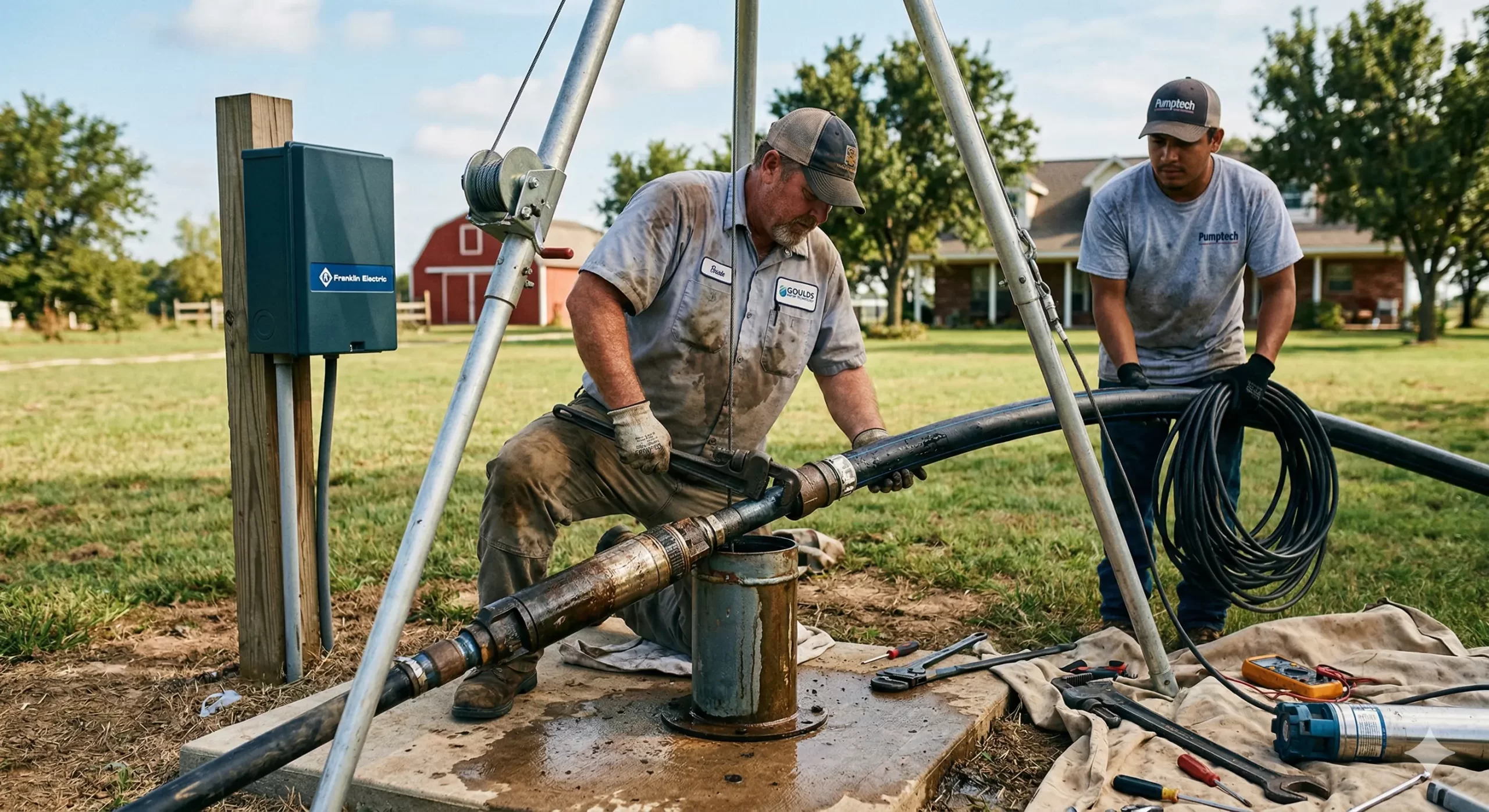
Once a downhole failure is confirmed, the pump retrieval process begins. This is a labor-intensive and hazardous procedure that requires specialized equipment. A heavy-duty hydraulic pump hoist or derrick is positioned over the wellhead. After shutting off and locking out the 240V breaker, the well cap is removed. A pitless adapter key, a long T-handle tool, is lowered down the casing to engage and disengage the pump’s discharge pipe from the well’s side wall. The technician then attaches specialized pipe clamps below the top pipe coupling and begins hoisting the entire assembly—pump, motor, drop pipe, and power cable—out of the well. This is often a two-person job, with one person operating the hoist and the other guiding the pipe to prevent damage to the well casing or wiring.
Safety Protocol
Working with a deep-set submersible pump involves significant risks. The system operates on lethal 240V electricity, which must be de-energized and verified with a meter. The pump assembly can weigh 200-500 lbs or more, creating a dangerous suspended load that mandates the use of a certified pulling rig. Attempting to lift this by hand is a primary cause of severe back injury and equipment damage. Furthermore, the drop pipe is under tension and can behave unpredictably. Professionals are trained in lockout/tagout procedures, proper lifting techniques, and managing the unique hazards of the well site to ensure a safe and successful operation.
With the pump on the surface, a physical diagnosis is performed. The technician will attempt to spin the pump intake shaft by hand. If the shaft is seized, they will separate the hydraulic pump end from the motor. By testing each component individually, they can pinpoint the failure. If the pump end is bound with sand, a disassembly and flush may be possible. If the motor shaft is locked or the previous megohmmeter test failed, the motor is non-repairable and requires replacement. The technician will then install a new, correctly sized pump/motor unit, create a permanent, watertight connection using a heat-shrink splice kit on the power cable, and carefully lower the entire assembly back into the well, ensuring torque arrestors are properly placed to prevent startup torque from damaging the wiring or pipe.
Repair Cost & Time Assessment
The cost to resolve a 3-flash error code varies significantly based on the root cause. A preliminary diagnostic service call, where a technician comes to your site, confirms the code, and performs electrical tests with a megohmmeter from the surface, typically costs between $175 and $450. This fee covers the technician’s expert time, travel, and the use of specialized diagnostic equipment to determine if the pump needs to be pulled.
If the diagnosis confirms a downhole failure, the cost escalates substantially. A full pump replacement is a common outcome. The total invoice can range from $2,500 to $5,500+ for a typical residential system. This price reflects several components: Labor (2 technicians for 3-6 hours at $125-$200/hr per technician), the use of a pump pulling rig (often a separate line item of $300-$600), the cost of the new Franklin pump and motor unit ($1,000 – $3,000 depending on horsepower and model), and ancillary materials like a new heat-shrink splice kit, new torque arrestors, and potentially sections of drop pipe or wire if they were damaged. The customer is paying for a complex, labor-intensive repair involving heavy machinery, specialized electrical skills, and premium-grade, durable equipment designed for years of underwater service.
Fast Local Service & Diagnostics
Calls are routed to a licensed local well professional.