
Diagnosis: If your well pump pressure switch clicks but fails to start the pump, the internal electrical contacts are likely burnt, pitted, or coated in carbon. This condition, caused by electrical arcing from frequent cycling or voltage fluctuations, prevents power from reaching the pump motor. The definitive repair is to replace the pressure switch and diagnose the underlying cause of the failure.
In this Guide:
What Causes the Square D Щелкает, но не качает Issue?
The audible ‘click’ from a Square D Pumptrol switch signifies a successful mechanical actuation; the diaphragm has responded to a drop in system pressure and moved the lever to close the electrical contacts. However, when the pump fails to start, the issue is almost always electrical, not mechanical. The root cause is the degradation of the switch’s contact surfaces due to electrical arcing. Every time the switch opens or closes under the high inductive load of the pump motor, a small, high-temperature plasma arc is drawn between the contact points. This arc vaporizes a microscopic amount of the contact material, typically a silver-cadmium oxide alloy chosen for its conductivity and resistance to arc welding. Over thousands of cycles, this process creates pits and deposits a layer of carbon and metallic oxides—a highly resistive, insulating film—on the contact surfaces. Consequently, even when the contacts are physically touching, their electrical resistance is too high to permit the necessary current (often 10-25 amps at 240V) to flow to the motor.
This failure is accelerated dramatically by ‘short-cycling,’ a condition where the pump turns on and off too frequently. The primary cause of short-cycling is a failed or improperly charged bladder-style pressure tank. A waterlogged tank, lacking its compressed air cushion, cannot store pressurized water, causing the pump to activate for even the smallest water usage. This drastically increases the number of arcing events at the pressure switch per day, leading to premature contact failure within months instead of years. Furthermore, voltage instability, such as sags during startup (brownouts) or utility-side surges, can prolong the arcing duration, intensifying the heat and damage with each cycle. The physics are unforgiving: the energy of the arc (I²R heating) is directly responsible for the material erosion and carbonization that ultimately renders the switch inoperative.
A failing pressure switch has severe downstream consequences for the submersible pump motor. The intermittent, high-resistance connection can cause ‘contact chatter,’ where the switch rapidly makes and breaks connection. This subjects the motor windings to repeated, massive inrush current spikes, leading to thermal stress that degrades the winding’s enamel insulation. This breakdown in insulation can lead to a short circuit and catastrophic motor failure. Simultaneously, the violent torque changes from these stuttering starts impart significant mechanical shock to the pump’s bearings and impeller stack. Over time, this can lead to accelerated bearing wear, shaft misalignment, and eventual seizure. The internal motor seals, designed for smooth operation, can also be compromised by the vibrations and thermal cycling, leading to water intrusion and a grounded motor.
DIY Troubleshooting Steps
- SAFETY FIRST: De-energize the Circuit. Before any inspection, locate the double-pole circuit breaker labeled ‘Well Pump’ or ‘Sub Pump’ in your main electrical panel and switch it to the full OFF position. Verify with a non-contact voltage tester or multimeter that all power is off at the pressure switch. This is a 240V circuit and is extremely dangerous.
- Visually Inspect the Contacts. Carefully remove the plastic or metal cover from the pressure switch. Examine the four contact points where the wires connect. Look for obvious signs of black carbon buildup, severe pitting, or evidence of melting. If the contacts are dark grey or black instead of a dull silver, they have failed due to arcing.
- Verify Voltage In and Out (Requires Power On). USE EXTREME CAUTION. With the breaker back on, use a multimeter set to AC Volts (at least 250V range) to test the incoming line-side terminals; you should read ~240V. When the pressure is low and the switch has ‘clicked’ on, test the outgoing load-side terminals. If you still read ~240V on the line side but 0V (or a fluctuating, low voltage) on the load side, the contacts are not making a proper electrical connection and the switch has failed.
- Check the Amperage Draw. With a clamp-on ammeter around one of the ‘hot’ wires going from the switch to the pump, have someone open a faucet to call for water. When the switch clicks, observe the meter. A healthy pump will immediately draw its rated run current. If the meter shows 0 amps or a brief, erratic flicker, it confirms no significant current is passing through the faulty contacts.
- Inspect for Thermal Overload Reset. If your system has a separate pump control box (common for 3-wire pumps), check it for a thermal overload reset button. A faulty switch causing chattering can sometimes trip this overload protector. If it has tripped, you can try resetting it once, but the root cause is likely the pressure switch.
- Evaluate the Pressure Tank Air Charge. Turn off the pump breaker and drain all water pressure from the system by opening a nearby faucet. Use a standard tire pressure gauge on the Schrader valve (usually on top of the tank). The pre-charge pressure should be 2 PSI below the cut-in pressure of your switch (e.g., 38 PSI for a 40/60 switch). If it’s very low or you get water from the valve, the tank’s bladder has failed, causing the short-cycling that destroyed your switch.
When to Call a Professional Well Service
Upon arrival, a professional technician’s first action is a systematic diagnosis to confirm the failure and identify the underlying cause, ensuring the repair is permanent. The initial steps mirror the advanced DIY checks: confirming power, verifying voltage drop across the switch contacts under load, and checking the pressure tank’s pre-charge. However, a professional goes further by using specialized diagnostic equipment. A key tool is a megohmmeter, often called a ‘Megger’. After isolating the pump motor wiring, the technician will use the megohmmeter to apply a high voltage (typically 500V or 1000V) to test the insulation resistance between the motor windings and ground. A low reading indicates that the stress from the failing switch has compromised the motor’s insulation, a critical finding that informs whether just replacing the switch is sufficient or if the pump itself is near failure and requires pulling.
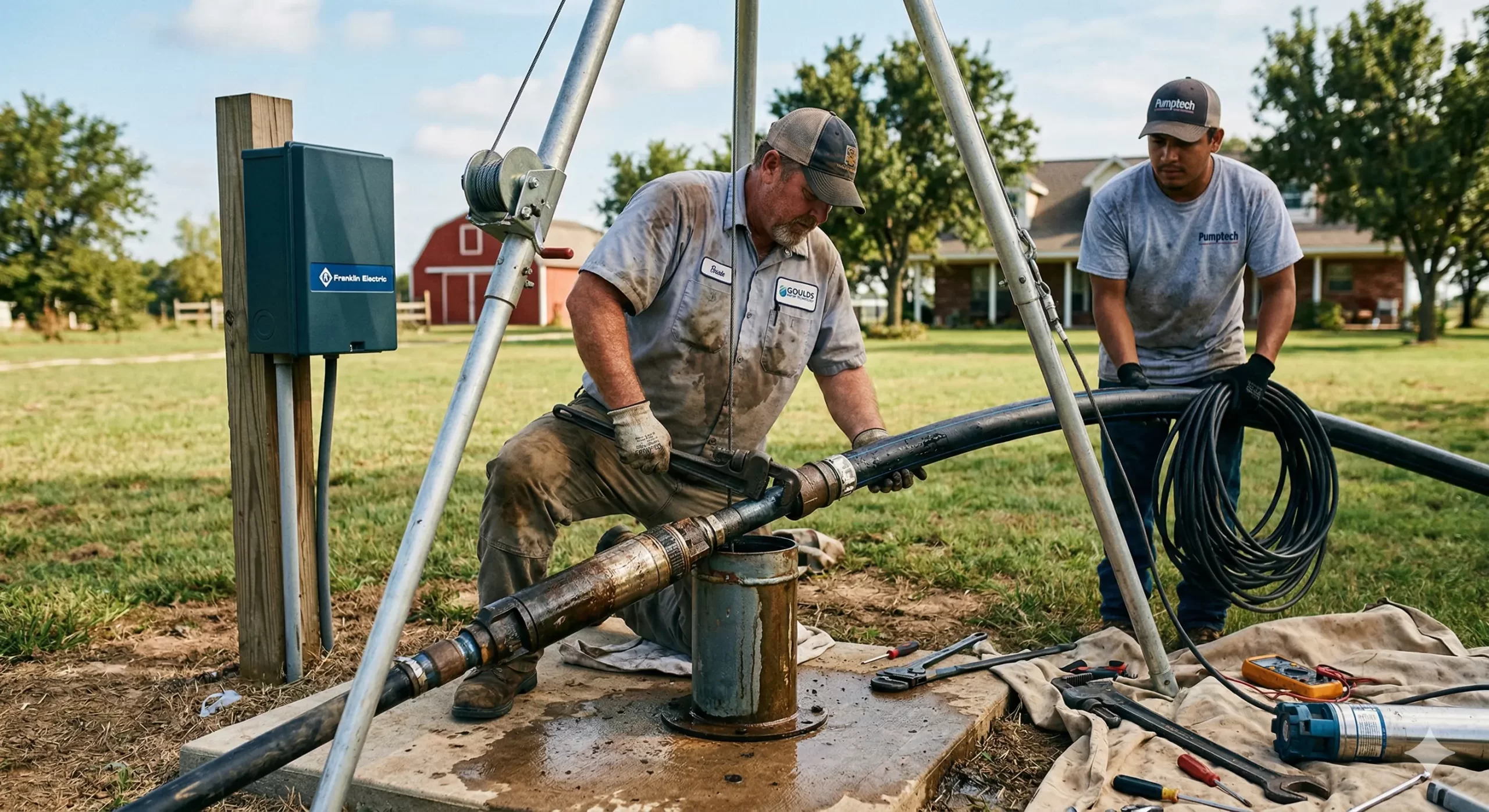
If the motor checks out, the technician proceeds with replacing the pressure switch, nipple, and pressure gauge. This is followed by a comprehensive system calibration. This involves accurately setting the pressure tank’s air pre-charge and then running the pump through several cycles to verify the new switch’s cut-in and cut-out pressures are correct and consistent. The technician will also measure the pump’s running amperage and compare it to the manufacturer’s specifications to ensure the motor is not overworking due to other system issues. If the megohmmeter test indicated a problem with the pump or drop cable, a far more involved repair is necessary. This requires specialized heavy equipment like a dedicated Pump Hoist or pulling rig to safely lift the pump, motor, drop pipe, and wiring, which can collectively weigh over 500 lbs, from a well that may be hundreds of feet deep. The technician will also use a Pitless Adapter Key, a long T-handle tool, to disengage the pump assembly from its connection point deep inside the well casing.
Safety Protocol
Working on a 240V well pump system is a high-risk activity that demands strict adherence to safety protocols. A professional will always implement a full Lockout/Tagout (LOTO) procedure at the main breaker, physically locking the breaker in the off position and attaching a tag to prevent accidental re-energization. When pulling a submersible pump, the area is secured, and the pump hoist is inspected before the lift. The immense weight of the pump and water-filled pipe presents a serious crush hazard, making a professional pulling rig non-negotiable for deep-set pumps. All electrical connections, especially a new downhole heat-shrink splice, are performed with meticulous care to create a permanent, watertight seal essential for years of submerged service.
Repair Cost & Time Assessment
The cost for a professional to diagnose and replace a failed pressure switch typically ranges from $275 to $500 in the United States. This price includes a standard service call fee ($100-$175), one to two hours of skilled labor ($100-$150 per hour), and the cost of a high-quality replacement part like a Square D Pumptrol switch and a new brass nipple and pressure gauge ($50-$75). This service resolves the immediate problem of the clicking switch and ensures the system is properly calibrated.
However, this cost assumes the pressure switch is the only failed component. If the diagnosis reveals the root cause is a failed pressure tank (a very common scenario), the total cost will increase significantly. Replacing a standard residential pressure tank can add $600 to $1,500+ to the final invoice, depending on the tank’s size, brand, and the complexity of the plumbing. If the diagnostic tests (like a megohmmeter reading) indicate a failing pump or compromised wiring that requires pulling the pump from the well, the cost escalates substantially due to the need for a pump hoist and a second technician. A pump-pulling job starts at approximately $800-$1,200 for labor and equipment setup alone, with the final cost being much higher depending on the price of a new pump, wire, and other necessary components.
Fast Local Service & Diagnostics
Calls are routed to a licensed local well professional.