
Diagnosis: A leaking Square D Pumptrol FSG2 switch indicates a ruptured internal diaphragm, a critical failure allowing water to contact 240V terminals. This requires immediate system de-energization and replacement of the switch to prevent electrical shock, fire, and catastrophic pump damage. The root cause is often a waterlogged pressure tank causing rapid cycling.
In this Guide:
What Causes the Square D Leaking from grey box Issue?
The operational principle of a Pumptrol FSG2 switch relies on a nitrile rubber diaphragm acting as a physical barrier between the pressurized water system and the mechanical snap-action electrical contacts. This diaphragm is engineered to flex under pressure, actuating a lever that opens or closes the 240V circuit to the pump motor. However, this component is subject to immense cyclical fatigue. Over its service life, it endures hundreds of thousands of pressure cycles, leading to work-hardening and embrittlement of the elastomer. Additionally, water chemistry, particularly high levels of chlorine or iron bacteria, can chemically degrade the material, creating microscopic fissures. Under system pressure (typically 40-60 PSI), one of these fissures will catastrophically propagate, resulting in a complete rupture. Water is then forcefully injected directly into the switch housing, a scenario the unit is not designed to contain.
Once the diaphragm is breached, a highly hazardous electromechanical failure cascade begins. Water floods the NEMA 1 enclosure, bridging the high-potential (240V) terminals. This creates a low-resistance path for current, often to the grounded metal components of the switch body, conduit, or plumbing system. The result is intense electrical arcing, which can generate temperatures exceeding several thousand degrees Fahrenheit, posing an immediate fire risk. This arcing can weld the contacts in the closed position, forcing the pump to run continuously until it either burns out its motor windings or a circuit breaker trips. Conversely, the arc can destroy the contact surfaces, preventing the pump from ever starting. The presence of 240V potential in a wet environment constitutes a lethal shock hazard to anyone touching the plumbing system or the pump equipment.
A ruptured switch diaphragm is frequently a symptom of a larger, more destructive system fault: rapid cycling caused by a failed pressure tank bladder or incorrect air pre-charge. When the tank loses its air cushion, every call for water causes an immediate pressure drop, starting the pump. Since there’s no air to compress, the pressure rises almost instantly, shutting the pump off. These cycles can occur every few seconds. Each startup subjects the pump motor to a massive inrush current (5-7 times the running amperage) and immense mechanical torque. This severe duty cycle rapidly destroys the motor’s thrust bearings, overheats and degrades the insulation on the motor windings, and causes premature failure of the pump’s internal mechanical seals. The excessive cycling also accelerates the fatigue failure of the pressure switch diaphragm, making its rupture an early, and critical, indicator of impending total pump system failure.
DIY Troubleshooting Steps
- IMMEDIATE SYSTEM DE-ENERGIZATION: Locate the dedicated double-pole circuit breaker for the well pump in your main electrical panel and switch it to the OFF position. A 240V circuit requires both poles to be disconnected to be truly safe. Verify the power is off with a non-contact voltage tester if you have one. Do not touch any part of the pump system until this is complete.
- VISUAL CONFIRMATION OF LEAK: From a safe distance, visually inspect the grey Square D pressure switch box. Confirm if water is dripping, seeping, or spraying from the cover’s seams or the conduit connection. Note the severity of the leak. Do not attempt to remove the cover under any circumstances.
- ASSESS THE PRESSURE TANK: Carefully tap the side of your pressure tank with your knuckles, starting from the top and moving down. A properly functioning tank will sound hollow and resonant at the top (where the compressed air pre-charge is) and dull or solid at the bottom (where the water is). A tank that sounds solid all the way to the top is waterlogged, indicating a failed internal bladder and confirming the root cause of rapid cycling.
- MONITOR PUMP CYCLE TIME (HISTORICAL): Before the failure, recall the pump’s behavior. A healthy pump system connected to a properly charged tank should run for a minimum of 60-90 seconds per cycle. If you observed the pump kicking on and off every 5-20 seconds, this is severe rapid cycling and is the primary reason the switch diaphragm failed.
- INSPECT WIRING FOR THERMAL DAMAGE: With the power confirmed OFF at the breaker, visually inspect the insulated wires entering and exiting the pressure switch’s conduit fitting. Look for any signs of melted insulation, discoloration (browning or blackening), or a distinct electrical burning odor. This evidence points to severe arcing having already occurred inside the switch.
- CHECK THE PRESSURE GAUGE: Observe the pressure gauge typically installed on the tee fitting next to the switch. Note the pressure reading. If it is at zero, the system has depressurized through the leak. If it is holding pressure, it provides data for the responding technician but does not diminish the hazard.
When to Call a Professional Well Service
Upon arrival, a professional technician’s first action is to confirm system de-energization using a calibrated multimeter at the pressure switch terminals, adhering to strict lockout/tagout (LOTO) safety protocols. After verifying zero voltage, they will diagnose the failure’s root cause, not just its symptom. This involves connecting a pressure gauge to the schrader valve atop the pressure tank to measure the air pre-charge, which should be 2 PSI below the pump’s cut-in pressure (e.g., 38 PSI for a 40/60 switch). A reading of zero or the presence of water confirms a failed tank bladder. They will then remove the ruptured switch and inspect the nipple it’s threaded onto for sediment or blockage, which can also contribute to switch malfunction.
With the primary failure diagnosed, the technician proceeds to advanced electrical testing to assess the health of the submersible pump motor itself, as it has been subjected to damaging rapid cycles. The essential tool for this is a Megohmmeter, or ‘Megger’. This instrument applies a high DC voltage (typically 500V or 1000V) between the motor’s power leads and ground. The resulting insulation resistance reading is critical; a value below 2-5 megaohms indicates compromised winding insulation, meaning the motor is on the verge of a fatal short-to-ground failure. Replacing only the switch in this scenario is malpractice, as the pump motor will fail shortly thereafter. The technician will also use a clamp-on ammeter during a brief, controlled test run (with a new switch installed) to measure the pump’s running amperage and compare it to the motor’s nameplate Full Load Amps (FLA) rating.
Safety Protocol and Major Repair Workflow
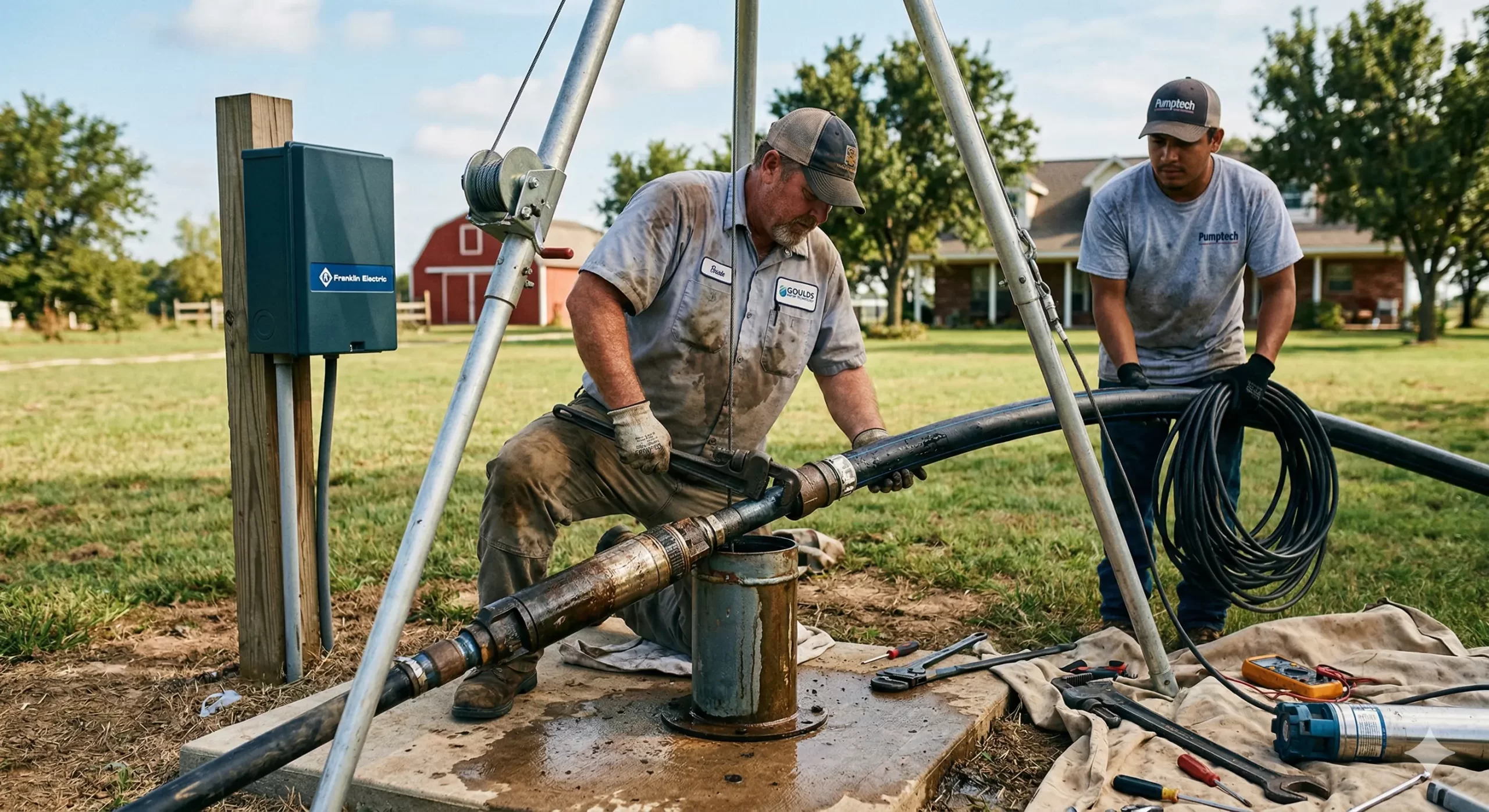
If the megohmmeter test indicates a failing motor, a full pump replacement is required. This is a hazardous operation demanding specialized equipment. A submersible pump and its attached drop pipe filled with water can weigh 300-800 lbs. A dedicated pump hoist or pulling rig is mandatory for safe extraction from the well. The technician will use a large pipe wrench or a specialized pitless adapter key to unlock the pitless adapter located below the frost line inside the well casing. Attempting to pull a pump by hand is exceedingly dangerous and risks dropping the entire assembly—pump, pipe, and wire—into the well, a catastrophic and often unrecoverable event. The entire process is performed under strict electrical safety protocols, ensuring the 240V circuit remains locked out until the new pump is installed, splices are completed with waterproof heat-shrink splice kits, and the system is ready for its final pressure test.
Repair Cost & Time Assessment
For a simple, best-case scenario where only the Square D FSG2 pressure switch has failed and the pressure tank and pump motor test healthy, the repair is considered a standard service call. The cost for a licensed technician to diagnose the issue, replace the switch, and properly calibrate the cut-in/cut-out pressures will typically range from $250 to $500. This price includes the service call fee, 1-2 hours of skilled labor, and the cost of a high-quality replacement switch and any minor fittings required.
However, if the diagnostic checks reveal the more common underlying problem—a failed pressure tank and a damaged pump motor caused by rapid cycling—the scope and cost of the repair increase dramatically. This becomes a major system overhaul. The cost for replacing a standard residential submersible pump, a new pressure tank, and the associated pressure switch can range from $2,800 to $6,000+. This comprehensive figure accounts for the new pump and tank, 4-8 hours of intensive labor for two technicians, the use of a specialized pump pulling rig or crane, new waterproof wire splices, and a full system recommissioning and pressure test. The final price is influenced by the well’s depth, the horsepower of the pump, and site accessibility.
Fast Local Service & Diagnostics
Calls are routed to a licensed local well professional.