
Fix an A.O. Smith 6-blink error code on your power vent water heater. Diagnose a failed blower motor or faulty control board with our expert guide.
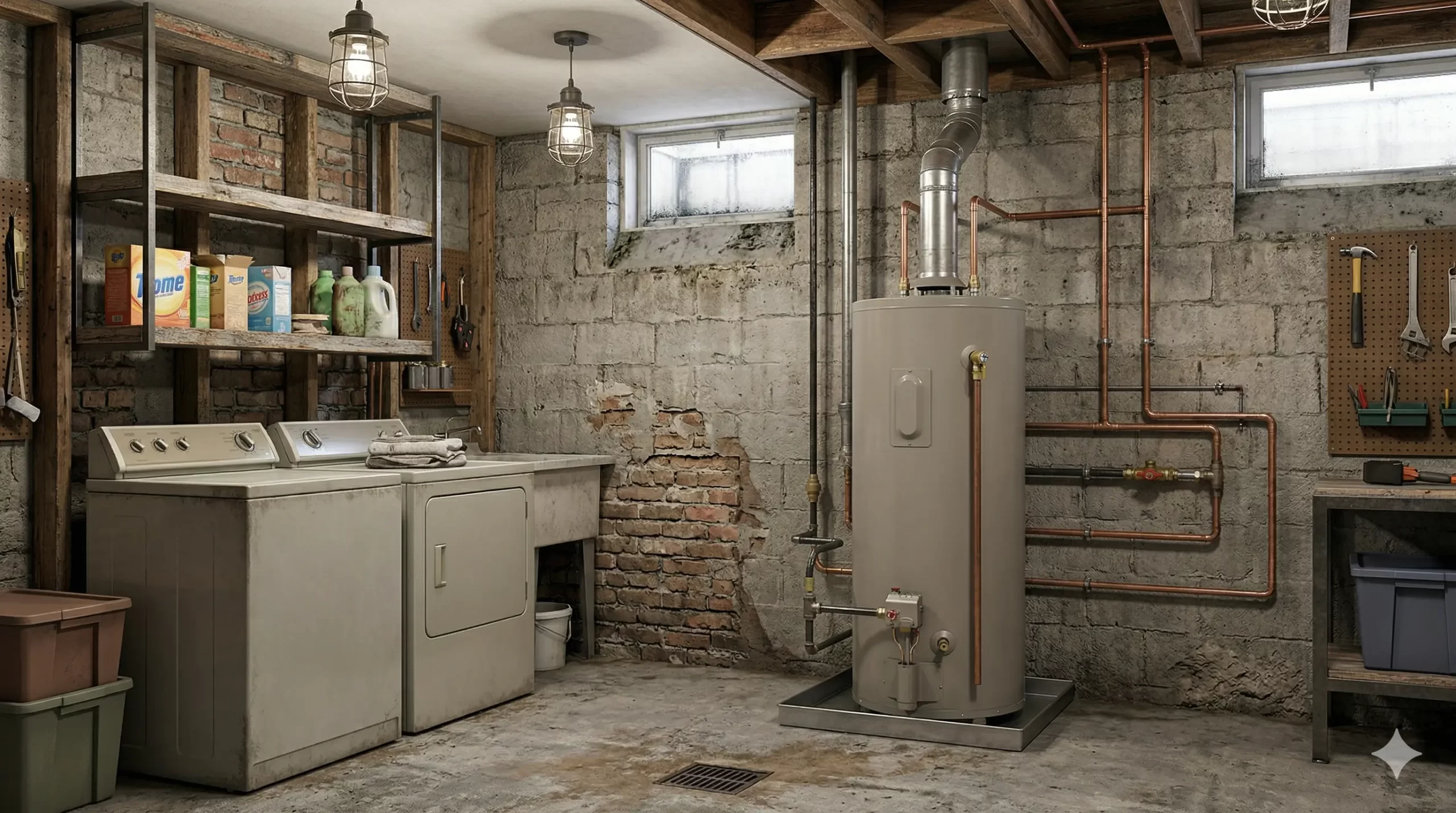
EXTREME HAZARD WARNING: A 6-Blink error signifies a failure of the mechanical draft system. Attempting to bypass the blower or its safety switches will cause the unit to fire without proper venting, potentially filling the living space with lethal, odorless carbon monoxide (CO). All diagnostic steps involving live 120VAC testing at the blower harness must be performed with lineman’s gloves and properly insulated tools, as accidental contact can cause severe electrical shock or electrocution. This is a high-risk repair; misdiagnosis can have fatal consequences.
️ Repair Profile
Required Diagnostics Tools
Digital Multimeter (with insulated probes), 1/4″ & 5/16″ Nut Drivers, Insulated Phillips & Flathead Screwdrivers, Non-Contact Voltage Tester, Safety Glasses, Insulated Lineman’s Gloves
Financial Breakdown: Parts vs. Licensed Labor
The cost allocation is heavily weighted towards parts because the OEM power vent blower assembly is a specialized, factory-calibrated component with a significant manufacturing cost. Labor costs reflect the advanced diagnostic time required to accurately differentiate between a failed motor and a faulty control board, a process that prevents unnecessary parts replacement.
Deep Technical Diagnosis: The Physics of the Failure
The A.O. Smith 6-Blink fault code is a specific diagnostic indicator pointing to a critical failure within the power vent combustion air system. The integrated furnace control (IFC) board has initiated a call for heat and has dispatched 120VAC to the draft inducer blower motor, but the pressure switch has failed to close its circuit within the predetermined proofing period. This failure to prove draft immediately halts the ignition sequence to prevent flue gas spillage. The control logic interprets this as a seized or non-operational blower motor, or a failure in the power delivery circuit itself.
The root of the issue lies in the electromechanical sequence. Upon a call for heat from the aquastat, a relay or solid-state triac on the control board is energized to send line voltage to the blower. The blower’s function is to create a specific negative static pressure within the combustion chamber and vent piping, ensuring that the byproducts of combustion are safely expelled. This negative pressure actuates a diaphragm in the air pressure switch, closing a low-voltage circuit and sending a confirmation signal (typically 24V) back to the control board. Only after this signal is received does the board proceed to the ignition trial. The 6-blink code is logged when the board sends 120V out but never receives the confirmation signal back.
This fault is not ambiguous; it isolates the problem to the blower’s operational status. The core diagnostic challenge is determining if the failure is with the load (the motor) or the source (the control board). Advanced diagnostics might involve checking the motor windings for continuity with an ohmmeter or testing the run capacitor (if equipped) with a capacitance meter. A seized motor can often be confirmed by a high amp draw using a clamp-on ammeter just before the internal overload trips. A complete lack of voltage at the Molex connector, despite a relay click, definitively points to a compromised trace or failed triac on the printed circuit board.
- Seized Motor Bearings: The most common cause, resulting from prolonged heat exposure or corrosion from acidic condensate, preventing the armature from rotating.
- Open Motor Winding: A break in the copper windings inside the motor creates an open circuit, preventing it from energizing despite receiving voltage.
- Failed Control Board Relay/Triac: The component on the control board responsible for sending 120V to the blower has failed, resulting in no power output to the motor.
- Compromised Wiring Harness: A loose, burnt, or corroded pin within the Molex connector between the control board and blower can prevent power transmission.
- Physical Obstruction: Debris, animal nests, or ice buildup inside the squirrel cage or vent termination can physically prevent the fan from spinning, causing a locked-rotor condition.
- Low Line Voltage: Insufficient incoming voltage (below ~108VAC) may not provide enough torque for the motor to overcome inertia and start spinning.
US Building Codes & Plumbing Regulations
The 6-Blink error code directly implicates violations of NFPA 54, the National Fuel Gas Code, particularly sections governing the safe operation of Category I and III vented appliances. A non-functioning power vent blower means the mechanical draft system, which is required for the appliance’s design, is inoperative. This contravenes the code’s fundamental requirement for the complete and safe removal of combustion products. Any attempt to bypass the pressure switch or force the unit to fire with a failed blower constitutes a severe code violation, as it guarantees the spillage of carbon monoxide and other hazardous flue gases into the conditioned space, creating an imminently dangerous situation.
Furthermore, under the Uniform Plumbing Code (UPC), all gas-fired water heaters must be installed and maintained according to their manufacturer’s instructions and listing agency requirements (e.g., ANSI Z21.10.1). The 6-Blink error indicates a failure of a critical, factory-integrated safety component. Replacing the blower with a non-OEM part or improperly repairing the control board would void the appliance’s safety listing. The UPC mandates that all repairs restore the appliance to its original, approved operating condition. Failure to use specified parts and procedures not only violates this principle but also transfers liability for any subsequent incident to the installer or homeowner.
Professional Master Plumber Repair Sequence
- Initiate Zero Energy State: Locate the dedicated circuit breaker for the water heater and switch it to the OFF position. Close the manual gas shutoff valve located on the sediment trap feeding the unit. Use a non-contact voltage tester at the heater’s junction box to confirm all electrical power is disconnected.
- Access Diagnostic Points: Remove the front access panel(s) to gain clear, unobstructed access to both the power vent blower assembly (typically top-mounted) and the main electronic control board.
- Perform Manual Rotation Test: Carefully reach into the blower’s squirrel cage fan. Attempt to spin it manually. It should rotate freely for several revolutions. If it feels stiff, gritty, or completely seized, the motor bearings have failed, and the assembly requires replacement.
- Prepare for Live Voltage Diagnostics: Ensure the area is dry and you are not in contact with any grounded surfaces. Put on insulated gloves and safety glasses. Set your digital multimeter to the VAC (AC Voltage) setting, selecting a range that can measure up to 240V.
- Simulate a Call for Heat: Re-engage the circuit breaker to restore power to the water heater. Turn the unit’s thermostat dial to its highest temperature setting. This will force the control board to initiate a heating cycle.
- Execute Live Voltage Test at Blower Harness: Listen for an audible ‘click’ from the control board, indicating the blower relay has been activated. Within 5-10 seconds of this click, carefully insert your multimeter’s insulated probes into the back of the wiring harness connector that plugs directly into the blower motor.
- Analyze Voltage Reading for Diagnosis: Observe the multimeter display. A) If you read 115-125VAC, the control board is functioning correctly, but the motor is not responding; the blower assembly has failed and must be replaced. B) If you read 0V or negligible voltage, the blower motor is not receiving power; the control board has a failed relay or internal fault and must be replaced.
- Execute Component Replacement: Turn off the circuit breaker again to re-establish a zero-energy state. If replacing the blower, disconnect the wiring harness, remove the mounting screws, and detach it from the PVC vent piping. Install the new OEM blower assembly. If replacing the control board, meticulously label and disconnect every wire harness before removing the board and installing the new one.
- System Recommissioning: Reconnect all venting and wiring securely. Open the gas shutoff valve. Restore power at the circuit breaker. Initiate a call for heat and visually confirm the new blower spins up immediately, followed by the igniter glow and clean burner ignition.
- Final Safety Verification: Allow the unit to run through a full heating cycle. Check the PVC vent pipe connections for any signs of flue gas leakage. As a final professional step, use a manometer to confirm the correct negative pressure is being achieved within the system, ensuring compliance with manufacturer specifications.
Expert Verdict: Is It Worth Repairing?
The decision to repair an A.O. Smith power vent heater displaying the 6-Blink error code hinges almost entirely on the unit’s age and warranty status. For a unit that is 1-5 years old, a repair is the most logical financial path. The cost of an OEM blower assembly or control board, plus professional labor, represents a fraction of the cost of a new installation. This repair restores the unit to its original operating condition and maximizes the return on the initial investment.
However, if the water heater is over 8 years old and out of its parts warranty, the financial calculus shifts dramatically. A repair can easily exceed $700. Investing this significant sum into an aging appliance with a tank nearing the end of its typical 10-12 year lifespan presents a poor return on investment. Other critical components, such as the gas control valve and anode rod, are also likely degraded. In this scenario, replacing the entire unit with a new, higher-efficiency model provides the benefit of a full warranty, lower operating costs, and peace of mind against imminent failure of other aging parts. The repair cost becomes a down payment on a more reliable, long-term solution.
Frequently Asked Questions (FAQ)
Q: Can I just reset the A.O. Smith heater to clear the 6-blink code?
A: Resetting the power may temporarily clear the code, but it will return on the next call for heat. The 6-blink error indicates a hard mechanical or electrical failure in the power vent system, not a transient fault. The underlying issue of the blower not starting must be professionally diagnosed and repaired.
Q: Is a noisy blower motor a warning sign for a future 6-blink failure?
A: Absolutely. A whining, grinding, or rattling sound from the power vent blower often signifies failing motor bearings. This mechanical degradation increases electrical load and friction, eventually leading to a seizure that triggers the 6-blink fault code. Proactive replacement is recommended if such noises are present.
Q: Why can’t I use a generic blower motor from a hardware store?
A: A.O. Smith power vent blowers are specifically engineered for the unit’s BTU input and vent design to achieve precise stoichiometric combustion. A generic motor will not have the correct CFM rating, RPM, or integrated safety proving mechanism, creating a severe carbon monoxide hazard and violating plumbing and gas codes.
Q: Does the 6-blink code mean my water heater is leaking gas?
A: No, the 6-blink code is not directly related to a gas leak. It’s an electromechanical fault within the venting system. The control logic prevents the main gas valve from opening if it cannot prove the vent blower is running, which is a critical safety feature to prevent flue gas spillage into your home.