
Diagnose a T&P valve leaking due to thermal expansion. Learn why a closed system causes this and how to install a thermal expansion tank for a permanent fix.
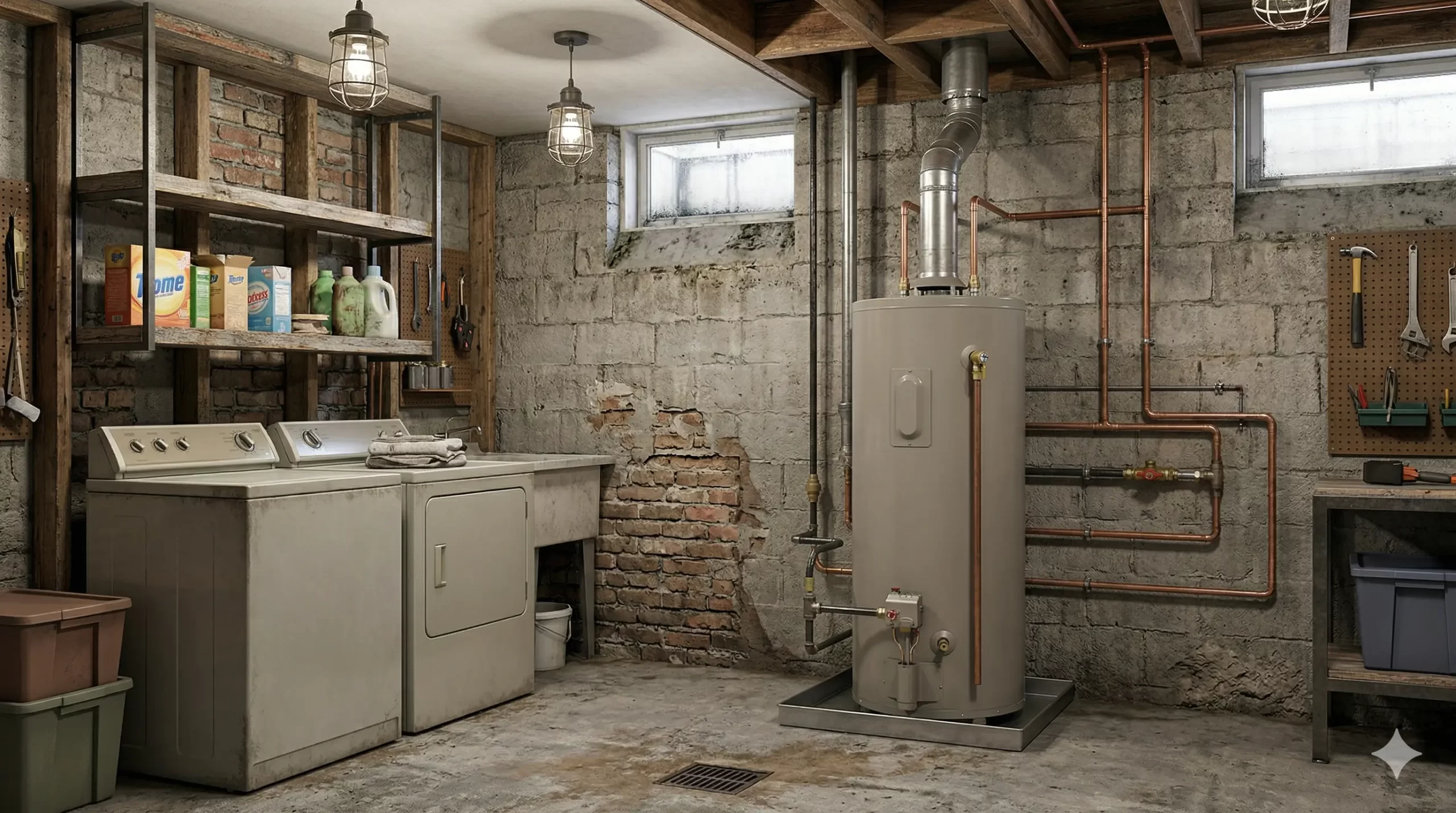
A discharging Temperature and Pressure (T&P) relief valve is an active safety device preventing a catastrophic failure. Under no circumstances should this valve or its discharge tube be capped, plugged, or restricted. The pressure buildup from thermal expansion in a sealed vessel can exceed the tank’s tensile strength, leading to a Boiling Liquid Expanding Vapor Explosion (BLEVE). This event releases immense, uncontrolled energy equivalent to a significant explosive force. Immediate professional diagnosis is required to rectify the underlying system pressure anomaly.
️ Repair Profile
Required Diagnostics Tools
Pipe Wrenches (2), Tubing Cutter, Propane Torch & Solder (for copper), PEX Crimp Tool (for PEX), Thread Sealant Tape, Pressure Gauge with Hose Bibb Adapter, Channel Locks, Bucket, Rags
Financial Breakdown: Parts vs. Licensed Labor
The material cost for this repair is substantial due to the mandatory inclusion of a new thermal expansion tank and a new T&P valve, not just one or the other. Labor costs reflect the moderate complexity of cutting into a main water line and ensuring the entire system is properly repressurized and leak-free.
Deep Technical Diagnosis: The Physics of the Failure
The phenomenon of a T&P relief valve intermittently discharging is most often a direct manifestation of Pascal’s Principle within a closed-loop potable water system. When water is heated, its volume increases due to thermal expansion; as an incompressible fluid with a high bulk modulus of elasticity, this volumetric change must be accommodated. In an open system, this expanded volume harmlessly pushes back towards the municipal main. However, the installation of a backflow preventer, check valve, or pressure reducing valve (PRV) at the service entrance creates a closed system. Now, the hydrostatic pressure generated by the heating cycle has no means of egress. The pressure increase is not linear; it accelerates rapidly as the temperature climbs, creating a pressure spike that can easily exceed the T&P valve’s calibrated relief setting (typically 150 PSI). This is not a failure of the water heater’s thermostat or gas control valve; it is a predictable outcome based on fluid dynamics.
A thorough diagnosis involves using a manometer or a high-resolution pressure gauge with a lazy hand to record the peak pressure during a full heating cycle. Static pressure might read a nominal 60 PSI, but the dynamic pressure during thermal cycling can reach upwards of 160 PSI, initiating the discharge. The valve is, in fact, operating precisely as designed: to prevent the tank’s pressure from exceeding its certified test pressure, averting structural failure. The core issue is the system’s inability to absorb this transient pressure increase.
- Root Cause 1: A newly installed or replaced municipal water meter, which often contains an integral check valve, closing a previously open system.
- Root Cause 2: Installation of a pressure reducing valve (PRV) which, by design, does not permit backflow.
- Root Cause 3: A dedicated backflow prevention device (e.g., a double check valve assembly) installed for code compliance, isolating the property from the main.
- Root Cause 4: A malfunctioning or waterlogged existing thermal expansion tank that has lost its pre-charge air cushion, rendering it ineffective.
US Building Codes & Plumbing Regulations
Modern plumbing codes rigorously address the hazards of closed-loop potable water systems. Per the International Plumbing Code (IPC), specifically section 607.3, and the Uniform Plumbing Code (UPC), section 608.3, where a backflow prevention device, check valve, or other device creates a closed water system, a device for controlling pressure from thermal expansion must be installed. These codes explicitly mandate that an approved, listed, and sized thermal expansion tank be installed to absorb the increased water volume during heating cycles. The code is not suggestive; it is a requirement to prevent the very symptom of a weeping T&P valve and the dangerous over-pressurization it indicates.
Furthermore, the installation of the T&P valve itself is governed by strict standards. The discharge piping, as mandated by codes like UPC 608.5, must be of an approved material, run full-size from the valve outlet, be pitched downwards for gravity drainage, and terminate in an approved location—not more than 6 inches above the floor or waste receptor. The end of this pipe must not be threaded, preventing any possibility of a cap being installed. Compliance is not merely about functionality; it’s a critical safety protocol to ensure the relief valve can perform its life-saving function without impediment.
Professional Master Plumber Repair Sequence
- Safety First – De-energize the Appliance: Turn the gas control valve knob on the water heater to the ‘OFF’ position. Shut off the main gas valve supplying the appliance as a secondary precaution.
- Isolate and Depressurize: Close the cold water shut-off valve above the water heater. Open a hot water tap at a nearby sink to relieve system pressure. Allow the tank to cool to a safe temperature.
- Verify Static Pressure: Attach a water pressure gauge to an external hose bibb. Open the bibb and record the home’s static water pressure. If it exceeds 80 PSI, a pressure reducing valve (PRV) must be installed or replaced before proceeding. This is a separate, but critical, issue.
- Drain the Tank Partially: Connect a hose to the water heater’s drain valve and drain several gallons of water into a floor drain or bucket. This lowers the water level below the T&P valve port.
- Remove the Old T&P Valve: Unscrew the discharge tube from the existing T&P valve. Using a large pipe wrench, unscrew the T&P valve from the tank. Be prepared for some residual water spillage. Clean the threads on the tank fitting.
- Install New T&P Valve: Apply 3-4 wraps of PTFE thread sealant tape in a clockwise direction to the threads of the new T&P valve. Screw the new valve into the tank and tighten securely with the pipe wrench until it is oriented correctly for the discharge tube. Do not overtighten. Reattach the discharge tube.
- Install the Thermal Expansion Tank: Turn off the main water supply to the house. Locate a section of the cold water supply line just before the water heater. Cut out a section of pipe and install a new tee fitting (soldered, crimped, or pressed depending on pipe type). Install a short nipple and the new thermal expansion tank onto the tee, ensuring it is properly supported.
- Pressurize Expansion Tank: Using a tire pressure gauge and a bicycle pump, adjust the air pre-charge in the expansion tank (via the Schrader valve) to match the static house pressure you measured in Step 3. This MUST be done before restoring water pressure.
- Re-pressurize and Leak Check: Slowly open the main water supply valve, then the cold water inlet valve to the heater. Let the tank and expansion tank fill. Meticulously inspect the new T&P valve, the new tee, and all associated fittings for any leaks.
- Return to Service: Once the system is confirmed to be leak-free, follow the manufacturer’s procedure for relighting the pilot light and returning the gas control valve to its operational setting. Monitor the T&P valve during the first full heating cycle to confirm the issue is resolved.
Expert Verdict: Is It Worth Repairing?
In the context of a T&P valve leaking due to thermal expansion, a ‘Repair vs. Replace’ analysis is fundamentally different from one concerning component failure. This issue is not indicative of a failing water heater; it is a symptom of an improperly configured plumbing system. Replacing the entire water heater without addressing the root cause—the closed system—is a futile and expensive exercise. The new unit’s T&P valve would inevitably begin leaking as well, resetting the clock on the problem without solving it. The return on investment (ROI) for the repair, which includes installing a thermal expansion tank, is therefore exceptionally high. This repair corrects a systemic flaw, protects the new T&P valve, extends the lifespan of all plumbing fixtures and appliances by mitigating pressure spikes, and brings the system into compliance with modern safety codes. The cost of the repair is a necessary system upgrade, while premature replacement of the heater would be a complete financial loss.
Frequently Asked Questions (FAQ)
Q: Why did my T&P valve only start leaking recently after years of no issues?
A: This is commonly due to a change in your water supply system that you may not be aware of. Your municipal water provider may have replaced your meter with a new one that contains a check valve, or a pressure reducing valve in your home may have failed, effectively closing a previously ‘open’ plumbing system and creating the conditions for thermal expansion pressure spikes.
Q: Can I just install a higher-pressure T&P valve to stop the dripping?
A: Absolutely not. This is extremely dangerous. The T&P valve is rated specifically for the maximum pressure your tank can safely handle (typically 150 PSI). Installing a valve with a higher rating would allow system pressure to build to unsafe levels, potentially causing the tank to rupture catastrophically. The valve is doing its job; the system pressure is the problem that must be fixed.
Q: Is a thermal expansion tank the only solution for this problem?
A: While it is the most common and widely accepted solution per U.S. plumbing codes, there are other approved devices, such as specialized pressure relief valves designed for potable water expansion. However, for residential gas tank water heaters, the diaphragm-style thermal expansion tank offers the most reliable and durable performance for managing hydrostatic pressure increases.
Q: My T&P valve leaks constantly, not just when the heater is running. Is this still thermal expansion?
A: A slow, constant drip is less likely to be thermal expansion. This symptom often points to either a faulty T&P valve with a weak spring or debris lodged in the valve seat. It could also indicate that your home’s static water pressure is too high (above 80 PSI), requiring the installation or adjustment of a pressure reducing valve (PRV). Thermal expansion leaks are typically intermittent and coincide with heating cycles.