
Blue-green stains in sinks signal acidic well water corroding copper pipes. The pro solution involves installing a whole-house acid neutralizer filter system.
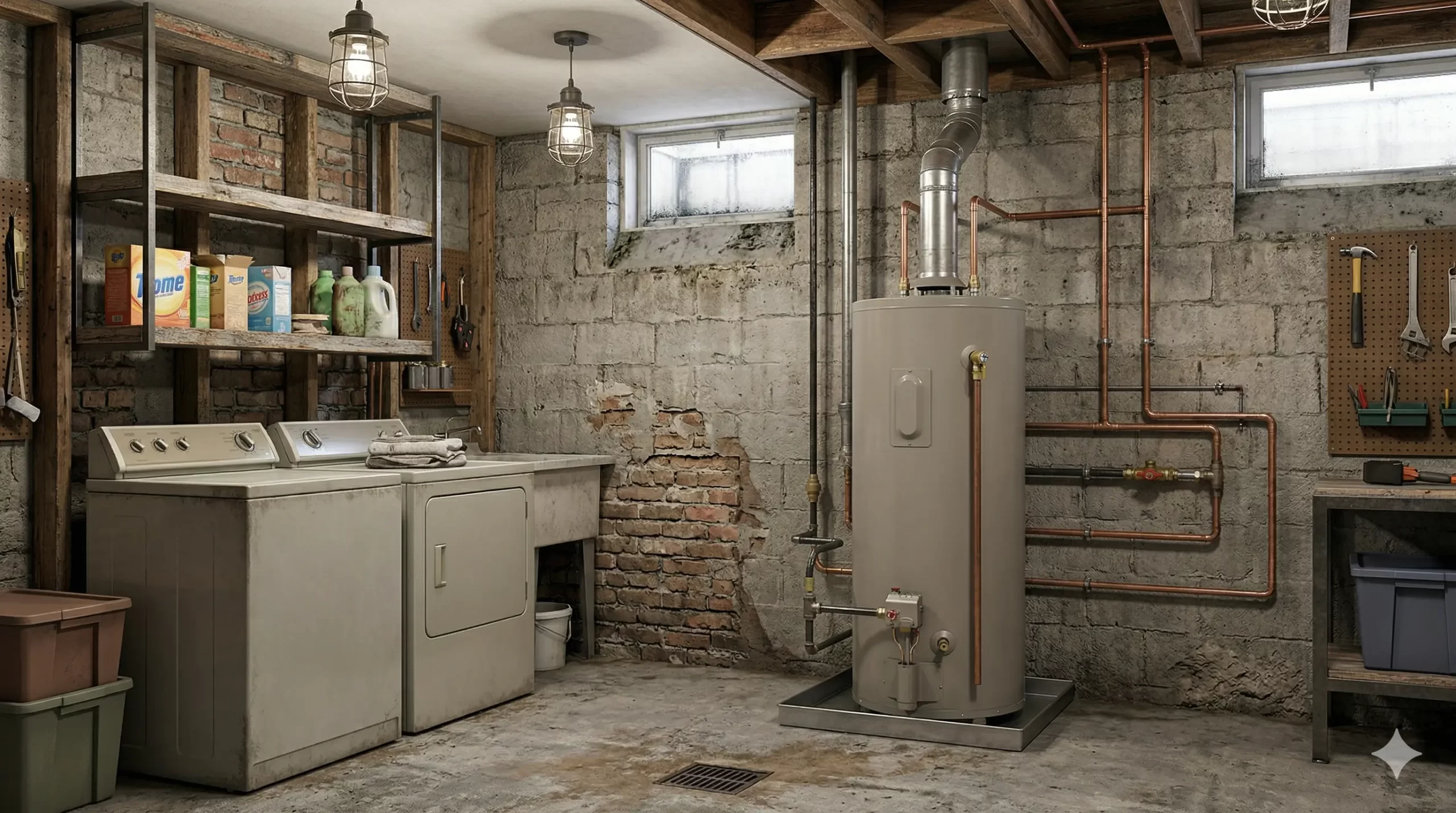
Exercise extreme caution. The presence of blue-green staining is a visual indicator of systemic copper pipe degradation. This acidic corrosion thins pipe walls over time, creating a significant risk of pinhole leaks or catastrophic bursts in concealed locations like walls or crawlspaces. Furthermore, if the plumbing system contains older solder joints (pre-1986), the low pH water can aggressively leach lead into your potable water supply, creating a serious health hazard that is not visible. This is not merely a cosmetic issue; it’s a warning about the structural integrity of your entire plumbing system.
️ Repair Profile
Required Diagnostics Tools
Calibrated pH Meter, Pipe Cutters (Copper/PEX), Soldering Torch Kit or PEX Crimping Tool, Pipe Wrenches, Channel Lock Pliers, Level, Safety Glasses, Work Gloves, Teflon Tape, Pipe Dope, Manometer
Financial Breakdown: Parts vs. Licensed Labor
The cost allocation is heavily weighted towards parts because the acid neutralizer filter system and its initial media charge represent a significant capital equipment investment. Labor, while highly skilled and critical for proper integration, constitutes a smaller portion of the total project expense.
Deep Technical Diagnosis: The Physics of the Failure
The manifestation of cyan-colored stains (copper sulfate) in fixtures is a direct result of electrochemical corrosion driven by low pH water, a condition endemic to many private well systems. Water with a pH below 7.0, and particularly below 6.5, becomes an aggressive solvent. This acidic water, rich in hydrogen ions (H+), acts as an electrolyte, creating a galvanic cell between the copper piping (Cu) and the brass fittings (a copper-zinc alloy) on the gas water heater. This generates a measurable millivolt potential, accelerating the dissolution of the more anodic metal, which in this case is the copper pipe itself.
The fundamental chemical reaction, governed by principles of stoichiometry, involves the oxidation of solid copper into soluble cupric ions (Cu2+). The thermal energy from the gas water heater’s burner assembly significantly increases the kinetic energy of this reaction, which is why the hot water lines often exhibit the most severe symptoms. The dissolved Cu2+ ions remain in solution until the water evaporates at a fixture, leaving behind the characteristic blue-green crystalline deposit. A thorough diagnostic includes not only pH testing but also verifying the gas supply pressure with a manometer to ensure the appliance is operating within its specified parameters, as improper combustion can lead to unrelated safety issues. The core issue, however, remains the water’s chemical aggression.
- Low Source Water pH: The primary driver is well water with a pH value below the neutral 7.0, creating an acidic environment.
- Absence of Water Treatment: The lack of a whole-house acid neutralizing system allows the corrosive water to directly contact the plumbing infrastructure.
- Galvanic Corrosion: The interface between dissimilar metals, such as the copper pipe and brass water heater nipples, creates an electrochemical cell that is supercharged by the acidic electrolyte.
- Thermal Acceleration: Elevated temperatures within the gas water heater act as a catalyst, dramatically increasing the rate of copper dissolution on the hot water side.
- Dissolved Gases: The presence of dissolved oxygen or carbon dioxide in the water can further exacerbate the corrosive action.
US Building Codes & Plumbing Regulations
According to the Uniform Plumbing Code (UPC), all piping materials must be resistant to corrosion and degradation for the intended service. While copper pipe is a standard approved material, UPC Section 604.1 states that the selection of materials must consider the specific conditions of service. When a water supply is proven to be aggressively acidic, the continued use of unprotected copper piping could be interpreted as a violation of this principle, as the material is actively dissolving and its structural integrity is being compromised over time. The installation of an acid neutralizing system is considered a corrective action to bring the water quality within a range suitable for the installed materials, thereby maintaining long-term code compliance for the entire plumbing system.
Furthermore, under NFPA 54, the National Fuel Gas Code, any modification to the plumbing system directly connected to a gas appliance requires diligent attention to safety protocols. When cutting into pipes to install a neutralizer system, the work must not impart any stress on the gas water heater’s connections. Post-installation, it is imperative to verify the integrity of the Temperature and Pressure (T&P) relief valve’s discharge pipe, ensuring it remains unobstructed and properly graded. While the code does not specify water chemistry, it stringently governs the safe installation and modification of any system attached to the fuel-burning appliance, ensuring that the corrective plumbing work does not inadvertently create a gas or pressure-related hazard.
Professional Master Plumber Repair Sequence
- Diagnostic Verification & System Shutdown: Confirm the acidic condition by testing both hot and cold water with a calibrated pH meter; expect a reading below 6.8. Shut off the main water supply to the house and turn the gas water heater’s control knob to the ‘OFF’ position. Shut off the gas supply valve to the appliance.
- System Depressurization: Open the highest and lowest faucets in the home to relieve system pressure and drain the lines. Connect a hose to the water heater’s drain valve and empty the tank completely to facilitate work on its connections.
- Select Location and Cut Main Line: Identify a suitable location for the acid neutralizer tank, typically on the main cold water line after the pressure tank but before any branches. Using a pipe cutter, make two clean, square cuts into the main line to accommodate the new filter head and bypass valve assembly.
- Install Neutralizer & Bypass Valve: Assemble and install the acid neutralizer’s control head and bypass valve. Plumb the inlet and outlet ports to the main line using appropriate methods (e.g., sweat soldering for copper, or PEX crimp fittings). Ensure the installation is level and secure.
- Inspect and Replace Water Heater Connections: Disconnect the hot and cold flex lines from the top of the water heater. Critically inspect the dielectric unions or heat trap nipples for advanced corrosion or blockages caused by mineral buildup. Replace them with new, high-quality dielectric unions, applying Teflon tape and pipe dope to the male threads.
- System Recharge and Leak Check: With the neutralizer in the bypass position, slowly reopen the main water supply valve, allowing the system to fill and purge air. Meticulously inspect every new joint and connection for leaks. Once leak-free, open the valves to direct water flow through the neutralizer tank.
- Flush and Commission System: Go through the house and open each faucet, one at a time, to purge the remaining air from the lines until a steady stream is achieved. Allow the water to run for 10-15 minutes to flush out any initial fines from the neutralizer media.
- Relight and Test Gas Appliance: Follow the manufacturer’s specific instructions to relight the pilot light and return the gas water heater to normal operation. Using an electronic leak detector or a soap solution, test the gas line fitting at the heater’s gas control valve to confirm there are no leaks.
- Final Water Quality Verification: After the system has been running for at least 30 minutes, take a new water sample from a kitchen faucet. Use the pH meter to confirm the water is now in the neutral range (typically 7.0 – 8.0), verifying the successful resolution of the acidic condition.
Expert Verdict: Is It Worth Repairing?
In the context of blue-green staining from acidic water, the ‘repair versus replace’ decision is not about the gas water heater, but about the plumbing system’s health. The ‘repair’ is the installation of a whole-house acid neutralizer. The alternative, doing nothing, inevitably leads to ‘replacing’ not just the water heater, but potentially entire sections of copper pipe after they fail from corrosion, as well as damaged fixtures. The Return on Investment (ROI) for installing an acid neutralizer is exceptionally high. This single investment protects the entire plumbing ecosystem: pipes, valves, faucets, and all water-using appliances (dishwasher, washing machine, and the gas water heater itself). The cost of the neutralizer system, while significant, is a fraction of the cost of a catastrophic leak, subsequent water damage restoration, and a full-house re-pipe. Therefore, treating the water at its source is the only financially prudent and technically sound solution.
Frequently Asked Questions (FAQ)
Q: Will simply replacing my gas water heater solve the blue-green stain problem?
A: No. The water heater is a victim of the corrosive water, not the cause. The blue-green stains are dissolved copper from your pipes. A new heater will also begin to corrode immediately, and the stains will persist until you treat the root cause: the acidic water.
Q: Are the blue-green stains and the water that causes them dangerous to my health?
A: While high levels of copper can cause gastrointestinal issues, a more significant health risk is the potential for acidic water to leach lead from older plumbing solder (used before 1986). If your home has older pipes, it is critical to have your water tested for both copper and lead content.
Q: How often will I need to add more material to the acid neutralizer tank?
A: The neutralizing media, typically calcite or a blend of calcite and corosex, is sacrificial; it dissolves as it raises the water’s pH. Depending on your water’s acidity level and your household’s water consumption, you will typically need to replenish the media every 1 to 3 years.
Q: Can I just install a small filter at the kitchen sink instead of a whole-house system?
A: A point-of-use filter is a temporary and incomplete solution. It does nothing to protect the vast majority of your plumbing system, including the pipes in your walls, your water heater, your washing machine, and your bathroom fixtures, which will all continue to be damaged by the acidic water.