
Water Heater Repair in California
From the cool coast to the hot inland valleys, we ensure your California home never runs out of hot water.
No Hot Water? Get It Fixed Today.
Connect with licensed California plumbers. Emergency service available.
Fast Local Water Heater Repair & Diagnostics
Calls are routed to a licensed local plumbing professional.
Common Failures We Fix in California
🔥 Gas Water Heaters
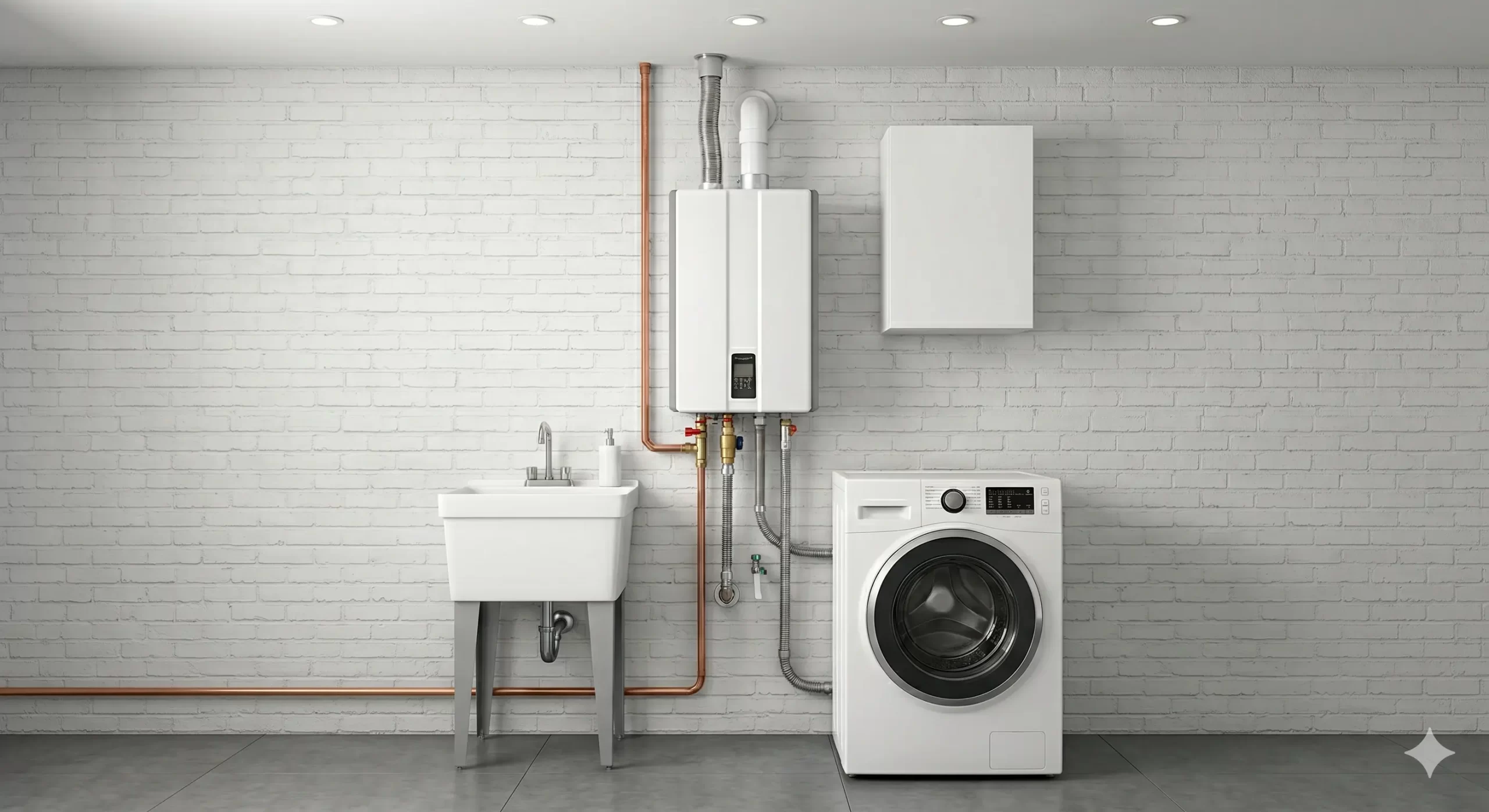
Is your gas water heater in your garage or an exterior closet making strange popping or banging noises? This is a classic sign of sediment buildup from California’s notoriously hard water, which superheats and causes mini-explosions at the bottom of the tank. Not only does this reduce efficiency, but it also puts immense stress on the tank itself. If you notice a faint rotten egg smell, especially near the unit, evacuate immediately and call us. This could indicate a gas leak from the control valve, a serious hazard particularly in enclosed spaces like a garage or basement where fumes can accumulate.
Another common failure point we see across California is a pilot light that refuses to stay lit. This is often caused by a faulty thermocouple, which is a relatively simple fix. However, it can also be a symptom of a blocked vent. In an exterior closet installation, debris or nesting animals can obstruct the flue, while in a garage or basement, improper ventilation can lead to a dangerous buildup of carbon monoxide. Water pooling around the base is the most critical sign; it almost always means the tank has corroded and requires immediate replacement to prevent major water damage.
⚡ Electric Water Heaters
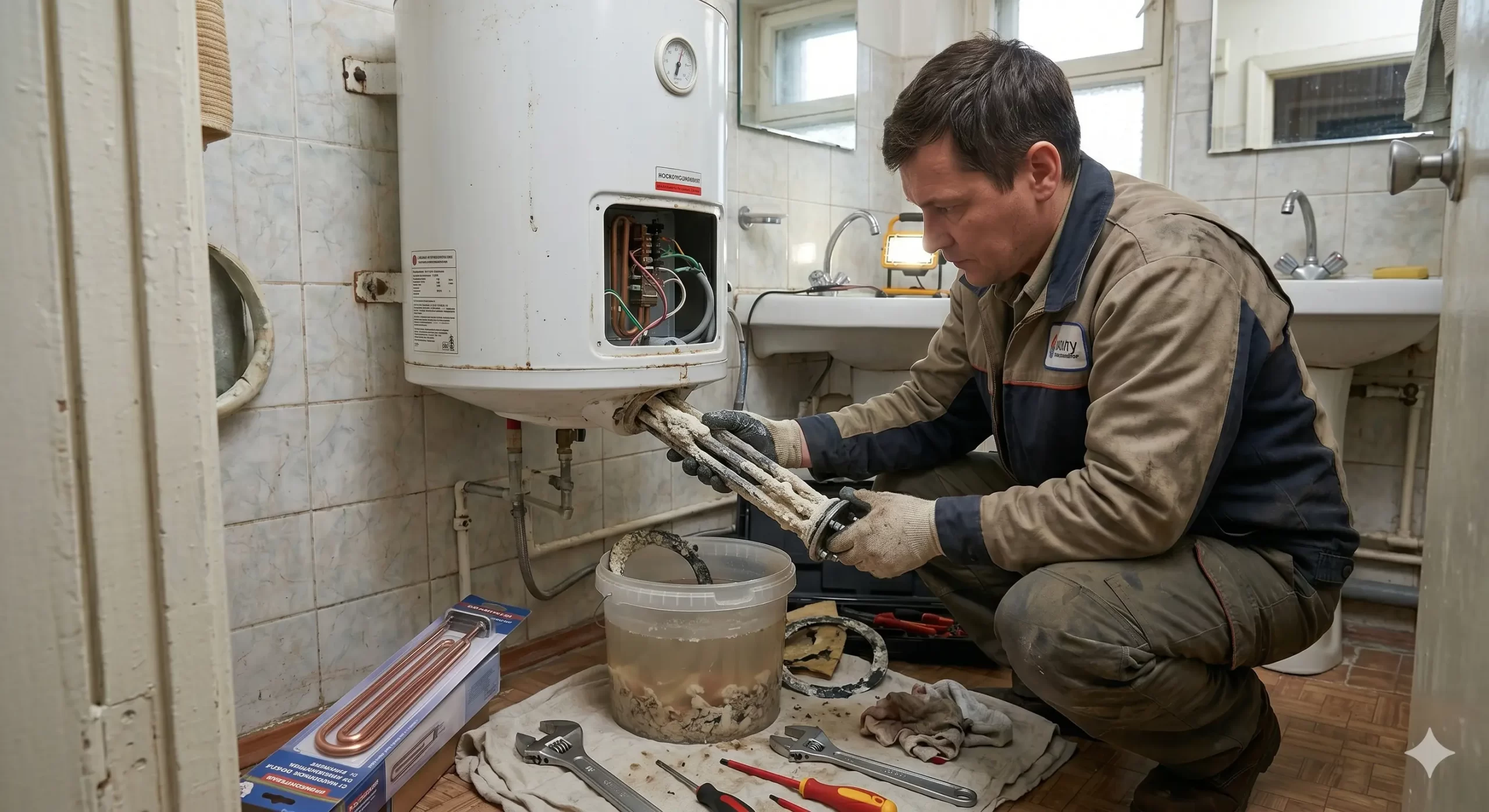
In California, the number one enemy of your electric water heater is our hard water. The high mineral content, particularly calcium and magnesium, creates a thick layer of scale that encrusts the heating elements. When you hear a sizzling or hissing sound from the tank, it’s often the sound of water hitting these overheated, scale-covered elements. This insulation effect forces the elements to work much harder, causing your already high electricity bills to skyrocket before the element burns out completely, leaving you with lukewarm or completely cold water.
If one shower is hot but the next is cold, you likely have a failed lower heating element. The upper element heats the top portion of the tank, giving you a small amount of hot water before it runs out. This is a direct result of the lower element succumbing to scale buildup first. A tripped circuit breaker is another red flag; it means an element is shorting out against the tank wall due to corrosion or scale damage. Ignoring these signs will only lead to higher costs and an inevitable cold-water surprise.
🚿 Tankless Systems
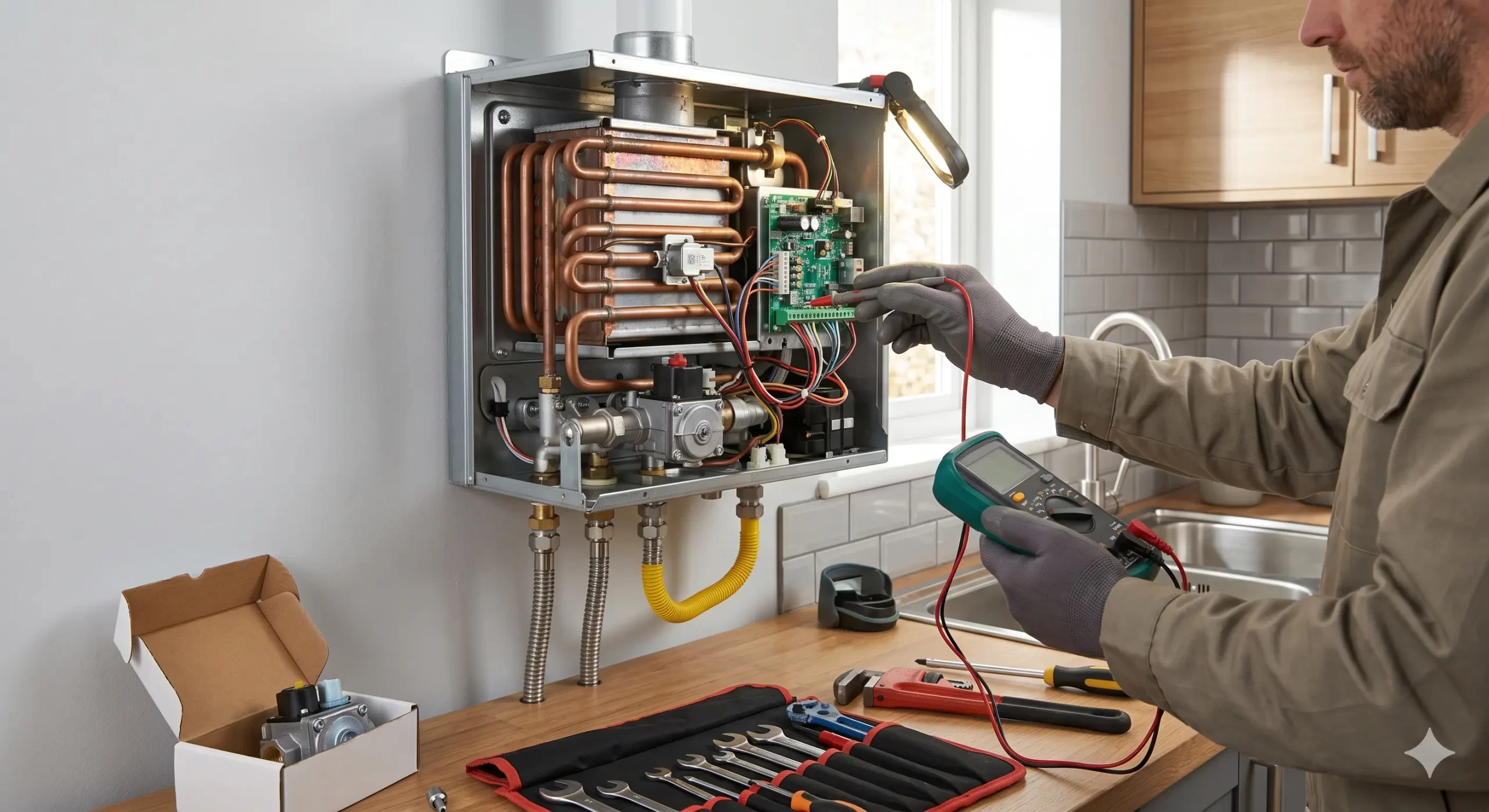
For California homeowners with tankless water heaters, the battle against hard water scale is constant. If you’re experiencing fluctuating water temperatures or a noticeable drop in water pressure, the heat exchanger is likely clogged with mineral deposits. From the mild, salty air on the coast to the dry heat of the Central Valley, our water is consistently hard, and it chokes these high-efficiency units without regular descaling. This buildup forces the unit to fire harder and longer, wasting expensive natural gas and leading to premature system failure.
Error codes flashing on your digital display are your unit’s cry for help. Often, these codes point directly to an ignition failure or a blocked air intake/exhaust vent. In our varied climate, coastal humidity can corrode ignition sensors, while inland dust and pollen can easily clog intake filters. A professional diagnosis is critical, as simply resetting the unit doesn’t fix the underlying problem of restricted flow or flame sensor issues, which can compromise both performance and safety.
Average Repair Costs in California
California Plumbing Codes & Regulations
🔥 Gas Installation Codes
In California, protecting our air quality is paramount, which is why all new gas water heater installations must use Ultra-Low NOx burners. These units have advanced combustion technology to significantly reduce nitrogen oxide emissions, a key component of smog. We only install compliant models to ensure you meet state regulations. Furthermore, due to our seismic activity, state code mandates that all tank-style water heaters be secured with approved seismic straps—one on the top third and one on the bottom third of the tank. This prevents the unit from tipping over during an earthquake, which could sever gas and water lines, causing a fire, flood, or gas leak.
⚡ Electric Codes
California’s Title 24 Building Energy Efficiency Standards are some of the strictest in the nation, and they apply directly to water heaters. When we install a new electric unit, it must meet specific energy factor (EF) ratings to comply with Title 24, helping you save money on our state’s high electricity rates. For many modern, high-wattage electric and heat pump water heaters, the law also requires a dedicated 30-amp circuit. This isn’t just a suggestion; it’s a critical safety measure to prevent overloading your home’s electrical system, which could lead to tripped breakers or even a dangerous electrical fire. We ensure your electrical panel is properly equipped for a safe, compliant installation.
🚿 Tankless Regulations
Installing a high-BTU tankless water heater in California requires a plumber who understands gas flow dynamics, not just plumbing. State code has strict gas line sizing requirements because these powerful units demand a much higher volume of gas than a traditional tank heater. An undersized gas line will ‘starve’ the unit, leading to poor performance, fluctuating temperatures, and error code lockouts. We perform detailed calculations to ensure your gas piping, from the meter to the unit, can safely and adequately supply the necessary fuel, guaranteeing your tankless system operates at peak efficiency and safety as intended.
💰 California Permits & Energy Rebates
In California, a water heater replacement isn’t a simple swap; it requires a permit from your local city or county. This process ensures the installation is performed to current safety codes, including seismic strapping and proper venting, and is often followed by a post-installation inspection. While it seems like a hassle, it protects your home and family. The great news is that California is aggressively promoting energy efficiency. By choosing to install a new Heat Pump Water Heater (HPWH), you can take advantage of massive state and local utility rebates that can often cover a significant portion of the installation cost, making the most energy-efficient option also the most affordable.
Ask the California Plumbing AI Expert
Have specific questions about plumbing codes, permits, or hard water in your local county? Ask our AI assistant below:
🤖 California Plumbing Expert AI
Local Codes & Water Quality Dashboard
What are the statewide water heater plumbing codes, safety regulations, and 2026 energy rebates for California?
Alright, you've come to the right place. As a Senior Master Plumber and Inspector for California, I'm fully up-to-date on what's expected in our great state. Let's get straight to the hard data you need for 2026 concerning water heater installations.
Statewide Water Heater Plumbing Codes (2026)
In California, water heater installations are governed primarily by the California Plumbing Code (CPC), which is based on the Uniform Plumbing Code (UPC) with specific California amendments. As of 2026, the prevailing code is the 2022 California Plumbing Code (CPC), which incorporates the 2021 Uniform Plumbing Code (UPC) with state-specific modifications. While the 2024 UPC is out, its California adoption (the 2025 CPC) may still be in the process for statewide enforcement in early 2026, so we enforce the 2022 CPC unless a local jurisdiction has officially adopted an earlier implementation of the 2025 CPC. Here are the key requirements:
- Permits: A plumbing permit is required for the replacement or installation of a new water heater in all jurisdictions across California. This ensures compliance and safety.
- Location and Clearances:
- Must comply with manufacturer's instructions for clearances from combustible surfaces.
- Accessibility: Water heaters must be installed to be readily accessible for inspection, maintenance, and replacement.
- Garages: Gas water heaters in garages must be elevated such that the ignition source (burner) is at least 18 inches above the garage floor to prevent ignition of flammable vapors. Electric water heaters do not have this requirement.
- Seismic Strapping (Earthquake Straps): All water heaters in California, regardless of location, must be secured with at least two approved metal seismic straps.
- One strap must be in the upper one-third of the tank.
- The other strap must be in the lower one-third of the tank, no less than 4 inches above the controls.
- Straps must be adequately secured to the wall studs or masonry.
- Temperature and Pressure Relief (TPR) Valve:
- Every water heater must have an approved TPR valve, correctly sized and installed according to manufacturer specifications and CPC 608.5.
- The discharge pipe from the TPR valve must be:
- Made of an approved material (e.g., copper, CPVC, galvanized steel, PEX rated for hot water).
- The same size as the TPR valve outlet, or larger.
- Run to the exterior of the building, terminating between 6 and 24 inches above finished grade, or to an approved indirect waste receptor (e.g., floor drain or standpipe).
- Must terminate downward.
- Must not be trapped, have any valve, or be capped.
- Must terminate without any threaded fitting (to prevent capping).
- Thermal Expansion Tank: Required on all closed-system domestic hot water heating systems to accommodate the expansion of water during heating, preventing excessive pressure buildup. This is mandated by CPC 608.3.
- Drain Pan and Drain Line:
- Required for water heaters installed in an attic, within a furred space, on a platform, or in any location where leakage could cause damage to the building structure or contents (CPC 507.4).
- The pan must be adequately sized and constructed of approved materials.
- A drain line from the pan must terminate to an approved indirect waste receptor or to the exterior of the building.
- Gas Piping (for Gas Water Heaters):
- A listed manual gas shutoff valve must be installed on the gas supply line to the water heater.
- A sediment trap (drip leg) is required immediately upstream of the water heater's gas control valve (CPC 1212.1).
- Gas connectors must be approved and adequately sized.
- Gas piping must be properly sized for the appliance's BTU input.
- Gas metallic piping systems must be electrically bonded (CEC 250.104(B)).
- Water Piping:
- A readily accessible manual shutoff valve must be installed on the cold water supply line to the water heater.
- Dielectric unions or approved dielectric fittings are generally required where dissimilar metals meet (e.g., copper to galvanized steel) to prevent galvanic corrosion, unless the water heater comes with factory-installed dielectric nipples (CPC 604.2).
- Ventilation/Combustion Air (for Gas Water Heaters): Adequate combustion air must be provided to the water heater for proper and safe operation, as per CPC Chapter 5.
- Energy Efficiency (Title 24, Part 6): All new and replacement water heaters must comply with the California Energy Code's minimum energy factor or uniform energy factor (UEF) requirements, particularly stringent for new construction or substantial renovations. This typically means favoring more efficient models like heat pump water heaters (HPWHs) or condensing tankless units.
Safety Regulations (2026)
Beyond the direct plumbing codes, California has specific safety mandates:
- Carbon Monoxide (CO) Alarms: State law (Health and Safety Code Section 17926) requires CO alarms in all dwelling units that have a fossil fuel-burning appliance (including gas water heaters) or an attached garage. These must be installed and maintained.
- Lead-Free Requirements: All plumbing components (including water heaters, valves, and fittings) in contact with potable water must comply with California's lead-free requirements (maximum 0.25% weighted average lead content). This is consistent with federal Safe Drinking Water Act amendments.
- Flame Arrestor Protection: Gas-fired atmospheric vent water heaters must be equipped with a flame arrestor device at the bottom of the tank to prevent accidental ignition of flammable vapors in their vicinity.
2026 Energy Rebates for California
As of 2026, California continues its aggressive push for energy efficiency and electrification, especially concerning water heating. Rebates are a dynamic landscape, but here are the primary programs and technologies expected to offer incentives:
- Federal Tax Credits (Inflation Reduction Act - IRA):
- 25C Energy Efficient Home Improvement Credit: Available for qualifying high-efficiency electric heat pump water heaters. Homeowners can claim a tax credit equal to 30% of the project cost, up to a maximum of $2,000. This credit applies to qualifying models with a Uniform Energy Factor (UEF) of 2.2 or higher (Energy Star certified). This is a direct federal tax credit and will be available through 2032.
- 25D Residential Clean Energy Credit: While primarily for solar, solar thermal water heaters also qualify for a 30% tax credit with no dollar limit.
- TECH Clean California Program:
- This statewide initiative, administered by the Building Decarbonization Coalition, is a major driver for heat pump water heater (HPWH) adoption and is expected to continue its robust incentive offerings through 2026.
- Incentives are paid to qualified contractors, who then pass savings directly to the customer.
- Typical base incentives for qualifying HPWHs are expected to range from $1,800 to $3,100 per unit, depending on the model and project specifics. Additional incentives may be available for low-income households or specific project types (e.g., multi-family).
- These incentives are funded by California utility ratepayers and aim to reduce greenhouse gas emissions by promoting super-efficient electric appliances.
- Local Utility Rebate Programs:
Many California investor-owned and publicly-owned utilities offer their own specific rebates, often stackable with federal credits and TECH Clean California incentives. You should verify the exact amounts and eligibility with your specific utility provider as programs can vary:
- Pacific Gas and Electric (PG&E): Expected to offer incentives for HPWHs and potentially for high-efficiency condensing tankless gas water heaters.
- Southern California Edison (SCE): Strong focus on electric technologies, including HPWHs, often with significant rebates.
- Southern California Gas (SoCalGas): May offer rebates for high-efficiency natural gas appliances, including condensing tankless water heaters.
- San Diego Gas & Electric (SDG&E): Typically offers incentives for both electric (HPWH) and high-efficiency gas water heating options.
- Los Angeles Department of Water and Power (LADWP): Known for offering rebates for high-efficiency electric appliances, including HPWHs.
- Sacramento Municipal Utility District (SMUD): A strong proponent of electrification, expected to offer competitive rebates for HPWHs.
- Other Municipal Utilities: Check with your specific local utility (e.g., Anaheim Public Utilities, Pasadena Water and Power, Silicon Valley Clean Energy) as many offer their own programs.
- Local and Regional Programs:
Some cities, counties, or regional energy organizations may offer additional incentives, particularly in areas with aggressive decarbonization goals. These are highly localized and require direct inquiry.
Recommendation: Always consult with your licensed plumbing contractor and confirm current rebate availability and eligibility directly with your utility provider and the TECH Clean California website (if applicable) before making a purchase decision. Rebate programs are subject to change and funding availability.
Repair vs. Replace Guidelines
With California’s high energy prices, should I repair my old water heater or just replace it?
That’s a critical question here. If it’s a minor repair on a newer, energy-efficient model, a fix makes sense. However, if your water heater is over 8-10 years old, you’re likely paying a premium on your already expensive gas or electric bill. A new, high-efficiency or heat pump model can cut your water heating energy costs by 25-70%. The monthly savings often outweigh the cost of a major repair and can quickly help the new unit pay for itself.
What can I do to protect my water heater from California’s very hard water?
Proactive maintenance is key. We strongly recommend having your tank-style water heater professionally flushed annually to remove the sediment that builds up from our hard water. For tankless units, an annual descaling service using a food-grade acid solution is essential to keep the heat exchanger clear and efficient. This regular maintenance will dramatically extend the life of your unit, improve its efficiency, and prevent unexpected breakdowns.
Recent Service Feedback in California
“Our water heater in the garage finally gave out. The technician arrived on time, explained the Ultra-Low NOx requirements for our new unit, and even installed the seismic straps correctly, which our last handyman completely botched. Very professional and knew California code inside and out.”
— David L., Los Angeles
“The hard water in Fresno absolutely destroyed our electric heater’s elements. They showed me the old ones covered in white scale. The new unit is working great, and they gave me a clear maintenance plan to help this one last. Honest and fair pricing.”
— Maria G., Fresno
“I was getting error codes on my tankless heater constantly. They diagnosed a clogged heat exchanger from sediment and also found the gas line was slightly undersized. They fixed both issues, and our water is finally consistently hot. Worth every penny.”
— Brian T., San Diego
Fast Local Water Heater Repair & Diagnostics
Calls are routed to a licensed local plumbing professional.