
Water Heater Repair in Illinois
From frigid Lake Michigan winds to deep freezes in Springfield, we keep your hot water flowing through Illinois’s toughest winters.
No Hot Water? Get It Fixed Today.
Connect with licensed Illinois plumbers. Emergency service available.
Fast Local Water Heater Repair & Diagnostics
Calls are routed to a licensed local plumbing professional.
Common Failures We Fix in Illinois
🔥 Gas Water Heaters
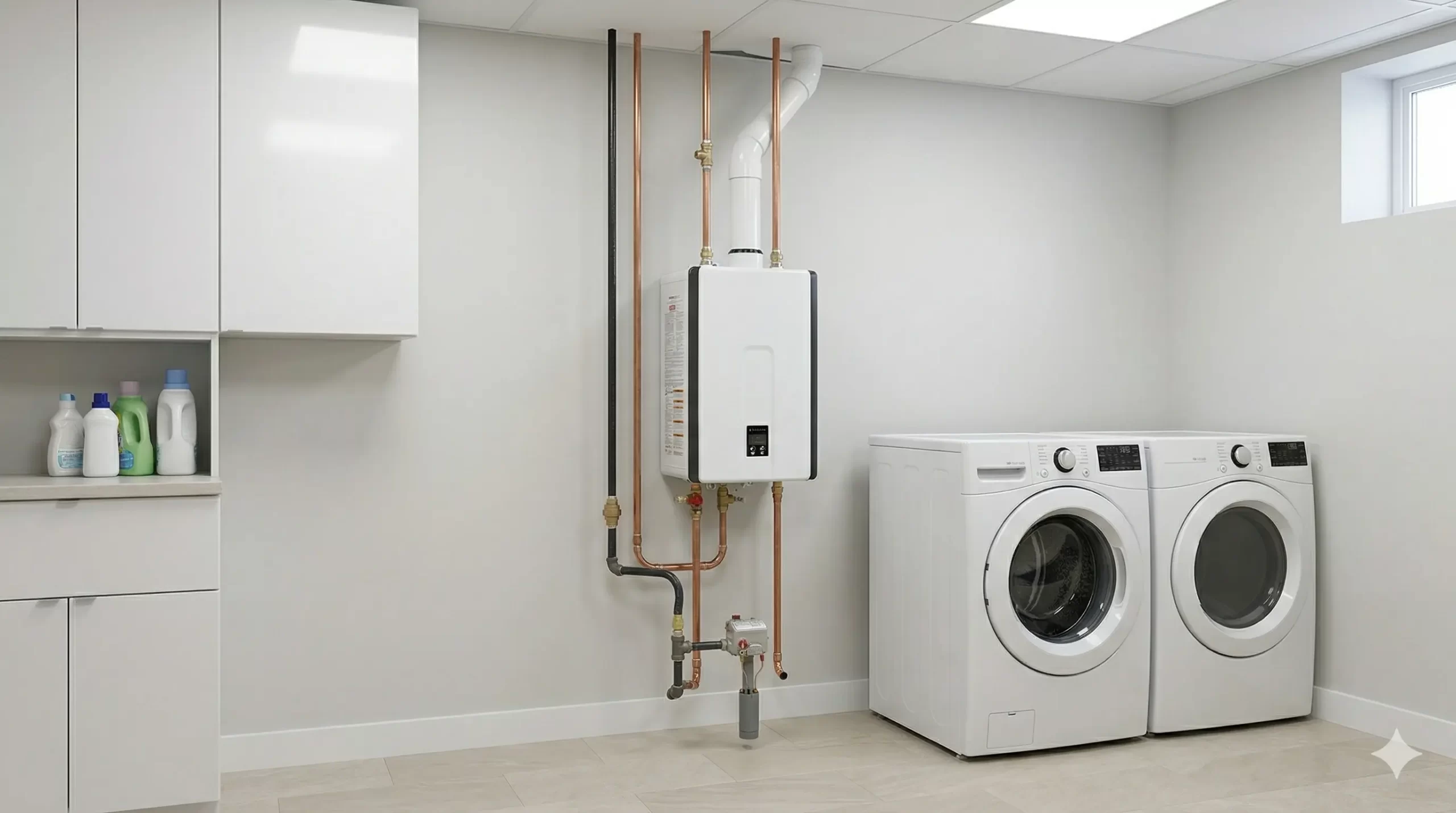
Is your pilot light stubbornly refusing to stay lit, or are you hearing strange popping and banging noises from the basement? These are classic signs of trouble for gas water heaters in Illinois homes. Because most units are tucked away in basements, issues like sediment buildup from our state’s notoriously hard water can go unnoticed until you’re left with a lukewarm shower. That popping sound is often water trapped under layers of mineral scale, boiling and exploding, which severely strains the tank and can lead to premature failure.
A more dangerous symptom, especially in well-sealed Illinois homes, is a faint smell of gas or evidence of soot around the base of the unit. This could indicate a ventilation problem or a failing thermocouple. Given the strict combustion air requirements in our state, improper venting in a confined basement space can lead to a dangerous buildup of carbon monoxide. Don’t ignore these warnings; a professional inspection is critical to ensure your family’s safety and your system’s integrity.
⚡ Electric Water Heaters
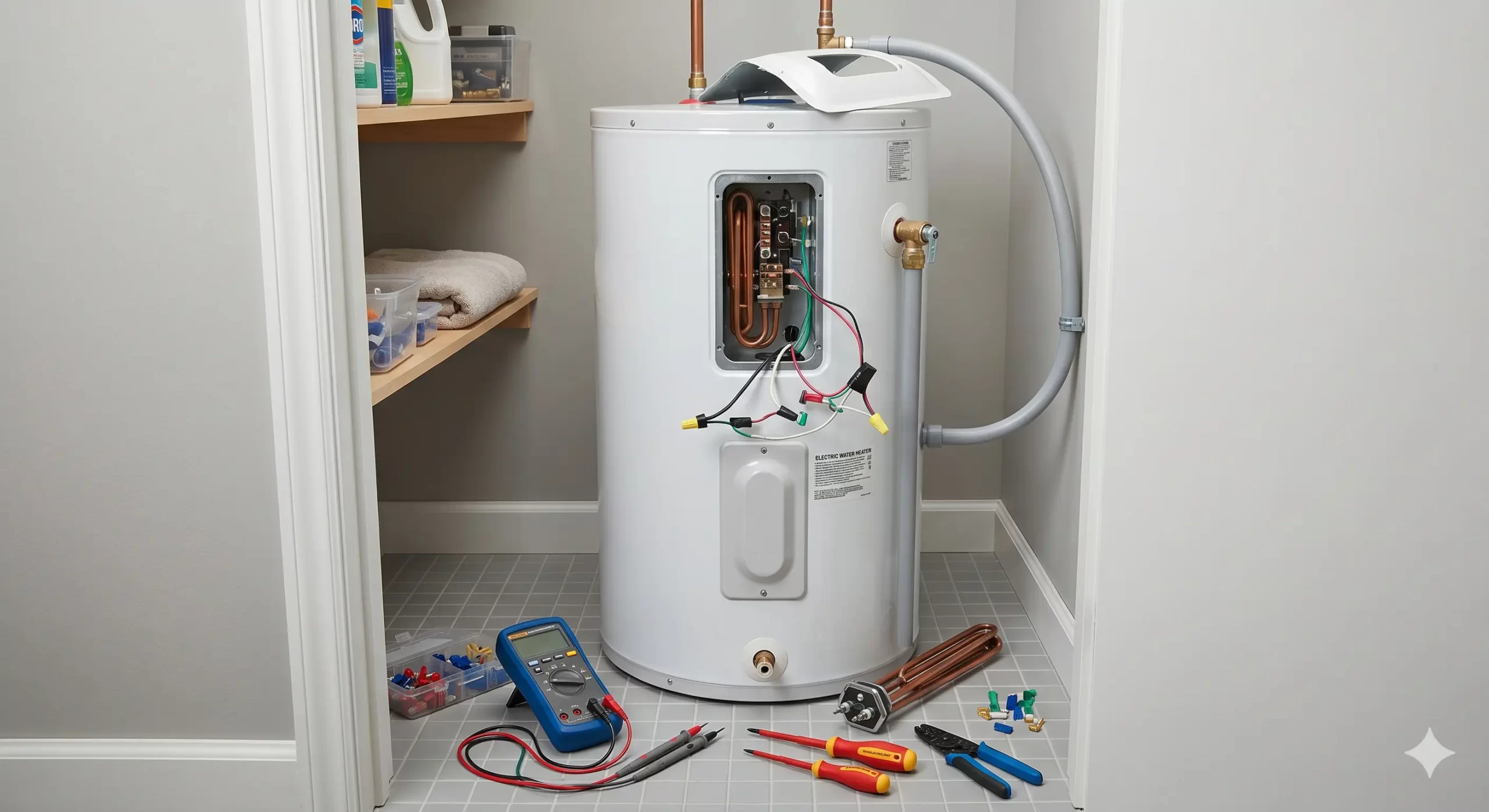
If your electric water heater is suddenly providing less hot water or your ComEd bill has mysteriously spiked, the primary culprit is almost always Illinois’s very hard water. The high concentration of calcium and magnesium creates thick layers of limescale that encrust the heating elements. This forces the elements to work much harder to heat the water, drastically reducing efficiency and eventually causing them to burn out completely, leaving you with no hot water at all.
Another common symptom is discolored or foul-smelling hot water. As mineral sediment accumulates at the bottom of the tank, it can foster bacterial growth, creating that unpleasant rotten-egg smell. You might also notice a significant drop in water pressure from your hot taps. This is because scale can break off and clog aerators and pipes downstream. Regular professional service is essential to descale elements and flush the tank to combat our state’s challenging water quality.
🚿 Tankless Systems
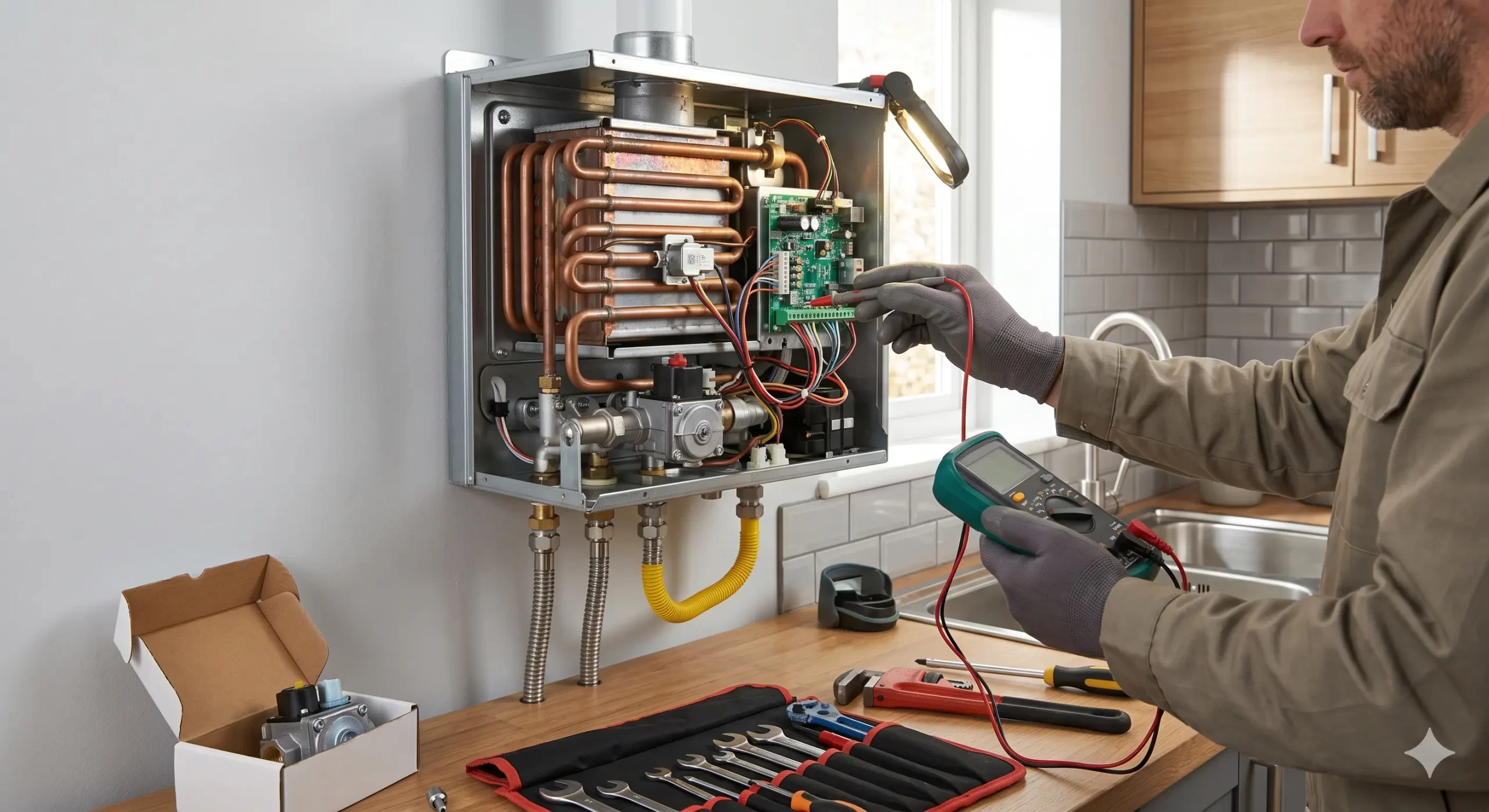
Tankless water heaters are fantastic, but they face unique challenges during our severe cold winters. If you’re experiencing fluctuating water temperatures or a complete shutdown of the unit when it’s freezing outside, it’s likely struggling with the frigid temperature of the incoming groundwater. The unit has to work overtime to raise the water temperature by a huge margin (e.g., from 35°F to 120°F), which can sometimes overwhelm its capacity and trigger a safety lockout or an error code on the display.
Another Illinois-specific issue is a ‘cold water sandwich’—a burst of cold water in the middle of your hot shower. This can happen when the unit cycles off and on during low-flow use in winter. Furthermore, the condensate lines on high-efficiency models are highly susceptible to freezing if not properly installed and insulated, which can back up water into the unit and cause a complete system failure. If your on-demand system can’t handle the Illinois cold, it needs professional diagnosis and adjustment.
Average Repair Costs in Illinois
Illinois Plumbing Codes & Regulations
🔥 Gas Installation Codes
In Illinois, we don’t guess when it comes to gas appliance safety. The state and local municipalities strictly enforce codes based on NFPA 54, the National Fuel Gas Code, which has stringent requirements for combustion air. This is especially critical for water heaters installed in basements or utility closets. A modern, tightly sealed home might not have enough natural air infiltration for the unit to burn fuel safely and efficiently. Our technicians are experts at calculating the precise ventilation your space needs, ensuring your installation includes adequate ducting or vents to prevent negative air pressure and the deadly risk of carbon monoxide backdrafting.
⚡ Electric Codes
If you live in the Chicago area or many surrounding suburbs, installing an electric water heater isn’t just about connecting wires. Local codes are famously strict, often mandating that all electrical connections to the unit must be housed in rigid metal conduit. This isn’t just a suggestion; it’s a legal requirement for safety and durability. This protects the wiring from physical damage in high-traffic areas like basements and garages, preventing potential fire hazards. Our licensed plumbers and electricians work in tandem to ensure your installation is 100% compliant with these demanding Chicago-area codes, guaranteeing it will pass inspection the first time.
🚿 Tankless Regulations
Installing a high-efficiency condensing tankless water heater in Illinois requires careful planning for our brutal winters. These units produce a steady trickle of acidic condensate as a byproduct of their operation, which must be drained away. The law requires this drain line to be properly routed and, crucially, protected from freezing. A frozen and cracked condensate line can cause extensive water damage, system shutdowns, and even damage the heater’s internal components. We ensure all exterior drain lines are properly insulated or use heat tracing to provide a freeze-proof solution that keeps your system running safely all winter long.
💰 Illinois Permits & Energy Rebates
In Illinois, a water heater replacement isn’t a simple DIY job; most municipalities strictly enforce permit and inspection requirements to ensure the work is done safely and to code. Attempting to skip this process can lead to fines and issues when selling your home. The good news is that a professional, permitted installation is your key to unlocking substantial savings. Major utility providers like ComEd and Nicor Gas offer generous rebates for installing high-efficiency models. We handle the entire process for you—from pulling the correct permits to ensuring the final work passes inspection, all while helping you file the paperwork to claim your valuable utility rebate.
Ask the Illinois Plumbing AI Expert
Have specific questions about plumbing codes, permits, or hard water in your local county? Ask our AI assistant below:
🤖 Illinois Plumbing Expert AI
Local Codes & Water Quality Dashboard
What are the statewide water heater plumbing codes, safety regulations, and 2026 energy rebates for Illinois?
Illinois Statewide Water Heater Plumbing Codes, Safety Regulations, and 2026 Energy Rebates
Greetings. As a Senior Master Plumber and Inspector for the State of Illinois, I can provide you with the essential information regarding water heater installations, safety, and a projection for 2026 energy incentives. Please be advised that all installations in Illinois must be performed by a State of Illinois Licensed Plumber and require proper permitting and inspection by local authorities having jurisdiction.
Statewide Plumbing Codes for Water Heaters (Based on Illinois Plumbing Code - 77 Ill. Adm. Code 890, which adopts and amends the International Plumbing Code)
- Permitting and Inspection: A plumbing permit is required for the installation or replacement of any water heater. The installation must be inspected by the local authority to ensure compliance with the Illinois Plumbing Code.
- Installation by Licensed Plumbers: All water heater installations must be performed by an individual holding a valid Illinois Plumber's License.
- Temperature and Pressure Relief Valve (TPRV):
- Every storage water heater shall be provided with a properly sized and installed TPRV, listed as complying with ASSE 1007/ANSI Z21.22/CSA 4.4 for hot water supply systems.
- The discharge pipe from a TPRV must be full-size, installed without valving or obstructions, pitched for drainage, terminate within 6 inches of the floor or into an approved receptor (such as a floor drain or indirect waste receptor), and not be threaded at its termination.
- The discharge pipe material must be approved for hot water distribution and pressure.
- Thermal Expansion Tanks: A properly sized thermal expansion tank conforming to ASSE 1061 is required for all water heater installations within a closed-loop potable water system (i.e., when a backflow prevention device or pressure-reducing valve creates a closed system).
- Drain Pans: A water heater installed in a location where water leakage would cause damage to the building structure or contents (e.g., above a finished ceiling, in an attic, or on an upper floor) must be installed in a properly sized and approved metallic or non-metallic pan. This pan must be equipped with a separate drain line, piped to an approved location such as a floor drain or indirect waste receptor.
- Water Heater Location and Clearances:
- Water heaters must be installed in a location that provides adequate access for observation, maintenance, servicing, and replacement.
- Required clearances from combustible materials for gas-fired water heaters must be maintained as specified by the manufacturer's installation instructions and local fire codes.
- Venting (for Gas/Propane Water Heaters):
- Vent systems must be properly sized and installed according to the manufacturer's instructions, the National Fuel Gas Code (NFPA 54/ANSI Z223.1), and Illinois mechanical codes.
- Vent connectors must be sloped upwards towards the vent or chimney, adequately supported, and not extend into the chimney flue.
- Proper combustion air must be supplied to the water heater.
- All combustion byproducts must be safely discharged to the outdoors.
- Water Supply and Fuel Gas/Electrical Connections:
- Approved shut-off valves must be installed on both the hot and cold water lines.
- Unions or other approved means of disconnection must be provided on the water lines.
- For gas water heaters, an approved manual shut-off valve must be installed on the gas supply line to the appliance. A sediment trap (drip leg) is required immediately upstream of the gas control valve.
- For electric water heaters, a dedicated circuit and a readily accessible disconnect switch must be provided.
- All gas and electrical connections must comply with the National Fuel Gas Code and the National Electrical Code (NFPA 70), respectively.
- Seismic Strapping: While Illinois is not a high-seismic zone, strapping water heaters to prevent tipping in the event of an earthquake or other force is considered good practice and may be required by local amendment or specific manufacturer instructions.
Safety Regulations
Safety regulations are intrinsically tied to the plumbing codes, but I emphasize these critical points:
- Carbon Monoxide (CO) Safety: For any fuel-burning water heater (natural gas, propane), proper venting is paramount to prevent the buildup of deadly carbon monoxide. Carbon monoxide detectors should be installed in the vicinity of the water heater and in sleeping areas.
- Scald Prevention: While specific code requirements for tempering valves vary depending on the application (e.g., public facilities versus residential), it is a best practice to ensure water temperature at fixtures is safe, typically below 120°F (49°C) to prevent scalding, especially for homes with children or elderly residents. The water heater's thermostat should be set appropriately.
- Fire Safety: Maintaining proper clearances from combustible materials and ensuring correct fuel line and electrical connections prevents fire hazards.
- Pressure Safety: The TPRV is a critical safety device that prevents the water heater from exploding due to excessive temperature or pressure. Its proper installation and maintenance are non-negotiable.
2026 Energy Rebates for Illinois Water Heaters
As a Master Plumber, I can advise you on the likely structure of rebates for 2026 based on current federal legislation and ongoing utility programs. Please understand that specific dollar amounts for 2026 are subject to finalization by utility companies and federal agencies. Always verify the most current details with your specific utility provider or program administrator at the time of purchase.
The primary focus for energy efficiency rebates, especially for 2026, will heavily favor Heat Pump Water Heaters (HPWHs) due to their significantly higher energy efficiency compared to traditional tank-type or even tankless gas heaters.
- Federal Tax Credits (Inflation Reduction Act of 2022 - IRA):
- The federal government, through the IRA, offers a tax credit for ENERGY STAR certified electric heat pump water heaters. This credit is generally for 30% of the project cost, up to $2,000, for eligible models. This program is currently effective through 2032 and is expected to continue into 2026.
- Eligibility typically requires the HPWH to meet specific ENERGY STAR standards.
- Consult IRS Publication 523 (Residential Energy Credits) or a tax professional for precise details for 2026.
- Illinois Utility Company Rebates (Likely Programs for 2026):
- ComEd: As the largest electric utility in Illinois, ComEd is highly likely to continue offering substantial rebates for qualifying ENERGY STAR certified electric heat pump water heaters. These rebates often range from several hundred to over a thousand dollars depending on the efficiency rating (UEF) of the unit.
- Ameren Illinois: Similar to ComEd, Ameren Illinois (serving downstate customers) is expected to continue its programs for high-efficiency electric heat pump water heaters. Their rebate structures are typically competitive.
- Nicor Gas, Peoples Gas, North Shore Gas: These natural gas utilities primarily offer rebates for high-efficiency natural gas water heaters, including:
- ENERGY STAR Certified Tankless Water Heaters: Rebates for these units are likely to continue, often in the range of $150 to $500, depending on their Uniform Energy Factor (UEF).
- High-Efficiency Storage Tank Water Heaters: While less common for significant rebates than tankless or HPWHs, some programs may offer incentives for ENERGY STAR certified conventional storage models with higher UEF ratings.
- Specifics for 2026: For exact rebate amounts, eligibility criteria, and application processes for 2026, you *must* visit the official energy efficiency program websites of your specific utility provider (e.g., ComEd Energy Efficiency, Ameren Illinois ActOnEnergy, Nicor Gas Energy Efficiency Program). These sites are updated annually.
- Illinois State Programs: While less common for direct consumer water heater rebates, occasionally the Illinois EPA or other state initiatives may launch or support programs. These are less predictable than utility programs.
When planning your water heater replacement in 2026, I strongly recommend consulting with your licensed plumber about the most energy-efficient options that qualify for both federal tax credits and available utility rebates in your service area. Ensure they are familiar with the latest code requirements and rebate procedures.
Repair vs. Replace Guidelines
With Illinois’s average energy rates, is it better to repair my old water heater or replace it?
It’s a balance of repair cost versus long-term savings. For a major repair on a unit over 8-10 years old, replacement is often the smarter financial choice. While Illinois energy rates are about average nationally, a new high-efficiency model can save you 25-50% on your water heating costs. These monthly savings on your Nicor Gas or ComEd bill can quickly offset the cost of the new unit, especially when you factor in available rebates.
How does Illinois’s very hard water affect my water heater, and what can I do about it?
Illinois has some of the hardest water in the country, which is brutal on water heaters. The high mineral content creates limescale buildup that insulates heating elements, reduces efficiency, and corrodes the tank. We strongly recommend a professional tank flush at least once a year to remove this sediment. For a long-term solution, consider installing a whole-home water softener. It will not only protect your water heater but also extend the life of all your water-using appliances.
Recent Service Feedback in Illinois
“Our basement water heater failed during that deep freeze in January. They came out the same day, explained the new ventilation codes for our gas unit, and got it installed perfectly. Professional, clean, and knew all the Naperville permit requirements. Highly recommend!”
— John D., Naperville
“The hard water in Aurora completely destroyed the elements in our electric heater. The technician showed me the scale buildup—it was shocking! He flushed the tank, replaced the parts, and recommended a schedule to prevent it from happening again. Honest and fair pricing.”
— Sarah W., Aurora
“I wanted to go tankless but was worried about the cold winters. Their team explained how to install it properly to avoid freezing issues. The new unit works flawlessly, even when it’s below zero outside. Big thanks from a warm family in Springfield!”
— Mike R., Springfield
Fast Local Water Heater Repair & Diagnostics
Calls are routed to a licensed local plumbing professional.