
Water Heater Repair in Minnesota
Don’t let a Minnesota winter leave you in the cold; get reliable hot water repair today!
No Hot Water? Get It Fixed Today.
Connect with licensed Minnesota plumbers. Emergency service available.
Fast Local Water Heater Repair & Diagnostics
Calls are routed to a licensed local plumbing professional.
Common Failures We Fix in Minnesota
🔥 Gas Water Heaters
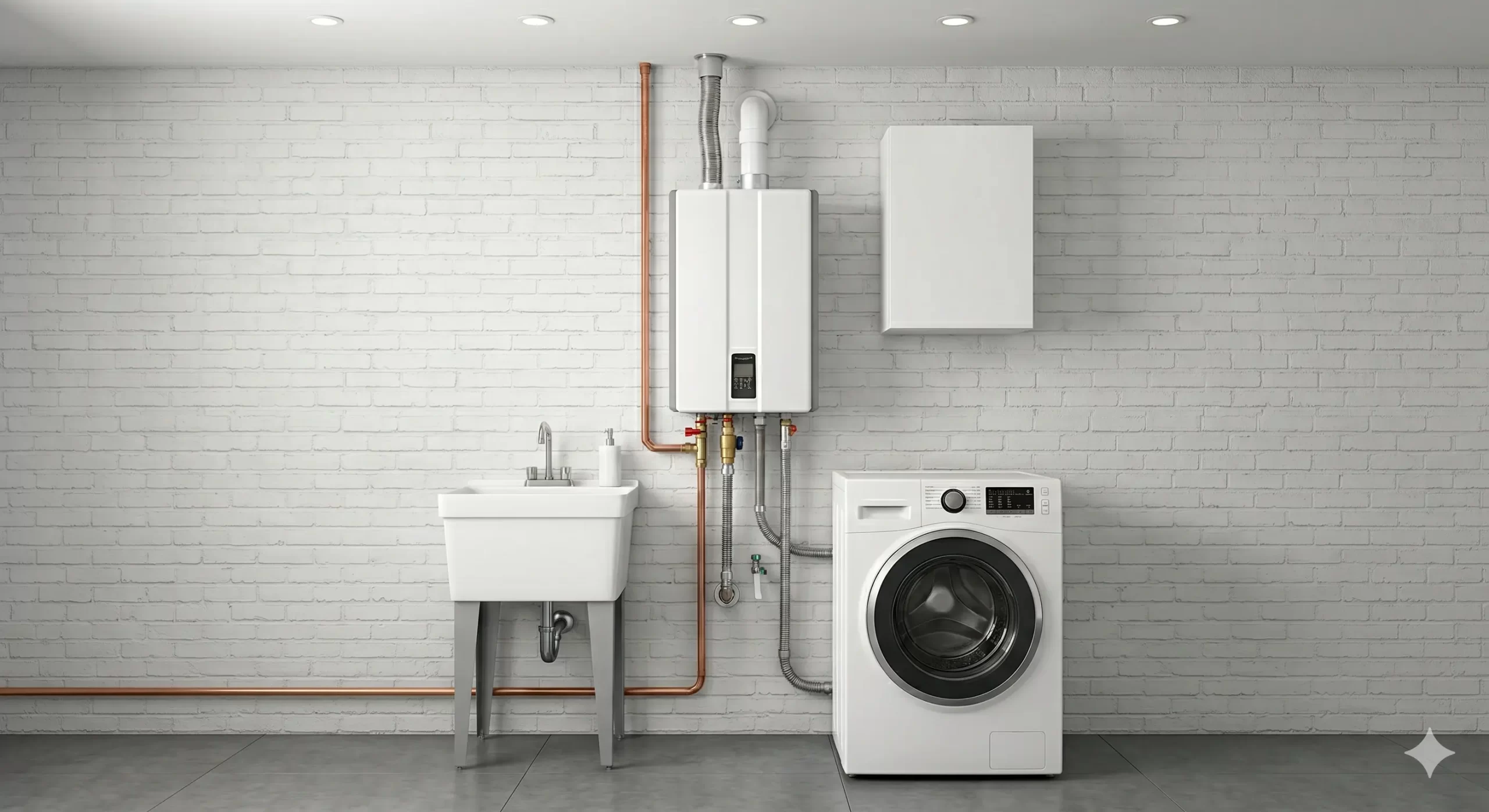
Is your gas water heater struggling to keep up? In Minnesota, common signs of failure often start with a pilot light that refuses to stay lit or a rumbling sound from the tank, which is amplified in our typical heated basements. These noises often indicate significant sediment buildup from our hard water, which insulates the water from the burner, causing overheating and stress on the tank itself. A faulty thermocouple can also be a frequent culprit, especially as units age, leading to an unreliable hot water supply when you need it most.
Beyond inconvenience, a malfunctioning gas heater in an enclosed basement poses serious safety risks. A rotten egg smell is an immediate red flag for a gas leak that requires urgent attention. Likewise, any signs of soot or scorching around the unit could indicate improper combustion or venting problems, potentially releasing dangerous carbon monoxide into your home. Don’t ignore these warnings; a professional inspection is critical to ensure your family’s safety and restore your hot water.
⚡ Electric Water Heaters
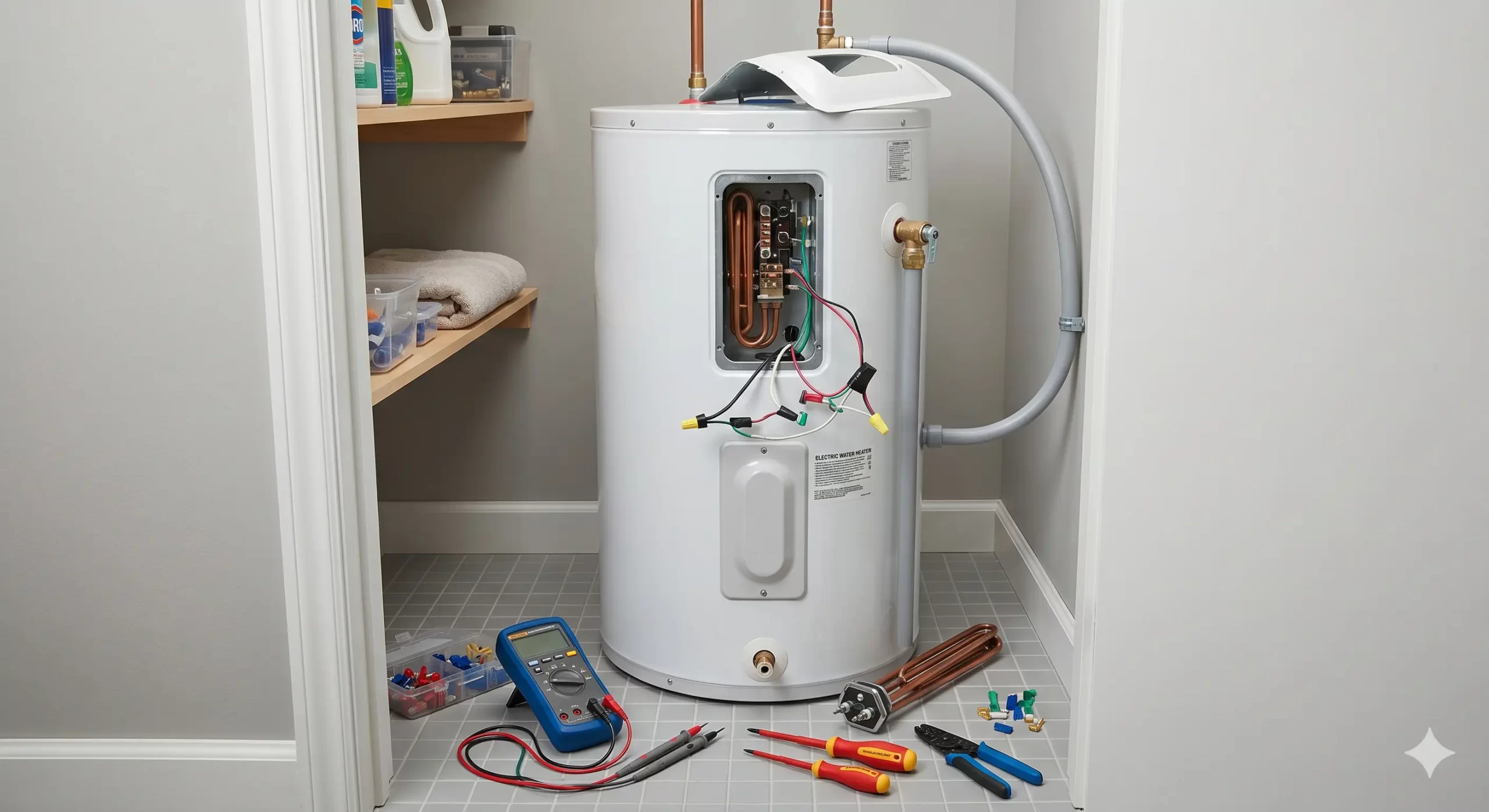
Electric water heaters in Minnesota face a relentless enemy: our state’s notoriously very hard water. The high mineral content, rich in calcium and magnesium, wreaks havoc on heating elements. The most common symptom is a loud popping or crackling sound as the elements heat the water, which is actually the sound of steam bubbles escaping from under a thick layer of mineral scale. This scale buildup forces the elements to work much harder, drastically reducing efficiency and leading to lukewarm water or a complete lack of heat.
When one heating element fails, you might notice you have some hot water, but it runs out incredibly fast. If both elements become caked in sediment and burn out, you’ll be left with nothing but cold showers. You may also notice a spike in your energy bill as the unit struggles to overcome the insulating effect of the scale. Regularly checking and replacing the anode rod is crucial, but once the elements are compromised, a professional repair is the only solution to combat the effects of Minnesota’s water quality.
🚿 Tankless Systems
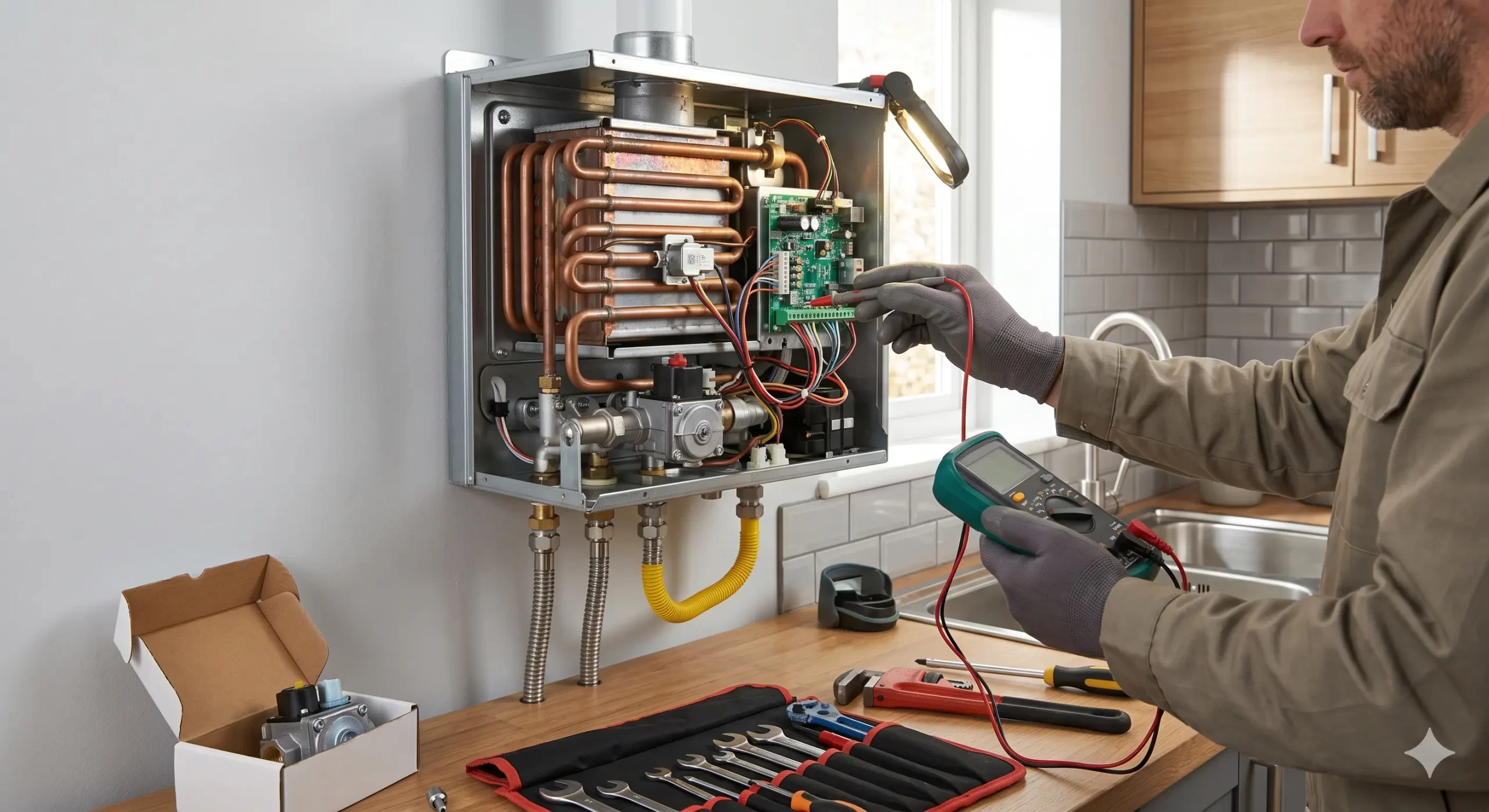
While incredibly efficient, tankless water heaters have unique vulnerabilities to our extreme freezing winters. A common issue is a ‘cold water sandwich’ or fluctuating temperatures, which can happen when the system struggles to instantly heat the near-freezing groundwater entering your home during a cold snap. The unit’s flow sensor might also fail to register low-flow hot water requests, leaving you with a trickle of icy water from the tap. If your unit is shutting down and displaying an error code, it could be a sign it’s being pushed beyond its limits by our frigid climate.
Furthermore, the intake and exhaust vents for tankless units are highly susceptible to blockage from ice and heavy snowfall. If these vents are obstructed, the unit’s safety sensors will shut it down to prevent dangerous gas buildup, leaving you without hot water. Another winter-specific risk is a frozen condensate line, which can cause water to back up into the unit, leading to significant damage. Proper installation and winterization are key to keeping your Minnesota tankless system running smoothly through the coldest months.
Average Repair Costs in Minnesota
Minnesota Plumbing Codes & Regulations
🔥 Gas Installation Codes
In Minnesota, our laws mandate that all gas water heater venting must be adequately protected from deep snow accumulation. This isn’t just a suggestion; it’s a critical safety measure. A ‘State of Hockey’ snowfall can easily drift and bury a side-wall vent, completely blocking the exhaust path for dangerous gases like carbon monoxide. A blocked vent forces these poisonous fumes back into your home, creating a silent and deadly hazard. Our certified plumbers ensure your vent terminations are installed well above the anticipated snow line and are properly shielded to prevent blockage from blizzards and drifting snow, keeping your family safe all winter.
⚡ Electric Codes
For powerful electric tank and tankless water heaters, Minnesota plumbing and electrical codes require installation on a dedicated circuit. This means the water heater has its own breaker in your electrical panel, not shared with other appliances. This is essential for safety and performance, especially in older homes. A heavy-load appliance like a water heater can easily overload a shared circuit, causing frequent breaker trips and leaving you without hot water. More importantly, it prevents the risk of overheating wires, which can lead to an electrical fire. We ensure your installation is fully compliant, providing a safe and reliable power source for your unit.
🚿 Tankless Regulations
Given our tightly sealed and well-insulated homes built to withstand frigid winters, direct vent indoor tankless models are the standard in Minnesota. Unlike atmospheric models that draw combustion air from inside the home, a direct vent unit uses a sealed pipe-in-pipe system to pull fresh air from the outside and exhaust fumes safely back outdoors. This prevents any potential for back-drafting of carbon monoxide and doesn’t steal heated air from your living space, which is crucial for maintaining both safety and energy efficiency in a Minnesota home.
💰 Minnesota Permits & Energy Rebates
When it’s time to replace your water heater in Minnesota, navigating the local requirements is part of the process. Most cities require a permit for installation to ensure the work is done to code, protecting your home and family. Our team handles the entire permitting process for you, guaranteeing a compliant and hassle-free installation. Furthermore, upgrading to a high-efficiency model can be very rewarding. Xcel Energy provides excellent rebates for customers who install qualifying energy-efficient gas or electric water heaters, helping you offset the initial cost while you enjoy long-term savings on your utility bills.
Ask the Minnesota Plumbing AI Expert
Have specific questions about plumbing codes, permits, or hard water in your local county? Ask our AI assistant below:
🤖 Texas Plumbing Expert AI
Local Codes & Water Quality Dashboard
What are the statewide water heater plumbing codes, safety regulations, and 2026 energy rebates for Texas?
Statewide Water Heater Plumbing Codes and Safety Regulations for Texas (2026)
As a Senior Master Plumber and Inspector for the Great State of Texas, it's my duty to ensure all plumbing installations meet the highest standards for safety and efficiency. For 2026, the foundational plumbing code in Texas remains based on the International Plumbing Code (IPC), specifically the 2021 International Plumbing Code with specific amendments adopted by the Texas State Board of Plumbing Examiners (TSBPE). While there's always a possibility of minor updates, the core principles outlined below are firmly in place.
Here are the critical statewide codes and safety regulations you must adhere to for water heater installations:
-
Permitting:
- Mandatory: A plumbing permit from your local Authority Having Jurisdiction (AHJ) is required for all new water heater installations and replacements. This ensures the work is inspected and complies with local and state codes.
-
Temperature and Pressure Relief (TPR) Valves:
- Essential Safety Device: Every water heater must be equipped with a properly sized and rated TPR valve.
- Discharge Pipe Requirements:
- Must be installed on the TPR valve and discharge to an approved location.
- Must be of approved material (e.g., copper, CPVC, PEX with specific pressure ratings).
- Must have an internal diameter no smaller than the outlet of the valve it serves.
- Must not be trapped, capped, or have any valves or obstructions.
- Must terminate by gravity flow with an air gap and be visible.
- Must terminate within 6 inches of the floor or into a properly drained receptor (like a floor drain or indirectly into a drain pan).
- Must not terminate in a location where it could cause property damage or create a hazard.
-
Water Heater Pan Requirements:
- Location Dependent: A water heater located in an attic, above a ceiling, in a furred space, or in any other location where water leakage could cause damage to the building or its contents, *must* be installed in a water heater pan.
- Drainage: The pan must be drained by an indirect waste pipe to a visible approved location, such as a floor drain, utility sink, or outside to an area that won't cause damage. The drain line must be at least 3/4 inch in diameter.
-
Expansion Tanks:
- Closed Systems: An approved, properly sized expansion tank is required for all water heaters installed in closed water supply systems (where there's a backflow prevention device or pressure reducing valve on the main water line).
- Function: This prevents excessive pressure build-up due to thermal expansion of heated water.
-
Venting (Gas Water Heaters):
- Combustion Air: Adequate combustion air must be supplied to the water heater area to ensure proper and safe operation.
- Vent Connectors: Must be properly sized, sloped upward, securely fastened, and made of approved materials suitable for the appliance's flue gas temperature.
- Termination: Vents must terminate outdoors with required clearances from openings, combustible materials, and other specific building features.
- Carbon Monoxide Safety: While not strictly a plumbing code, installers have a responsibility to ensure proper venting to prevent carbon monoxide accumulation. A CO detector is highly recommended in proximity to gas-fired appliances.
-
Seismic Strapping:
- Best Practice: While Texas isn't a high seismic zone, securing water heaters with approved strapping (typically two straps for tanks over 40 gallons) is considered a best practice for stability and safety, especially against tipping. Many local jurisdictions mandate this.
-
Clearances to Combustibles:
- Water heaters must maintain manufacturer-specified clearances from combustible materials (walls, ceilings, etc.).
-
Accessibility:
- Water heaters must be installed in a location that provides adequate access for inspection, maintenance, and replacement.
-
Water Temperature Setting:
- For residential applications, the default factory setting is often 120°F. While higher temperatures are possible, 120°F is generally recommended to prevent scalding, especially in homes with children or elderly residents.
-
Electrical Connections (Electric Water Heaters):
- Must comply with the National Electrical Code (NEC) as adopted in Texas.
- Proper wiring, grounding, overcurrent protection, and disconnects are mandatory.
2026 Energy Rebates for Water Heaters in Texas
As your inspector, I must provide hard data. Specific statewide and local rebates for 2026 are often not finalized until the end of the preceding year or the beginning of the new year, and they can change based on legislative action, utility company budgets, and federal funding allocations. Therefore, I cannot provide definitive 2026 rebate figures at this moment.
However, I can provide you with the most likely avenues for rebates and the types of water heaters that typically qualify:
-
Federal Tax Credits (Expected to Continue):
- The Inflation Reduction Act (IRA), enacted in 2022, offers significant federal tax credits for energy-efficient home improvements, many of which are expected to continue or be updated for 2026.
- High-Efficiency Heat Pump Water Heaters (HPWHs): These are generally eligible for a tax credit of 30% of the project cost, up to $2,000. This credit is claimed via IRS Form 5695 (Residential Energy Credits) when filing your federal taxes. To qualify, the HPWH must meet specific energy factor (EF) or uniform energy factor (UEF) requirements set by ENERGY STAR.
- It's crucial to consult the IRS website or a tax professional for the most current information and eligibility requirements for the 2026 tax year.
-
Local Utility Company Rebates:
- Many Texas utility companies offer their own incentive programs to encourage energy efficiency among their customers. These programs are highly localized and vary greatly.
- Action Required: You will need to directly contact your specific electric and/or gas utility provider to inquire about any active or anticipated 2026 rebates for energy-efficient water heaters.
- Common Utility Providers in Texas include:
- Oncor Electric Delivery
- CenterPoint Energy
- Texas-New Mexico Power (TNMP)
- AEP Texas
- Austin Energy (City of Austin)
- CPS Energy (San Antonio)
- Reliant Energy
- TXU Energy
- Various Electric Cooperatives (e.g., Pedernales Electric Cooperative - PEC, Bluebonnet Electric Cooperative, GVEC, etc.)
- Various Municipal Utilities
- Typical Qualifying Water Heaters: Heat Pump Water Heaters (HPWHs) and high-efficiency tankless water heaters are most often the focus of these utility programs.
-
Manufacturer Rebates:
- Some water heater manufacturers periodically offer their own rebates on specific high-efficiency models.
- Action Required: Check the websites of major water heater brands (e.g., Rheem, Bradford White, A. O. Smith, Noritz, Rinnai) for any direct rebate programs.
Recommendation: Always verify eligibility requirements, application processes, and deadlines for any rebate program you plan to utilize, as these can be strict and subject to change. For the most accurate and up-to-date information on 2026 rebates, direct contact with the listed sources is essential.
Repair vs. Replace Guidelines
With Minnesota’s average energy rates, is it better to repair my old water heater or replace it?
It depends on the age and the issue. For a newer unit with a minor problem, a repair is often cost-effective. However, if your water heater is over 8-10 years old and needs a major repair, replacement is usually the smarter investment. An older, inefficient unit will continue to cost you more on your monthly Xcel Energy bill. A new high-efficiency model, especially with available rebates, will lower your energy consumption, providing long-term savings that quickly surpass the cost of a temporary repair.
My home has very hard water. What can I do to protect my water heater?
Minnesota’s very hard water is tough on plumbing. The best preventative maintenance is to have your tank-style water heater professionally flushed at least once a year. This removes the sediment buildup (scale) that lowers efficiency and damages the tank and components. We also highly recommend inspecting the anode rod every two years. This ‘sacrificial’ rod attracts corrosive minerals, and replacing it when depleted can dramatically extend the life of your water heater in our challenging water conditions.
Recent Service Feedback in Minnesota
“Our water heater died during that big freeze in January. These guys were out the same day and got a new one installed. They even handled the permit with the city of Duluth and told me how to get the Xcel rebate. Lifesavers!”
— Brenda L., Duluth
“I was hearing loud popping noises from my basement and was worried the thing would burst. The technician explained it was all the mineral buildup from Rochester’s hard water. He flushed the tank and replaced a part, and it’s been quiet and working perfectly ever since. Very knowledgeable.”
— Mark T., Rochester
“Fast, professional, and honest. They fixed the pilot light on my gas heater and didn’t try to upsell me on a new unit I didn’t need. I appreciate that they understood I was on a budget. Great local Minneapolis service.”
— Karen S., Minneapolis
Fast Local Water Heater Repair & Diagnostics
Calls are routed to a licensed local plumbing professional.