
Water Heater Repair in Nevada
From the blistering Mojave heat to chilly Sierra nights, your Nevada home deserves dependable hot water.
No Hot Water? Get It Fixed Today.
Connect with licensed Nevada plumbers. Emergency service available.
Fast Local Water Heater Repair & Diagnostics
Calls are routed to a licensed local plumbing professional.
Common Failures We Fix in Nevada
🔥 Gas Water Heaters
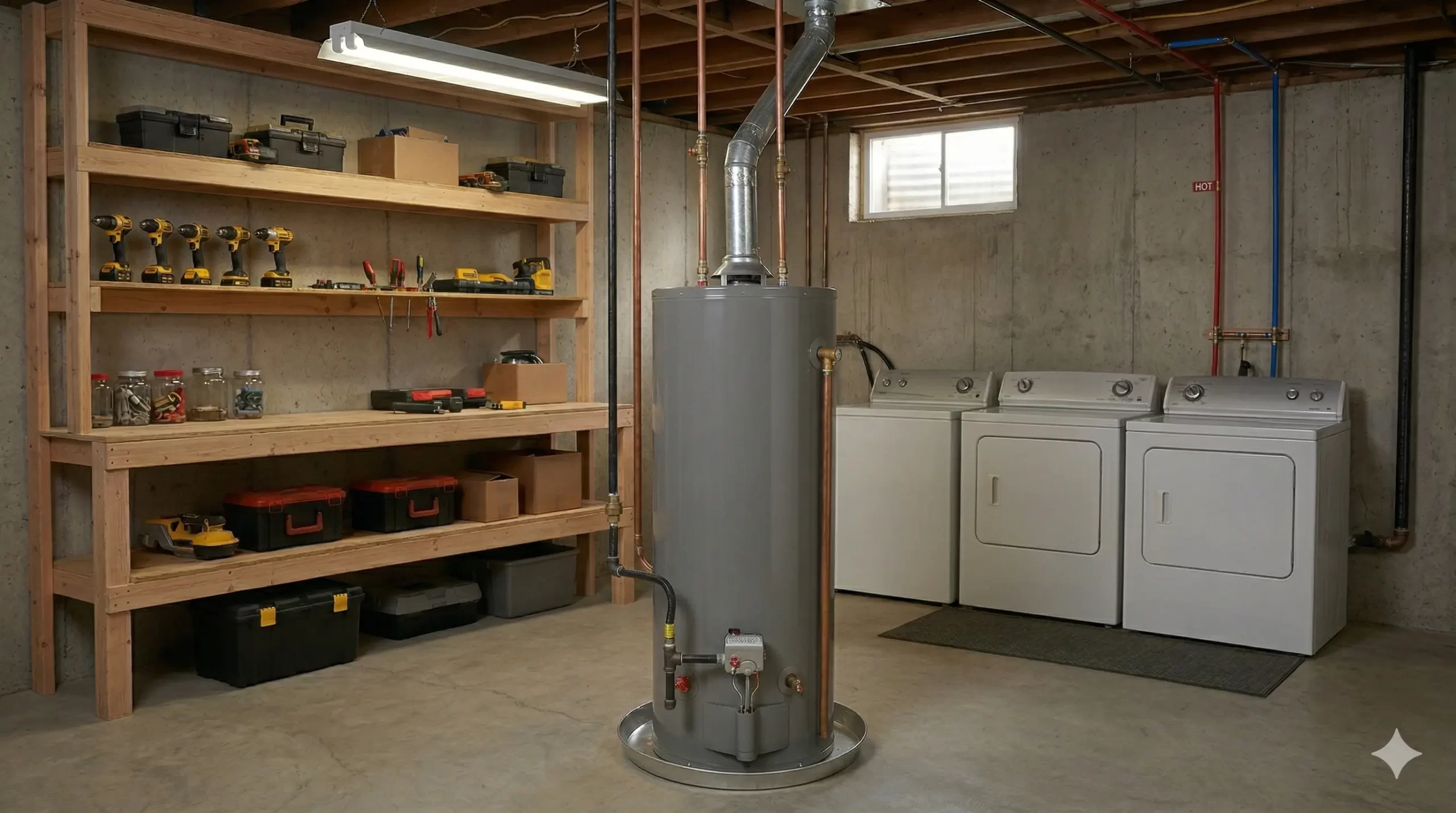
In many Nevada homes, the gas water heater is located in the garage, a space prone to dust and temperature swings. This desert dust can clog the burner assembly or pilot orifice, leading to a weak, flickering, or yellow flame instead of a crisp blue one. You might notice the unit struggles to ignite or won’t stay lit at all. These are clear indicators that the combustion system is compromised and requires professional cleaning and inspection to ensure safe operation.
Beyond ignition issues, listen for unusual noises. Loud popping or banging sounds often signal a significant buildup of mineral sediment at the bottom of the tank—a common problem with our hard water. This layer insulates the water from the flame, causing overheating and stress on the tank. If you notice a faint ‘rotten egg’ smell, shut off your gas supply immediately and call for emergency service, as this indicates a dangerous gas leak that cannot be ignored.
⚡ Electric Water Heaters
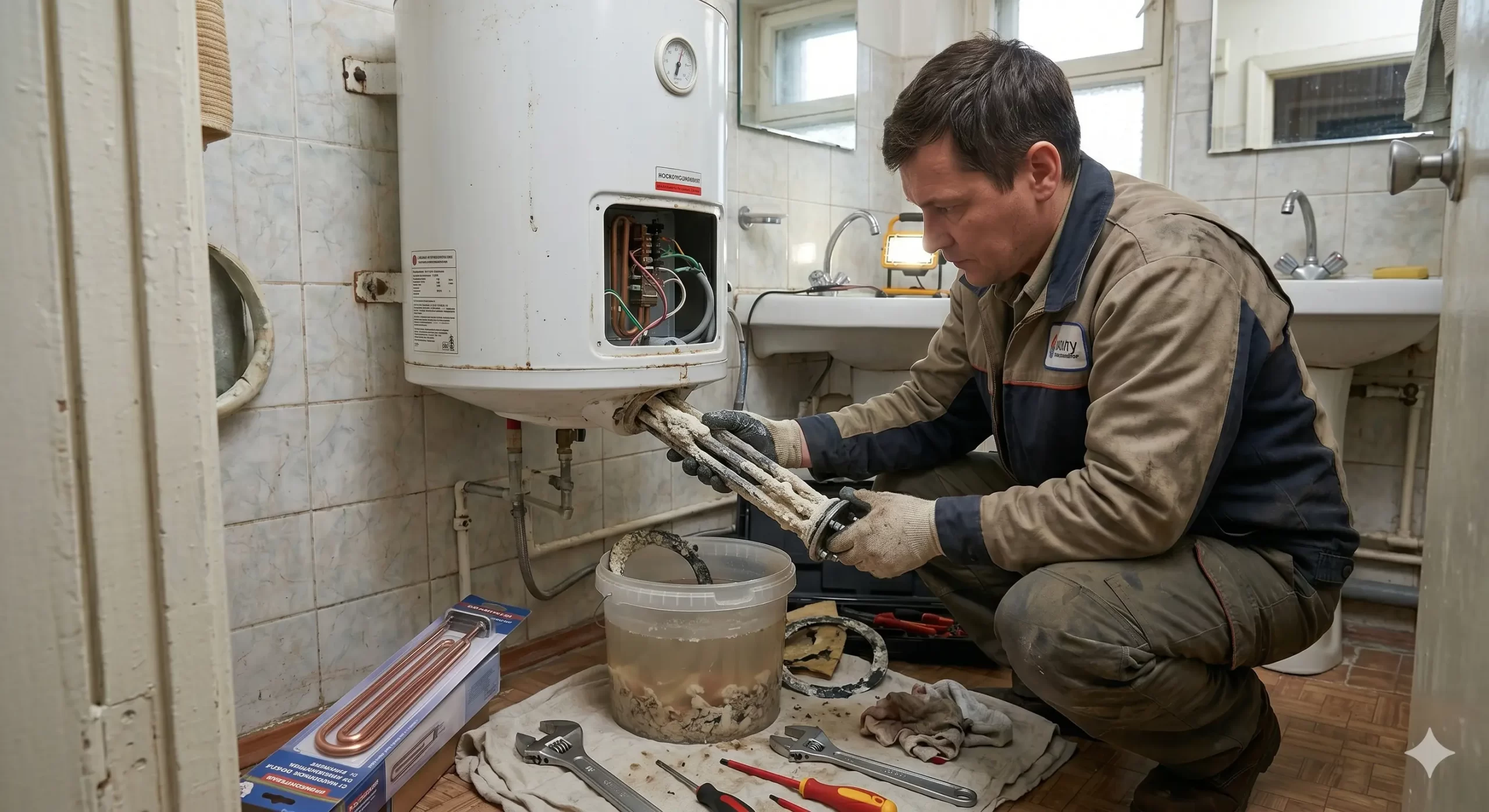
Nevada’s extremely hard water is the primary culprit behind most electric water heater failures. The high concentration of calcium and magnesium creates a thick, rocky scale that builds up directly on the heating elements. This forces the elements to work much harder to heat the water, causing a dramatic spike in your NV Energy bill. Eventually, the elements will burn out completely, leaving you with lukewarm or completely cold water and in need of a professional repair.
This same mineral scale also settles at the bottom of the tank, reducing its hot water capacity and creating loud popping or rumbling noises as water boils underneath the sediment layer. Over time, this sediment can accelerate corrosion inside the tank. If you see discolored, rusty water coming from your taps or discover moisture around the base of the heater, the tank’s structural integrity may be compromised, often requiring a full replacement.
🚿 Tankless Systems
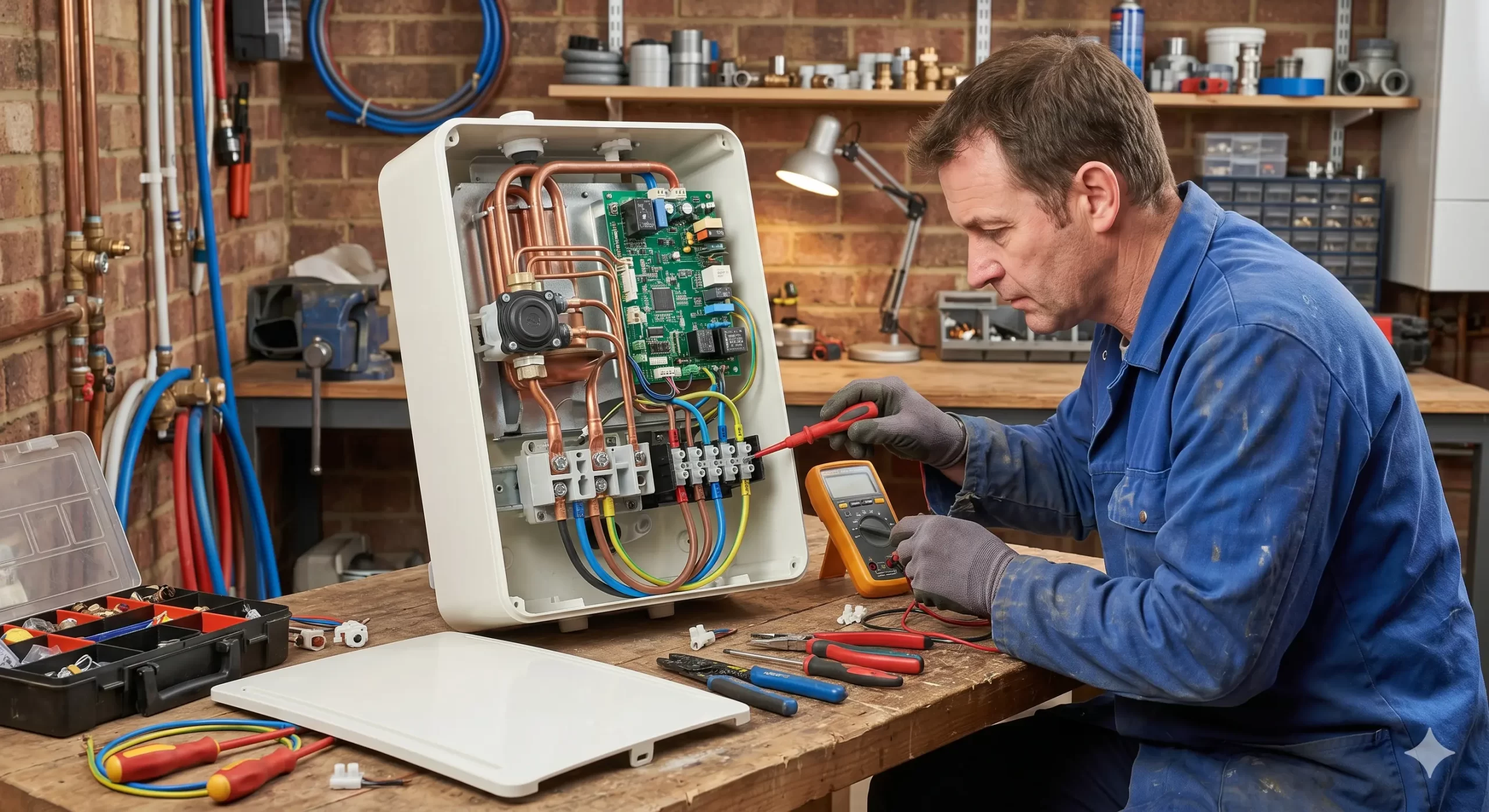
Tankless water heaters in Nevada, especially units installed outdoors to save space, face a unique challenge: the extreme desert heat. During our intense summer months, the ambient temperature can cause the unit’s sensitive internal electronics to overheat. This often triggers a safety shutdown, resulting in an error code on the display and an unexpected loss of hot water. The unit may refuse to restart until it has cooled down, a frustrating issue during a summer heatwave.
Furthermore, the fine dust that blankets the Nevada landscape can be drawn into the unit’s air intake and fan. This accumulation can clog filters and coat crucial sensors, leading to improper combustion and fluctuating water temperatures. If your hot water suddenly goes cold or the pressure seems inconsistent, it’s often a sign that the unit is suffocating on dust and requires a thorough, professional cleaning to restore its efficiency and reliability.
Average Repair Costs in Nevada
Nevada Plumbing Codes & Regulations
🔥 Gas Installation Codes
In Nevada, where garage installations are the norm, safety is paramount. Local plumbing and building codes often mandate the installation of a protective steel post, known as a bollard, in front of any gas water heater located in the path of a vehicle. This simple but critical requirement prevents a minor parking mishap from becoming a catastrophe by protecting the unit, its gas lines, and its exhaust vent from accidental impact, which could otherwise lead to a dangerous gas leak or carbon monoxide poisoning.
⚡ Electric Codes
Electrical safety codes in Nevada are strictly enforced to protect homeowners. An electric water heater is a high-demand appliance that requires its own dedicated circuit in your home’s electrical panel. This prevents overloading and reduces the risk of electrical fires. Additionally, regulations often require GFCI (Ground Fault Circuit Interrupter) protection for the circuit, which immediately cuts power if it detects a dangerous electrical fault, providing essential protection against shock in areas like garages or basements where moisture may be present.
🚿 Tankless Regulations
Installing tankless water heaters on an exterior wall is a popular space-saving solution in Nevada. However, this exposes the unit to our state’s harsh elements. To comply with local codes and manufacturer specifications, these outdoor installations must include proper protection from dust and direct, prolonged sun exposure. This often involves using a manufacturer-approved weather-resistant case and ensuring vents are shielded from fine desert dust, which can clog components and cause premature failure if not properly managed.
💰 Nevada Permits & Energy Rebates
When replacing a water heater in Nevada, securing a permit from your local municipality is a necessary step. This ensures that the installation is performed by a qualified professional and meets all current safety codes, protecting your property and family. While navigating the permit process, don’t forget to explore savings. NV Energy actively promotes energy conservation and offers valuable rebates for customers who install qualifying high-efficiency or smart water heaters, helping to offset the cost of your new, more energy-conscious unit.
Ask the Nevada Plumbing AI Expert
Have specific questions about plumbing codes, permits, or hard water in your local county? Ask our AI assistant below:
🤖 Nevada Plumbing Expert AI
Local Codes & Water Quality Dashboard
What are the statewide water heater plumbing codes, safety regulations, and 2026 energy rebates for Nevada?
Statewide Water Heater Plumbing Codes and Safety Regulations for Nevada (2026)
As a Senior Master Plumber and Inspector for Nevada, I can confirm that the statewide plumbing code adopted in Nevada generally references a modified version of the Uniform Plumbing Code (UPC). For 2026, local jurisdictions across Nevada are primarily enforcing the 2021 Uniform Plumbing Code (UPC), with some possibly transitioning to or having already adopted the 2024 UPC. Always verify the specific code cycle adopted by your local authority having jurisdiction (AHJ) for precise details, as amendments can occur at the local level.
Key Plumbing Code Requirements and Safety Regulations for Water Heaters:
- Temperature and Pressure Relief (TPR) Valve: Every water heater must be equipped with an approved TPR valve. The discharge pipe from this valve must:
- Be constructed of approved material (e.g., copper, galvanized steel, CPVC, polypropylene with appropriate temperature ratings).
- Have no valves, obstructions, or caps.
- Terminate indirectly to an approved drain (e.g., floor drain, standpipe, exterior to grade) within 6 inches of the floor or finished grade.
- Maintain a full-size diameter (usually 3/4 inch) throughout its length.
- Be installed within 6 inches of the top of the tank.
- Seismic Strapping: All tank-type water heaters must be securely strapped in place to prevent tipping during seismic events.
- Typically requires two straps: one in the upper one-third of the tank and one in the lower one-third, with a minimum of 4 inches clearance from the controls.
- Straps must be anchored to the structure (e.g., studs, masonry).
- Drain Pan (Catch Pan): Water heaters installed in locations where leakage could cause damage to the building structure or contents (e.g., above finished ceilings, in attics, above living spaces) must be installed in an approved metallic or non-metallic pan.
- The pan must be sized to contain any potential leakage from the tank.
- A drain pipe from the pan must terminate indirectly to an approved receptor or to the exterior.
- Expansion Tank: If the plumbing system incorporates a backflow prevention device or a pressure reducing valve, creating a closed system, an approved expansion tank must be installed on the cold water supply line to the water heater.
- The expansion tank must be sized appropriately for the water heater's capacity and system pressure.
- Gas Shut-off Valve & Sediment Trap (for Gas Water Heaters):
- An approved manual gas shut-off valve must be installed on the gas supply line to the water heater.
- A sediment trap (drip leg) must be installed upstream of the gas control valve, as close as practical to the appliance, to collect sediment and moisture from the gas line.
- Venting (for Fuel-Fired Water Heaters): All fuel-fired water heaters must be properly vented to the outdoors in accordance with the manufacturer's instructions and the adopted mechanical code (e.g., Uniform Mechanical Code or International Mechanical Code).
- Vent piping must be of approved material and size, properly sloped, and securely supported.
- Adequate combustion air must be provided.
- Combustible Clearances: Water heaters must maintain specified clearances from combustible materials as per manufacturer's instructions and code requirements.
- Access and Working Space: Water heaters must be installed with adequate access for inspection, maintenance, and replacement.
- Electrical Requirements (for Electric Water Heaters): Must comply with the National Electrical Code (NEC) as adopted by Nevada, including proper wiring, overcurrent protection, and disconnects.
Nevada 2026 Energy Rebates for Water Heaters
As of 2026, energy rebates for high-efficiency water heaters are primarily offered through local utility providers and federal tax credits rather than a single comprehensive statewide program in Nevada. These incentives are designed to encourage the adoption of more energy-efficient technologies.
Primary Rebate Providers in Nevada:
- NV Energy: Serving northern and southern Nevada. NV Energy typically offers rebates for:
- Heat Pump Water Heaters (HPWH): Significant rebates are generally available for ENERGY STAR certified models with qualifying Uniform Energy Factor (UEF) ratings. Rebate amounts can vary based on efficiency tiers and tank size.
- For definitive 2026 program details, eligibility requirements, and current rebate amounts, customers must visit the official NV Energy website or contact their customer service department.
- Southwest Gas: Serving natural gas customers in parts of Nevada. Southwest Gas often provides rebates for:
- ENERGY STAR Tankless Water Heaters: Rebates for high-efficiency natural gas tankless water heaters that meet specific Uniform Energy Factor (UEF) ratings.
- ENERGY STAR Natural Gas Storage Water Heaters: Rebates may be offered for high-efficiency natural gas storage water heaters meeting specific UEF criteria.
- For the most current 2026 rebate information, terms, and application procedures, natural gas customers should consult the official Southwest Gas website or call their energy conservation department.
Federal Tax Credits:
- In 2026, homeowners upgrading to certain high-efficiency home improvements, including water heaters, may still be eligible for federal tax credits under Section 25C of the Internal Revenue Code (part of the Inflation Reduction Act).
- Heat Pump Water Heaters: Up to a 30% tax credit, capped at $2,000 annually, for qualifying ENERGY STAR certified electric heat pump water heaters with a UEF of 2.2 or greater.
- High-Efficiency Natural Gas, Propane, or Oil Water Heaters: Up to a 30% tax credit, capped at $600 annually, for qualifying tankless or storage water heaters with a UEF of 0.82 or greater, or a thermal efficiency of 90% or greater.
- These tax credits are subject to federal regulations and individual tax situations. Consult a qualified tax professional and review IRS Publication 523 and relevant IRS guidance for 2026 for full details and eligibility requirements.
It is crucial to verify all rebate and tax credit eligibility requirements, application processes, and deadlines directly with the respective utility or the IRS prior to purchase and installation, as programs can be updated or modified annually.
Repair vs. Replace Guidelines
With NV Energy’s summer rates being so high, does it make sense to repair my old electric water heater or just replace it?
That’s a critical financial question for any Nevadan. If the repair is for a minor component like a thermostat, it can be cost-effective. However, if a heating element has failed due to our hard water, it’s a symptom of major inefficiency. A new, energy-efficient model will use significantly less electricity, providing substantial savings on your utility bills, especially during those peak summer months when your A/C is already driving costs up. The long-term savings often make replacement the smarter investment.
What’s the best maintenance routine for a water heater dealing with Nevada’s extremely hard water?
Proactive maintenance is key to survival here. We strongly recommend a professional tank flush at least once a year to remove the mineral scale that builds up and kills efficiency. Just as important is checking the anode rod every two years. This ‘sacrificial’ rod is designed to corrode instead of your tank. Replacing a depleted anode rod is an inexpensive service that can potentially double the life of your water heater in our harsh water conditions.
Recent Service Feedback in Nevada
“Our water heater in the garage finally gave out. They came out the same day, explained how the hard water had destroyed the old one, and got a new one installed quickly. They even installed one of those safety poles in front of it, which we didn’t know was a thing. Great service.”
— David L., Henderson
“My electric bill was getting out of control. The technician showed me how caked with minerals my heating elements were. He replaced them and flushed the tank, and my last NV Energy bill was noticeably lower. Honest work and fair pricing.”
— Maria S., Reno
“The tankless unit on the side of our house kept failing in the afternoon heat. Their tech knew exactly what to look for, cleaned out all the desert dust from the fan, and it’s been running perfectly ever since. They understand the unique problems we have here in Vegas.”
— Tom P., Las Vegas
Fast Local Water Heater Repair & Diagnostics
Calls are routed to a licensed local plumbing professional.