
Water Heater Repair in Wyoming
From Cheyenne to Jackson, we ensure your hot water keeps flowing through Wyoming’s harshest winters.
No Hot Water? Get It Fixed Today.
Connect with licensed Wyoming plumbers. Emergency service available.
Fast Local Water Heater Repair & Diagnostics
Calls are routed to a licensed local plumbing professional.
Common Failures We Fix in Wyoming
🔥 Gas Water Heaters
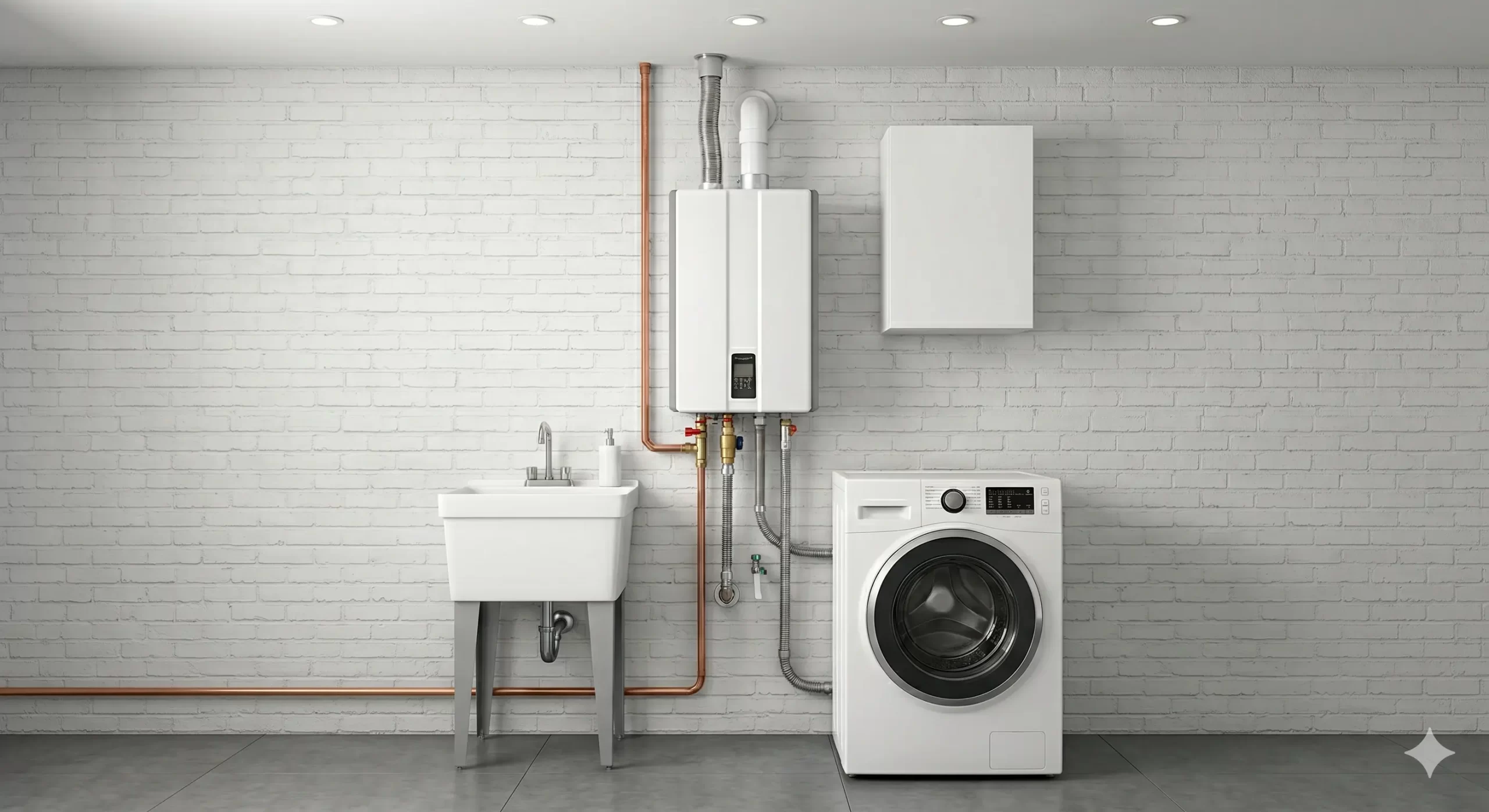
Is your gas water heater making a rumbling or popping sound from the basement? In Wyoming, our extremely hard water causes significant sediment buildup at the bottom of the tank, which can insulate the burner and lead to overheating and strange noises. You might also notice a pilot light that refuses to stay lit or a faint smell of gas. These aren’t just inconveniences; they are serious warning signs, especially for units located in enclosed basement spaces where poor ventilation can turn a small leak into a major hazard.
A flickering or yellow pilot light, rather than a crisp blue one, often indicates incomplete combustion, a problem exacerbated by our high altitude. This not only wastes fuel but can produce dangerous carbon monoxide. If you notice soot collecting around the unit or water pooling at the base, it’s a clear signal that your gas water heater’s thermocouple, gas valve, or the tank itself is failing. Don’t ignore these symptoms; a prompt professional inspection is crucial for the safety of your Wyoming home.
⚡ Electric Water Heaters
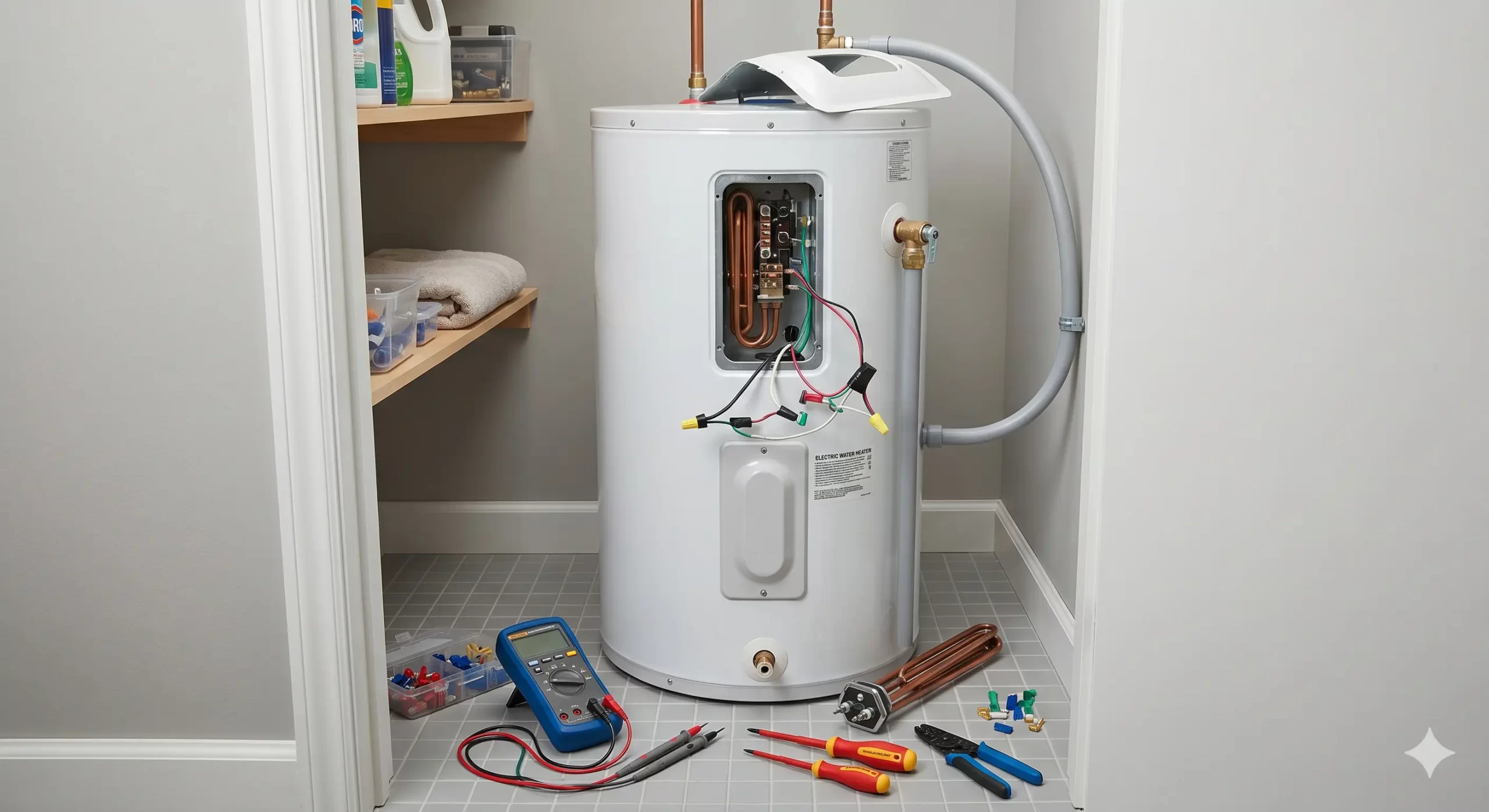
In Wyoming, the number one enemy of an electric water heater is our notoriously hard to very hard water. The high mineral content, particularly calcium and magnesium, calcifies and coats the heating elements. This forces them to work much harder to heat the water, causing a spike in your energy bill and leading to premature burnout. If you’re experiencing lukewarm water, no hot water at all, or hear a hissing sound from the tank, it’s highly likely a sediment-caked element has failed.
This same mineral buildup settles at the bottom of the tank, reducing its capacity and creating a breeding ground for rust. Over time, this corrosion can eat through the tank lining, leading to leaks. Another key component destroyed by our water is the anode rod, which is designed to sacrifice itself to protect the tank. Once it’s gone, the tank itself begins to corrode rapidly. Discolored or metallic-tasting water is a late-stage warning that significant internal decay is happening.
🚿 Tankless Systems
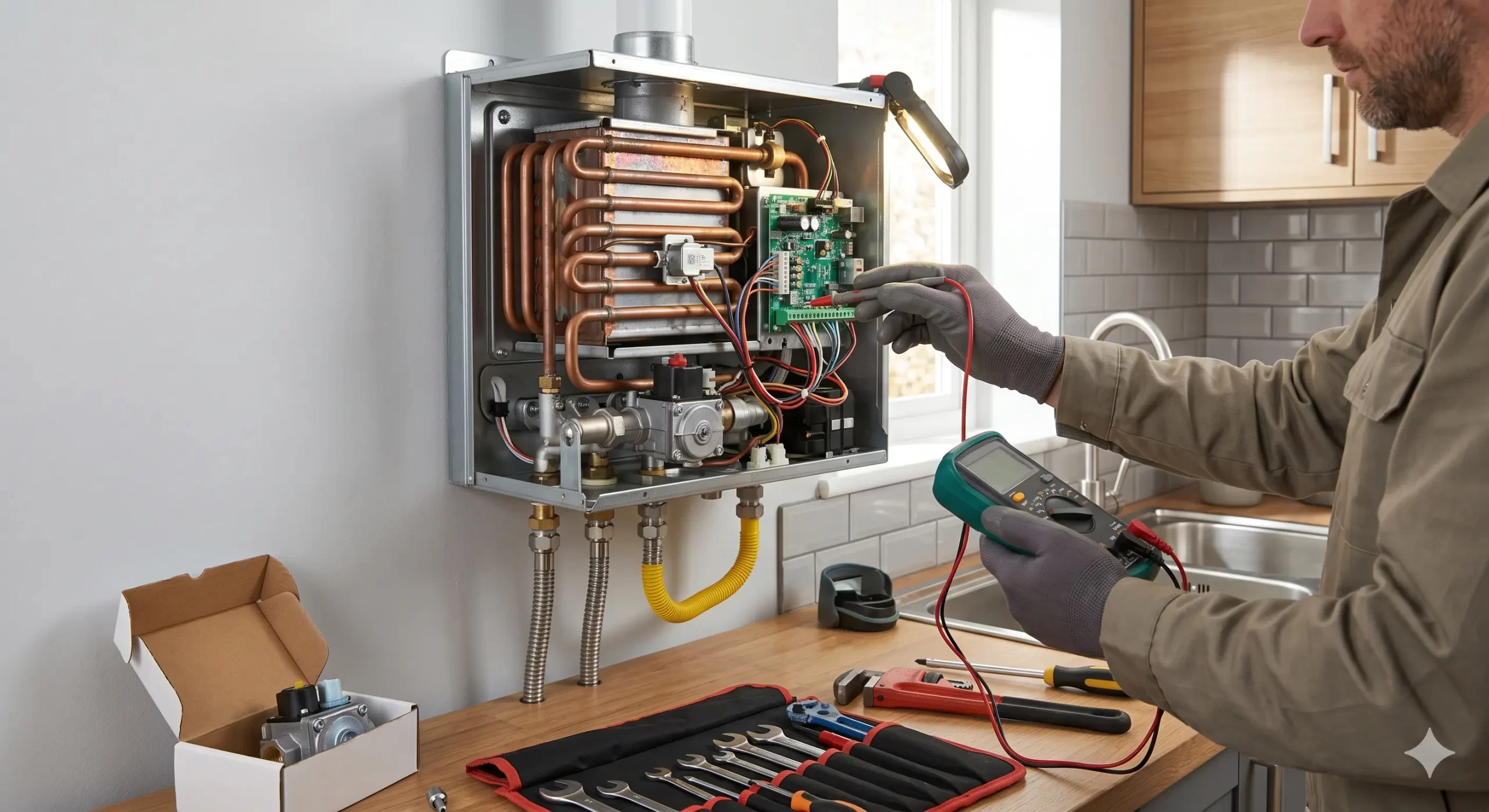
Tankless water heaters in Wyoming face a unique dual threat: severe cold winters and high altitude. During our brutal cold snaps, the incoming groundwater temperature can drop dramatically, forcing your tankless unit to work overtime to achieve the target hot water temperature. This immense strain can lead to system overloads, ignition failures, or an inability to keep up with demand, resulting in fluctuating water temperatures. You might notice your shower suddenly going cold, which is often a sign the unit’s flow sensor or heat exchanger is struggling with the extreme conditions.
Furthermore, Wyoming’s high altitude thins the air, which can disrupt the precise air-to-fuel ratio required for clean combustion in a tankless heater. This can lead to error codes, flame loss, or inefficient operation. If your unit is frequently shutting down or displaying fault codes related to combustion or exhaust, it’s likely struggling with the elevation. Proper installation and high-altitude adjustments are not optional here; they are essential for reliable, on-demand hot water.
Average Repair Costs in Wyoming
Wyoming Plumbing Codes & Regulations
🔥 Gas Installation Codes
In Wyoming’s high-elevation environment, installing a gas water heater correctly isn’t just about following the manual—it’s about following the laws of physics. ‘High altitude derating’ is a mandatory adjustment for all gas-burning appliances. As altitude increases, the air becomes less dense, providing less oxygen for combustion. To compensate, a certified plumber must adjust the gas orifice or burner settings to reduce the fuel input. Failing to derate a water heater can lead to sooting, inefficient burning, and the production of dangerous levels of carbon monoxide, creating a significant safety risk in your home.
⚡ Electric Codes
When it comes to electric water heaters, standard electrical compliance is non-negotiable for safety and proper function. This means ensuring the unit is connected to a dedicated circuit with the correct amperage breaker and appropriate wire gauge as specified by the manufacturer and the National Electrical Code (NEC). Using an undersized wire or an oversized breaker can create a serious fire hazard. Our licensed technicians always verify that your home’s electrical system can safely support your water heater, protecting your property and your family from electrical risks.
🚿 Tankless Regulations
Wyoming regulations mandate that any new indoor tankless water heater must be a sealed combustion, direct-vent unit. This is a critical safety measure for our tightly sealed homes, which are built to withstand harsh winters. A sealed combustion system pulls all the air it needs for burning directly from the outside and vents all exhaust gases back outside through a dedicated pipe. This eliminates any risk of backdrafting carbon monoxide into your living space and prevents the unit from consuming the oxygen you need to breathe, ensuring your indoor air quality remains safe.
💰 Wyoming Permits & Energy Rebates
Before we begin any water heater replacement in Wyoming, securing the proper permits from your local city or county is a required first step. This ensures the installation is performed to the highest safety and code standards. We handle the entire permitting process for you. Additionally, many of our customers can benefit from financial incentives. Rocky Mountain Power often offers valuable rebates and incentives for upgrading to a new, high-efficiency water heater. We can help you identify qualifying models and guide you through the application process to help you save money on your investment.
Ask the Wyoming Plumbing AI Expert
Have specific questions about plumbing codes, permits, or hard water in your local county? Ask our AI assistant below:
🤖 Texas Plumbing Expert AI
Local Codes & Water Quality Dashboard
What are the statewide water heater plumbing codes, safety regulations, and 2026 energy rebates for Texas?
Statewide Water Heater Plumbing Codes and Safety Regulations for Texas (2026)
As a Senior Master Plumber and Inspector for the Great State of Texas, it's my duty to ensure all plumbing installations meet the highest standards for safety and efficiency. For 2026, the foundational plumbing code in Texas remains based on the International Plumbing Code (IPC), specifically the 2021 International Plumbing Code with specific amendments adopted by the Texas State Board of Plumbing Examiners (TSBPE). While there's always a possibility of minor updates, the core principles outlined below are firmly in place.
Here are the critical statewide codes and safety regulations you must adhere to for water heater installations:
-
Permitting:
- Mandatory: A plumbing permit from your local Authority Having Jurisdiction (AHJ) is required for all new water heater installations and replacements. This ensures the work is inspected and complies with local and state codes.
-
Temperature and Pressure Relief (TPR) Valves:
- Essential Safety Device: Every water heater must be equipped with a properly sized and rated TPR valve.
- Discharge Pipe Requirements:
- Must be installed on the TPR valve and discharge to an approved location.
- Must be of approved material (e.g., copper, CPVC, PEX with specific pressure ratings).
- Must have an internal diameter no smaller than the outlet of the valve it serves.
- Must not be trapped, capped, or have any valves or obstructions.
- Must terminate by gravity flow with an air gap and be visible.
- Must terminate within 6 inches of the floor or into a properly drained receptor (like a floor drain or indirectly into a drain pan).
- Must not terminate in a location where it could cause property damage or create a hazard.
-
Water Heater Pan Requirements:
- Location Dependent: A water heater located in an attic, above a ceiling, in a furred space, or in any other location where water leakage could cause damage to the building or its contents, *must* be installed in a water heater pan.
- Drainage: The pan must be drained by an indirect waste pipe to a visible approved location, such as a floor drain, utility sink, or outside to an area that won't cause damage. The drain line must be at least 3/4 inch in diameter.
-
Expansion Tanks:
- Closed Systems: An approved, properly sized expansion tank is required for all water heaters installed in closed water supply systems (where there's a backflow prevention device or pressure reducing valve on the main water line).
- Function: This prevents excessive pressure build-up due to thermal expansion of heated water.
-
Venting (Gas Water Heaters):
- Combustion Air: Adequate combustion air must be supplied to the water heater area to ensure proper and safe operation.
- Vent Connectors: Must be properly sized, sloped upward, securely fastened, and made of approved materials suitable for the appliance's flue gas temperature.
- Termination: Vents must terminate outdoors with required clearances from openings, combustible materials, and other specific building features.
- Carbon Monoxide Safety: While not strictly a plumbing code, installers have a responsibility to ensure proper venting to prevent carbon monoxide accumulation. A CO detector is highly recommended in proximity to gas-fired appliances.
-
Seismic Strapping:
- Best Practice: While Texas isn't a high seismic zone, securing water heaters with approved strapping (typically two straps for tanks over 40 gallons) is considered a best practice for stability and safety, especially against tipping. Many local jurisdictions mandate this.
-
Clearances to Combustibles:
- Water heaters must maintain manufacturer-specified clearances from combustible materials (walls, ceilings, etc.).
-
Accessibility:
- Water heaters must be installed in a location that provides adequate access for inspection, maintenance, and replacement.
-
Water Temperature Setting:
- For residential applications, the default factory setting is often 120°F. While higher temperatures are possible, 120°F is generally recommended to prevent scalding, especially in homes with children or elderly residents.
-
Electrical Connections (Electric Water Heaters):
- Must comply with the National Electrical Code (NEC) as adopted in Texas.
- Proper wiring, grounding, overcurrent protection, and disconnects are mandatory.
2026 Energy Rebates for Water Heaters in Texas
As your inspector, I must provide hard data. Specific statewide and local rebates for 2026 are often not finalized until the end of the preceding year or the beginning of the new year, and they can change based on legislative action, utility company budgets, and federal funding allocations. Therefore, I cannot provide definitive 2026 rebate figures at this moment.
However, I can provide you with the most likely avenues for rebates and the types of water heaters that typically qualify:
-
Federal Tax Credits (Expected to Continue):
- The Inflation Reduction Act (IRA), enacted in 2022, offers significant federal tax credits for energy-efficient home improvements, many of which are expected to continue or be updated for 2026.
- High-Efficiency Heat Pump Water Heaters (HPWHs): These are generally eligible for a tax credit of 30% of the project cost, up to $2,000. This credit is claimed via IRS Form 5695 (Residential Energy Credits) when filing your federal taxes. To qualify, the HPWH must meet specific energy factor (EF) or uniform energy factor (UEF) requirements set by ENERGY STAR.
- It's crucial to consult the IRS website or a tax professional for the most current information and eligibility requirements for the 2026 tax year.
-
Local Utility Company Rebates:
- Many Texas utility companies offer their own incentive programs to encourage energy efficiency among their customers. These programs are highly localized and vary greatly.
- Action Required: You will need to directly contact your specific electric and/or gas utility provider to inquire about any active or anticipated 2026 rebates for energy-efficient water heaters.
- Common Utility Providers in Texas include:
- Oncor Electric Delivery
- CenterPoint Energy
- Texas-New Mexico Power (TNMP)
- AEP Texas
- Austin Energy (City of Austin)
- CPS Energy (San Antonio)
- Reliant Energy
- TXU Energy
- Various Electric Cooperatives (e.g., Pedernales Electric Cooperative - PEC, Bluebonnet Electric Cooperative, GVEC, etc.)
- Various Municipal Utilities
- Typical Qualifying Water Heaters: Heat Pump Water Heaters (HPWHs) and high-efficiency tankless water heaters are most often the focus of these utility programs.
-
Manufacturer Rebates:
- Some water heater manufacturers periodically offer their own rebates on specific high-efficiency models.
- Action Required: Check the websites of major water heater brands (e.g., Rheem, Bradford White, A. O. Smith, Noritz, Rinnai) for any direct rebate programs.
Recommendation: Always verify eligibility requirements, application processes, and deadlines for any rebate program you plan to utilize, as these can be strict and subject to change. For the most accurate and up-to-date information on 2026 rebates, direct contact with the listed sources is essential.
Repair vs. Replace Guidelines
With Wyoming’s average energy rates, is it better to repair my old water heater or just replace it?
While our energy rates aren’t the highest in the nation, they still add up. The decision depends on the repair cost and your unit’s age. If the repair is more than 50% of the replacement cost, or if your heater is over 10 years old, replacing it is usually the smarter financial move. A new, energy-efficient model will provide immediate and consistent savings on your monthly utility bill that will quickly offset the initial investment.
How can I protect my water heater from Wyoming’s very hard water?
Wyoming’s hard water is tough on plumbing. The most important maintenance task is to have your tank flushed annually by a professional. This removes the sediment buildup that damages heating elements and corrodes the tank. We also strongly recommend checking the anode rod every two years. Replacing this inexpensive ‘sacrificial’ rod when it’s depleted can dramatically extend the life of your water heater, saving you from a premature and costly replacement.
Recent Service Feedback in Wyoming
“Our water heater died in the middle of a January cold snap in Cheyenne. They were out here the same day and explained how the hard water had destroyed the old electric element. The new installation was fast, professional, and up to code. Huge relief!”
— David P., Cheyenne
“The pilot light on our gas heater in the basement kept going out. The technician who came to our Casper home was fantastic. He identified a high-altitude combustion issue, corrected it, and serviced the unit. It’s running better and safer than ever.”
— Brenda K., Casper
“We were getting lukewarm water and our power bill was creeping up. They diagnosed a sediment-caked heating element right away. The repair was done quickly and they flushed the tank. Excellent service for our home in Laramie.”
— Tom F., Laramie
Fast Local Water Heater Repair & Diagnostics
Calls are routed to a licensed local plumbing professional.