
Initial Capital Outlay vs. Long-Term Net Present Value: A Comparative Cost Breakdown ️
The selection of a septic tank material—precast concrete versus fiber-reinforced polymer (FRP), or fiberglass—is a significant capital investment decision with long-term financial ramifications. A superficial analysis focuses solely on the initial purchase price, a flawed methodology that ignores critical variables such as installation complexity, material longevity, and failure-mode cost liabilities. Below is a detailed financial model for a standard 1,000-gallon system, contextualized for challenging soil conditions, such as the expansive clays and high water tables prevalent in Minnesota.
| Cost Factor / Metric | Precast Concrete (1000-Gallon) | Fiberglass (FRP) (1000-Gallon) | Engineering Notes & Financial Implications |
|---|---|---|---|
| Material Purchase Price | $1,200 – $2,200 | $1,800 – $2,800 | Fiberglass exhibits a ~30-40% higher initial material cost. However, this is only one component of the total project cost. |
| Excavation & Standard Labor | $3,500 – $6,000 | $3,000 – $5,500 | FRP tanks are significantly lighter (approx. 300-500 lbs vs. 8,000-12,000 lbs for concrete), potentially reducing machinery requirements and labor hours. |
| Specialized Installation Costs | Crane/Boom Truck Rental: $500 – $1,000 | Water Ballasting & Anchoring System (High Water Table): $800 – $1,500 | Concrete’s mass requires heavy machinery. Fiberglass’s buoyancy requires anti-flotation measures in saturated soils. This cost is non-negotiable in areas like Minnesota. |
| Total Estimated Installation Cost | $5,200 – $9,200 | $5,600 – $9,800 | The total installed cost delta often narrows significantly when accounting for site-specific logistics and engineering requirements. |
| Median Design Lifespan | 25 – 40 Years | 30 – 50+ Years | Lifespan is highly dependent on maintenance protocol and environmental chemistry (e.g., H₂S corrosion). FRP is inert to biogenic sulfide corrosion. |

Proactive Maintenance Protocols: Mitigating Financial Liability
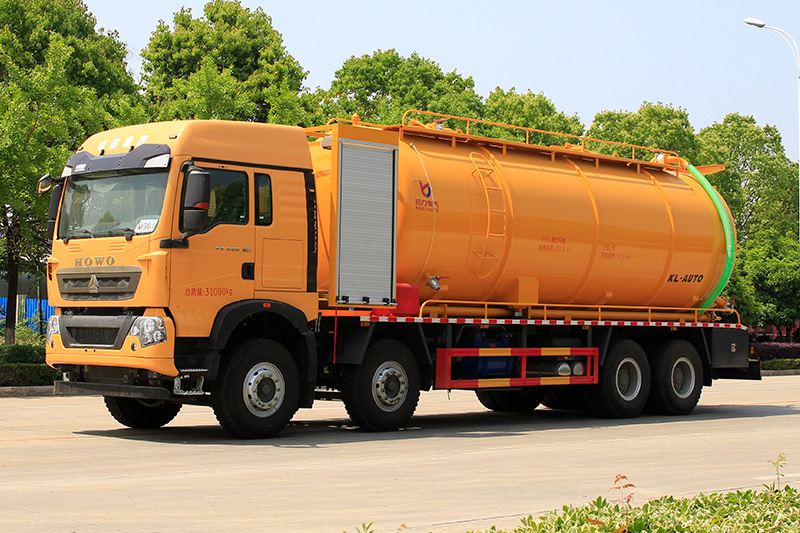
System longevity is not a function of material alone, but of a rigorously followed maintenance schedule. Negligence transforms a manageable operational expense into a catastrophic capital expenditure. The primary goal of maintenance is to prevent solid waste (sludge and scum) from migrating into the drain field, which constitutes the most expensive component of the entire onsite wastewater treatment system. For fast response times, get in touch with our septic professionals servicing Oakland Park, FL.
- Scheduled Pumping: The standard pumping interval is 3-5 years, contingent on household size and water usage. The cost, typically $350 – $600, is a high-ROI preventative measure. Deferring this service to save money is a classic economic fallacy. A $500 pumping fee prevents a $15,000 – $30,000 drain field replacement.
- Effluent Filter Maintenance: Modern systems are equipped with an effluent filter in the outlet baffle. This device must be cleaned annually. Failure to do so results in system backup and can force solids into the drain field under pressure. The cost of neglect is the same as failing to pump the tank.
- Structural Inspection: During each pump-out, a certified technician must perform a visual inspection of the tank’s interior. For concrete tanks, this involves checking for spalling, cracking, and baffle integrity. For fiberglass, the inspection focuses on baffle connection points and any signs of deformation.
Troubleshooting Common Modes of Material Failure
Each material possesses a unique profile of vulnerabilities, particularly in environments with dynamic soil pressures and extreme temperature fluctuations as seen in the Upper Midwest.
Precast Concrete Failure Points:
- Structural Cracking: Minnesota’s frost heave can exert immense pressure on a tank, leading to shear cracks. Clay soils, which expand and contract significantly with moisture content, also impose cyclical stress. Water ingress through these cracks can hydraulically overload the drain field.
- Baffle Collapse: The most common point of failure is the concrete baffle wall, which succumbs to H₂S corrosion long before the tank walls. Its collapse allows solids to exit the tank directly, rapidly destroying the drain field. Repair is often impossible, necessitating tank replacement.
- Lid Deterioration: The tank lid is also susceptible to corrosion and physical stress. A compromised lid is not just a functional failure; it is a severe safety hazard that can lead to catastrophic collapse under load.
Fiberglass (FRP) Failure Points:
- Buoyant Uplift: In high water tables, an empty or partially empty fiberglass tank can act like a boat, literally ‘popping’ out of the ground if not properly anchored and ballasted with water during installation. This is an installation failure, not a material defect.
- Puncture/Damage: FRP can be punctured by sharp rocks or improper handling during backfilling. A thorough pre-installation inspection and careful, sand-based backfill are critical.
- Deformation Under Load: Unlike concrete, fiberglass requires proper soil support around it to maintain its shape. It should never be installed under driveways or areas with vehicular traffic without specific structural engineering and reinforcement, such as a concrete collar.
Financial Case Study: The Schmidt Residence, Stearns County, MN
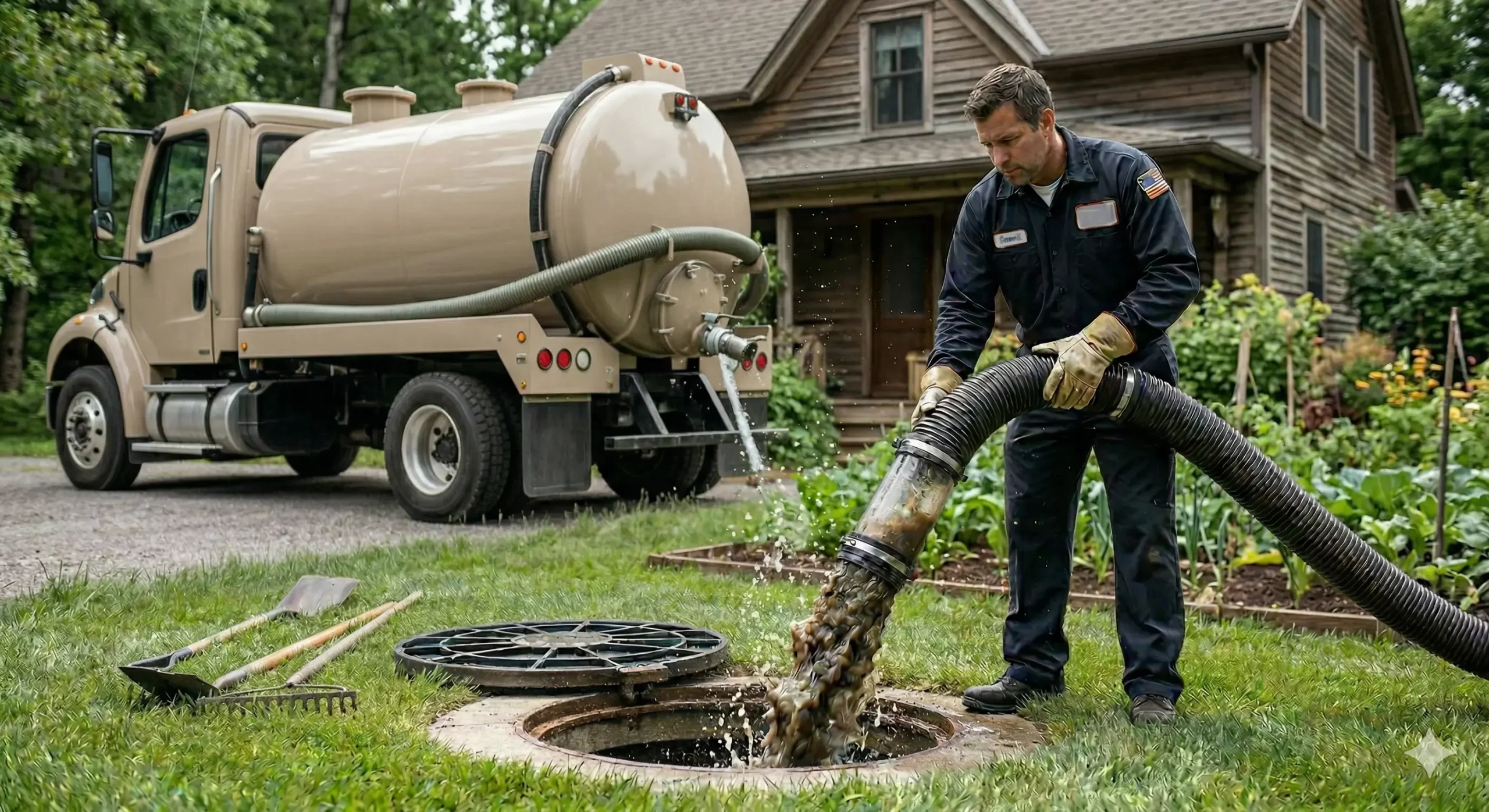
Does a $1,500 upfront ‘savings’ on a septic system installation truly represent a sound financial decision over a 30-year horizon? Let us analyze a real-world scenario. In 1998, the Schmidt family opted for a standard precast concrete tank, saving approximately $1,500 compared to the quoted price for an anchored fiberglass system. The property features a high water table and silty clay soil.
For 22 years, the system functioned adequately with regular pumping. However, in 2020, a routine inspection during a pump-out revealed severe degradation of the concrete outlet baffle and significant spalling on the tank ceiling due to advanced biogenic sulfide corrosion. The baffle was on the verge of collapse. The cost to replace the baffle was quoted at $2,800, but with no guarantee it wouldn’t fail again. The family faced a difficult choice: a patch-job or a full system replacement. Don’t wait for a backup to flood your yard. Check out our local services in Cedar Hill, TX.
They opted for a full replacement to protect their drain field. The total cost was a financial shock:
- Emergency Pump-Out & Temporary Holding: $750
- Excavation, Demolition & Disposal of old concrete tank: $3,200
- New 1,000-Gallon Fiberglass Tank with Anchoring System: $9,500
- Plumbing Connections, Risers, and Inspection Fees: $1,800
- Final Grading and Landscape Restoration: $2,500
Total Unplanned Capital Expenditure: $17,750. The initial $1,500 savings in 1998 resulted in a $17,750 liability 22 years later. This case study starkly illustrates that the most critical financial metric is not the initial installation price, but the total lifecycle cost, adjusted for the risk of premature failure. The inert nature of the fiberglass material would have precluded the specific corrosion-based failure mode experienced.
Progression of Failure: Concrete Tank H₂S Corrosion Timeline ☣️
The deterioration of a concrete septic tank is not an event, but a chemical process that occurs over decades. Understanding this timeline is key to appreciating the financial risk. To get a customized pumping schedule, feel free to speak with our local representatives in Waxahachie, TX.
- Phase 1 (Years 1-5): Initial anaerobic conditions are established. Sulfate-reducing bacteria (SRB) begin producing low levels of H₂S gas. The concrete’s high alkalinity neutralizes the initial, weak sulfuric acid formation. No structural impact.
- Phase 2 (Years 5-15): H₂S production reaches equilibrium. A robust colony of Thiobacillus bacteria is established on surfaces above the waterline. The rate of sulfuric acid production increases, slowly etching away the cement paste and exposing the aggregate. Baffles may show initial signs of wear.
- Phase 3 (Years 15-25): Corrosion accelerates significantly. The pH of the surface moisture can drop below 2.0. Significant material loss is visible, especially on baffles and the tank ceiling. The structural integrity of the baffles becomes compromised. This is the critical window for intervention.
- Phase 4 (Years 25+): Catastrophic failure is imminent. Baffles may collapse, sending solids into the drain field and causing irreversible damage ($15k+ repair). The tank lid and walls lose significant structural capacity, creating a severe collapse risk. The asset has become a major liability.
Verified Customer Experiences
Michael T. – Duluth, MN ⭐⭐⭐⭐⭐
“Our property has a ridiculously high water table and bedrock close to the surface. I was worried about a tank ‘floating’. The engineers recommended a fiberglass tank with a deadman anchoring system. The installation was complex but the crew was meticulous. That was 15 years ago. We’ve had it pumped every 4 years and it looks brand new inside. Zero issues. Worth every single penny for the peace of mind.”
Our Dayton, TX service technicians are fully licensed to handle these exact types of installations.
Susan G. – Rochester, MN ⭐⭐⭐⭐⭐
“We have an old-school concrete tank installed in the late 1970s. The key is that it was extremely well-made and we have been religious about maintenance. We had the baffles inspected and they are still in decent shape. The saying ‘they don’t make them like they used to’ is true for concrete tanks. If you get a new one, make sure you get one from a reputable precaster who uses a high-strength mix. Ours has been a workhorse.”
If you smell sewage or hear gurgling, contact our Yoakum, TX septic repair specialists immediately.
Frequently Asked Questions (FAQ)
What is the true ROI of a fiberglass septic tank? ️
The Return on Investment (ROI) for a fiberglass tank is calculated by amortization of its higher initial cost over a longer, more reliable lifespan, factored against the avoided cost of premature concrete tank replacement. If a fiberglass tank costs $2,000 more but avoids a $17,000 replacement at year 25, the ROI is substantial. The primary financial benefit is risk mitigation; fiberglass is immune to biogenic sulfide corrosion, eliminating a common and expensive failure mode. This makes it a lower-risk long-term asset, particularly in aggressive septic environments.
Can a concrete septic tank really last 50+ years?
Yes, it is physically possible but requires ideal conditions. A 50+ year lifespan for a concrete tank necessitates: 1) Manufacturing with a high-density, low-permeability, sulfate-resistant concrete mix. 2) A non-aggressive septic environment with well-balanced pH. 3) A geotechnically stable installation site with no soil shifting or excessive frost heave. 4) A flawless, lifelong maintenance and pumping schedule. The reality is that most modern installations do not meet all these criteria, making a 25-40 year lifespan a more realistic engineering projection.
How does Minnesota’s climate affect tank choice?
Minnesota’s climate imposes two primary stresses: frost heave and high water tables from snowmelt. Frost heave exerts immense pressure on rigid structures, potentially cracking concrete tanks. Fiberglass has more flexibility to withstand minor soil movement. High water tables create buoyant forces that can lift a lightweight fiberglass tank if not properly anchored. Concrete’s immense weight makes it inherently resistant to flotation. Therefore, the choice in Minnesota is a trade-off: mitigating crack risk (favoring fiberglass) versus mitigating flotation risk (favoring concrete, or requiring specialized anchoring for fiberglass).
What is the single biggest hidden cost in septic system replacement?
The single largest and most underestimated cost is landscape and hardscape restoration. Replacing a septic tank and/or drain field requires heavy machinery that will destroy lawns, gardens, patios, and sometimes even driveways. The cost to restore these features to their original condition can easily add $3,000 to $10,000+ to the total project bill, a cost rarely included in the initial septic contractor’s quote. This financial variable strongly incentivizes choosing the material with the longest possible lifespan to minimize the frequency of such disruptive projects.
Technically Reviewed By:
BlixBase Master Plumber Team
20+ Years Septic Industry Experience | Certified System Inspectors