
What Does That Ear-Splitting Alarm Really Mean?
Listen. That piercing sound is your home’s last line of defense. Your lift station is the heart of your wastewater system. It pumps sewage from a low point up to the sewer main or septic tank. When that pump system fails, the wastewater has nowhere to go but up. And eventually, back into your house. That alarm means the water level in the holding tank is dangerously high. It’s a final warning before a sewage backup. Do not ignore it. We need to act now.

How Quickly Can A Small Problem Become A Catastrophe?
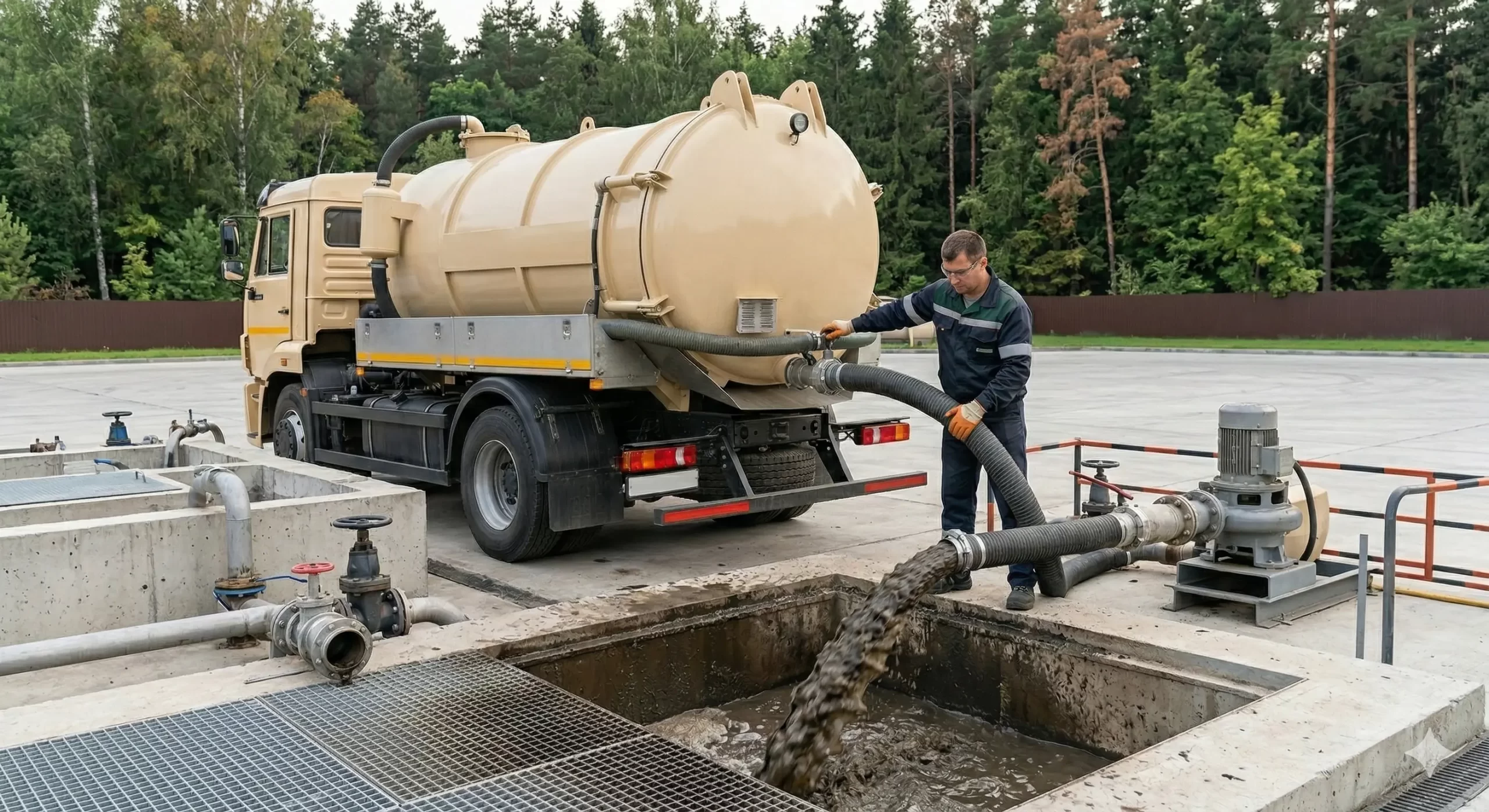
Failure isn’t instant. It’s a process. Ignoring the small signs leads directly to a catastrophic backup. Here is the typical progression of a failing lift station system. Facing a drain field failure? Our team in Deer Park, TX is ready to diagnose the problem.
Progression of Failure Timeline
- Year 1-2 (Normal Operation): System runs quietly. Pumps engage for short periods. No unusual smells. You barely know it’s there.
- Year 3-4 (Early Warning): You notice the pump runs a little longer than it used to. Maybe a faint musty smell near the station lid after heavy rain. The system is working harder to keep up.
- Year 5-6 (Significant Wear): The pump becomes noticeably louder. You might hear a ‘thud’ when it stops. The breaker trips once or twice a year, especially during storms. Grease and solids are building up, stressing the components.
- Year 7+ (Imminent Failure): The high water alarm sounds during a party or a major rainstorm. The breaker trips and won’t reset. You have an active emergency. The pump has likely failed, the floats are stuck, or the basin is completely clogged. This is when you get sewage in your shower.
What Will This Emergency Repair Cost Me?

I know this is your first question. You’re stressed. You need a number. The cost depends entirely on what we find. Below is a realistic breakdown for emergency service. Prices vary by location and the complexity of your system, but this is a solid guide.
| Service / Component | Typical Cost Range (Installed) | Common Reason |
|---|---|---|
| Emergency Service Call Fee | $150 – $400 | After-hours, weekend, or holiday dispatch. |
| Simple Electrical Fix (Reset Breaker/GFCI) | $100 – $250 | Power surge, overload from storm. |
| Float Switch Replacement (Single) | $350 – $700 | Stuck, tangled, or failed switch. |
| Effluent or Grinder Pump Replacement | $1,200 – $3,500+ | Motor burnout, major clog, impeller failure. |
| Control Panel / Alarm Repair | $500 – $1,500 | Failed relays, lightning strike, water damage. |
Can I See A Real-World Example?
You’re not alone in this. Last spring, we got a frantic call from a family in a suburb of Houston, Texas. A massive thunderstorm had just rolled through, dumping inches of rain in an hour. Their high water alarm was screaming.
When we arrived, the yard was saturated. The homeowner had already checked the breaker, and it was fine. That was smart. He knew not to mess with it further. We immediately cut power at the disconnect box. Opening the lift station lid revealed the problem in seconds. The water was nearly at the top. All three float switches—the ‘pump off’, ‘pump on’, and ‘high alarm’ floats—were tangled together in a massive ball of so-called “flushable” wipes and grease. For a free consultation, simply reach out to our office serving Greenville, AL.
The pump was fine. The power was fine. But because the floats couldn’t separate and rise independently, the ‘pump on’ switch never activated. The water kept rising until it hit the high alarm float, triggering the warning. We were able to untangle the mess, clean the floats, and test the system. It was a close call. Another hour and their downstairs bathroom would have been flooded with sewage. This case highlights that the problem isn’t always a catastrophic pump failure; sometimes it’s the simple, overlooked components. For fast response times, get in touch with our septic professionals servicing Cut And Shoot, TX.
What Is The First Step In Diagnosing The Alarm?
Stop. Breathe. Do not panic. We’re going to walk through this logically. The goal is to identify the cause safely. This is a diagnostic tree. Follow it step-by-step. Do not skip ahead. We understand the specific environmental rules for your region. Learn more from our experts in Gulf Breeze, FL.
Cause #1: Is It An Electrical Problem?
This is the most common cause and the easiest to check. Lift station pumps use a lot of power and are often on dedicated circuits. Whether it’s a minor repair or a major overhaul, our Hallsville, TX plumbing and septic crew has you covered.
- Step 1: Go to your main electrical panel. Look for a breaker labeled “Lift Pump,” “Sump Pump,” “Sewage Pump,” or something similar.
- If the breaker is tripped (in the middle or off position), then try to reset it ONCE. Push it firmly to the ‘Off’ position, then back to ‘On’.
- If it stays on, then wait. Listen for the pump to kick on. This may have solved the problem temporarily. A single trip could be from a power surge.
- If the breaker immediately trips again, then STOP. Do not reset it again. This indicates a serious problem like a seized pump motor or a short circuit, which is a fire hazard. You have an electrical failure. Call a professional immediately.
- If the breaker was not tripped, then check for a GFCI outlet. Sometimes the pump is plugged into a GFCI outlet near the unit or in the garage. Look for an outlet with ‘Test’ and ‘Reset’ buttons. If the reset button is popped out, press it back in. If it resets, the pump should get power. If it won’t reset, the GFCI outlet may be faulty or there’s a ground fault in the pump system.
Cause #2: Are The Float Switches Malfunctioning?
Float switches are the traffic cops of your lift station. They are small, hollow bulbs that float on the water’s surface. As the water rises, they tip upwards, activating a switch inside. If they can’t move freely, the pump never gets the signal to turn on.
- Step 1: SAFETY FIRST. Turn off the breaker to the pump before you do anything else. You must assume all water is electrically live.
- Step 2: Carefully and safely open the lift station lid. You’ll be met with a strong odor. This is normal.
- Step 3: Look inside with a strong flashlight. Do not stick your hands in. Can you see the float switches? There are usually two or three. They look like small buoys on short black cords.
- If the floats are tangled together or tangled around the pump, plumbing, or wires, then this is your problem. Items like wipes, hygiene products, and grease can create a ‘rope’ that binds them.
- If one float is stuck underneath a pipe or the pump itself, then it cannot rise with the water. This is common in smaller basins.
- If the floats are completely coated in a thick layer of grease or scum, then they may be too heavy to float properly. Their buoyancy is compromised. This is a sign your tank needs immediate pumping and cleaning.
- In these cases, a professional needs to safely enter or reach into the tank, clear the obstruction, and ensure the floats have a full, unimpeded range of motion.
Cause #3: Has The Pump Itself Failed?
The pump is the workhorse. It’s a submersible motor designed for a harsh environment, but it doesn’t last forever. Failure can be mechanical or electrical.
- Symptom 1: The breaker trips instantly. As mentioned in Cause #1, a pump motor that has shorted out will trip the breaker the second it tries to draw power. This is a dead pump.
- Symptom 2: A loud humming or grinding noise. If power is on and the pump is humming but not pumping water, the impeller is likely jammed. This can be caused by a solid object—a rock, a piece of plastic, a toy—that was flushed. Sometimes we can clear the jam, but often the motor burns itself out trying to break free.
- Symptom 3: Complete silence. If the breaker is on, the floats are up, and the pump is making no noise at all, the motor is likely dead. The windings could have burned out, or an internal seal failed, flooding the motor housing.
- Diagnosing a failed pump requires pulling the unit from the basin for inspection and testing. This is a difficult and hazardous job that should only be performed by a qualified technician with the right equipment.
How Can You Prevent This From Happening Again?
An emergency is a painful lesson. Let’s make sure you don’t repeat it. Prevention is all about maintenance and proper usage.
- Only Flush Human Waste and Toilet Paper. Nothing else. No wipes (even ‘flushable’ ones), no paper towels, no dental floss, no hygiene products. Your lift station grinder pump is strong, but it’s not a garbage disposal.
- Minimize Grease. Never pour cooking grease down the drain. It cools, solidifies, and coats everything in your lift station, especially the float switches.
- Schedule Professional Maintenance. Have your lift station inspected and pumped every 2-3 years, or as recommended by your local health department. This removes the solids and grease that kill pumps and stick floats.
- Test Your Alarm. Once a year, have your technician manually lift the alarm float to ensure the alarm and beacon light are working. A silent failure is the worst kind of failure.
What Do Other Homeowners Say?
Michael R. – Dallas, TX ⭐⭐⭐⭐⭐
“The alarm went off at 2 AM. I was in a complete panic with my family asleep. I followed the initial electrical checklist here, found the tripped GFCI in my garage, and reset it. The pump kicked on instantly. This guide saved me a $400 emergency call-out fee and let my family sleep through the night. I’m scheduling a full inspection tomorrow, but I’m incredibly grateful for this clear, urgent advice.”
Jennifer S. – Orlando, FL ⭐⭐⭐⭐⭐
“After days of heavy Florida rain, our alarm started blaring. We were terrified of a backup. Reading about the float switches made me realize the problem wasn’t just the rain, but what we were flushing. When the technician arrived, he confirmed our floats were tangled in wipes, just like the case study described. This information helped me understand the problem and ask the right questions. Knowledge is power, even when you’re ankle-deep in stress.”
Do You Still Have Questions?
Can I just silence the alarm and wait until morning?
You can often silence the audible alarm using a button on the control panel, but this is extremely risky. Silencing the alarm does not fix the problem. The water level is still critically high. Every flush, shower, or load of laundry adds more water to the tank, bringing you closer to a sewage backup. It is not a matter of ‘if’ it will back up, but ‘when’. We strongly advise against waiting. Treat this as a true emergency.
Why does my lift station alarm always go off during heavy rain?
This is a critical sign of a problem called inflow and infiltration (I&I). It means that groundwater or rainwater is leaking into your lift station basin or the connected pipes. This can happen through cracked lids, bad seals, or damaged pipes. The extra water overwhelms your pump, causing it to run constantly and eventually triggering the high water alarm. This is especially common in areas with high water tables or clay soil that doesn’t drain well, like parts of Texas or the Southeast. You need a professional to identify and seal the source of the leak.
My pump is only a few years old. Could it really have failed already?
Yes, absolutely. A pump’s lifespan is not measured in years, but in workload and working conditions. A pump that is constantly fighting grease, wipes, and other solids will fail much faster than one in a clean system. An undersized pump or one dealing with significant water infiltration will also burn out prematurely from overuse. Age is less important than the environment it’s operating in. Regular maintenance is the key to longevity.
Technically Reviewed By:
BlixBase Master Plumber Team
20+ Years Septic Industry Experience | Certified System Inspectors