

Real-Life Horror Story: Bob’s $18,000 Puddle ️
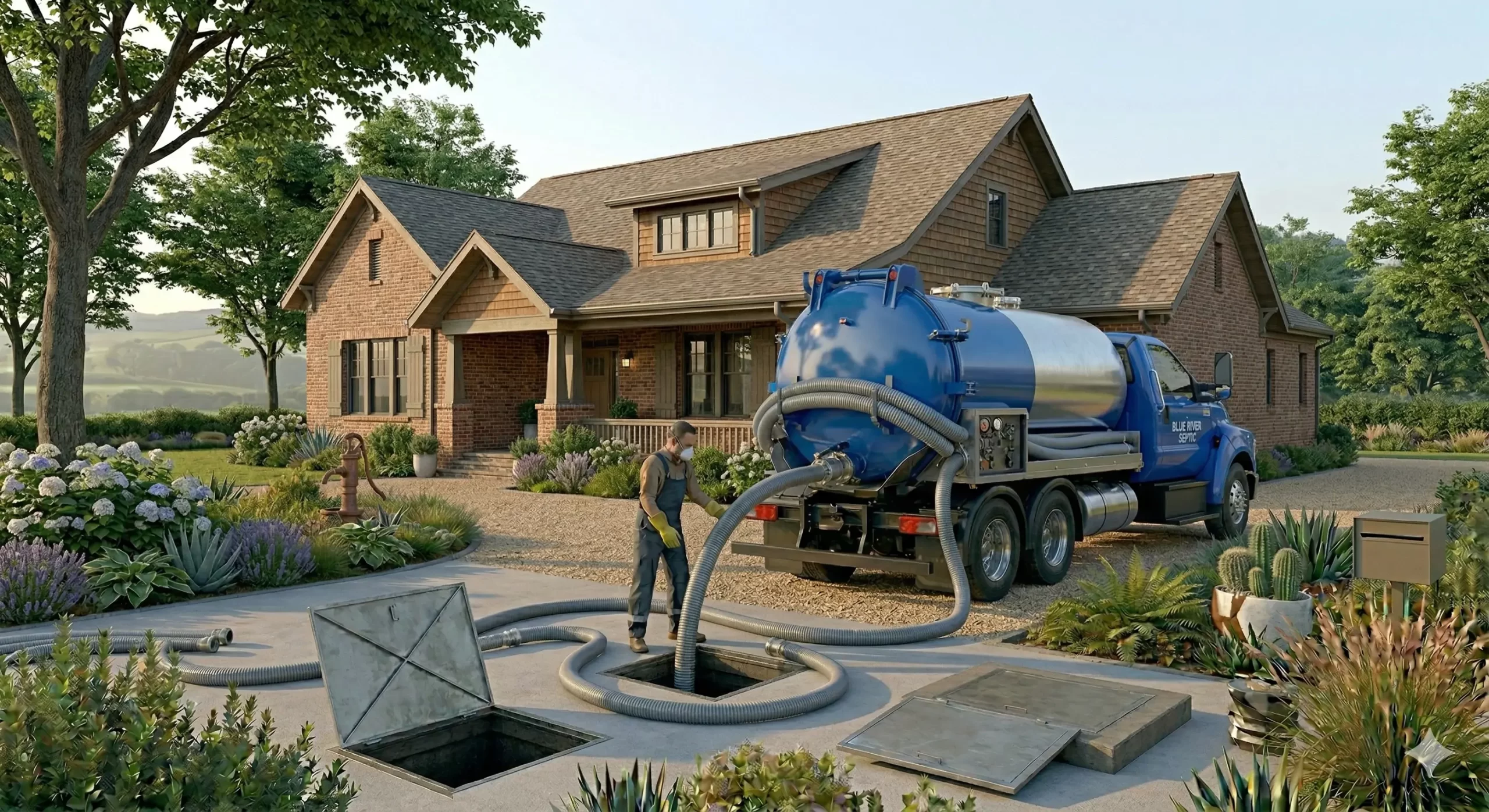
Let me tell you about Bob. Bob lived up near Snoqualmie, Washington, on a nice acre with a brand-new 40-foot fifth wheel. He thought he was king of the world. Every Sunday, like clockwork, he’d pull that behemoth up to his house and dump the full 50-gallon black tank and 80-gallon gray tank right into his 4-inch sewer cleanout. He used that blue formaldehyde-laced chemical cocktail they sell you at the RV dealership because it promised a ‘pleasant scent.’ For two years, everything seemed fine. Then his wife noticed the dogs’ paws were always muddy in one particular spot in the backyard. That ‘mud’ was black, smelly, and definitely not from the garden. Bob’s drainfield had turned into a biologically dead, compacted layer of sludge and grease, what we call a ‘total failure.’ The glacial till soil out here is unforgiving; once the pores are sealed with biomat from solids and soap scum, it’s game over. The bill to dig up the old system, haul away contaminated soil, and install a new pressure-dosed mound system? A cool $18,500. Bob sold the fifth wheel.
The Only Maintenance Tips That Actually Matter ️
Forget the common sense stuff. Let’s talk about what really keeps your system from turning into a superfund site. First, find the right access point. You’re looking for the main line cleanout, which is typically a 3-inch or 4-inch PVC pipe with a threaded cap, located between your house and the septic tank. Do NOT, under any circumstances, dump into the 24-inch concrete or plastic lids on the tank itself. Opening those lids is dangerous (hello, hydrogen sulfide gas), and dumping there bypasses the inlet baffle, causing extreme turbulence that sends solids directly into your drainfield. That’s septic murder, plain and simple. Need immediate assistance? Find trusted septic tank pumping in Mary Esther, FL right away.
Think your little bottle of ‘septic-safe’ blue goo is going to save you? Most RV toilet chemicals, even the ‘green’ ones, are a problem. The worst offenders contain formaldehyde, bronopol, or glutaraldehyde. These are biocides; their entire purpose is to kill bacteria to stop odors. But your septic system is a living colony of billions of bacteria. You are pouring poison into the heart of your system. The result is an underperforming tank that can’t break down solids, leading to more frequent pumping and a higher risk of drainfield clogs. The only thing you should ever put in your RV black tank is a high-quality, enzyme or bacteria-based treatment. Or better yet, nothing at all but water. Regular maintenance is crucial. Connect with our Levelland, TX septic experts to schedule a check-up.
Let’s talk about the physical connection. Get yourself a proper threaded sewer hose adapter, like a RhinoFLEX or a Valterra. Don’t just jam the flimsy ‘slinky’ hose into the cleanout pipe. An unsealed connection will vent methane and hydrogen sulfide gas right into your face, which isn’t just unpleasant—it’s a health hazard. After you dump the black tank, follow it with the gray tank. The soapy water helps flush the hose. But here’s the key: do not dump them back-to-back. Wait at least a few hours, or better yet, a full day. Give the tank time to settle. A 1,250-gallon septic tank (a common size for a 4-bedroom house) can handle the shock, but only if you give it time to recover. Need immediate assistance? Find trusted septic tank pumping in St Augustine Beach, FL right away.
The Real Cost of Convenience: A Grumpy Breakdown
People love to cut corners to save a buck, and then they wonder why they’re calling me on a holiday weekend with sewage in their bathtub. Here’s a realistic look at what things cost when you do them the cheap way, the right way, and the ‘I-have-to-remortgage-my-house’ way.
| Item / Service | The Cheap Way Cost | The Right Way Cost | The ‘I Messed Up’ Cost |
|---|---|---|---|
| RV Sewer Hose & Connection | $20 (Flimsy hose, no seal) | $75 (Heavy-duty hose, threaded adapter) | $300+ (Plumber call for cleanup of spill) |
| Tank Chemicals (Per Year) | $50 (Formaldehyde-based) | $40 (Enzyme/bacteria-based) | $600 (Emergency pump-out from dead tank) |
| Septic Pumping Schedule | ‘Pump it when it backs up’ | $450 (Every 3 years, proactive) | $1,500+ (Jetting clogged lines, multiple pump-outs) |
| Long-Term Outcome | Guaranteed Failure | System Longevity (30+ years) | $15,000 – $40,000 (Drainfield Replacement) |
The Slow Death of a Drainfield: A Progression of Failure
A septic system doesn’t just die overnight. It’s a slow, agonizing death caused by neglect and abuse. Here’s what the timeline looks like when you regularly and improperly dump RV waste. Dealing with a sudden sewage issue? Rely on our emergency septic team in Victoria, TX.
- Year 1-2 : The Honeymoon Phase. You dump your 40-gallon black tank every other weekend. Everything seems to work just fine. The ground easily absorbs the extra liquid. You think all the warnings are for suckers. What you can’t see is the layer of suspended solids beginning to form a thin, greasy film (the biomat) on the soil trench walls.
- Year 3-4 : The First Signs of Trouble. You notice the toilets in the house gurgle for a second after you dump the RV. The washing machine drain seems a little slower than it used to be. This is your system telling you it’s struggling. The hydraulic load is exceeding the soil’s percolation rate, and the biomat is now thick enough to significantly slow down water absorption.
- Year 5-6 : The Point of No Return. After a heavy rain, you notice a patch of grass over the drainfield is unusually green and spongy. You might even catch a faint septic odor on a humid day. The system is now in a state of constant failure. The trenches are full of water that can’t drain away, and effluent is starting to surface. The bacteria-killing RV chemicals have destroyed the tank’s ecosystem, sending even more solids into the field.
- Year 7+ : Total System Collapse. Sewage backs up into your basement or lowest shower drain. The yard is a stinking, contaminated swamp. You get a friendly letter from the county health department informing you that your system is a public nuisance and must be replaced immediately. Your only option now is a full, and very expensive, excavation and replacement.
Troubleshooting: When the Worst Happens
So you dumped the tank and now the toilet won’t flush. Don’t panic. First, stop running any water in the house. The problem is likely one of two things: a simple clog in the main line or a saturated drainfield. To figure out which, find your main line cleanout. Carefully unscrew the cap (be ready for potential backflow). If the pipe is full of standing water, the clog is between the cleanout and the septic tank. If the pipe is empty, the clog is between the house and the cleanout. If water comes gushing out, the problem is your tank or drainfield is full to capacity and has nowhere to go.
A pro tip for distinguishing a clog from a field failure: a clog is usually sudden; a field failure is gradual. If your drains have been getting progressively slower for months, it’s the field. If they were fine yesterday and are totally stopped today after dumping, it’s more likely a physical blockage—probably from one of those ‘flushable’ wipes that are anything but. The only way to know for sure is to call a professional to run a camera down the line. A camera inspection costs about $250-$400 and is worth every penny before you start digging up your yard. If you smell sewage or hear gurgling, contact our Weston, FL septic repair specialists immediately.
What Our Customers Are Saying
Frank Miller, Gig Harbor, WA ⭐⭐⭐⭐⭐
“Called this guy out after my last ‘plumber’ told me I needed a whole new system for $25k because of my RV. He showed up, grumbled about my choice in sewer hose, and then spent an hour teaching me about hydraulic load and why the blue stuff was poison. He jetted one line for a fraction of the cost and told me how to do it right. System’s been perfect for two years. He’s grumpy, but he knows his stuff.”
Susan Chen, Redmond, WA ⭐⭐⭐⭐⭐
“I was terrified to dump our new travel trailer at home. After reading this guide, I understood the ‘why’ behind the rules. We switched to an enzyme treatment, always dump on a dry day, and space out our black and gray tanks. Had our tank pumped last month and the technician said it was one of the healthiest looking tanks he’s seen. This advice saved us thousands, I’m sure of it.”
Frequently Asked (and Misunderstood) Questions ❓
How often is TOO often to dump my RV into the septic system?
There’s no single answer, but here’s a professional formula: A healthy septic system should not receive more than 25-30% of its total volume in a single ‘shock load.’ For a standard 1,000-gallon tank, that’s 250 gallons. Figure out your home’s daily water usage (average is 70 gallons/person). If you have a family of four, that’s 280 gallons per day. Dumping a 40-gallon RV tank on top of that puts you way over the limit. The rule: dump only on a day with minimal water usage in the house (e.g., no laundry, no dishwasher). For a full-time RVer, dumping more than a 40-gallon tank once a week is asking for trouble.
Is it okay to dump the gray water tank?
Yes, with major caveats. People think gray water is harmless, but it’s loaded with soaps, grease, and food particles that are brutal on a drainfield’s soil. Never dump the gray tank at the same time as the black tank—wait several hours or a day. The volume is often much larger (60-80 gallons) than the black tank, so the hydraulic load is a real concern. If your system is older or you’re on clay soil, dumping the gray tank at all is risky business. It’s always less harmful than the black tank, but it’s not ‘safe.’ It’s just ‘less bad’.
What if I can’t find a cleanout between the house and the tank?
Then you need to call a plumber or septic installer and have one put in. Period. It’s a code requirement in most jurisdictions for a reason. It might cost you $400-$800, but it’s the only proper access point. Do not, under any circumstances, think you can dump into a toilet, a sink drain, or the vent pipe on your roof. The plumbing inside your house isn’t designed for that volume or type of solid waste, and you will cause a massive, disgusting backup inside your walls.
Do I need to add bacteria or additives after dumping?
If you’re not using harsh chemical toilet treatments and your household isn’t pouring bleach down the drain, then no. A healthy septic tank has all the bacteria it needs, which comes from human waste. However, if you’ve been using the blue poison, adding a high-quality biological septic treatment (not the cheap stuff from the hardware store) can help ‘re-seed’ the bacteria colony. Think of it as a probiotic for your septic tank. It won’t fix a failing drainfield, but it can help a struggling tank recover its biological balance.
Technically Reviewed By:
BlixBase Master Plumber Team
20+ Years Septic Industry Experience | Certified System Inspectors