
What Are the Geotechnical Realities of a Real-World Wet Pumping Scenario?
An examination of a service call in Fulton County, Georgia provides a salient case study in the consequences of disregarding soil mechanics during septic system maintenance. The client, facing an imminent backup, insisted on immediate service during the third consecutive day of heavy rainfall, a common occurrence in the region’s humid subtropical climate. The soil profile was predominantly Cecil series red clay, characterized by a high plasticity index (PI > 35) and low hydraulic conductivity when saturated. For a free consultation, simply reach out to our office serving Atmore, AL.
The service vehicle was a standard tandem-axle pumper truck with a Gross Vehicle Weight Rating (GVWR) of 58,000 lbs. The access path required traversing approximately 75 feet of turf directly over the drain field’s lateral lines. A preliminary site assessment indicated near-total soil saturation, with standing water present in low-lying areas. The soil’s shear strength was critically compromised.
Despite advisories, the service was performed. The consequences were immediate and severe:
- Soil Compaction and Rutting: The truck’s tires, each exerting a contact pressure exceeding 80 PSI, displaced the saturated clay. This resulted in ruts measuring between 8 and 14 inches in depth. This level of compaction reduces the soil’s macroporosity, effectively sterilizing it for aerobic bacterial action essential for effluent treatment.
- Drain Field Damage: The static and dynamic loads directly over the drain field fractured two 4-inch Schedule 40 PVC lateral lines. The soil displacement altered the precise gradient of the entire field, creating low points where effluent could pool, leading to anaerobic conditions and eventual biomat formation.
- Hydraulic Sealing: The smearing action of the tires on the clay particles created a hydraulically sealed layer at the rut surface, further inhibiting water and oxygen infiltration into the vadose zone.
The initial $450 septic pumping service escalated into a $7,800 remediation project. This included excavation and replacement of the damaged pipe sections, importation of 20 cubic yards of ASTM C33 specification sand to restore the drain field trench profile, and complete yard regrading and sodding. This case study quantitatively demonstrates that the decision to pump on saturated ground is not merely an aesthetic concern but a significant financial and system-integrity risk.
Client Testimonials on Professional Site Assessment
⭐⭐⭐⭐⭐ – Michael T., Cobb County, GA
“We had a backup during a week of non-stop storms. The technician arrived and performed a soil assessment. He explained in clear, technical terms why bringing his truck onto our lawn would cause thousands in damage to our drain field. He advised a temporary chemical treatment to manage the issue and rescheduled for the first dry day. This professionalism saved us a fortune. They prioritized the long-term health of our system over a quick service fee.” Whether it’s a minor repair or a major overhaul, our Orlando, FL plumbing and septic crew has you covered.
⭐⭐⭐⭐⭐ – Sarah Jennings, Gwinnett County, GA
“I was worried about the mud, but I was more worried about a backup. The team that came out showed me the science behind soil load-bearing capacity and why my saturated clay soil was a major liability. They patiently explained the risks and offered to wait. Their honesty and expertise were deeply appreciated. They treated my property like it was a complex engineering site, not just a lawn.” Facing a drain field failure? Our team in Lake Worth Beach, FL is ready to diagnose the problem.

How Does a Technician Assess Site Viability During Inclement Weather?
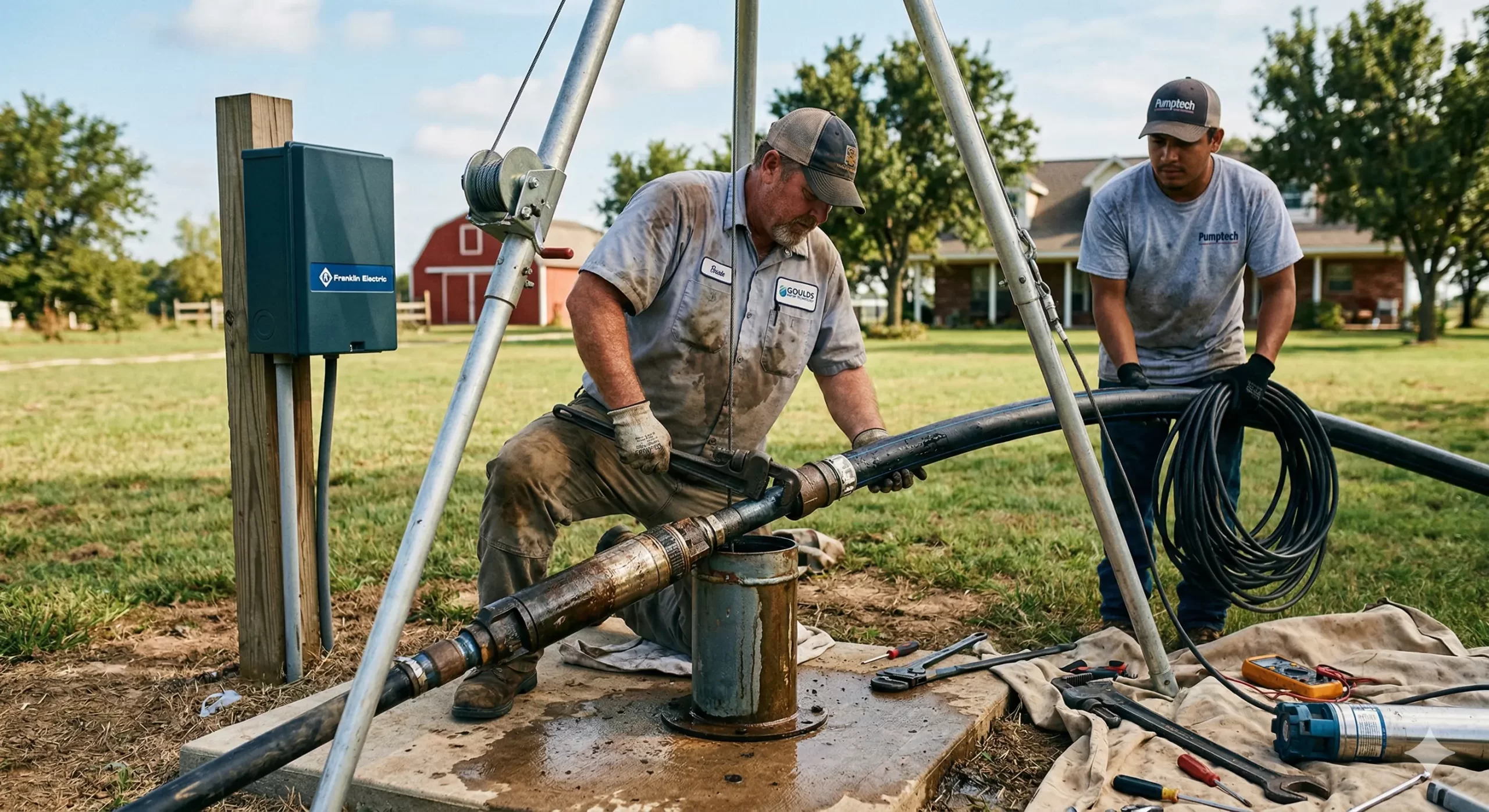
A professional assessment transcends a simple visual inspection. It involves a multi-faceted analysis of soil mechanics, hydrology, and vehicle dynamics. The primary objective is to determine if the soil’s bearing capacity can support the applied loads without undergoing plastic deformation (i.e., rutting and compaction).
Phase 1: Soil Characterization and Saturation Analysis
The first step is to classify the soil type and quantify its moisture content. While a formal laboratory analysis like a Proctor compaction test is impractical for a field visit, experienced technicians use established field methods: Navigating local soil conditions can be tricky. Consult our Lady Lake, FL septic pumping guide.
- Ribbon Test: A sample of soil is moistened and squeezed between the thumb and forefinger. The length of the resulting ribbon before it breaks indicates the clay content. A long, durable ribbon (greater than 2 inches) signifies high-plasticity clay, which has very low shear strength when saturated.
- Visual and Tactile Assessment: The presence of standing water, a spongy feel underfoot (indicating the soil is at or beyond its liquid limit), and the ease with which a soil probe can be pushed into the ground are all qualitative indicators of saturation.
- Moisture Content Estimation: A soil is considered saturated when all pore spaces are filled with water. For a typical clay-loam, this can be around 40-50% water by weight. At this level, the soil’s ability to resist shear forces is drastically reduced.
Phase 2: Vehicle Load and Ground Pressure Calculation
The service vehicle itself is a critical variable. A standard 3,600-gallon vacuum truck has a GVWR between 50,000 and 60,000 lbs. When fully loaded, the axle loads can exceed 20,000 lbs per axle. The ground pressure is not uniform and is concentrated at the tire contact patch. A single tire can exert a pressure of 80-110 PSI, a force more than sufficient to cause shear failure in saturated fine-grained soils. The analysis must consider the entire route, identifying the point of lowest bearing capacity.
Phase 3: Risk Analysis of Subsurface Infrastructure
The final diagnostic step is to evaluate the risk to buried utilities. This includes not only the septic system components (tank, distribution box, drain field lines) but also municipal water lines, gas lines, irrigation systems, and electrical conduits. A detailed site plan is ideal, but in its absence, the technician must make a conservative judgment. The dynamic loading and vibration from a heavy truck can damage infrastructure that would be safe under static conditions.
What Are the Financial Implications of Proceeding with Pumping on Saturated Ground?
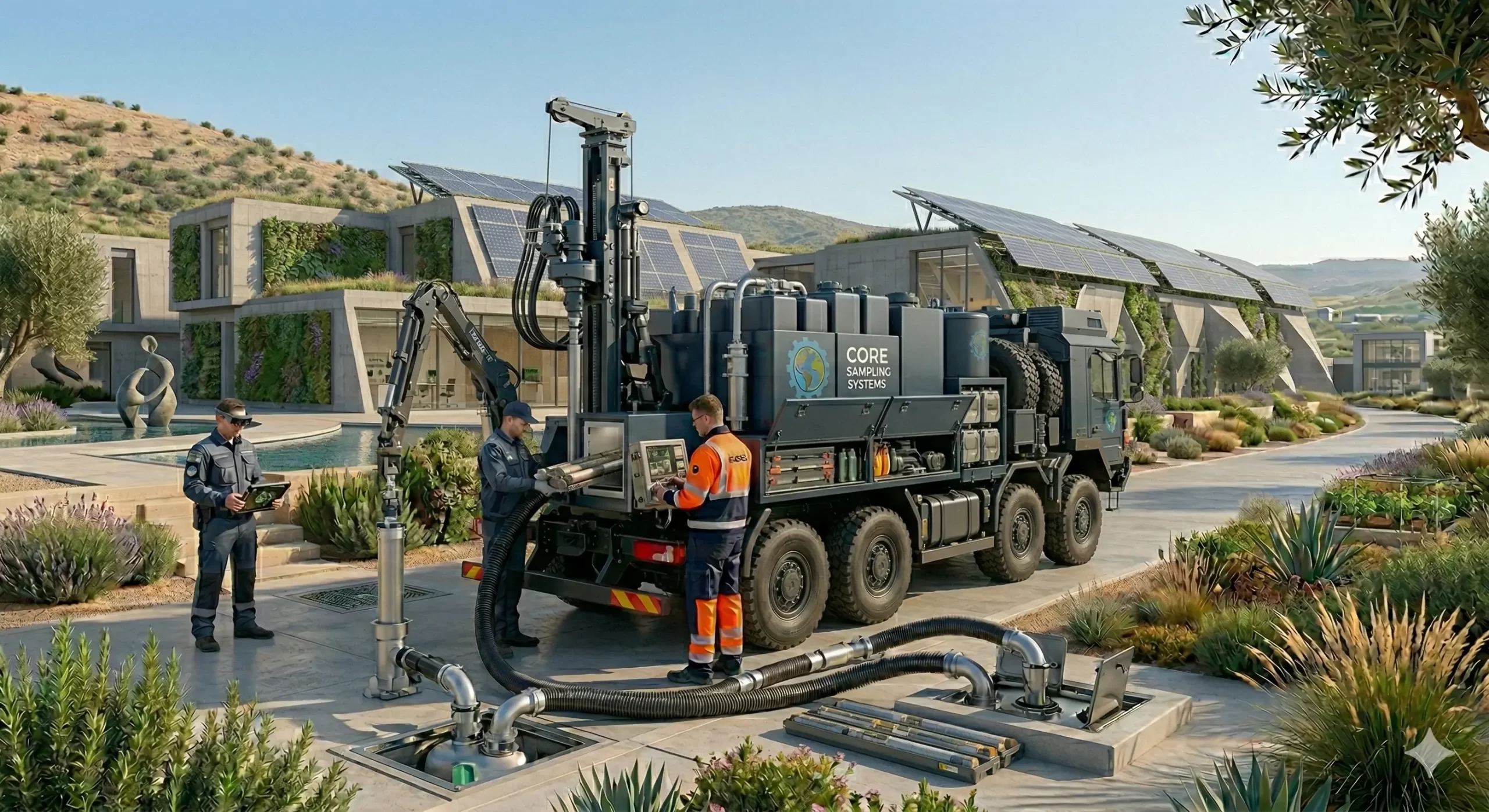
The decision to proceed with septic pumping in adverse weather conditions is fundamentally an economic risk assessment. The potential for collateral damage can transform a routine maintenance task into a major civil engineering repair project. The following table provides a quantitative breakdown of these potential costs, contrasting standard service with wet-condition service. Dealing with a sudden sewage issue? Rely on our emergency septic team in Denton, TX.
| Service / Repair Item | Standard Cost (Dry Conditions) | Potential Cost (Wet Conditions) | Rationale for Cost Escalation |
|---|---|---|---|
| Standard Septic Pumping | $350 – $600 | $450 – $800 | Increased time on site, potential for vehicle getting stuck, emergency call-out fees. |
| Ground Protection Mat Rental | $0 | $300 – $750 | Cost to rent, deliver, and deploy sufficient mats to create a stable pathway. |
| Yard Remediation (Regrading & Seeding) | $0 – $100 | $1,500 – $4,000 | Requires heavy equipment, importation of topsoil, and labor to repair deep ruts and severe compaction. |
| Drain Field Line Repair | $0 | $2,500 – $10,000+ | Excavation and replacement of crushed pipes. Severe damage may require partial or full drain field replacement. |
| Total Potential Cost | $350 – $600 | $4,750 – $15,550+ | Summation of potential liabilities from a single poor decision. |
Progression of Cumulative Damage Timeline
The damage is not always a single catastrophic event. Repeatedly servicing a system under sub-optimal, damp conditions creates a cumulative degradation of the soil structure surrounding the drain field. This timeline illustrates the progressive failure.
- Year 1 (Single Wet Service): Minor surface rutting (2-4 inches). Some localized compaction. Soil porosity is reduced by 10-15% in the tire tracks. System function is not noticeably impaired.
- Year 3 (Second Wet Service): Deeper rutting (4-6 inches). A compacted hardpan layer begins to form 8-12 inches below the surface, impeding vertical water movement (percolation). The grass in the compacted zones shows signs of stress during dry periods.
- Year 5 (Third Wet Service): Severe rutting (>6 inches). The hardpan layer is now well-established, creating a perched water table above the drain field trenches. Effluent begins to surface during wet periods. Anaerobic conditions develop in the soil.
- Year 7 (Fourth Wet Service): Catastrophic failure. The soil structure is permanently altered. The drain field has zero effective absorption capacity due to biomat formation and compaction. The system is in a constant state of hydraulic failure, requiring a complete and costly replacement.
What Proactive Measures Can Mitigate Wet-Weather Service Risks?
System owners can implement several engineering and procedural controls to minimize the risks associated with service during inclement weather. These measures focus on reducing the necessity for emergency service and improving site access.
- Adherence to a Prescribed Pumping Schedule: The most effective mitigation is to avoid emergency situations altogether. Based on tank size, household occupancy, and water usage, a pumping interval (typically 3-5 years) should be established. Pumping should be scheduled proactively during historically dry seasons (e.g., late summer or early fall in the Southeast US).
- Installation of At-Grade Risers and Lids: Excavating to access septic tank lids is a primary cause of yard damage. Installing watertight risers brings the access ports to the ground surface. This eliminates the need for digging and allows the technician to park further away, using extra hose length instead of driving directly over the tank and drain field.
- System Monitoring with Effluent Filters and Alarms: An effluent filter, installed on the outlet baffle of the septic tank, prevents suspended solids from migrating to the drain field. Many filters are available with an integrated alarm that provides an early warning of a potential backup, allowing service to be scheduled before it becomes a rainy-day emergency.
- Designation and Reinforcement of a Service Access Path: For properties with chronically saturated soils, establishing a designated, reinforced access path is a sound long-term investment. This can involve the installation of a geogrid textile layer covered with a compacted aggregate base (e.g., #57 stone), creating a stable path capable of supporting the vehicle’s axle loads.
Frequently Asked Technical Questions
What is the acceptable soil moisture content for heavy vehicle traffic?
There is no single universal value, as it depends on soil type. However, for civil engineering purposes, soil stability is often assessed relative to its Plastic Limit (PL) and Liquid Limit (LL). Vehicle traffic should ideally occur when the soil’s moisture content is significantly below its Plastic Limit. Once moisture exceeds the PL, the soil begins to deform plastically under load. When it approaches the Liquid Limit, it behaves as a fluid, offering virtually no shear strength, and cannot support vehicle loads without catastrophic deformation.
Can a smaller, lighter pumping truck be used to mitigate damage?
While theoretically possible, it is often impractical. Smaller trucks have significantly less tank capacity (e.g., 1,000-1,500 gallons). For a standard 1,000-1,500 gallon residential tank, this may require multiple trips, increasing service time and cost. Furthermore, even a ‘light’ commercial truck chassis weighs over 10,000 lbs empty, which is still sufficient to cause significant damage to fully saturated turf and soil. The reduction in ground pressure is often not substantial enough to eliminate the risk.
Does yard damage from a septic service void my septic system warranty?
Yes, in nearly all cases it will. Septic system installation warranties explicitly exclude damage caused by external factors, including vehicle traffic. If a homeowner insists on service against the professional advice of the pumping company, and the resulting soil compaction or pipe damage leads to system failure, the liability rests with the homeowner. The installer’s warranty covers materials and workmanship, not damage from subsequent site activities.
How far can a septic pumping hose typically reach?
Standard pumper trucks carry between 150 to 200 feet of vacuum hose. While additional lengths can be added, there are physical limitations. Each foot of hose adds friction loss, reducing the pump’s vacuum efficiency (measured in inches of mercury). Furthermore, the vertical lift (the elevation difference between the tank’s liquid level and the truck’s intake port) significantly impacts performance. Exceeding 250-300 feet of hose, especially with a significant vertical lift, can make pumping extremely slow or impossible.
Technically Reviewed By:
BlixBase Master Plumber Team
20+ Years Septic Industry Experience | Certified System Inspectors