
Alright, listen up. I’ve been in this business for over 30 years, and if there’s one thing that gets my goat, it’s a slick new restaurant owner who drops a quarter-million on fancy decor but won’t spend a few hundred bucks to pump their septic tank. ♂️ You think that hunk of concrete buried in the dirt is just gonna magically digest all the grease, food scraps, and… well, you know… from 200 customers a day? Get real. You’re not running a business; you’re running a science experiment in biological failure, and you’re about to lose. Big time.
I’m here to give you the cold, hard, smelly truth. This isn’t about convenience; it’s about pure, unadulterated economics. Pumping your tank isn’t an ‘expense.’ It’s the single best investment you can make to prevent a financial catastrophe that will shut your doors faster than a bad review from the local food critic. Let’s talk dollars and cents, because that seems to be the only language some people understand. Don’t ignore the warning signs. Reach out to our septic maintenance crew in Ponchatoula, LA today.

The Brutal Economics: Pay Me Now or Pay EVERYONE Later
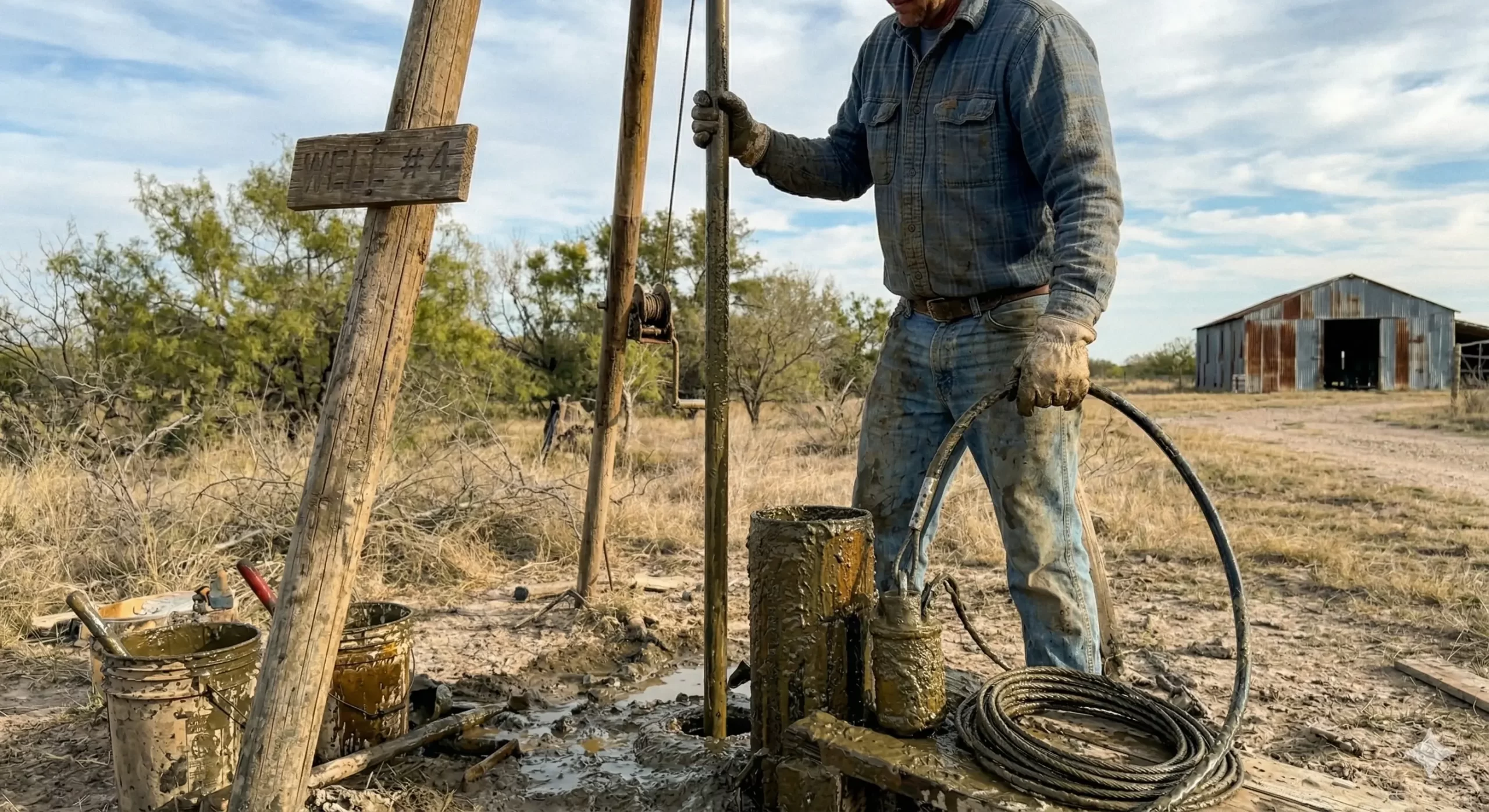
You want a cost-benefit analysis? Fine. Here it is in black and white. I’ve seen it all, from a small-town diner in rural Ohio with its heavy clay soil to a bustling tourist cafe near the coast where the water table is practically in the parking lot. The numbers change a bit, but the story always ends the same for the cheapskates. Don’t be a cheapskate.
| Service / Catastrophe | The ‘Smart Investor’ Cost (Proactive) | The ‘I’ll Do It Later’ Cost (Reactive) |
|---|---|---|
| Routine Septic Pumping (5,000 gal tank) | $600 – $950 (every 3-6 months) | N/A – You skipped this, remember? |
| Routine Grease Trap Pumping (Interior) | $250 – $600 (monthly/quarterly) | N/A – The root of all evil. |
| Emergency Pump-Out (Friday, 8 PM) | Avoided | $1,200 – $2,500+ (And I’m not happy about it) |
| Main Line Jetting (Grease Blockage) | Unlikely | $800 – $3,000 (To clear the concrete-like grease) |
| Lost Business Revenue (1-3 Day Closure) | $0 | $5,000 – $50,000+ (Depending on your sales) |
| Health Department Fines | $0 | $1,000 – $10,000 (They don’t mess around) |
| TOTAL DRAIN FIELD REPLACEMENT | Avoided for decades | $25,000 – $60,000+ (The Business Killer) |
You see that last line? That’s the one that sends people into bankruptcy. When solid waste and grease escape your neglected tank, they flow into the drain field. They clog the perforated pipes and seal the surrounding soil, turning your expensive wastewater treatment area into a useless, stinking swamp. Once that happens, it’s game over. You can’t just ‘fix’ it. You need a full-blown excavation, new permits, new system design… it’s a nightmare. ️
So, What Are The Warning Signs You’re About To Lose Your Shirt? (Troubleshooting)
Your system will cry for help before it completely dies. The problem is, most people aren’t listening. They turn up the radio and ignore the screaming. Here’s what to watch for:
- Gurgling Drains: When you flush a toilet or run a sink, do you hear a deep, ominous gurgle from other drains? That’s the sound of your pipes gasping for air. It’s a classic sign of a full tank or a developing clog.
- Slow Drains Everywhere: If one sink is slow, it might be a local clog. If ALL your floor drains, sinks, and toilets are draining like they’re full of molasses, your septic system is the culprit.
- That… Smell: You know the one. That rotten egg, raw sewage smell. If you’re catching whiffs of it inside, or worse, outside near the tank or drain field, you’re on borrowed time. This is often the last warning before a backup.
- Suspiciously Green Grass: Is there a patch of grass over your drain field that’s way lusher and greener than the rest of your property? You might think it looks nice, but you’re not watering it with fertilizer, my friend. You’re watering it with untreated effluent. It’s a sign the system is failing and sewage is surfacing.
- Puddles & Soggy Ground: If the ground around your tank or drain field is wet and spongy even when it hasn’t rained, you have a major problem. This means the drain field is saturated and can no longer absorb water. A backup into the restaurant is imminent.
How to Not Be Like Bob: Real Maintenance Tips
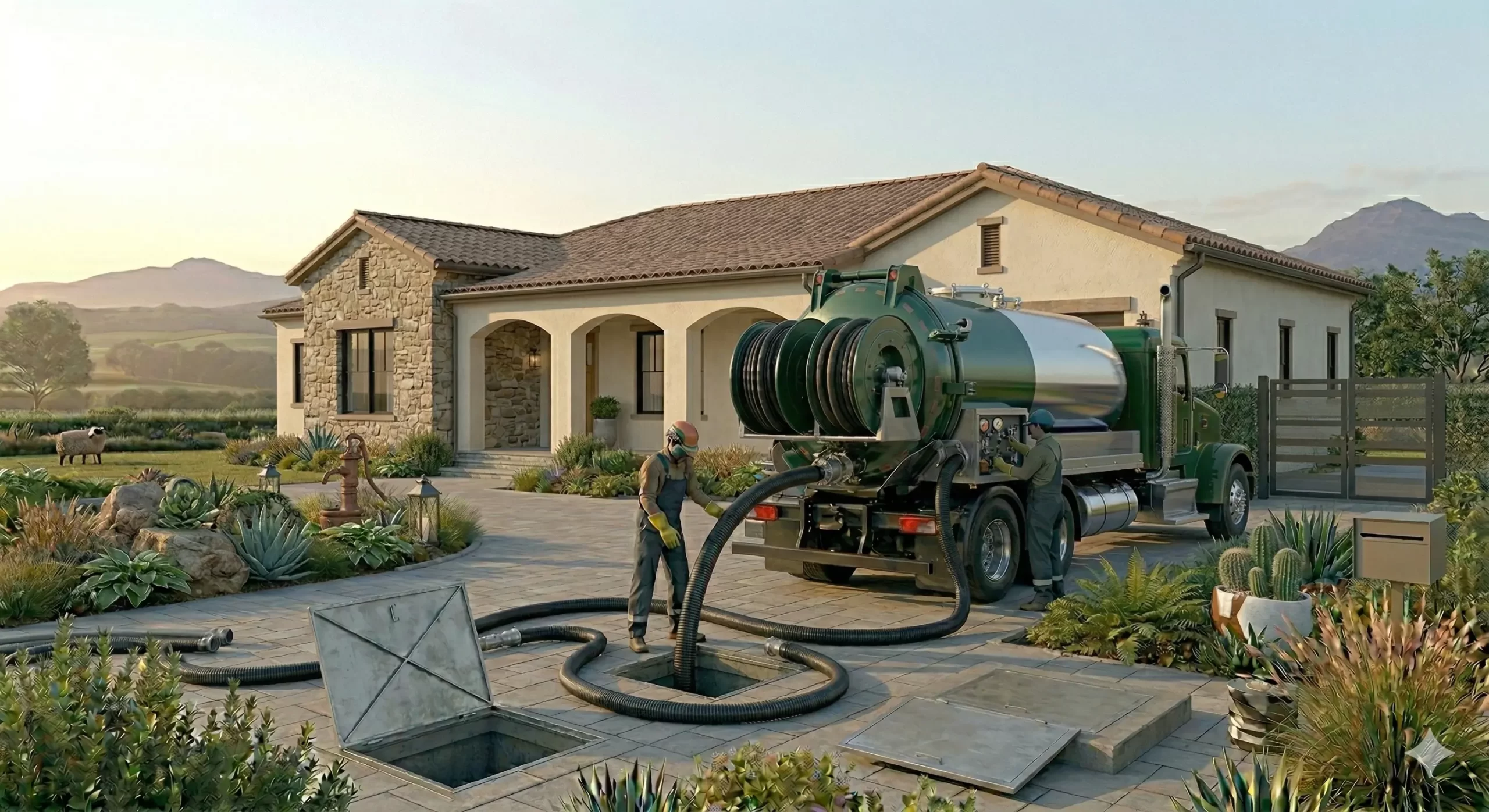
This isn’t rocket science. It’s just about being a responsible business owner. The ‘rules’ they print on the internet are usually for houses, not for a high-volume restaurant sending thousands of gallons of greasy water into the ground every week. For a free consultation, simply reach out to our office serving Dalhart, TX.
- Forget the Calendar, Use a Formula: The ‘pump every 3-5 years’ rule is for a family of four, not a fish-and-chips joint. The real frequency depends on: Tank Size (gallons), Daily Flow (gallons per day, based on seats/meals), and Menu Type (greasy food = more frequent pumping). A busy diner with a 3,000-gallon tank might need pumping every 3 months. A quiet cafe with the same tank might go 9-12 months. You need a professional to calculate your actual pumping schedule, not a Google search.
- The Grease Trap is King: Your septic tank is not designed to handle large amounts of grease and oil. That’s what the grease trap is for. If you don’t have it pumped RELIGIOUSLY (often monthly), that grease will make it to the septic tank, where it won’t break down. It will float, cool, and form a solid layer that clogs the outlet pipe to your drain field, murdering it.
- Train Your Staff: Your employees are your first line of defense. No coffee grounds, eggshells, or solid food waste down the drain. No ‘flushable’ wipes (a plumber’s curse word) down the toilet. No pouring fryer oil down the floor drain. Put up signs. Be a hawk about it.
- Keep Meticulous Records: I can’t tell you how many owners I meet who have no idea when their tank was last pumped. Keep a logbook. Date of service, company who did it, volume pumped, condition of the tank baffles. This data is gold. It helps you spot problems early and proves to the health department that you’re a responsible operator.
The Progression of Failure: A Timeline of Your Financial Doom
Here’s how it usually plays out when you decide to ‘save money’. This is the lifecycle of a dead commercial septic system.
- Phase 1: The ‘Genius’ Phase (First 1-2 Years of Neglect)
The system works flawlessly. The solids layer at the bottom and scum layer at the top are slowly building, but there’s plenty of room. You pat yourself on the back for saving that $800 pumping fee. You feel smart. You are not smart. - Phase 2: The ‘Whispers’ Phase (Years 2-3)
The tank is now over 50% full of solids and scum. The retention time for wastewater is reduced. You might notice the toilets don’t flush with the same vigor. A floor drain might be slow for an hour after the dinner rush. Faint, swampy smells appear on hot, humid days. These are not ‘quirks’; they are cries for help. - Phase 3: The ‘Loud Warnings’ Phase (Years 3-4)
The solids level is now so high that particles are being pushed out into the drain field with every flush. Grease is starting to coat the outlet baffle. Drains gurgle constantly. You’re getting weekly backups in the kitchen that require a plunger or a cheap snake. The ‘green patch’ outside is now a ‘soggy patch’. The smell is undeniable. Your staff is complaining. - Phase 4: Total System Catastrophe (Year 4+)
The drain field is now completely clogged with solid waste and a thick layer of grease, a condition known as ‘biomat failure’. It can no longer accept any water. Sewage now has nowhere to go but back up into your restaurant. We’re talking raw sewage bubbling out of floor drains, toilets overflowing, and a health department notice on your front door. You are now looking at a $40,000 bill and a closed business. Congratulations, your savings plan was a spectacular failure.
What Our Customers Say (After They Finally Listened)
⭐⭐⭐⭐⭐ – Maria G., Owner of ‘The Corner Grill’
“I’ll admit, I thought this old timer was just trying to get more money out of me with his ‘quarterly pumping’ schedule. Then my neighbor’s place got shut down for a week with a septic backup. I called him back the next day. He’s grumpy as all get out, but he’s honest and he knows his stuff. He showed me the grease buildup in my tank and explained exactly why my system was at risk. Best money I spend all year, no question. Peace of mind is priceless.” Need immediate assistance? Find trusted septic tank pumping in Casselberry, FL right away.
⭐⭐⭐⭐⭐ – David Chen, ‘Chen’s Family Restaurant’
“When we bought our restaurant, the previous owner gave us no records for the septic. We called this company for an inspection. He came out, took one look, and gave us the straight dope. The system was on its last legs from neglect. He could have sold us a brand new system for $50k. Instead, he worked out a plan of aggressive pumping and drain field jetting that saved the system and saved us a fortune. He’s not cheap, but he’s worth every penny. A true professional who values integrity over a quick buck.” For a free consultation, simply reach out to our office serving Opa Locka, FL.
Your Burning Questions Answered By Someone Who’s Seen It All
How often *really* should my specific restaurant pump its tank?
There is no single answer. It depends on your tank’s size in gallons and your daily wastewater flow. A busy restaurant can easily generate 1,000-3,000 gallons of wastewater a day. A good rule of thumb is to pump the tank when it becomes one-third (33%) full of solid sludge and scum. For most busy restaurants, this means a pumping interval of 3 to 6 months. For smaller cafes or delis, it might be 9-12 months. The only way to know for sure is to have a professional measure your sludge and scum layers annually to establish a baseline and create a custom schedule for your specific business.
Can’t I just use septic tank additives to avoid pumping?
No. Let me be clear: NO. Most septic additives are pure snake oil. They’re a waste of money. Your tank already has the bacteria it needs to break down organic waste. The problem is that things like grease, soap, sanitizers, and solid food waste are not easily broken down. Furthermore, some chemical additives can actually harm the system by breaking up the solid sludge layer, causing it to become suspended and flow out into your drain field, which is the worst possible outcome. Pumping physically removes the solids. There is no magic potion that can do that.
What’s the biggest financial mistake restaurant owners make with their septic?
Ignoring the grease trap. Hands down, it’s the number one killer of commercial septic systems. Owners see the $300 monthly bill for grease trap pumping as an easy place to cut corners. This is financial suicide. That grease WILL find its way into your main tank and then into your drain field pipes, where it cools and turns into a solid, waxy plug. It’s like pouring bacon grease down your sink every day for years. Eventually, it will clog the artery, and your system will have a fatal heart attack. Clean the grease trap religiously. It’s not optional.
Is a commercial septic system different from a residential one?
Yes, massively different. A commercial system for a restaurant is designed for a much higher ‘hydraulic load’ (daily water volume) and a much higher ‘organic load’ (waste strength), especially concerning fats, oils, and grease (FOG). They typically require larger tanks (or multiple tanks), extensive grease management systems (large grease traps), and much larger and more complex drain fields. The regulations, permits, and maintenance requirements are also far stricter. You cannot treat it like the septic system at your house.
Look, I know I’m a grumpy old coot. I’ve earned it. I’ve spent three decades in muddy holes, dealing with the aftermath of bad decisions. I’ve seen hardworking people lose their life’s dream over a completely preventable problem. So take it from me. Stop seeing your septic system as an out-of-sight, out-of-mind problem. See it for what it is: a critical piece of your business infrastructure that requires a small, regular investment to protect you from a massive, business-ending liability. Now go check your records and call a professional. Regular maintenance is crucial. Connect with our Richwood, LA septic experts to schedule a check-up.
Technically Reviewed By:
BlixBase Master Plumber Team
20+ Years Septic Industry Experience | Certified System Inspectors