

Real-Life Case Study: The Catastrophic Failure of a Houston BBQ Joint 텍사스
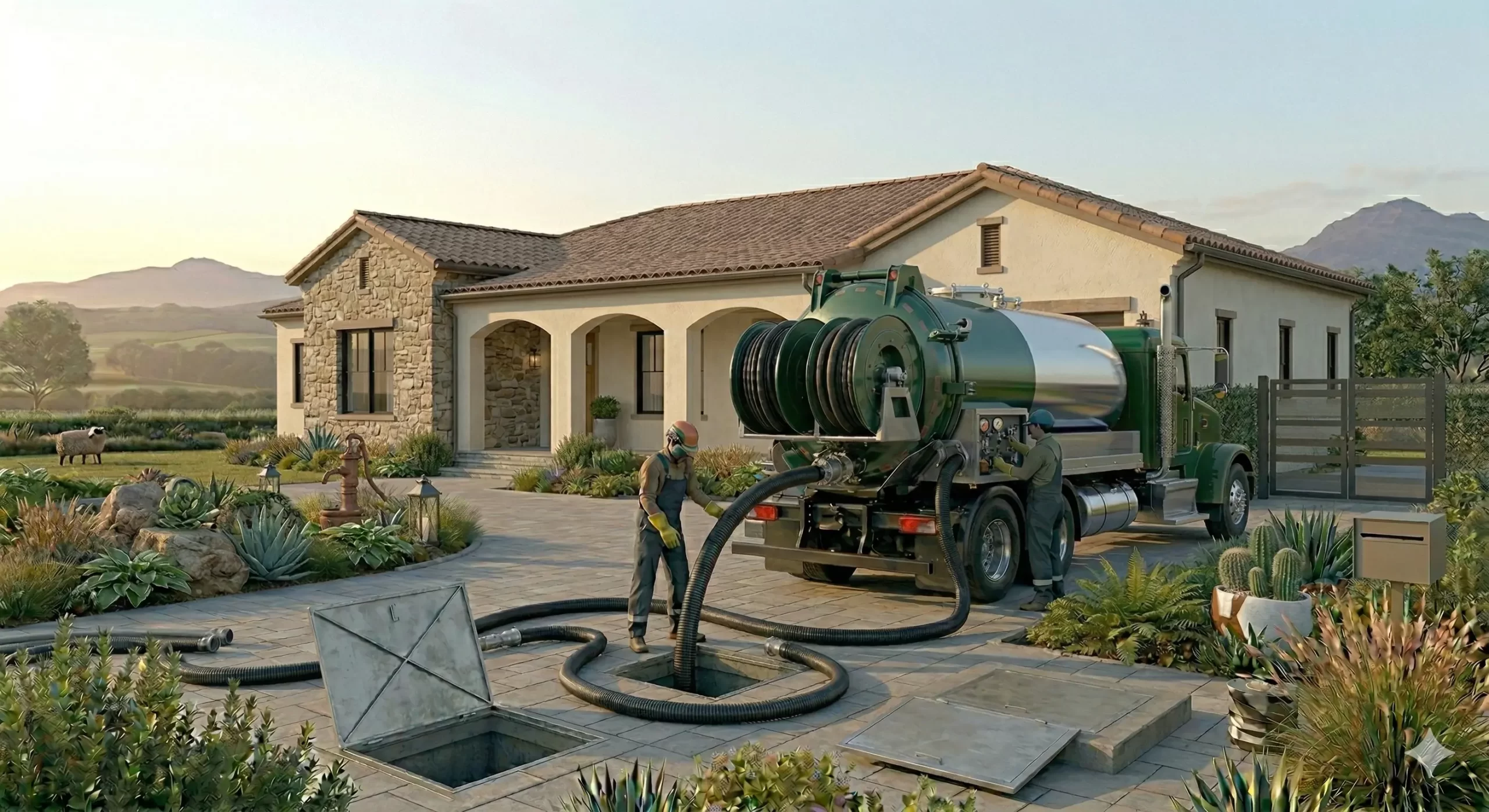
Location: Houston, Texas. Climate: Hot, humid summers, exacerbating FOG (Fats, Oils, and Grease) coagulation and anaerobic bacterial activity.
Facility: A high-volume barbecue restaurant, operating 7 days a week, specializing in slow-smoked brisket and pork ribs. Daily output: Approximately 150 gallons of FOG-laden wastewater during peak hours.
The Interceptor: A standard 1,500-gallon concrete gravity interceptor, located in the parking lot. As per standard engineering principles, this unit was correctly sized for initial operations. To get a customized pumping schedule, feel free to speak with our local representatives in Sinton, TX.
The Fallacy: The owner, swayed by a low-cost, high-volume pumping contractor, adopted a fixed “every 90 days” pumping schedule. This schedule completely disregards the operational output and the fundamental chemical and physical principles governing FOG accumulation. The contractor never performed a proper solids measurement, simply “pumped and ran.”
The Inevitable Breakdown:
- Month 1-2: The interceptor functions within design parameters. The FOG mat begins to form, and the solids layer at the bottom starts accumulating.
- Month 3 (Day 90): The first pumping occurs. However, due to a recent weekend festival, the FOG and solids levels were already at 30% capacity, exceeding the 25% rule threshold. The pumping service failed to scrape the walls or inspect the baffles.
- Month 4-5: The residual FOG left on the tank walls from the improper cleaning accelerated the accumulation of new FOG. The elevated ambient temperatures of the Houston summer increased the rate of anaerobic decomposition, producing significant hydrogen sulfide (H2S) gas, which began corroding the concrete baffles.
- Month 6 (Day 180): The second pumping is performed. The tank is now at 45% capacity prior to pumping. The high-pressure inflow from the kitchen begins pushing semi-solid FOG globules past the corroded baffles. The effluent sent to the municipal sewer line is no longer compliant with Houston’s wastewater discharge regulations (typically <100 mg/L for FOG).
- Month 7: Catastrophe. A massive FOG blockage, or “fatberg,” forms 200 feet down the municipal sewer line, causing a Sanitary Sewer Overflow (SSO). Wastewater backs up not only into the restaurant’s floor drains but also into two neighboring businesses. The City of Houston Public Works is alerted.
The Financial Aftermath:
- Emergency Pumping & Hydro-Jetting: $4,500 (to clear the restaurant’s line and the initial municipal blockage)
- Municipal Fines: $15,000 for the non-compliant discharge and causing an SSO.
- Plumbing Repairs: $2,800 for replacing drain lines damaged by the high-pressure backup.
- Health Department Shutdown: 3 days of lost revenue, estimated at $25,000.
- Remediation Costs: Contribution to the municipal cost of cleaning the main sewer line, billed at $8,000.
- Total Direct Cost: $55,300
This entire fiscal and operational disaster was the direct result of adhering to a fallacious, arbitrary schedule instead of the scientifically mandated 25% Rule. The initial savings of a few hundred dollars on a cheaper, less thorough pumping service resulted in a five-figure liability. ️
The Unvarnished Truth: A Cost Breakdown of Grease Trap Services
Let us dissect the financial variables associated with grease interceptor maintenance. Contractors who provide a simple, flat-rate quote without a comprehensive assessment are engaging in malpractice. The total cost is a multivariate function of volume, FOG composition, disposal manifests, and regulatory compliance. Here is a granular analysis.
| Service Component | Industry Average Cost Range (USD) | Technical Justification & Notes |
|---|---|---|
| Standard Pumping (Per Gallon) | $0.25 – $0.75 | Based on interceptor volume. Lower rates often indicate incomplete pumping (leaving solids) or hidden fees. |
| Waste Disposal & Manifesting Fee | $50 – $250 per load | A non-negotiable regulatory requirement. This fee covers the legal disposal of FOG waste at a licensed facility. If a contractor does not provide a waste manifest, they are illegally dumping, and you are liable. |
| Hydro-Jetting (Inlet/Outlet Lines) | $300 – $900 | Required for clearing solidified grease from pipes. Pressure typically ranges from 3,000 to 4,000 PSI at 15-20 GPM. This is a preventative or emergency service. |
| Emergency / After-Hours Surcharge | $200 – $600+ | Premium for immediate dispatch outside of standard business hours (e.g., a Saturday night backup). |
| Confined Space Entry Fee | $400 – $1,200 | OSHA-mandated safety protocol for large, below-grade interceptors. Requires specialized equipment and certified personnel. |
Progression of Failure: A Grease Trap Neglect Timeline
The degradation of a grease interceptor is not a linear event. It is a cascade of failures, each stage exponentially increasing the risk of catastrophic system collapse. The timeline below illustrates the typical progression based on a hypothetical 1,500-gallon interceptor in a busy restaurant, assuming total neglect.
- Stage 1 (0-45 Days): Optimal Function. The interceptor is operating within its designed hydraulic retention time (HRT). FOG and solids account for less than 15% of the total volume. Effluent is clear and compliant. All systems are nominal.
- Stage 2 (45-75 Days): The 25% Rule Breach. The combined FOG mat and solids layer now exceeds 25% of the liquid volume. The HRT is compromised. The system is no longer efficient. Semi-solids and emulsified oils begin to pass through the outlet baffle. A faint odor may be detectable near the manhole cover. This is the critical juncture for pumping.
- Stage 3 (75-120 Days): Systemic Compromise. FOG and solids now occupy 40-50% of the tank. Flow is severely restricted. Drains in the kitchen become noticeably slow. Gurgling sounds are frequent as sewer gases are displaced. The effluent is grossly non-compliant, actively contributing to downstream blockages. Hydrogen sulfide (H2S) production accelerates, causing concrete and metal corrosion.
- Stage 4 (120+ Days): Catastrophic Failure. The interceptor is now effectively a solid block of FOG and sludge, with over 60% of its volume displaced. The inlet and outlet pipes are clogged. Wastewater has no path forward and backs up into the kitchen through floor drains. This constitutes a critical health code violation, mandating immediate closure. A Sanitary Sewer Overflow (SSO) into the environment is imminent. Full system remediation, not just pumping, is now required.
Troubleshooting Common Grease Trap Malfunctions: A Diagnostic Protocol ️
A grease trap is a simple gravity separation device, but its failure modes can be complex. Proper diagnosis requires moving beyond superficial observations to an analysis of the underlying fluid dynamics and biochemical processes.
Symptom: Slow Draining Fixtures
Common Misdiagnosis: A simple clog in the P-trap under the sink.
Engineering Analysis: While a localized clog is possible, in a commercial setting, slow drains are the primary indicator of reduced hydraulic retention time (HRT) within the interceptor itself. As the FOG and solids layers exceed the 25% threshold, the effective liquid volume of the tank is reduced. This means wastewater is forced through the tank too quickly for gravity separation to occur. More critically, it signifies that the outlet baffle is likely becoming occluded with semi-solidified grease, creating a bottleneck that reduces the entire system’s flow rate (measured in gallons per minute, GPM). This is not a clog; it is a systemic loss of capacity. Discover why so many neighbors recommend our septic tank services in New Roads, LA.
Symptom: Foul Odors (Hydrogen Sulfide)
Common Misdiagnosis: “It’s just a smelly grease trap.”
Engineering Analysis: The characteristic “rotten egg” smell is hydrogen sulfide (H2S), a byproduct of anaerobic bacterial decomposition. While some H2S production is normal, a sharp increase in odor indicates an excessively large and old solids layer at the bottom of the interceptor. This sludge layer has become septic. Furthermore, H2S combines with water to form sulfuric acid (H₂SO₄), a highly corrosive compound that aggressively attacks concrete and metal components, leading to baffle failure and structural collapse over time. Therefore, a strong odor is not just an inconvenience; it is an audible alarm of accelerated structural degradation.
Symptom: Effluent Non-Compliance (Noticed by Regulators)
Common Misdiagnosis: The trap is too small.
Engineering Analysis: While undersizing can be an issue, the most common cause of non-compliant effluent (FOG content > 100-300 mg/L, depending on the municipality) is a breached 25% Rule. When the FOG mat is too thick, it can be drawn into the outlet flow. When the solids are too high, they can be re-suspended by turbulent inflow and washed out. Another frequent cause is the use of emulsifying detergents or enzymes, which keep grease in suspension, allowing it to pass directly through the interceptor. The solution is not necessarily a larger trap, but a correctly timed pumping schedule based on measured FOG/solids levels. To get a customized pumping schedule, feel free to speak with our local representatives in Gladewater, TX.
Mandatory Maintenance Protocols for Grease Interceptor Longevity ️
Do you believe that simply calling a pumper truck periodically constitutes a comprehensive maintenance strategy? This simplistic view is the root cause of nearly all catastrophic interceptor failures. A proper protocol is a multi-faceted engineering control system designed to manage FOG from its point of origin to its final disposal.
- The 25% Rule: The Only Metric That Matters. The frequency of pumping is not determined by a calendar. It is dictated by the combined volume of the floating FOG mat and the bottom sludge layer. When this combined volume equals 25% of the total liquid volume of the tank, the interceptor must be pumped. This requires physical measurement with a core sampler (a “sludge judge”) at regular intervals to establish an operational baseline. For a new restaurant, this measurement should be performed weekly to determine the rate of accumulation.
- Comprehensive Pumping Procedure. A legitimate service does not just vacuum the liquid. The protocol must include: a) Pumping the entire liquid and solid contents of the interceptor. b) Scraping the walls and baffles to remove hardened, saponified grease deposits. c) A thorough visual inspection of the inlet baffle, outlet baffle, and the tank’s structural integrity. d) Proper completion of a waste manifest document, which is your legal proof of compliant disposal.
- Source Control & Best Practices. The most effective maintenance occurs in the kitchen. Staff must be rigorously trained on pre-scraping plates, pots, and pans into a solid waste bin before washing. Implement a system for collecting and recycling used cooking oil; it should never be poured down a drain.
- Biological Augmentation vs. Enzymes. Avoid enzyme-only products. Enzymes are catalysts that liquefy FOG, but they do not consume it, pushing the problem downstream. A superior solution is biological augmentation using specific strains of grease-metabolizing bacteria. These microorganisms break down complex long-chain fatty acids into simple, harmless byproducts (CO₂ and H₂O). This should be viewed as a system enhancement, not a replacement for pumping.
Verified Client Testimonials
⭐⭐⭐⭐⭐ – Maria Rodriguez, Owner of “La Cocina Central”
“We were facing constant backups and the city was threatening fines. Our previous ‘pumper’ just came and went in 20 minutes. The engineer who came out performed a full diagnostic, measured our FOG levels with some kind of core sampler, and explained the 25% Rule. They implemented a data-driven pumping schedule and hydro-jetted our lines. For the first time in years, we have zero issues. The level of technical expertise is unmatched. This is not just a pumping service; it’s a wastewater management solution.” Upgrading your system? Let our Porter, TX installation experts walk you through the options.
⭐⭐⭐⭐⭐ – David Chen, Operations Manager, “Fry-King Franchise Group”
“As a multi-location franchise, compliance is everything. We were dealing with inconsistent service and surprise charges across our locations. This team standardized our approach. They analyzed the output of each kitchen and created a custom pumping frequency for each store. The detailed reports and waste manifests they provide give us the legal documentation we need. The cost savings from avoiding emergency calls and fines has been substantial. A truly professional, engineering-led operation.” Keeping your system healthy is easier when you partner with top-rated Dayton, TX septic technicians.
Frequently Asked Questions (FAQ): An Engineering Perspective
How often does a commercial grease trap actually need to be pumped?
The pumping frequency is not determined by a fixed time interval (e.g., every 30, 60, or 90 days). This is a common and dangerous industry fallacy. The correct frequency is dictated by the “25% Rule” (also known as the “1/4 Rule”). This rule, enforced by most health and wastewater authorities, mandates that an interceptor must be pumped when the combined depth of the floating FOG (Fats, Oils, and Grease) layer and the settled solids layer at the bottom equals 25% of the total liquid depth of the tank. The rate of accumulation depends on kitchen output, menu type, and kitchen practices, requiring physical measurement to determine the correct, site-specific pumping interval. ️
Can I use chemicals or enzymes instead of pumping?
No. The use of harsh chemicals (solvents, acids, caustics) is generally illegal and highly destructive. These agents merely emulsify FOG, allowing it to bypass the trap and re-solidify downstream, causing major blockages in the municipal sewer lines. Enzyme treatments are similarly ineffective for waste *removal*; they are catalysts that liquefy grease but do not eliminate it, again passing the problem downstream. The only scientifically valid alternative to supplement—not replace—pumping is biological augmentation with live, grease-metabolizing bacteria, which actually consume the FOG. However, physical removal via pumping remains a non-negotiable requirement.
What is the difference between a grease trap and a grease interceptor?
These terms are often used interchangeably, but in a technical context, they refer to different scales of equipment. A “grease trap” typically refers to a small, high-maintenance unit (10-100 gallons) located indoors, often under a sink. A “grease interceptor” refers to a much larger, exterior, in-ground tank (typically 750-5,000+ gallons) made of concrete, fiberglass, or steel. Interceptors are passive, gravity-driven systems with a much higher capacity and longer service intervals than indoor traps. The principles of separation are the same, but the engineering scale, maintenance requirements, and regulatory oversight are vastly different.
What happens if I don’t pump my grease trap on time?
Failure to adhere to the 25% Rule initiates a cascade of system failures. Initially, the interceptor’s efficiency plummets, discharging non-compliant wastewater. This leads to slow drains inside the facility. Subsequently, foul odors from anaerobic decomposition become prominent. The final stage is a total blockage, causing a raw sewage backup into your kitchen—a guaranteed health department shutdown. Concurrently, you will likely cause a major blockage in the public sewer main, resulting in substantial municipal fines, civil liability for damages to other businesses, and mandated, costly repairs. The financial consequences of neglect far exceed the cost of proactive maintenance.
Technically Reviewed By:
BlixBase Master Plumber Team
20+ Years Septic Industry Experience | Certified System Inspectors