
An A.O. Smith water heater’s 1-blink LED code means normal standby. If you have no hot water, the issue may be a thermostat setting or a broken dip tube.
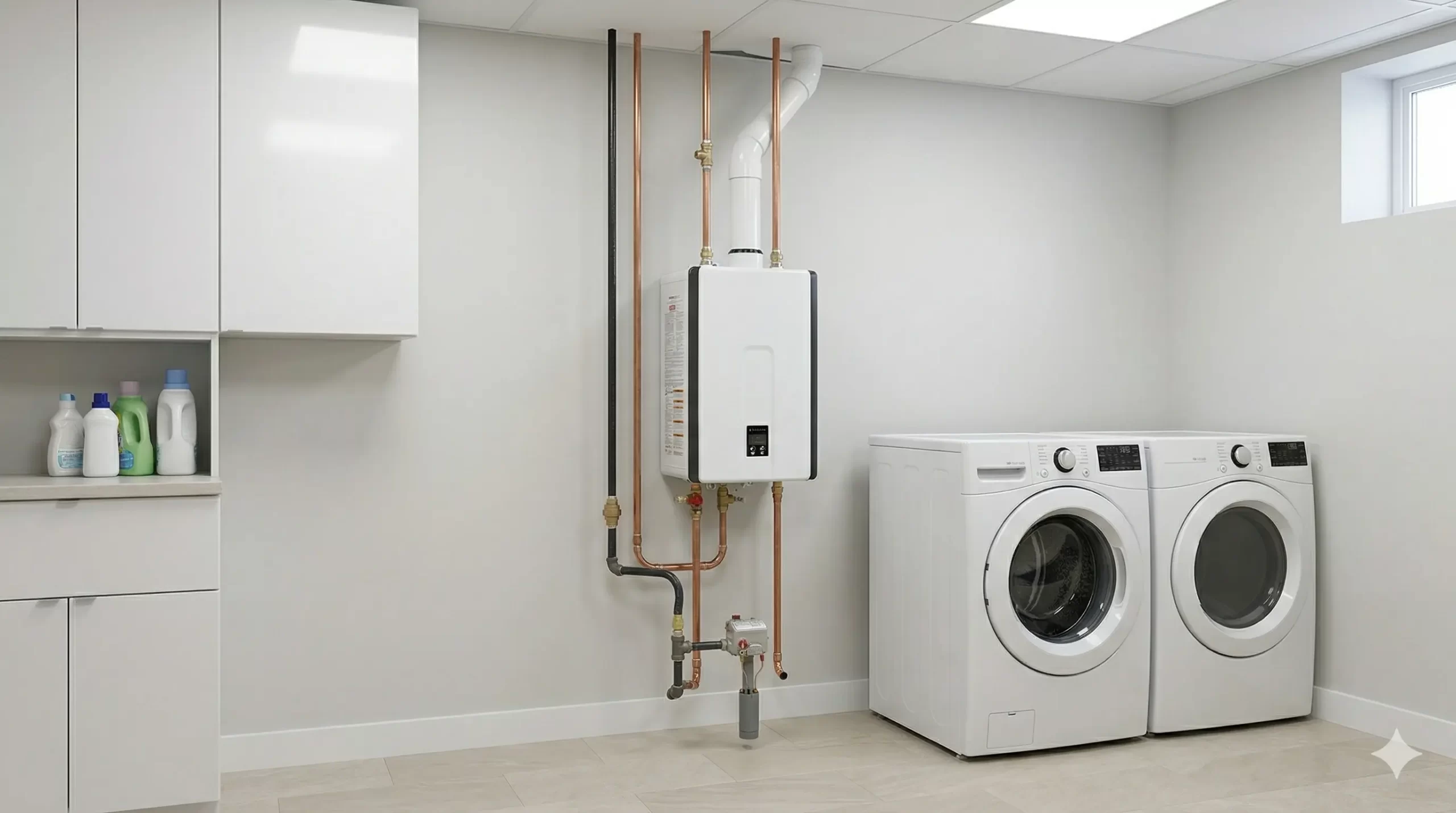
A single LED blink indicates a normal, quiescent state; it is not a fault code. Homeowners must resist the urge to manipulate the gas control valve (GCV) or pilot assembly in an attempt to ‘clear’ this code. Altering factory settings on the GCV based on a misunderstanding of a normal operational signal can compromise safety interlocks, leading to potential gas leaks or delayed ignition. The primary risk associated with this specific code is misdiagnosis, leading to unnecessary and potentially dangerous intervention on a properly functioning gas system.
️ Repair Profile
Required Diagnostics Tools
None, Phillips Head Screwdriver, Multimeter, Channel Locks, Pipe Wrench
Financial Breakdown: Parts vs. Licensed Labor
The cost allocation is heavily skewed towards labor because the 1-blink code itself requires no parts for repair. Expenses arise from professional diagnosis to uncover a secondary issue, such as a faulty dip tube, which is an inexpensive part but requires significant labor to access and replace.
Deep Technical Diagnosis: The Physics of the Failure
An A.O. Smith gas water heater displaying a single, repeating LED blink indicates the unit’s microprocessor-based control system is in a standby or quiescent state. This is the designated signal for normal operation when the thermostat’s aquastat is satisfied, meaning the stored water has reached its target temperature setpoint. In this mode, the main burner is off, and the gas control valve (GCV) is closed to the main burner orifice, while the pilot light remains lit and stable. The control module continuously monitors the thermopile’s millivolt output—a steady signal typically between 350-750 millivolts—confirming a healthy pilot flame is present and capable of igniting the main burner when a call for heat is initiated.
The single blink is essentially a ‘heartbeat’ signal, confirming the control board is powered and functioning as designed. No corrective action is required for the code itself. However, if this ‘normal’ code is concurrent with a no-hot-water condition, the diagnostic focus must shift to peripheral systems that could erroneously create a satisfied state. The primary culprits are:
- Incorrect Thermostat Setpoint: The most basic cause is a thermostat dial set too low or to a ‘vacation’ (VAC) setting, which maintains a minimal temperature.
- Dip Tube Integrity Failure: A fractured or disintegrated cold-water dip tube will introduce cold inlet water at the top of the tank instead of the bottom. This cold water immediately mixes with the hottest water near the thermostat sensor, prematurely satisfying the aquastat and tricking the GCV into remaining in standby mode.
- Extreme Thermal Stratification: In rare cases of low usage, a distinct layer of super-heated water can form at the tank’s apex, satisfying the thermostat while the bulk of the water below remains tepid. A brief draw of hot water can sometimes disrupt this stratification and initiate a heating cycle.
- Faulty Aquastat/Thermostat Assembly: Although less common, the thermostat sensor itself could be malfunctioning, reading the water temperature as higher than it actually is, thus preventing a call for heat. This would require component-level testing with a multimeter to verify resistance values against the manufacturer’s temperature chart.
A professional diagnosis for a no-hot-water condition with a 1-blink code would involve verifying gas pressure with a manometer to rule out supply issues, confirming proper vent draft to ensure no high-limit switch trips are occurring, and systematically investigating the potential root causes listed above to isolate the mechanical or electrical failure that is masking as normal operation.
US Building Codes & Plumbing Regulations
While a 1-blink code indicates normal operation and does not directly implicate a code violation, its context within a ‘no hot water’ scenario can relate to installation standards. The Uniform Plumbing Code (UPC) Section 507.2 mandates that appliances ‘shall be accessible for inspection, service, repair and replacement without removing permanent construction.’ If a homeowner or technician cannot easily access the gas control valve and thermostat dial to verify the setpoint—a primary diagnostic step for this issue—the installation is non-compliant. The code ensures that fundamental operational controls are not obscured, which is critical when troubleshooting a perceived fault during a normal operating signal.
Furthermore, National Fuel Gas Code (NFPA 54 / ANSI Z223.1) specifies required clearances around the water heater. An installation with insufficient clearance could lead to ambient heat buildup around the unit, potentially influencing the thermostat’s external components and contributing to an inaccurate temperature reading. This could theoretically cause the control to remain satisfied (1-blink state) when the bulk water temperature is below the setpoint. Therefore, while the 1-blink code is benign, ensuring the unit’s serviceability and proper placement per code is essential for accurate diagnosis and function.
Professional Master Plumber Repair Sequence
- Acknowledge the Code: First, recognize that a single blinking LED is the correct signal for a water heater in standby mode. Do not treat it as an error.
- Verify Water Temperature: Go to a faucet close to the water heater. Turn on the hot water tap fully and let it run for 2-3 minutes. Assess the temperature by hand. Is it completely cold, lukewarm, or hot?
- Inspect Thermostat Setting: Locate the gas control valve (GCV) on the front of the unit. The temperature dial is typically black or grey. Confirm it is not set to ‘PILOT,’ ‘VAC’ (Vacation), or a very low setting. The ‘Hot’ or a triangular marker is a common normal setting (approx. 120°F).
- Initiate a Call for Heat: Turn the thermostat dial up by one or two increments to a noticeably higher temperature. This should create a ‘call for heat’ from the thermostat.
- Listen for Ignition: Wait and listen quietly for 30-60 seconds. You should hear a distinct ‘clunk’ from the GCV opening, followed by the whooshing sound of the main burner igniting. If this happens, the unit is now heating, and the problem was likely the setpoint. The LED may change to a solid ‘on’ or a different pattern during heating, depending on the model.
- Perform a Basic Dip Tube Test (If No Ignition): If the unit does not fire up after turning up the thermostat, a broken dip tube is a strong possibility. With the water at the faucet still running hot, carefully feel the hot water outlet pipe at the top of the heater. If the pipe quickly becomes cool or lukewarm while the water at the faucet is still hot, it suggests cold inlet water is short-circuiting within the tank, a classic sign of dip tube failure.
- Confirm Gas Supply: Check that other gas appliances in the home (e.g., furnace, stovetop) are working. Ensure the gas shutoff valve on the line leading to the water heater is in the ‘On’ position (handle parallel to the pipe).
- Reset the System (Optional): As a final step, you can turn the GCV dial to ‘PILOT’ for one minute, then back to your desired temperature setting. This can sometimes reset the control logic, but is unlikely to resolve a mechanical issue.
- Contact a Professional: If you have no hot water, the thermostat is set correctly, and the unit will not fire, do not proceed further. The issue requires professional diagnosis with tools like a multimeter to test the thermopile and aquastat.
Expert Verdict: Is It Worth Repairing?
The 1-blink LED code itself requires no repair and therefore has an ROI of infinity, as the cost is $0. The financial analysis applies only when this normal code is accompanied by a lack of hot water. In this scenario, investing in a professional diagnosis presents a substantial positive ROI. A typical service call to diagnose the underlying cause (e.g., a failed dip tube) might cost $150-$350. A replacement dip tube is an inexpensive part, often under $50. The total repair cost is a fraction of the $1,800-$3,000+ cost of a new A.O. Smith gas unit installation.
Replacing a water heater due to a misinterpretation of this benign code would be a significant financial error. The key is differentiating between the electronic signal (which is normal) and the mechanical performance (which is lacking). Therefore, allocating funds for an expert diagnosis to potentially perform a minor repair like a dip tube replacement is the most financially prudent course of action, preserving the capital investment in the existing appliance.
Frequently Asked Questions (FAQ)
Q: Why is my A.O. Smith water heater blinking once but I have no hot water?
A: A single blink means the unit’s controls think the water is already hot (standby mode). If you have no hot water, it’s likely a mechanical issue tricking the sensor. The most common cause is a broken or detached dip tube, which is feeding cold water to the top of the tank and prematurely satisfying the thermostat.
Q: Should the single green light blink all the time?
A: Yes, on most A.O. Smith models, a slow, single blink of the status light is the default ‘heartbeat’ of the system. It indicates the control module has power and is monitoring the system in a standby state, ready to heat when needed. It will continue to blink like this whenever the burner is not actively firing.
Q: Can I fix the cause of a 1-blink ‘no hot water’ issue myself?
A: Homeowners can safely check the thermostat dial to ensure it’s set to a hot enough temperature. However, if that doesn’t solve the problem, the next likely cause, a broken dip tube, requires shutting off water, partially draining the tank, and removing plumbing connections. This is a job best left to a qualified plumber to avoid leaks and ensure it’s done correctly.
Q: Does turning the thermostat up and down reset the 1-blink code?
A: The 1-blink code does not need resetting as it’s not an error. Turning the thermostat up should cause the unit to exit the 1-blink standby mode and initiate a heating cycle. The light may turn solid or change pattern while heating. Turning it back down will cause the unit to satisfy sooner and return to the 1-blink state. It’s a method of control, not a reset procedure.