
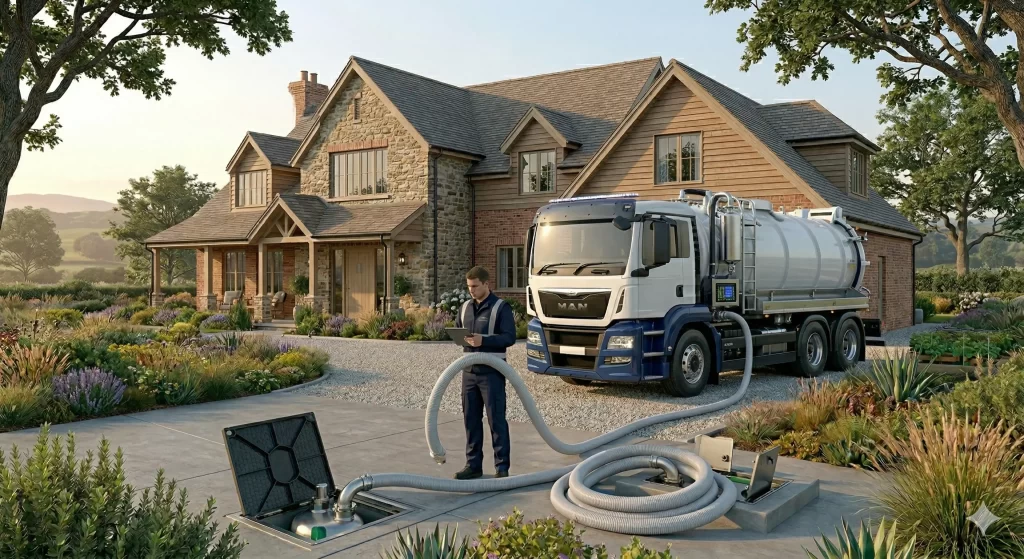
Aerobic Treatment Units (ATU) vs. Traditional Septic: What You Need to Know

Aerobic Treatment Units (ATU) vs. Traditional Septic: What You Need to Know

Aerobic Treatment Units (ATU) vs. Traditional Septic: What You Need to Know

For decades, the standard gravity-fed septic system was the undisputed king of rural and suburban plumbing. You bury a large concrete box in the yard, attach a network of perforated pipes, and let nature do the rest. It is simple, requires zero electricity, and relies on the natural absorption of the soil to dispose of your home's wastewater.

But what happens when nature refuses to cooperate? What happens when you build a beautiful home, but the soil underneath it is dense, impermeable clay? Or what if your backyard is entirely composed of loose sand sitting just three feet above a fragile groundwater aquifer?

In these hostile environments, a traditional septic drain field is a guaranteed, catastrophic failure waiting to happen. To solve this, wastewater engineers developed the Aerobic Treatment Unit (ATU). An ATU is essentially a highly advanced, miniaturized municipal sewage treatment plant buried directly in your backyard. It utilizes electric motors, air compressors, and oxygen-breathing bacteria to purify wastewater so thoroughly that it can often be legally sprayed directly onto your lawn.

However, upgrading from a traditional gravity system to a mechanical ATU is a massive shift in how you maintain your home. In this comprehensive guide, we will break down the precise mechanical differences, the strict legal maintenance requirements, and the true, hidden costs of operating an Aerobic Treatment Unit in 2026.
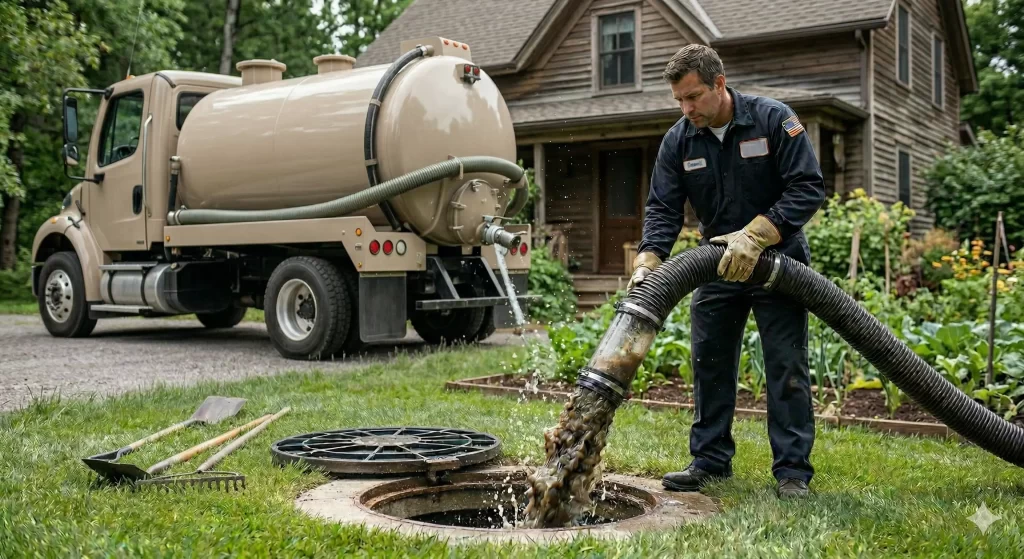
Professional installation and maintenance of an advanced mechanical Aerobic Treatment Unit (ATU) septic system
Unlike traditional gravity systems, an ATU requires active electricity, mechanical air compressors, and continuous disinfection to legally discharge treated effluent to the surface.

1. The Mechanics: How an Aerobic System Works

A traditional septic system relies almost entirely on the soil in your yard to treat the wastewater. An Aerobic Treatment Unit treats the wastewater inside the tank itself, long before it ever touches the soil. To achieve this, an ATU is usually divided into three or four distinct mechanical compartments:

  • Chamber 1: The Trash Tank (Pre-treatment): Similar to a conventional system, raw wastewater from the house enters this chamber first. Heavy solids sink to the bottom as sludge, and lighter fats and greases float to the top as scum.
  • Chamber 2: The Aeration Chamber (The Engine): This is the heart of the ATU. An electric air compressor (aerator) located above ground pumps massive amounts of oxygen into this chamber through diffusers. The highly oxygenated water allows aggressive aerobic bacteria to rapidly consume and destroy the organic waste in the water.
  • Chamber 3: The Clarifier (Settling Zone): The churning, oxygenated water flows into a quiet, still chamber. Any remaining microscopic solids (often called "sludge return") settle to the bottom and are usually cycled back to the aeration chamber for further digestion.
  • Chamber 4: The Pump & Disinfection Tank: By the time the water reaches this final chamber, it is almost completely clear. However, by law, it must be disinfected. The water passes through a chlorinator (using specialized septic chlorine tablets) or an ultraviolet (UV) light tube. Finally, a mechanical pump shoots this clean, treated water out to sprinkler heads (spray field) or underground drip lines.

2. Anaerobic vs. Aerobic Bacteria (The Biology)

The fundamental difference between these two systems lies in the microbiology.

Traditional Septic (Anaerobic): These tanks are sealed and devoid of oxygen. The bacteria that live in this dark environment (anaerobic bacteria) process waste very slowly and produce strong, foul-smelling byproducts like hydrogen sulfide and methane gas. Because they are slow, the water leaving a traditional tank is still highly toxic and relies on the yard's soil biomat for secondary treatment.

ATU Systems (Aerobic): By forcing compressed air into the water, you cultivate aerobic bacteria. These are the same highly aggressive, fast-acting bacteria used in massive city wastewater plants. They consume organic solid waste up to 20 times faster than anaerobic bacteria, and they do not produce foul-smelling methane. The effluent produced by aerobic bacteria is exceptionally clean, which is why it can be legally sprayed onto the surface of your lawn.

The Vulnerability of Aerobic Bacteria
While aerobic bacteria are incredibly efficient, they are fragile. If the power to your home goes out and the air compressor stops, the oxygen in the tank depletes rapidly. Within 24 to 48 hours, the entire aerobic bacterial colony will die, and your expensive ATU will revert into a sluggish, foul-smelling traditional tank.

3. Why Geography Forces the Switch

You rarely choose to install an ATU because you want to; you install one because local environmental laws or poor soil percolation force you to. State and county health departments will mandate an ATU upgrade if your property falls into specific geographic categories.

The Gumbo Clay of Louisiana:
In the dense, coastal plains of Acadiana, a traditional gravity system simply cannot drain. For example, homeowners in rural areas who regularly schedule septic pumping in Scott, LA, often find that their clay soil instantly hydraulically locks during spring storms. To combat this, local ordinances frequently mandate ATUs. By treating the water mechanically inside the tank, residents requiring septic services in Rayne, LA, can utilize surface spray fields to legally dispose of their wastewater, completely bypassing the stubborn, impermeable clay below. (For more details on state-wide compliance, see our Louisiana septic guide).

The High Aquifers of Florida:
If you are looking at septic systems in Florida, the problem is not poor drainage, but rather environmental protection. Florida has extremely porous sand and high groundwater tables. A traditional system allows untreated wastewater to reach the aquifer too quickly. Advanced ATUs (specifically Nitrogen-Reducing models) are heavily mandated here to purify the water mechanically before it touches the fragile coastal environment.

The Expansive Soils of Texas:
In areas requiring septic services in Texas, the infamous "blackland prairie" clay shrinks and expands violently with the weather. This shifting earth destroys traditional buried PVC drain fields. Surface spray ATUs are the predominant solution for new home builds across Central and East Texas.

4. Head-to-Head Comparison: ATU vs. Conventional

👉 Swipe right to view full comparison 👉
System FeatureTraditional Gravity SepticAerobic Treatment Unit (ATU)
Soil RequirementsRequires excellent, deep, well-draining loamy or sandy soil.Works in any soil (Clay, shallow bedrock, high water tables).
Electricity Required?No. 100% gravity-fed. Works during power outages.Yes. Requires continuous power for air compressors and lift pumps.
Effluent QualityPoor. Relies heavily on the underground soil for final filtration.Excellent. Highly treated, clear, and disinfected. Safe for surface spray.
Yard Space NeededLarge. Requires a massive, dedicated underground leach field.Minimal underground footprint. Surface spray heads can be hidden in landscaping.
Maintenance LegalityHomeowner responsibility. Unregulated pumping schedule.Highly Regulated. Often requires a legally binding, paid maintenance contract with the county.

5. Strict Maintenance & Pumping Requirements

The greatest shock for a homeowner transitioning from a traditional system to an ATU is the maintenance burden. You can safely ignore a traditional system for 3 years, but an ATU requires constant, active management.

  • The Alarms: ATUs are equipped with control panels featuring loud audible and visual alarms. If the air compressor fails, or if the water level rises too high in the pump chamber, the alarm will sound. You cannot ignore this; you must call a technician immediately.
  • Chlorine Tablets: If your system uses surface spray heads, you are legally required to keep the chlorinator tubes filled with specialized wastewater chlorine tablets (NEVER use swimming pool chlorine, which can create explosive gases in a septic environment).
  • Mandatory Service Contracts: In almost all jurisdictions across Texas, Florida, and Louisiana, the county health department legally requires ATU owners to maintain an active, paid service contract with a licensed professional. They must visit your property 2 to 3 times a year to inspect the motors, clean the diffusers, and submit a compliance report to the state.

Furthermore, because ATUs have smaller primary "trash tanks" than traditional systems, they require more frequent pumping to prevent solids from escaping and destroying the delicate aeration diffusers. If you want to calculate your baseline budget for this, review the standard 1000 gallon septic tank pumping cost, and ensure you read our 2026 comprehensive septic pumping guide to account for the specialized ATU mechanical surcharges.

Aerobic Atu Vs Traditional Septic Systems Septic Expert AI

Local Health Dept Data & Permits for the Aerobic Atu Vs Traditional Septic Systems Area
What are the specific septic tank regulations, typical soil drainage characteristics, and the local permitting authority for the Aerobic Atu Vs Traditional Septic Systems area?
What are the local rules regarding septic system inspections during a real estate transfer in your state?
Based on local soil conditions in the Aerobic Atu Vs Traditional Septic Systems area, what are the most common challenges for septic drain fields (leach fields)?
What is the average cost to pump a standard 1,000-gallon septic tank in Aerobic Atu Vs Traditional Septic Systems, USA in 2026?
Are there any specific local grants or programs in the Aerobic Atu Vs Traditional Septic Systems area to help homeowners replace failing septic systems?
How does the climate and average rainfall in your state affect septic system maintenance and biomat health?
What are the mandatory legal setback requirements between a septic tank and property lines or water wells in the Aerobic Atu Vs Traditional Septic Systems area?
âš¡ FETCHING LOCAL DATABASE...
Local Geo-Data Report for Aerobic Atu Vs Traditional Septic Systems:

What are the specific septic tank regulations, typical soil drainage characteristics, and the local permitting authority for the Aerobic Atu Vs Traditional Septic Systems area?

Clarification on Location: "Aerobic Atu Vs Traditional Septic Systems, USA"

As a Senior Environmental Health Inspector and Septic Regulatory Expert, I must first clarify that "Aerobic Atu Vs Traditional Septic Systems, USA" is not a specific geographic location. Instead, it describes a common comparison and a scenario encountered across numerous counties in the United States where site-specific conditions dictate the choice between a conventional (traditional) septic system and an Advanced Treatment Unit (ATU) with aerobic treatment.

The need for an ATU versus a traditional system is determined by factors such as soil type, lot size, proximity to water bodies, and local environmental regulations. To provide you with the specific, hard data you're requesting, I will detail regulations, soil characteristics, permitting, and costs for a representative jurisdiction where ATUs are commonly mandated due to challenging site conditions:

For the purpose of this detailed response, I will use Travis County, Texas, as an illustrative example. Travis County frequently deals with diverse and challenging soil conditions, requiring a robust regulatory framework that often mandates advanced treatment systems.

Septic Tank Regulations in Travis County, Texas (2026)

In Travis County, all On-Site Sewage Facilities (OSSFs), including both traditional and aerobic systems, are regulated primarily by the Texas Commission on Environmental Quality (TCEQ) through 30 Texas Administrative Code (TAC) Chapter 285, "On-Site Sewage Facilities." Travis County's local regulations supplement and sometimes exceed state requirements to address specific local environmental concerns.

  • Conventional Systems (Traditional):
    • Typically require a minimum of 24 inches of suitable, permeable soil below the drainfield trench bottom and a minimum of 5 feet separation to the seasonal high water table or impermeable layer.
    • Drainfields generally consist of gravel and pipe or gravelless chambers designed for passive wastewater dispersal after primary treatment in a septic tank.
    • Limited to areas with good soil permeability (e.g., not heavy clay) and sufficient depth.
  • Aerobic Treatment Units (ATUs):
    • Mandated when site conditions preclude a conventional system, such as:
      • Insufficient soil depth or unsuitable soil types (e.g., heavy clay with low permeability, shallow bedrock).
      • High seasonal water table.
      • Small lot size that cannot accommodate required setbacks for conventional systems.
      • Proximity to sensitive environmental areas (e.g., lakes, rivers, aquifer recharge zones).
    • ATUs provide a higher level of treatment than a conventional septic tank, using aeration and often chlorination/UV disinfection to reduce pathogens and organic matter significantly before effluent dispersal.
    • Maintenance Contracts: A critical regulation for ATUs in Texas (including Travis County) is the mandatory professional maintenance contract for the life of the system. These contracts typically require inspections every four months to ensure proper operation, effluent quality, and compliance. This is a significant ongoing cost and regulatory requirement not present for traditional systems.
    • Dispersal Methods: Due to the higher quality effluent, ATUs often utilize specialized dispersal methods suitable for challenging soils, such as drip irrigation, surface irrigation (if permitted), or low-pressure dosing systems, which typically have smaller footprints than conventional drainfields.
    • Electrical Requirements: ATUs require continuous electrical power for blowers, pumps, and controls.
  • Setbacks: Both system types must adhere to strict setback requirements from property lines, wells, foundations, water bodies, and other structures, as outlined in 30 TAC Chapter 285. These can vary slightly depending on the specific system components and site characteristics.

Typical Soil Drainage Characteristics in Travis County, Texas

Travis County is geographically diverse, leading to a wide range of soil conditions that heavily dictate drainfield design and system choice:

  • Western Travis County (Edwards Plateau): Characterized by shallow, rocky soils over limestone bedrock. Permeability can be highly variable due to fractures in the bedrock. High water tables can occur seasonally in some depressions. These conditions frequently necessitate ATUs with drip irrigation or low-pressure dosing fields to distribute treated effluent over a larger, shallower area or to accommodate limited soil depth above bedrock.
  • Central Travis County (Blackland Prairie/Edwards Plateau Transition): Features expansive clay soils (like Houston Black clay) with high shrink-swell potential. These soils have very low permeability, leading to poor drainage and a high risk of ponding. Conventional septic systems are typically unsuitable due to the inability of the soil to absorb effluent effectively. ATUs with drip irrigation are almost universally required here, as they can slowly deliver small doses of highly treated effluent directly into the root zone of vegetation.
  • Eastern Travis County (Blackland Prairie): Dominated by deep, heavy clay soils with very low hydraulic conductivity. Similar to central Travis County, these soils pose significant challenges for conventional drainfields. ATUs are the preferred or required solution, again often paired with drip irrigation or other specialized dispersal methods that accommodate slow absorption rates.

How Soil Dictates Drain Field Design: Due to the prevalence of shallow bedrock, expansive clays, and low permeability soils in much of Travis County, traditional gravity-fed drain fields are often not feasible. This directly leads to the common requirement for:

  • Aerobic Treatment Units (ATUs): To produce a higher quality effluent that can be dispersed in more challenging conditions.
  • Drip Irrigation Fields: The most common dispersal method for ATUs in poor soils. These systems bury thin tubing with emitters that release small, precise amounts of treated effluent directly into the soil's root zone, allowing for slow absorption and evapotranspiration.
  • Low-Pressure Dosing Systems: Used to distribute effluent evenly across a drainfield in controlled doses, preventing overloading of specific areas, especially in moderately restrictive soils.

Local Permitting Authority (Travis County, Texas)

The primary local permitting authority for On-Site Sewage Facilities (OSSFs) in unincorporated areas and many extraterritorial jurisdictions (ETJs) of Travis County is:

Travis County Transportation and Natural Resources (TNR) - Environmental Health Program

For properties located within the full purpose city limits of Austin or its specific extraterritorial jurisdictions where Austin Water provides service, the permitting authority may fall under the City of Austin Watershed Protection Department / Austin Water.

Regardless of the specific entity, the permitting process involves:

  • Application submission, including detailed plans designed by a licensed professional engineer or registered sanitarian.
  • Site evaluation (soil test, property survey, flood plain determination).
  • Review against TCEQ Chapter 285 and local Travis County ordinances.
  • Inspections during installation.
  • Final approval and operating permit issuance.

Realistic 2026 Costs for the Travis County, Texas Market

These estimates are based on current market trends and projected inflation for 2026, specifically for the Travis County area, which can have higher labor and material costs compared to some other regions.

  • Septic System Pumping (Conventional System):
    • Typical Cost: $400 - $700. This usually covers pumping of the primary septic tank. Factors influencing cost include tank size, accessibility, and location within the county.
  • Aerobic Treatment Unit (ATU) Maintenance/Pumping:
    • Pumping: May be similar to conventional septic tanks ($400 - $700) for the main sludge compartment, but ATUs also have aeration chambers and often clarifiers that require specific cleaning, potentially adding to the cost.
    • Mandatory Maintenance Contract: A recurring cost, typically $300 - $600 per year, covering four quarterly inspections, basic servicing, and effluent sampling (if required). This is separate from pumping.
  • New Septic System Installation (2026 Estimates):
    • Traditional Septic System (Conventional Tank with Gravity Drainfield):
      • Cost: $8,000 - $15,000+. This range applies only if the site's soil conditions (depth, permeability) are suitable for a conventional system, which is less common in Travis County. Costs depend on tank size, drainfield size, excavation complexity, and material costs.
    • Aerobic Treatment Unit (ATU) System with Drip Irrigation Field:
      • Cost: $20,000 - $40,000+. This is the more typical installation in Travis County due to soil limitations. This higher cost reflects:
        • The ATU itself (treatment plant with blowers, pumps).
        • Specialized, pressure-dosed drip irrigation drainfield.
        • Electrical work for the ATU components.
        • More extensive engineering and design fees required for ATU systems.
        • Potential for advanced site preparation and landscaping for drip fields.

These installation costs are for a standard residential system (e.g., 3-4 bedrooms). Larger homes or more complex sites will incur higher costs.

Disclaimer: Local environmental regulations and soil codes change. Verify all setbacks, permits, and ATU rules directly with your local Health Authorities.

6. The Financial Breakdown: Initial & Ongoing Costs

ATUs are engineering marvels, but they come with a premium price tag. Here is how the costs stack up over the life of the system.

Standard Routine Pump-Out
$350 - $650
Annual ATU Maintenance Contract
$250 - $500 / Year
Initial ATU Installation (Complete System)
$12,000 - $22,000+

Conclusion: Is an ATU Right for You?

An Aerobic Treatment Unit is not a luxury upgrade you choose for fun; it is a vital, highly effective engineering solution designed to protect public health and the environment when the native soil has failed.

If you are building a home in an area with dense clay, shallow bedrock, or high water tables, an ATU allows you to utilize land that would otherwise be legally unbuildable. However, you must be prepared for the financial reality of owning a mini sewage plant. Budget for the electricity to run the compressor, the cost of specialized chlorine, the mandatory annual maintenance contracts, and a strict, professional pumping schedule.

Take care of your ATU's mechanical components, and it will safely and cleanly process your household's wastewater for decades to come.

Does Your ATU Alarm Keep Buzzing?

Don't let a failed compressor turn your expensive aerobic system into a toxic, anaerobic swamp. Connect with top-rated, certified local ATU technicians to diagnose the alarm, repair the motors, and pump the system clean today.

📞 +1-512-207-0418

Free Quotes & Estimates

Calls are routed to a licensed local partner.