
Bradford White’s 5-blink error code indicates a critical temperature sensor failure within the gas valve. The entire valve assembly requires replacement.
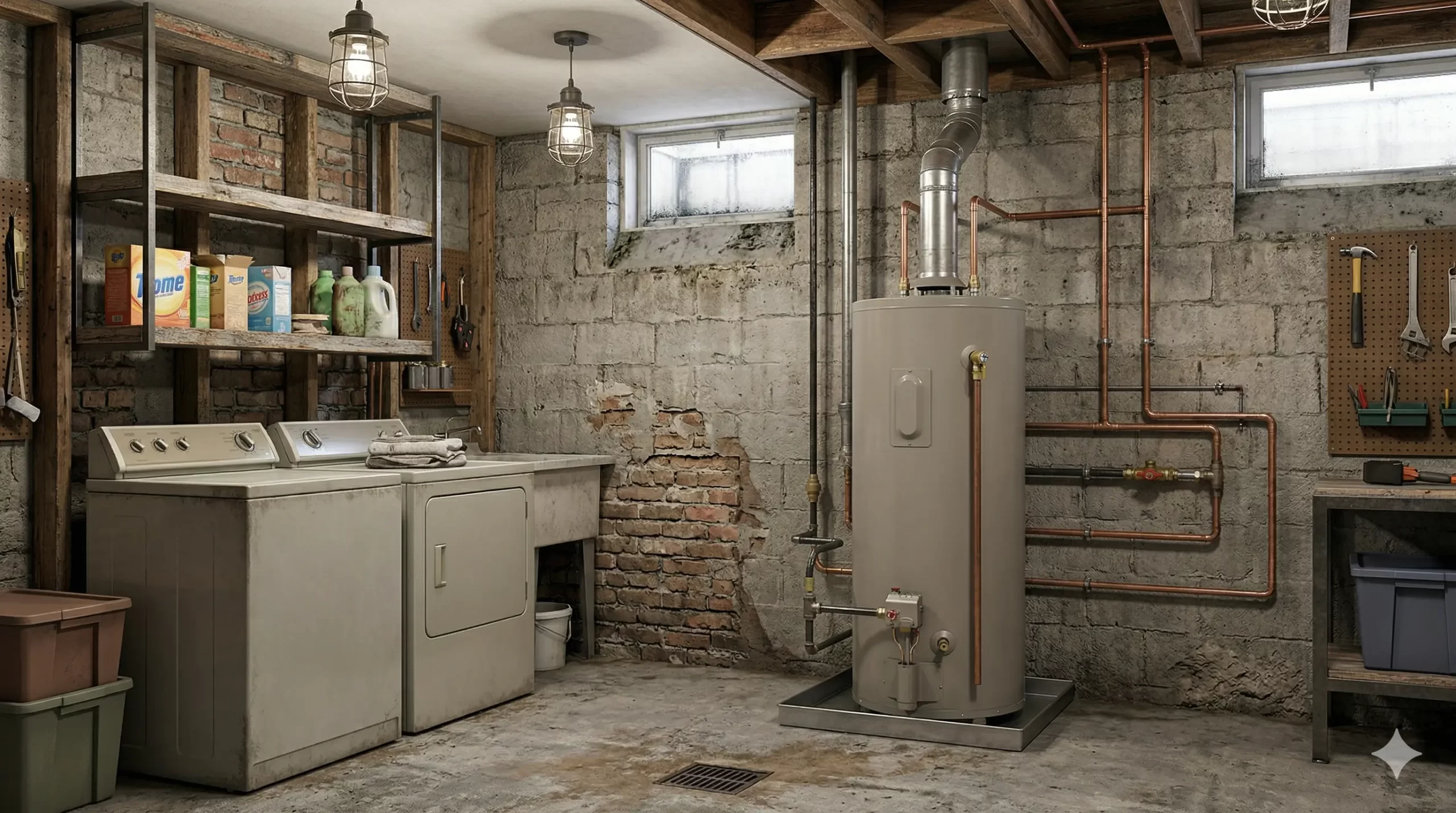
Critical System Integrity Alert: Sensor Failure Implications
A 5-blink error signifies a compromised thermal regulation circuit. This is not merely an inconvenience; the sensor’s failure mode is unpredictable. While typically resulting in a shutdown, an intermittent short circuit could theoretically send an erroneous ‘cold’ signal to the main controller, potentially leading to a runaway heating event. This places extreme demand on the T&P relief valve, the final line of defense against catastrophic tank failure. All gas line manipulations carry inherent risks of leaks. This repair must only be attempted by a licensed professional equipped with a calibrated combustion analyzer and manometer.
️ Repair Profile
Required Diagnostics Tools
Pipe Wrench (2), Channel Lock Pliers, Phillips & Flathead Screwdrivers, Garden Hose, Bucket, Multimeter, Gas-rated Pipe Thread Sealant or PTFE Tape, Manometer, Soapy Water Solution
Financial Breakdown: Parts vs. Licensed Labor
The Bradford White ICON System® gas control valve is a sophisticated, non-serviceable component integrating the thermistor, control logic, and safety shutoffs. Its cost reflects this complex, factory-sealed engineering, making the part itself the dominant expense over the procedural labor of draining the tank and performing the replacement.
Deep Technical Diagnosis: The Physics of the Failure
The 5-blink status code on a Bradford White ICON System® controller is a definitive indication of a Temperature Sensor Failure. This is not an external thermocouple issue; the fault lies with the integrated thermistor located within a thermal well that projects directly into the tank’s water volume from the gas control valve body. This sensor is a Negative Temperature Coefficient (NTC) thermistor, meaning its electrical resistance decreases predictably as the water temperature increases. The microprocessor within the ICON valve continuously monitors this resistance value, converting it into a precise temperature reading.
A ‘Sensor Failure’ fault is triggered when the control logic reads a resistance value that is drastically outside the pre-programmed operational range—typically below 50°F or above 190°F equivalent resistance. This indicates either an open circuit (infinite resistance, perceived as extreme cold) or a short circuit (near-zero resistance, perceived as extreme heat). The control system’s fail-safe protocol immediately locks out the burner operation to prevent either a dangerous overheating scenario or futile firing cycles. The diagnostic check is continuous, meaning a momentary glitch or intermittent connection will still trigger the hard lockout, requiring a power cycle to re-evaluate, though the fault will reappear if the physical issue persists. Verifying with a multimeter across the sensor leads (if accessible, though typically not on ICON valves) would show either infinite ohms (open) or near zero ohms (shorted), confirming the diagnosis. This failure preempts any analysis of combustion characteristics; issues with stoichiometry or gas pressure confirmed by a manometer are irrelevant until this primary control circuit is restored.
Primary Root Causes:
- Thermistor Degradation: Prolonged exposure to thousands of thermal cycles causes material fatigue and eventual breakdown of the semiconductor material within the thermistor bead, leading to a resistance drift that falls out of the acceptable range.
- Internal Corrosion/Moisture Ingress: A microscopic breach in the thermal well’s seal can allow moisture to penetrate, causing corrosion on the sensor’s leads, resulting in a short circuit or an open circuit.
- Wire Fatigue: Vibration and thermal expansion/contraction can cause the delicate wires connecting the thermistor to the control board to fracture internally, creating an open circuit fault.
- Control Board Fault: In rare instances, the fault may lie with the analog-to-digital converter on the ICON control board itself, which misinterprets a valid signal from the sensor. However, the 5-blink code is specifically programmed to point to the sensor component itself.
US Building Codes & Plumbing Regulations
The replacement of a gas control valve is explicitly governed by the NFPA 54: National Fuel Gas Code. Section 8.1.3 (not a direct quote) mandates that appliance components must be replaced with parts that are equivalent in function and safety. More critically, any time the gas piping is ‘opened’—as is required for this repair—the integrity of the system must be re-verified. NFPA 54 Section 7.1.1 requires a pressure test of the affected piping section before the appliance is put back into service. A professional will use a manometer to confirm zero pressure drop over a specified time, ensuring no minute gas leaks were introduced at the new valve connections. Failure to perform and document this test constitutes a significant code violation and safety hazard.
Furthermore, the Uniform Plumbing Code (UPC) Section 507.5 requires that the Temperature and Pressure (T&P) relief valve be maintained in operable condition. A 5-blink sensor failure directly involves the primary temperature regulating system of the water heater. As a certified inspector, I would mandate that following the replacement of the gas control valve, the T&P valve’s functionality must be tested (carefully, by operating the test lever). This ensures the ultimate safety device is capable of functioning correctly, as its proper operation is contingent on the very temperature readings that the new sensor will now provide. This is a critical step in restoring the appliance to a code-compliant and safe operational state.
Professional Master Plumber Repair Sequence
- Isolate and Depressurize: Turn the gas control valve knob to ‘OFF’. Turn the manual gas shut-off valve on the supply line to the OFF position (handle perpendicular to the pipe). Close the cold water inlet valve to the heater. Open a hot water tap somewhere in the house to relieve system pressure.
- Drain the Tank: Connect a garden hose to the drain valve at the bottom of the water heater and route it to a floor drain or outside. Open the drain valve and the T&P relief valve lever to allow air to enter the tank, speeding up the draining process. This will take 30-60 minutes.
- Disconnect Gas and Control Lines: Using two pipe wrenches (one for backup to prevent stressing the manifold), carefully disconnect the main gas supply line and the pilot tube from the old gas control valve. Disconnect the piezo igniter wire and any other sensor wires.
- Remove Old Gas Control Valve: The valve is threaded directly into the tank spud. Using a large pipe wrench, carefully unthread the entire valve assembly by turning it counter-clockwise. Be prepared for some residual water to spill.
- Clean and Prepare Tank Threads: Inspect the female threads on the tank spud for damage or corrosion. Clean them thoroughly with a wire brush to ensure a clean sealing surface for the new valve.
- Install New Gas Control Valve: Apply gas-rated PTFE tape or pipe thread sealant to the male threads of the new control valve. Carefully thread the new valve into the tank spud by hand to avoid cross-threading, then tighten securely with a pipe wrench until it is properly oriented. Do not overtighten.
- Reconnect Lines: Reconnect the pilot tube, main gas supply line, and any electrical connectors to the new valve. Use fresh thread sealant on the gas line connection and tighten using the two-wrench method.
- Refill Tank and Purge Air: Close the drain valve. Open the cold water inlet valve fully. Leave the hot water tap open elsewhere in the house. When water flows steadily from the tap, all air has been purged from the tank; you can then close the tap.
- Perform Gas Leak Test: Slowly open the manual gas shut-off valve. Using a soapy water solution, liberally coat all gas connections you worked on. Watch for the formation of bubbles, which indicates a gas leak. If bubbles appear, shut off the gas immediately and tighten the connection.
- Relight and Test Operation: Follow the specific lighting instructions on the new gas control valve label. This typically involves setting the knob to ‘PILOT,’ depressing it, and clicking the igniter. Once the pilot is lit and stable, turn the knob to your desired temperature setting. The main burner should ignite. Monitor the unit for one full heating cycle to ensure it shuts off correctly.
Expert Verdict: Is It Worth Repairing?
When faced with a 5-blink sensor failure on a Bradford White heater, the repair-versus-replace decision hinges almost entirely on the unit’s age and warranty status. The replacement of the ICON gas control valve is a costly repair, often representing 30-50% of the cost of a completely new, installed water heater. If the water heater is less than 6 years old and still under a parts warranty, the repair is the clear choice, as you would only be responsible for labor costs. However, if the unit is 8 years or older, the Return on Investment (ROI) for this repair diminishes sharply. Investing a significant sum into an aging tank with a corroding anode rod and sediment buildup is often economically unsound. A practical guideline is the ‘Rule of 50’: multiply the repair cost by the heater’s age. If that number exceeds the cost of a new installed unit, replacement is the financially superior long-term decision. The failure of a sophisticated electronic component like the thermistor is often a leading indicator of other age-related failures to come.
Frequently Asked Questions (FAQ)
Q: Can I just replace the temperature sensor probe inside the Bradford White gas valve?
A: No. On Bradford White water heaters equipped with the ICON System® gas control valve, the temperature sensor (thermistor) is an integral, non-serviceable component. It is factory-sealed within the valve body. The 5-blink error code necessitates the replacement of the entire gas control valve assembly.
Q: What causes the temperature sensor to fail and trigger a 5-blink error?
A: Sensor failure is typically caused by one of three factors: thermal stress from thousands of heating and cooling cycles causing the internal electronic component to fracture or drift out of specification; moisture ingress past a failing seal on the thermal well, causing a short circuit; or simple end-of-life failure for the electronic component after many years of service.
Q: Is my water heater dangerous with a 5-blink error code?
A: The system is designed to be fail-safe. When the 5-blink code is active, the control board initiates a hard lockout, preventing the burner from firing. This eliminates the immediate danger. However, the underlying fault in a primary safety and control component means the unit should not be used or tampered with until it is professionally repaired.
Q: Can I just reset the water heater to clear the 5-blink code?
A: You can cycle power to the unit (often by turning the gas valve knob to OFF and then back ON after a minute), which will force the controller to re-run its diagnostic check. However, since the 5-blink code indicates a permanent physical hardware failure (a shorted or open sensor), the error will reappear immediately upon the diagnostic self-test, and the unit will return to lockout mode. Resetting does not fix the root cause.