
Bradford White water heater’s 7-blink status light signals a critical gas valve processor failure. Attempt a specific reset or proceed with full replacement.
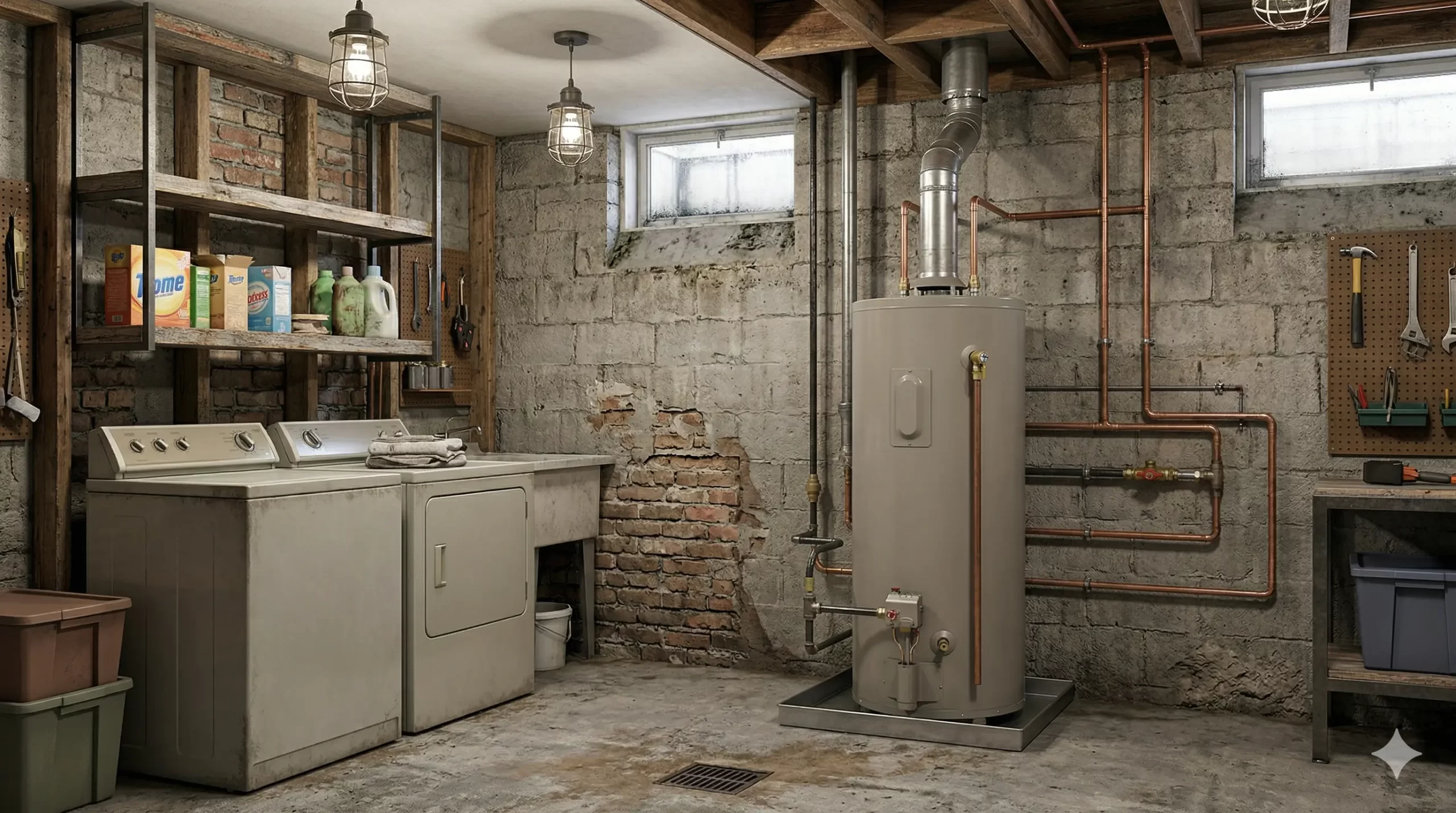
A 7-blink fault code transcends a simple component failure; it signifies the compromise of the water heater’s primary safety logic. The internal microprocessor within the gas valve is malfunctioning, creating an unpredictable operational state. This is not a static failure. The valve could potentially fail to close, allow intermittent gas flow, or misinterpret sensor data from the thermopile. Attempting to operate the unit with this diagnostic code presents a significant risk of uncontrolled gas release or improper combustion events. This is a non-negotiable, immediate-shutdown condition until a full valve replacement is completed by a qualified professional.
️ Repair Profile
Required Diagnostics Tools
Two pipe wrenches (10″ and 14″), gas-rated thread sealant, calibrated manometer, electronic combustible gas detector, channel lock pliers, Phillips and flathead screwdrivers, drain hose, bucket
Financial Breakdown: Parts vs. Licensed Labor
The replacement gas control valve, a sophisticated electronic and mechanical assembly, constitutes the majority of the total cost due to its engineered complexity. The labor portion reflects the certified technician’s time for gas line management, precise pressure testing, and adherence to safety protocols.
Deep Technical Diagnosis: The Physics of the Failure
A 7-blink status light on a Bradford White gas water heater’s ICON System® control indicates a definitive, non-recoverable gas valve processor failure. This is not an external sensor issue but an internal fault within the printed circuit board (PCB) of the gas control valve itself. The microprocessor, which governs all safety and operational logic, has failed its internal self-diagnostics. This failure can stem from several root causes, each compromising the valve’s ability to safely manage gas flow and ignition sequencing.
The valve’s logic board operates on a low millivolt signal generated by the thermopile, which is heated by the pilot flame. This delicate electrical environment is susceptible to damage. An external event like a nearby lightning strike or a significant power grid surge can induce transient voltage, irreparably damaging the microcontroller. Internally, the degradation of components like capacitors or resistors on the PCB can lead to voltage irregularities that the processor interprets as a critical fault. Over time, the thermopile’s output can weaken or become erratic, and while this typically throws a different code, an unstable power supply can corrupt the processor’s memory or cause a logic lock-up, resulting in the 7-blink code.
Ultimately, this code means the valve can no longer trust its own decision-making process for solenoid actuation, pilot flame verification, or main burner gas release. It enters a hard lockout state to prevent a potentially catastrophic failure where gas could be released without proper ignition. Verifying with a manometer or checking combustion stoichiometry is irrelevant at this point, as the core control unit has declared itself unfit for service. The internal board fault is not field-serviceable; the entire sealed valve assembly must be replaced.
- Transient Voltage Damage: An electrical surge from the grid or a significant static discharge event can permanently damage the sensitive microprocessor or its supporting components on the logic board.
- Thermopile Signal Degradation: While typically causing other errors, a severely fluctuating or weak millivolt signal from a failing thermopile can starve the processor of stable power, leading to firmware corruption or a fatal logic error.
- Internal Component Failure: The failure of a single surface-mount capacitor or resistor on the valve’s internal PCB can disrupt the precise electrical environment required for the processor to function, triggering the self-diagnostic fault.
- Moisture Intrusion: High ambient humidity or a minor, unnoticed water leak can cause microscopic corrosion on the PCB traces, leading to short circuits or open circuits within the processor’s critical pathways.
- Firmware Corruption: The non-volatile memory on the microprocessor that stores the operational logic can become corrupted, causing the boot-up self-check to fail and resulting in the 7-blink lockout.
US Building Codes & Plumbing Regulations
When addressing a 7-blink processor failure by replacing the gas control valve, adherence to the NFPA 54 National Fuel Gas Code is mandatory, not optional. Specifically, Section 9.6.5.1 dictates that any replacement component, such as this gas valve, must be a listed part directly approved by the manufacturer for the specific appliance model. Using a generic or unlisted valve is a direct violation that compromises the unit’s safety certifications. Furthermore, post-installation, NFPA 54 Section 8.2.3 requires that all disturbed gas piping connections be meticulously tested for leaks using a non-corrosive leak detection fluid or a calibrated electronic gas detector before the appliance is returned to service. This step is a critical safeguard against fugitive gas emissions resulting from the repair.
From a plumbing code perspective, the Uniform Plumbing Code (UPC), particularly in Chapter 12, contains stipulations directly relevant to this procedure. The UPC mandates that such work be performed by a qualified and licensed individual, ensuring the technician understands the complexities of gas systems. Critically, after the new valve is installed, the code requires verification of the appliance’s firing rate and combustion characteristics. This is professionally accomplished by connecting a manometer to the valve’s outlet pressure tap and confirming the manifold pressure (e.g., 3.5″ Water Column for Natural Gas) precisely matches the value specified on the water heater’s rating plate. This ensures the unit operates at the correct stoichiometric ratio for safe and efficient combustion, preventing conditions like flame rollout or carbon monoxide production.
Professional Master Plumber Repair Sequence
- Isolate and Verify: Shut off the dedicated manual gas shutoff valve for the water heater. Turn the gas control valve knob to the ‘OFF’ position. Confirm the 7-blink code is still active. Attempt the manufacturer’s reset sequence: turn the knob from OFF to HOT for 5 seconds, then back to OFF. If the 7-blink code returns, replacement is mandatory.
- System Depressurization: Shut off the cold water inlet valve to the heater. Connect a drain hose to the boiler drain at the bottom of the tank and route it to a floor drain. Open a hot water tap somewhere in the house to break the vacuum and allow the tank to drain below the level of the gas control valve.
- Disconnect Gas and Electrical Leads: Using two opposing pipe wrenches to prevent stress on the piping, disconnect the main gas supply line from the valve. Carefully disconnect the pilot tube, main burner tube, and the thermopile/thermocouple wire leads from their respective ports on the valve. Note their exact locations.
- Remove Failed Valve Assembly: Carefully unthread the entire gas control valve from the threaded spud on the water heater tank. Be prepared for a small amount of residual water to spill. Once removed, inspect and clean the female threads on the tank spud.
- Prepare and Install New Valve: Procure the exact OEM replacement gas control valve for your Bradford White model. Apply a moderate amount of gas-rated pipe thread sealant (e.g., RectorSeal No. 5) to the male threads of the new valve only. Carefully thread the new valve into the tank spud and tighten securely with a pipe wrench, ensuring it is properly oriented. Do not over-tighten.
- Reconnect All Lines: Re-attach the main burner tube, pilot tube, and gas supply line to the new valve, using two wrenches to tighten fittings securely. Reconnect the thermopile leads to the correct terminals. Ensure all connections are snug but not stripped.
- Perform Critical Leak Test: Slowly re-open the manual gas shutoff valve. With the system under pressure, meticulously coat every joint and fitting you disturbed with a non-corrosive soap bubble solution. Watch for the formation of any bubbles, which indicates a dangerous gas leak that must be corrected immediately by tightening or re-sealing the connection.
- Commissioning and Pressure Verification: Follow the specific lighting instructions on the new valve or appliance label to light the pilot and then turn the unit on. Remove the outlet pressure tap plug on the valve and connect a manometer. Verify the manifold gas pressure matches the specification on the heater’s rating plate (typically 3.5″ W.C. for NG, 10″ W.C. for LP). Adjust if necessary, though new valves are factory-set.
- Restore Full Service and Monitor: Turn off the hot water tap inside, and slowly re-open the cold water supply to refill the tank. Purge all air from the hot water lines. Check for water leaks around the valve threads. Observe the water heater through one full heating cycle, ensuring the new status light shows a normal operation code (typically a single slow blink).
Expert Verdict: Is It Worth Repairing?
The decision to repair or replace a Bradford White unit presenting a 7-blink gas valve failure hinges on the appliance’s age and a cost-benefit analysis. The replacement of the gas control valve is a high-cost repair, often running between $450 and $750 installed. If the water heater is less than 5-6 years old, this repair represents a sound investment, restoring the unit to full operational safety for a fraction of the cost of a new installation. The tank and other components likely have significant remaining service life, making the repair the clear choice for maximizing your initial investment’s ROI.
However, if the water heater is approaching or has surpassed 8-10 years of service, the financial calculus shifts dramatically. Investing a substantial sum into an aging tank introduces the risk of a tank failure shortly after the repair, negating your investment. At this age, the anode rod is likely depleted, and sediment buildup is significant. The cost of the valve replacement can be 30-50% of a brand new, more efficient unit’s installed price. Therefore, for older units, the 7-blink error should be viewed as the terminal failure that signals it is more financially prudent to allocate the repair funds towards a full system replacement, which comes with a new warranty and the benefits of modern efficiency standards.
Frequently Asked Questions (FAQ)
Q: Can I just keep resetting the 7-blink code on my Bradford White?
A: No. The reset sequence is a diagnostic step, not a solution. A persistent 7-blink code indicates a definitive internal failure of the gas valve’s processor. Ignoring it creates an unpredictable safety hazard as the component responsible for regulating gas flow is compromised and its failure mode is unknown.
Q: Is a 7-blink error covered under the Bradford White warranty?
A: It depends on your unit’s age. The gas control valve is typically covered under the parts warranty (often 6 years for standard models). However, the warranty will not cover the labor cost for a licensed plumber to perform the replacement, which is a significant part of the total expense.
Q: Could a bad thermopile cause a false 7-blink error code?
A: While a failing thermopile (which generates the millivolt signal to power the valve) typically produces a different error code, a severely degraded or fluctuating signal could theoretically starve the processor’s logic board of stable voltage, contributing to a processor fault. However, the 7-blink code is specifically designed to indicate a definitive failure within the valve’s internal board itself.
Q: Why can’t I buy a Bradford White gas valve at a big box store?
A: Bradford White primarily distributes its products and replacement parts, especially critical safety components like gas control valves, through professional plumbing supply houses. This ensures that these parts are installed by qualified, licensed technicians who can perform the necessary safety checks, pressure tests, and commissioning procedures required by code.