
Bradford White water heater’s 8-blink code indicates a critical FVIR lockout from flammable vapors or a chamber fire. Immediate inspection is vital.
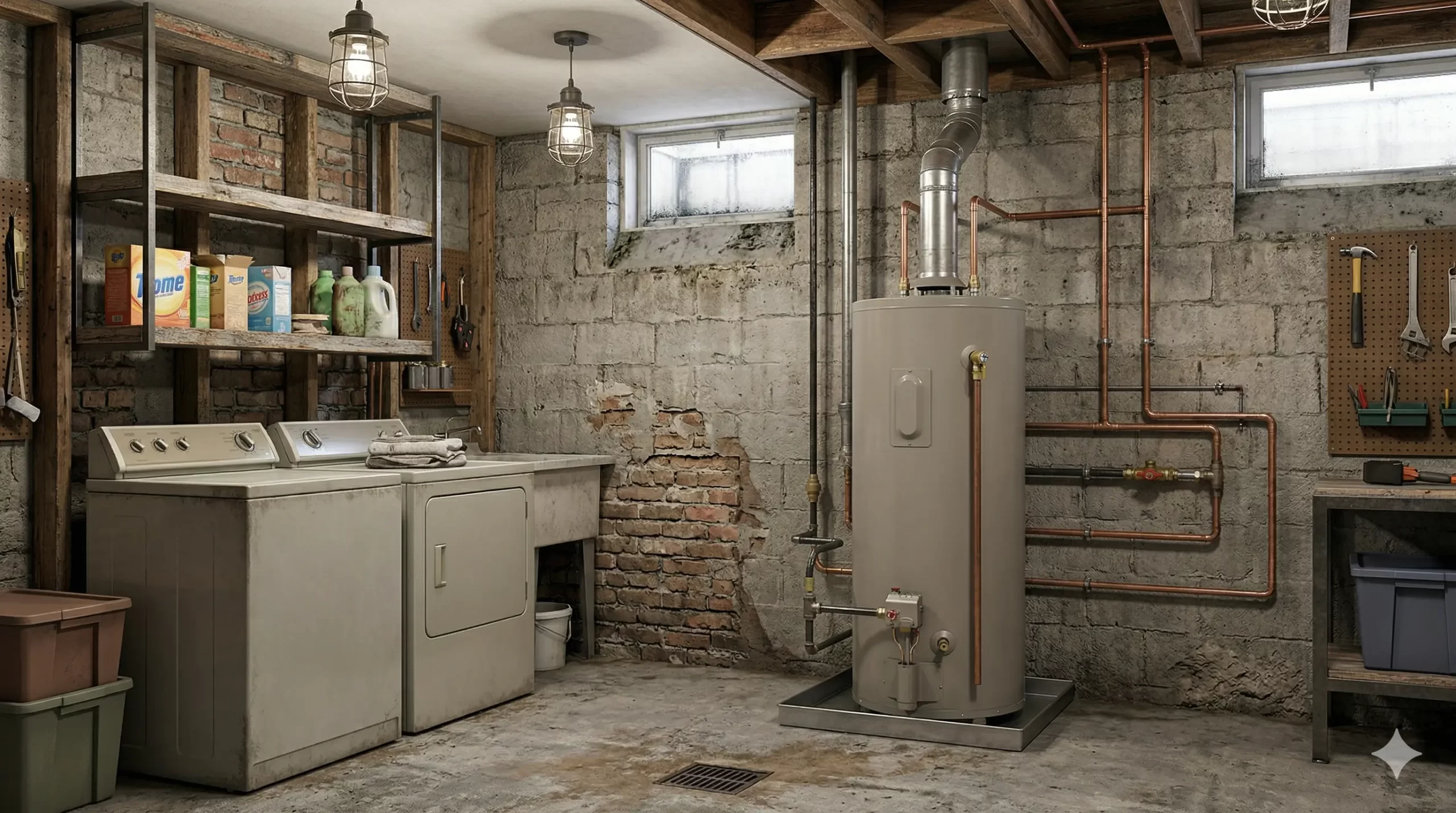
CRITICAL SAFETY ALERT: FVIR LOCKOUT
An 8-blink status code on a Bradford White unit is not a component malfunction; it is a declaration that a life-threatening event, such as a flashback fire from external flammable vapors, has occurred inside the sealed combustion chamber. The Light Duty Oil (LDO) thermal switch is a one-time, non-resettable fuse designed to melt and permanently disable the unit to prevent a catastrophic explosion. Under no circumstances should this switch be bypassed or tampered with. Attempting to override this safety feature is akin to disabling the brakes on a vehicle and creates an imminent risk of fire, explosion, and release of carbon monoxide.
️ Repair Profile
Required Diagnostics Tools
Combustible Gas Detector, Manometer, Multimeter (for millivolt readings), High-Lumen Flashlight, Inspection Mirror, Torx/Hex Driver Set, Wire Brush
Financial Breakdown: Parts vs. Licensed Labor
The cost allocation is heavily weighted towards labor because this issue demands an expert diagnostic process, not a simple part replacement. The fee covers the technician’s liability and specialized knowledge required to analyze combustion safety and identify environmental hazards, which is far more valuable than any single component.
Deep Technical Diagnosis: The Physics of the Failure
An 8-blink fault code on a Bradford White ICON gas control valve signifies the activation of the Flammable Vapor Ignition Resistant (FVIR) system’s final safeguard: a permanent lockout. This is triggered when the LDO (Light Duty Oil) thermal switch, a sacrificial one-time thermal fuse integrated into the burner assembly, melts. This component is designed to fail when chamber temperatures radically exceed normal operating parameters, an event caused by the introduction of flammable vapors into the combustion process. When substances like gasoline, paint thinners, or aerosol propellants are drawn through the flame arrestor screen, they drastically alter the air-fuel mixture from its ideal stoichiometry. This vapor-enriched mixture ignites with violent instability, causing a flashback or flame rollout that engulfs the burner chamber, melting the LDO switch and severing the electrical circuit to the gas valve.
The ICON system continuously monitors the thermopile’s millivolt output, but the 8-blink code supersedes all other functions. It is a direct signal from a physical component failure designed to prevent a larger explosion. While insufficient combustion air from a severely clogged flame arrestor can cause rollout, it typically results in high-limit errors before triggering a full FVIR event. The 8-blink code points almost exclusively to an external accelerant being introduced. A technician’s primary role is not just to verify the melted switch but to perform a forensic analysis of the environment to identify the source of the vapors to prevent a recurrence with a replacement unit.
- External Flammable Vapor Source: The most common cause. Chemicals stored in the mechanical room are ingested through the unit’s air intake.
- Severely Clogged Flame Arrestor: A screen completely impacted with lint, dust, or oily residue can starve the chamber of oxygen, causing flame to roll out in search of air, thereby melting the LDO switch.
- Sustained Negative Air Pressure: A tightly sealed home with powerful exhaust fans (e.g., downdraft cooktops) can create a vacuum, causing back-drafting and flame disturbance severe enough to trigger the lockout.
- Catastrophic Burner Failure: In extremely rare cases, a physical breach or failure of the main burner can cause uncontrolled combustion within the chamber, leading to the thermal event.
US Building Codes & Plumbing Regulations
The 8-blink FVIR lockout is a direct manifestation of conditions that codes like the NFPA 54 (National Fuel Gas Code) are designed to prevent. Specifically, section 9.3 mandates that gas appliances shall not be installed in locations where they may be exposed to flammable vapors. An FVIR lockout serves as definitive proof that the installation environment has violated this core safety principle, either through improper initial placement or subsequent hazardous storage practices by the occupants. An inspector citing this condition would reference this section as the root cause, emphasizing that the appliance operated as designed by sacrificing itself to prevent a potential explosion resulting from a non-compliant environment.
Furthermore, any attempt to circumvent the lockout by bypassing or replacing the melted LDO switch constitutes a profound violation of the Uniform Plumbing Code (UPC), Chapter 5, which strictly prohibits the alteration or improper repair of safety devices. The manufacturer’s installation manual, which is legally adopted by reference under the code, explicitly states that an FVIR-activated water heater is non-serviceable and must be replaced. A licensed professional who circumvents this directive is not only violating code but is also assuming immense legal and financial liability for creating an imminently dangerous condition.
Professional Master Plumber Repair Sequence
- Confirm and Isolate: Verify the 8-blink code on the ICON control. Immediately shut off the gas supply to the appliance at the dedicated shutoff valve. Use a calibrated manometer or combustible gas detector to confirm zero pressure post-valve.
- Environmental Sweep: Employ an electronic combustible gas detector (‘sniffer’) to meticulously scan the area around the water heater’s base and the entire mechanical room to identify the presence and source of any lingering flammable vapors. This step is critical for root cause analysis.
- External System Inspection: Examine the flame arrestor screen at the base of the unit. Document any significant blockage from lint, dust, debris, or oily residue that would impede the flow of primary combustion air.
- Disassemble for Access: After allowing the unit to cool, carefully remove the outer and inner burner access doors. Disconnect the burner, pilot, and thermopile connections at the gas control valve, then extract the entire burner assembly from the combustion chamber as a single unit.
- Combustion Chamber Forensics: With a high-lumen flashlight and an inspection mirror, conduct a thorough forensic examination of the combustion chamber interior. Look for heavy sooting, melted or distorted components, and scorched paint on the chamber walls, which indicate extreme temperatures.
- Diagnose the LDO Thermal Switch: Locate the LDO switch on the burner assembly. It is typically a small, wired, disc-shaped device. Visually inspect it for any signs of melting, warping, or physical deformation. A melted switch is a definitive confirmation of an FVIR lockout event.
- Verify Non-Repairable Status: If the LDO switch is confirmed to be melted, the diagnosis is complete. Per manufacturer and national safety standards, the unit is non-repairable. Document the finding with clear photographs for the client and insurance purposes.
- Identify and Remediate Root Cause: Inform the homeowner of the identified cause (e.g., gasoline stored nearby, clogged arrestor). This environmental hazard MUST be rectified before a new water heater can be safely installed.
- Decommission the Unit: If replacement is required, proceed with the safe decommissioning of the water heater. Drain the tank completely, disconnect all water and gas lines, and remove the unit from the premises for disposal according to local regulations.
Expert Verdict: Is It Worth Repairing?
ROI Analysis: Repair is Not an Option
For a Bradford White water heater displaying an 8-blink status light, the financial and safety analysis overwhelmingly favors immediate replacement. The concept of ‘repair’ is functionally non-existent and dangerous. The melted LDO thermal switch is a symptom of a catastrophic combustion event, not a simple faulty part. Replacing the switch (if one could even be sourced) without addressing the compromised combustion chamber and the original environmental cause is a guarantee of failure and a severe fire hazard. The return on investment for attempting such a repair is negative, as you are investing in a component that will immediately fail again upon the next combustion anomaly, while leaving a potentially damaged and unsafe appliance in service. The only sound investment is in a new, correctly installed water heater, which restores safety, efficiency, and provides a new warranty, offering a 100% return on safety and peace of mind.
Frequently Asked Questions (FAQ)
Q: Can I just replace the melted FVIR thermal switch on my Bradford White heater?
A: Absolutely not. The LDO thermal switch is a single-use safety device. Its activation signifies that a dangerous flame event has occurred within the sealed combustion chamber. Replacing the switch ignores the underlying damage and the environmental cause, creating an extreme fire and explosion hazard. Per all safety standards and manufacturer directives, the entire water heater must be replaced.
Q: What kind of household fumes can cause an 8-blink FVIR lockout?
A: A wide range of volatile organic compounds (VOCs) can trigger an FVIR lockout. The most common culprits are fumes from gasoline, paint thinner, solvents, mineral spirits, aerosol propellants, certain cleaning agents, bleach, or ammonia stored in the same airspace as the water heater’s air intake.
Q: Is an 8-blink error covered under my Bradford White warranty?
A: Typically, an FVIR lockout event is not covered by the manufacturer’s warranty. Warranties cover defects in materials and workmanship. An 8-blink code indicates the unit’s safety system performed correctly in response to external factors, such as flammable vapors or severely restricted combustion air, which are considered site or environmental issues, not product defects.
Q: How do I prevent an FVIR lockout from happening with my new water heater?
A: Prevention hinges on proper installation and maintenance. Ensure the new unit is installed in a location with adequate combustion air per NFPA 54 code. Critically, never store or use any flammable liquids or chemicals in the same room. Finally, perform regular visual inspections of the flame arrestor screen at the unit’s base and gently clean it with a brush as directed in the owner’s manual to prevent airflow restriction.