
Bradford White status light is out? This indicates a dead thermopile or unlit pilot. Learn to safely relight the pilot or replace the thermopile.
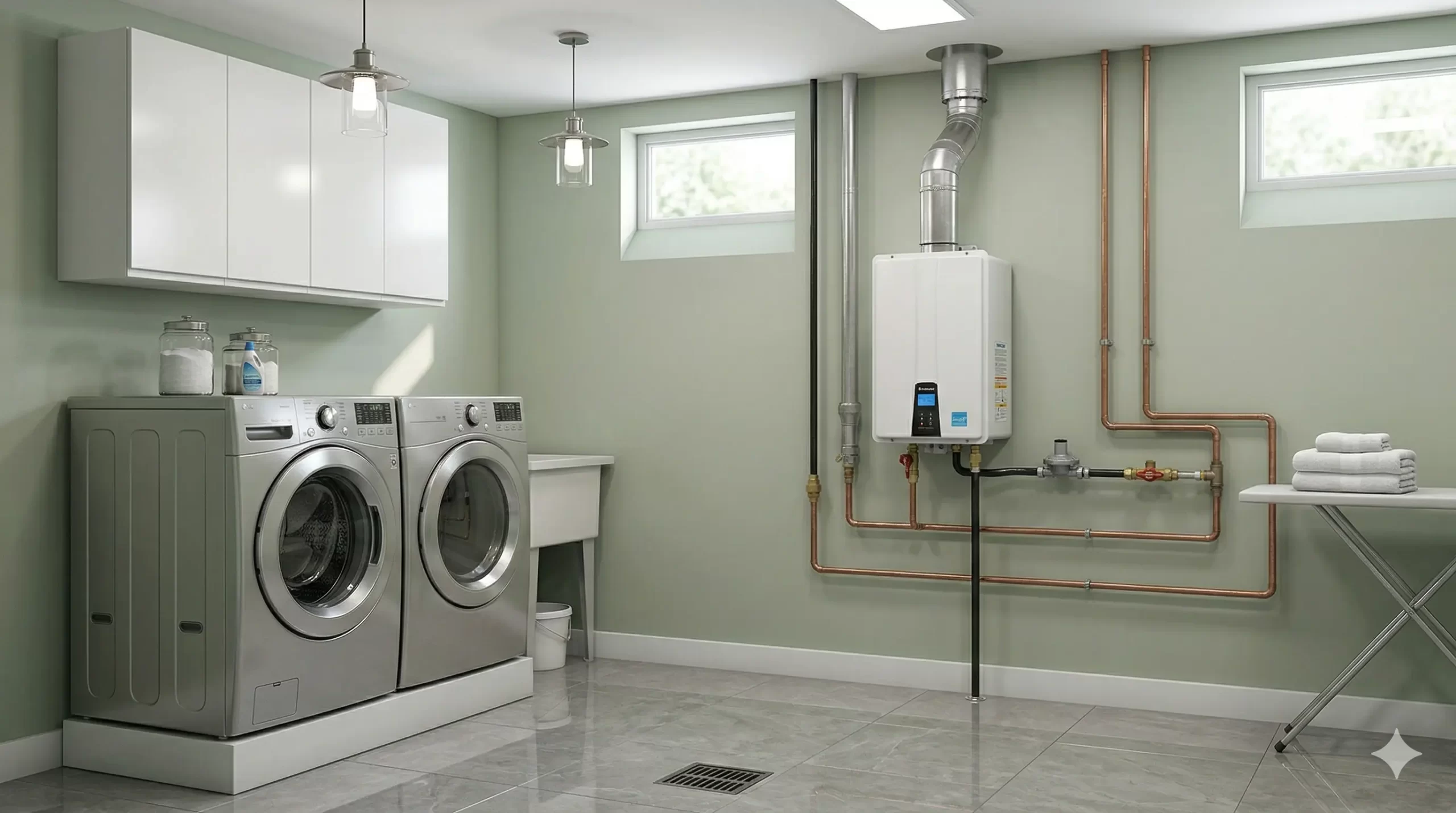
A completely extinguished status light indicates a total loss of power to the gas valve’s safety controls. Before attempting to relight the pilot, you must be aware of the potential for unburnt gas to have pooled in the sealed combustion chamber. An immediate ignition attempt without a proper purge cycle could lead to a dangerous hard ignition or flashback. Furthermore, never attempt to bypass or jumper the thermopile connections to force the valve open. This component is a critical flame-proving safety device, and defeating it creates an extreme explosion risk. This diagnosis requires handling live gas lines; improper reassembly can lead to significant and persistent gas leaks.
️ Repair Profile
Required Diagnostics Tools
Multimeter (with millivolt DC setting), Open-end wrench set, Pipe thread sealant (gas-rated), Headlamp, Safety glasses, Nitrile gloves, Soapy water solution in a spray bottle
Financial Breakdown: Parts vs. Licensed Labor
The cost allocation is heavily weighted towards labor because the diagnostic procedure requires specialized knowledge of gas control systems and the use of testing equipment like a manometer. The replacement part itself, the thermopile, represents a minor fraction of the total expense compared to the technician’s expertise and safety liability.
Deep Technical Diagnosis: The Physics of the Failure
The absence of any status light on a Bradford White gas control valve signifies a complete lack of electrical power to the valve’s internal logic board. Unlike electronically powered systems, this unit operates on a self-generated electrical current produced by a thermopile through the Seebeck effect. A pilot flame, calibrated for correct stoichiometry, engulfs the tip of the thermopile, which consists of multiple thermocouples wired in series. This temperature differential between the hot and cold junctions generates a small DC voltage, typically between 350 and 750 millivolts (mV) under an open-circuit test. This minuscule current is just enough to energize an electromagnet that holds the pilot valve open against spring pressure and to power the status LED.
When the LED is dark, it means the supplied millivoltage has dropped below the component’s forward voltage threshold, effectively zero. The immediate cause is either the pilot flame is extinguished, creating no heat differential, or the thermopile itself has failed internally and can no longer produce current. A technician would use a manometer to confirm proper inlet gas pressure (typically 7-11 inches of water column for natural gas) to rule out supply issues. Then, they would test the thermopile’s output directly. A reading under load that falls below 150-200 mV is insufficient to hold the safety magnet open, leading to pilot dropout and a de-energized state. The complete absence of voltage points to a catastrophic failure of the thermopile or a complete break in its circuit.
- Thermopile Failure: The most common cause. Internal degradation of the dissimilar metal junctions from thousands of heating/cooling cycles results in a complete loss of millivolt generation.
- Pilot Orifice Obstruction: Debris, spider webs, or carbon buildup in the pilot orifice restricts gas flow, producing a weak or lazy yellow flame that cannot adequately heat the thermopile.
- Improper Flame Impingement: The pilot assembly bracket may be bent or misaligned, causing the blue cone of the pilot flame to miss the thermopile’s tip, preventing sufficient heat transfer.
- Loose or Corroded Electrical Connection: The threaded coaxial connection at the gas control valve may be loose or have developed oxidation, creating an open circuit that prevents the generated millivoltage from reaching the valve.
- Complete Gas Supply Interruption: An upstream valve is closed, or there is a utility-side service interruption, meaning no fuel is available to light the pilot.
US Building Codes & Plumbing Regulations
The condition of a ‘Status Light Out’ directly engages the safety principles outlined in NFPA 54, the National Fuel Gas Code. Specifically, this event demonstrates the proper ‘fail-safe’ operation of the automatic pilot reignition system. The code mandates that gas appliances must be equipped with a safety shutoff device that stops the flow of gas to the main burner if the pilot flame is extinguished. The thermopile’s inability to generate millivoltage, which in turn de-energizes the gas valve and the LED, is the exact mechanism that ensures compliance with this critical safety standard. It prevents unburned gas from filling the combustion chamber and creating an explosive hazard.
Furthermore, the Uniform Plumbing Code (UPC) dictates requirements for serviceability. The code requires that all appliance components requiring periodic inspection, service, or replacement—such as the pilot assembly and thermopile—be installed with adequate clearance and accessibility. A professional plumber replacing the thermopile must ensure that access panels are not obstructed and that the work can be performed without altering the building’s permanent structure, thereby upholding the code’s intent for long-term, safe maintenance of the equipment.
Professional Master Plumber Repair Sequence
- Initial Safety Assessment: Set the water heater’s temperature dial to the lowest possible setting. Locate the manual gas shutoff valve on the supply line leading to the unit and confirm it is in the fully open position. As a cross-check, verify that other gas appliances in the building are functioning to rule out a utility outage.
- Visual Inspection of Burner Assembly: Carefully remove the lower access panel and the inner combustion chamber door. Using a headlamp, inspect the pilot assembly, thermopile, and burner for any signs of soot, corrosion, debris, or water.
- Attempt Manufacturer’s Relighting Procedure: Turn the gas control knob to the ‘PILOT’ position. Firmly press and hold the knob down. This manually opens the pilot valve. While holding, press the piezo igniter button repeatedly (you should hear a distinct ‘click’ inside the chamber). Listen for the ‘whoosh’ sound of the pilot igniting.
- Thermopile Heat-Up Test: Once the pilot is visibly lit, continue to hold the pilot knob down for a full 60 seconds. This period is non-negotiable as it allows the flame to heat the thermopile to its required operating temperature.
- Confirm Pilot Dropout: Slowly release the pilot knob. If the pilot flame immediately extinguishes and the status light remains dark, a thermopile or gas valve fault is confirmed. Proceed with diagnostics.
- Isolate and Test Millivoltage: Turn the gas control knob to ‘OFF’ and shut off the external gas valve. Carefully disconnect the thermopile lead from the gas control valve using an open-end wrench. Set a multimeter to the DC millivolts (mV) scale.
- Perform Open Circuit Voltage Test: Turn the external gas valve back on. Light the pilot by pressing the pilot knob and using the igniter. While the pilot flame is on and heating the thermopile, touch the multimeter’s red probe to the center pin of the disconnected thermopile lead and the black probe to its outer metal casing. A healthy thermopile will read above 350 mV. A reading near zero confirms the thermopile is dead and must be replaced.
- Thermopile Replacement: With the gas fully off at the shutoff valve, carefully remove the entire pilot burner assembly. Unthread the failed thermopile from the bracket. Install the new, OEM-specified thermopile, ensuring its tip is positioned correctly for flame impingement. Reinstall the assembly, using a minimal amount of gas-rated pipe thread sealant on the pilot tube fitting only.
- Reconnection and Leak Detection: Securely reconnect the new thermopile lead and the pilot tube to the gas valve. Turn the gas supply on. Liberally spray every disturbed connection with a soapy water solution and watch meticulously for the formation of any bubbles, which indicates a gas leak.
- Commissioning and Verification: Relight the pilot. It should now remain lit after the knob is released, and the status light should begin to flash a normal operation code. Turn the temperature dial up to call for heat and verify smooth ignition of the main burner. Replace all access panels.
Expert Verdict: Is It Worth Repairing?
For a Bradford White water heater, resolving a ‘Status Light Out’ issue by replacing the thermopile presents an exceptionally high return on investment. This specific failure is a common service item and is not indicative of the tank’s or gas valve’s overall health. The repair cost, typically under $450, is a marginal expense when contrasted with the $2,000+ cost of a new unit installation. Given the robust build quality of Bradford White tanks, performing this repair on a unit under 10-12 years of age is the most financially prudent decision, effectively resetting the lifespan of the ignition control system. Opting for a full replacement should only be considered if the unit is already leaking, showing signs of advanced tank corrosion, or is well beyond its warranty period and the owner wishes to upgrade to a higher-efficiency model. In nearly all other scenarios, this repair is a simple, cost-effective restoration of function.
Frequently Asked Questions (FAQ)
Q: Why did my Bradford White status light go out completely instead of blinking an error code?
A: A completely dark LED signifies zero electrical power to the gas valve’s control board. This is almost always caused by a failed thermopile that no longer generates the required millivoltage, or an unlit pilot flame which provides the heat for that generation.
Q: Can I use a universal thermopile from a hardware store for my Bradford White heater?
A: While some universal thermopiles may physically fit, it is strongly recommended to use an OEM or OEM-specified part. This ensures correct millivolt output, proper lead length, and correct fitment within the pilot bracket for optimal flame impingement and safe operation.
Q: If the pilot lights but goes out as soon as I release the button, is it always the thermopile?
A: In over 90% of professional service calls, this exact symptom points to a weak or failed thermopile. However, it can also be caused by a misaligned pilot flame not properly enveloping the thermopile tip, or, in very rare cases, a faulty electromagnet within the gas control valve itself.
Q: Is it dangerous if my water heater’s status light is out?
A: Yes, this is an urgent condition requiring immediate attention. It means the primary flame safeguard is not functioning. While the gas valve is designed to fail-safe in the closed position, the appliance is inoperative and presents potential risks if an untrained person attempts to relight it without proper diagnostic steps.