
If you are building a new home, replacing a failing drain field, or upgrading your property's wastewater management system, one of the most critical decisions you will make happens before a single shovel hits the dirt. You must choose the material of your septic tank. The two undisputed heavyweights in the industry today are precast concrete and high-density polyethylene (HDPE plastic).
To the untrained eye, a tank is just a box buried in the yard designed to hold wastewater. However, from an engineering standpoint, the material you choose dictates how your system interacts with the surrounding soil, how it withstands groundwater pressure, how long it will survive the corrosive gases of human waste, and ultimately, how easily (and safely) a technician can pump it out.
Choosing the wrong material for your specific geographic location can lead to catastrophic system failure, collapsed tanks, or even tanks that literally float out of the ground during a heavy storm. In this massive, comprehensive guide, we are pitting concrete against plastic. We will break down the structural mechanics, lifespan, pumping logistics, and regional considerations to help you make an informed investment.
- 1. The Heavyweight Standard: Concrete Septic Tanks
- 2. The Modern Contender: Polyethylene Plastic Tanks
- 3. Lifespan & Durability: Which Material Survives Longer?
- 4. The Pumping Experience: Concrete vs. Plastic Risks
- 5. Head-to-Head Comparison Table
- 6. Regional Soil Impacts (Texas, Florida, Louisiana)
- 7. Cost Implications and Professional Pumping Rates
- 8. The Final Verdict: Which Should You Choose?
1. The Heavyweight Standard: Concrete Septic Tanks
For over a century, precast concrete has been the gold standard for residential and commercial wastewater management. A standard 1,000-gallon concrete septic tank is a monolithic beast, typically weighing between 8,000 to 10,000 pounds. They are manufactured locally, reinforced with steel rebar or wire mesh, and delivered to the job site on heavy flatbed trucks equipped with boom cranes.
The Strengths of Concrete
- Unmatched Structural Integrity: Once buried, a high-quality concrete tank is virtually impervious to external environmental pressures. It will not warp, bend, or collapse under the weight of saturated topsoil or vehicles driving over it (if rated for traffic).
- Immune to Buoyancy: Because concrete is incredibly heavy, it is completely immune to the "floating tank" phenomenon. Even if the tank is pumped completely empty during a period of high groundwater or heavy flooding, the sheer weight of the concrete keeps it securely anchored in the dirt.
- Longevity: A properly poured and cured concrete tank can easily outlast the house it serves, with many functioning perfectly well past the 50-year mark.
The Weaknesses of Concrete
- Susceptibility to Hydrogen Sulfide Gas: The biggest enemy of concrete isn't soil; it is the waste inside. As anaerobic bacteria break down human waste, they release hydrogen sulfide gas. This gas rises to the top of the tank, mixes with moisture, and forms sulfuric acid. Over decades, this acid can eat away at the concrete above the waterline—a phenomenon known in the industry as "crown rot."
- Difficult Installation: You cannot squeeze a concrete tank into a tight backyard. The installation requires massive heavy machinery, a clear path for a crane truck, and significant yard disruption.
- Cracking and Root Intrusion: If the ground shifts dramatically (like in earthquake zones) or if tree roots apply constant pressure, concrete can crack. Once a hairline crack forms, roots will aggressively infiltrate the tank seeking water, eventually destroying the structural integrity.
2. The Modern Contender: Polyethylene Plastic Tanks
Plastic septic tanks, typically rotationally molded from high-density polyethylene (HDPE), have surged in popularity over the last two decades. Unlike their concrete counterparts, a 1,000-gallon plastic tank weighs a mere 300 to 500 pounds. They are engineered with deep structural ribs to provide strength against soil pressure.
The Strengths of Plastic
- 100% Corrosion Proof: Plastic is entirely immune to the sulfuric acid generated by hydrogen sulfide gas. A plastic tank will never suffer from crown rot, rust, or chemical degradation.
- Installation Logistics: Because they are lightweight, a plastic tank can be carried into a backyard by a small crew of workers without the need for destructive heavy cranes. This makes them the ultimate choice for remote cabins, mountainous terrain, or heavily wooded lots.
- Watertight Guarantee: Plastic tanks are molded as a single, seamless piece (or two pieces welded together at the factory). There are no concrete seams to degrade, drastically reducing the risk of groundwater infiltration or tree root intrusion.
The Weaknesses of Plastic
- The Buoyancy Risk (Floating Tanks): This is the Achilles' heel of plastic. Because they are lightweight and watertight, they act like giant underground balloons. If the water table rises due to heavy rain and the tank is pumped empty, hydrostatic pressure can physically push the plastic tank out of the ground, severing plumbing lines and destroying the yard. (They must be installed with anti-buoyancy measures).
- Structural Vulnerability to Pressure: While ribbed for strength, plastic is still pliable. If installed in the wrong type of soil (like expansive clay) or if a heavy vehicle drives over the drain field, the sides of a plastic tank can warp, crush, or completely collapse.
- Vulnerability to Improper Pumping: Plastic requires a gentler touch during maintenance, which we will explore deeply in the next section.
If you choose a plastic tank, local building codes usually require the installation contractor to pour a concrete pad at the bottom of the excavation hole and physically strap the plastic tank to it. This acts as an anchor to counteract the severe buoyancy risks during high-water events.
3. Lifespan & Durability: Which Material Survives Longer?
When investing in a wastewater system, you want to know exactly how long your money will last. Let's look at the baseline survival rates for these materials before the environment breaks them down.
*Lifespan estimates assume proper maintenance and routine pumping. Neglected tanks of any material will fail prematurely.
4. The Pumping Experience: Concrete vs. Plastic Risks
When you research the comprehensive guide to septic tank pumping costs, you must understand that the physical act of pumping differs dramatically based on your tank's material. The material dictates how aggressive the technician can be.
Pumping Concrete Tanks:
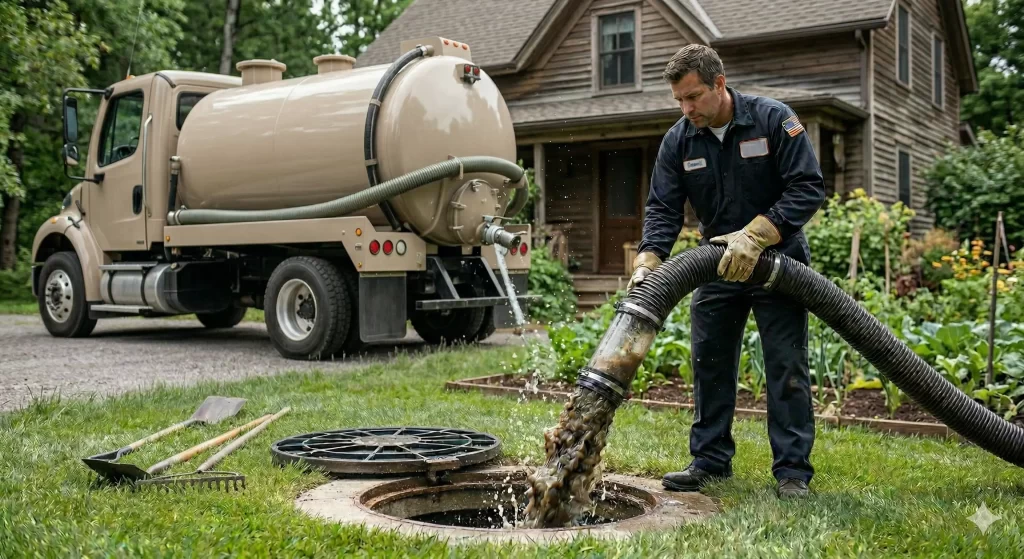
Concrete is forgiving. When a 3,000-gallon pumper truck drops a massive vacuum hose into a concrete tank, the operator can extract the heavy sludge layer rapidly. The rigid walls of the concrete perfectly counteract the negative pressure of the vacuum and the external hydrostatic pressure of the surrounding groundwater. You can pump a concrete tank completely dry in the middle of a rainstorm without batting an eye.
Pumping Plastic Tanks:
Plastic requires a highly cautious approach. Professional pumpers must constantly monitor the external groundwater levels. If a plastic tank is pumped completely empty while the surrounding soil is saturated, the lack of internal liquid weight combined with external soil pressure can cause the plastic walls to buckle inward. Furthermore, aggressive use of a "crust buster" tool (a metal rod used to break up thick, neglected sludge) can accidentally puncture the wall of a plastic tank, ruining the system instantly.
Time for Maintenance? Know Your Tank!
Whether your tank is heavy concrete or ribbed plastic, routine pumping is the only way to protect your drain field. Connect with top-tier local professionals who know how to service your specific system safely.
5. Head-to-Head Comparison Table
👉 Swipe right to view full specifications 👉| Specification | Precast Concrete Tank | HDPE Polyethylene (Plastic) Tank |
|---|---|---|
| Average Weight (1,000 Gal) | 8,000 – 10,000 lbs | 300 – 500 lbs |
| Installation Method | Requires heavy crane truck & clear access | Can be manually carried or moved with a small bobcat |
| Corrosion Resistance | Vulnerable to sulfuric acid (crown rot) over decades | 100% immune to biological gases and acids |
| Root Intrusion Risk | Moderate to High (through microscopic cracks/seams) | Low (Seamless, watertight construction) |
| Buoyancy Risk (Floating) | Zero risk. Stays anchored by its own weight. | High risk if pumped empty during wet seasons. Requires anchoring. |
| Pumping Difficulty | Easy and aggressive. Walls will not cave. | Requires caution to prevent inward buckling from soil pressure. |
| Crush Resistance | Excellent. Can be engineered for vehicle traffic. | Poor. Cannot support vehicles; vulnerable to expansive soils. |
6. Regional Soil Impacts: Why Location Dictates Material
You may not actually get a choice between concrete and plastic. In many jurisdictions, local environmental and building codes dictate the material based on the specific geology of your state.
Texas (Expansive Clay Soils):
If you are managing property and need septic services in Texas, you are likely dealing with highly expansive clay. When clay gets wet, it swells dramatically, exerting massive hydrostatic pressure against anything buried within it. Concrete is almost universally preferred in Texas because pliable plastic tanks can be crushed or warped by the swelling clay over time.
Florida (Sand and High Aquifers):
For homeowners looking into septic pumping in Florida, the terrain is defined by loose sand and incredibly high groundwater tables. While plastic is easier to transport through Florida's dense vegetation, the buoyancy risk is extreme. If a plastic tank is not heavily anchored to a massive concrete slab, a tropical storm will turn the empty tank into a submarine, pushing it straight through the topsoil.
Louisiana (Saturated Wetlands):
In areas requiring specialized septic care in Louisiana, the ground is frequently fully saturated. Installing a lightweight plastic tank in a literal swamp requires intense engineering to ensure it stays down. Heavy, monolithic concrete is usually the safer bet for long-term stability in wetland environments.
Concrete Vs Plastic Septic Tanks Comparison Septic Expert AI
7. Cost Implications and Professional Pumping Rates
When looking at upfront costs, a plastic tank is generally slightly cheaper to purchase than a concrete tank. However, because plastic tanks require specific beddings (like pea gravel or sand) and concrete anchor straps to prevent floating, the overall installation cost usually evens out.
But what about maintenance? Does the material change the 1000-gallon septic tank pumping cost?
Generally, professional septic companies charge the same flat rate to pump a 1,000-gallon tank, regardless of whether it is plastic or concrete. The volume of waste is identical, and the municipal dumping fees are the same. However, if your plastic tank was improperly installed and has slightly warped inwards, it makes it incredibly difficult for the technician to fully clean the corners of the tank without risking a puncture. In severe cases of tank warping, you may be quoted a higher labor fee for the extra caution required to service the delicate system.
8. The Final Verdict: Which Should You Choose?
There is no undisputed winner in the battle of concrete versus plastic—only the right tool for the right job.
Choose a Concrete Tank If:
- You live in an area with highly expansive clay soils or extreme seasonal flooding.
- The tank must be buried deep or placed in an area that might occasionally see heavy weight (like a riding lawnmower or light tractor).
- Your property has easy, wide access for a heavy boom-crane delivery truck.
- You want the absolute most durable, "set it and forget it" structural rigidity available.
Choose a Plastic (HDPE) Tank If:
- Your property is heavily wooded, fenced in, or inaccessible to large heavy machinery.
- You want absolute immunity to the corrosive effects of hydrogen sulfide gas (crown rot).
- You are installing the system in rocky terrain where heavy equipment cannot easily excavate a massive, perfectly leveled hole.
- You ensure your contractor uses proper anti-buoyancy anchoring during installation.
Ultimately, the longevity of either material relies entirely on routine maintenance. A 100-year concrete tank will still cause a catastrophic $20,000 drain field failure if you never pump the sludge out of it.
Protect Your Property's Value
Don't wait for your system to fail. Keep your tank—whether it's heavy concrete or modern plastic—functioning flawlessly with regular, professional pump-outs. Get connected with the best local technicians today.