
Diagnosis: A ruptured diaphragm in a CSV1W Cycle Stop Valve causes extreme, unregulated high pressure by allowing the pump to push its full output directly into your plumbing. This dangerous condition requires immediate power shutdown to prevent pipe or fixture damage. This guide details the engineering causes, DIY diagnostic checks, and the professional repair process.
In this Guide:
What Causes the Cycle Stop Valve Extreme high pressure Issue?
The Cycle Stop Valve (CSV) model CSV1W is a non-electric, mechanical back-pressure regulating valve designed to maintain a constant downstream pressure. Its primary component is a heavy-duty diaphragm backed by an adjustable spring. In normal operation, as system pressure builds, it pushes against this diaphragm, which opens a bypass port inside the valve, allowing excess water flow to be returned to the well. This creates a state of equilibrium, protecting the pump from cycling and providing constant pressure. When the diaphragm ruptures, this entire regulatory mechanism is compromised. The pilot assembly can no longer sense downstream pressure, and the bypass remains sealed shut. The pump’s full discharge is now directed into the system with no mechanical relief, a condition known as ‘dead-heading’.
The hydraulic physics of this failure state are severe and immediate. A submersible pump running in a dead-head condition experiences a massive increase in axial thrust. The impellers are designed to float within their diffuser bowls, but extreme back-pressure forces the entire impeller stack downward against the motor’s thrust bearing. This bearing, typically a carbon-graphite assembly, is not designed for continuous, maximum-load operation and can rapidly disintegrate, sending debris throughout the pump and motor. Simultaneously, internal pump seals, particularly the mechanical seal separating the pump end from the motor, are subjected to pressures far exceeding their design specifications. This can cause immediate failure, allowing water intrusion into the oil-filled motor housing, which is a catastrophic event for the motor.
Electrically, the consequences are just as damaging. As the pump strains against an impassable barrier of high pressure, the motor’s workload skyrockets, causing amperage draw to climb dramatically toward Locked Rotor Amps (LRA). This excessive current generates immense heat within the motor windings. The thin enamel insulation coating the copper windings begins to break down and melt. If the thermal overload protector in the control box fails to trip quickly enough, this heat can cause a short circuit between windings or from a winding to the motor’s steel case (a ground fault). This results in a complete motor burnout, rendering the entire unit useless and requiring a full replacement.
DIY Troubleshooting Steps
- IMMEDIATE POWER DISCONNECTION: This is the most critical first step. Locate the double-pole circuit breaker dedicated to the well pump in your main electrical panel and switch it to the OFF position. A 240V shock is lethal. Do not restore power until the issue is resolved.
- Verify Pressure Gauge Reading: Safely observe the system’s primary pressure gauge. If it is ‘pegged’ or reading well above the normal cut-off pressure (e.g., 100+ PSI instead of 60 PSI), it confirms a severe over-pressurization event consistent with a CSV failure.
- Inspect the Pressure Relief Valve: Locate the pressure relief valve on your pressure tank or plumbing manifold. It is a brass valve, often with a small lever. If it is actively discharging water, it is functioning correctly as a last-resort safety device, but confirms the system is dangerously over-pressurized.
- Check for Thermal Overload Trip: Open the cover of your pump’s control box (ONLY after power is confirmed off). Look for a small red reset button for the thermal overload. If it is popped out, the motor has overheated due to excessive amperage draw. Do not repeatedly reset this button, as it will lead to permanent motor failure.
- Measure Amperage Draw (Advanced): For those comfortable and trained in using electrical meters: With a clamp-on ammeter around one of the hot legs going to the pump, briefly restore power and observe the amp reading. Compare this to the Full Load Amps (FLA) listed on the motor’s nameplate. A reading significantly higher than the FLA confirms the pump is operating under extreme load. Shut off power immediately after testing.
- Visual Inspection of Plumbing: With the power off, carefully inspect all visible plumbing, joints, and fixtures for signs of strain, bulging, or leaks caused by the extreme pressure. Check the pressure tank for any signs of bladder or diaphragm stress.
When to Call a Professional Well Service
A certified pump technician’s first action upon arrival is to verify the homeowner’s complaint and perform an independent diagnosis. This involves confirming the extreme pressure reading with a calibrated gauge and using a professional-grade clamp-on ammeter and megohmmeter (or ‘megger’) at the control box. The megohmmeter test is crucial; it measures the resistance of the motor’s winding insulation in millions of ohms (megohms). A low reading indicates that the high-amperage event caused by the dead-heading may have already compromised the motor’s insulation, signaling that the motor itself may need replacement in addition to the valve.
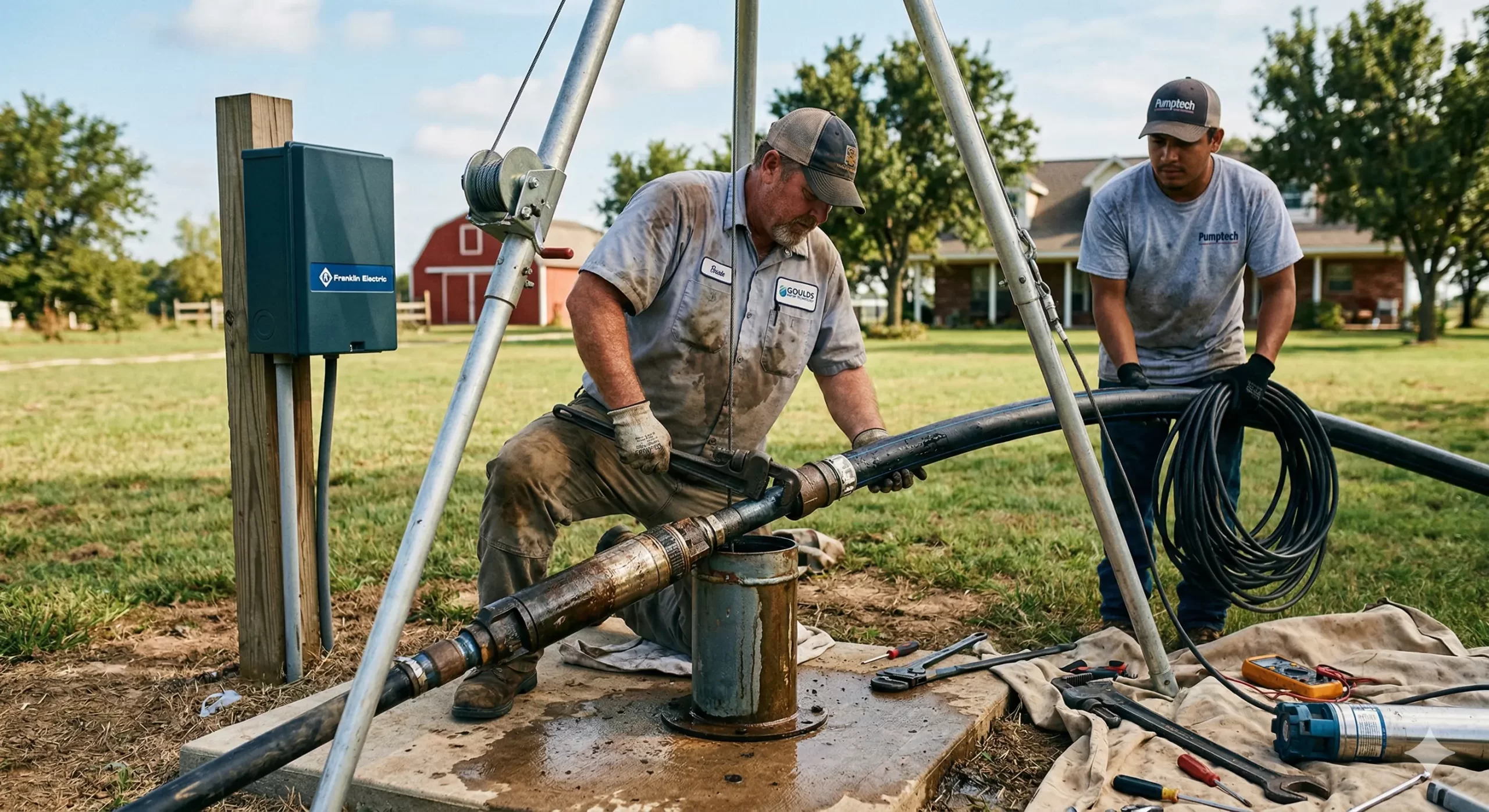
Once the CSV diaphragm failure is confirmed as the root cause, the physical repair process begins. Safety Protocol: The technician will execute a formal Lockout/Tagout (LOTO) procedure on the circuit breaker, ensuring the 240V circuit cannot be accidentally energized. Repairing a deep-set submersible pump is not a manual job. A dedicated pump hoist or a specialized boom truck is required. A 4-inch submersible pump, attached to hundreds of feet of water-filled pipe and heavy gauge wire, can weigh over 500 pounds. The technician will use a large T-handle pitless adapter key to latch onto and disengage the pump assembly from the pitless adapter located several feet below ground inside the well casing. The entire assembly is then carefully hoisted from the well.
With the pump on the surface, the failed CSV1W is unthreaded from the pump’s discharge head. The technician will install a new, identical valve, applying appropriate thread sealant. Before reinstalling, they will inspect the pump’s check valve and the integrity of the heat-shrink splice connecting the motor leads to the main drop cable. The pump is then carefully lowered back into the well, guided to re-engage the pitless adapter, and the well cap is secured and sanitized per local health codes. A final electrical check is performed before the system is re-energized. The technician then performs a full system pressure test, adjusting the new CSV to the desired system pressure and monitoring several pump cycles to ensure smooth, reliable operation.
Repair Cost & Time Assessment
The cost for a professional replacement of a failed Cycle Stop Valve on a submersible well pump in the United States typically ranges from $850 to $2,200. This price variance is determined by several key factors. The base cost includes a standard service call fee, the price of the new CSV1W valve (approx. $100-$150), and 3-5 hours of labor for a licensed two-person crew. The use of a specialized pump hoist or pulling rig is often billed as a separate line item or included in a higher hourly rate.
Several conditions can significantly increase the final invoice. The depth of the well is the primary factor; a pump set at 500 feet requires substantially more time and labor to pull and reset than one set at 100 feet. If the initial megohmmeter test reveals that the motor was damaged by the over-amperage condition, the job escalates from a valve replacement to a full pump and motor replacement, which can increase the cost by $1,500 to $4,000 or more, depending on the pump’s horsepower and brand. Finally, emergency service calls outside of normal business hours will incur premium labor rates, adding several hundred dollars to the total cost.
Fast Local Service & Diagnostics
Calls are routed to a licensed local well professional.