
Stop what you’re doing. That gurgling toilet, that slow drain, that foul odor in your yard – these are not minor annoyances. They are urgent signals from your septic system. A warning. I’m a septic professional with 30 years in the trenches across Pennsylvania, from the rocky soils of the Poconos to the dense clay in Chester County. I’ve seen homeowners ignore these signs and face catastrophic backups costing tens of thousands. This is not a sales pitch. This is an emergency briefing to save you from that fate. We’re going to cover the hard numbers for 2026, the real-world diagnostics you must perform now, and the timeline to total system failure. Listen closely. Let’s get to work.

How Do I Know If My Tank Is Full or Just Clogged?

This is the first critical diagnostic. A wrong guess here costs you time and money. A plumbing clog is localized. A full septic tank is a systemic failure. Here’s how you, the homeowner, can make an initial assessment before calling a pro.
- The Gravity Test: Focus on the lowest drains in your home. This is typically a basement shower, toilet, or floor drain. If only one upstairs sink is slow, it might be a simple clog in that specific line. But if ALL your lower-level fixtures are gurgling, backing up, or draining slowly at the same time, the problem is systemic. The wastewater has nowhere to go. This points directly to the septic tank or drainfield.
- The Odor Pinpoint: Go outside. Walk over to your septic tank’s location. Do you smell raw sewage? Now, walk over the drainfield area. Is the odor stronger there? A strong odor at the tank lid suggests a full tank or a blocked outlet. A widespread, marshy smell over the drainfield points to a much more serious issue: drainfield failure. In Pennsylvania’s humid summers, this odor can become overwhelming fast.
- Visual Drainfield Assessment: Look at your leach field. Do you see standing water or soggy, muddy patches, even when it hasn’t rained? Is the grass over the drainfield unusually lush and green compared to the rest of your yard? This is a classic sign that untreated effluent is surfacing because the tank is full and pushing solids into the field, or the field itself is saturated and failing. This is common during the spring thaw in PA when the ground is already saturated.
What Is the Real Cost Breakdown for Pumping in Pennsylvania for 2026?
Let’s get down to the numbers. Costs vary based on your location in PA, tank size, and the condition of your system. A quote over the phone is just a baseline. A true professional assesses the situation on-site. Here is what you can expect to see on your invoice in 2026. Looking for a reliable local contractor? Explore our septic solutions for Northport, AL.
| Service / Fee | Estimated 2026 Cost Range (PA) | Notes & Considerations |
|---|---|---|
| Standard Pumping (1000 Gallon Tank) | $375 – $550 | Base price. Higher end for metro areas (Philly/Pittsburgh suburbs). |
| Standard Pumping (1500 Gallon Tank) | $500 – $700 | For larger homes (4+ bedrooms). |
| Lid Digging & Access Fee | $75 – $250+ | Depends on depth and soil type. PA’s rocky/clay soil can significantly increase this. |
| Emergency / After-Hours Fee | $150 – $400 | Premium for nights, weekends, or holidays. This is where neglect gets expensive. |
| Outlet Baffle Filter Cleaning | $50 – $125 | Crucial preventative step. If neglected, it clogs and mimics a full tank. |
| System Inspection / Report | $200 – $400 | Often required for real estate transactions or by local PA townships. |
The biggest variable is access. If your septic lids are buried two feet deep under rocky Pennsylvania soil and the technician has to spend an hour with a shovel and pry bar, you will pay for that labor. A smart homeowner installs risers to bring the lids to ground level, turning a $150 digging fee into a $0 fee for every future pumping.
How Can I Prevent a Septic Emergency?
An ounce of prevention is worth a pound of cure. In the septic world, an ounce of maintenance saves you from a $15,000 drainfield replacement. Your septic system is a living ecosystem in your yard. Treat it with respect. Here is your action plan. Looking for a reliable local contractor? Explore our septic solutions for Monticello, FL.
- Know Your Schedule: An average family in a 3-bedroom home in PA should pump their 1000-gallon tank every 3-4 years. A larger family or a home with a garbage disposal should shorten that to 2-3 years. Mark it on your calendar like any other critical home maintenance task.
- Water is the Enemy: Every drop of water that goes down your drain ends up in the drainfield. Fix leaky toilets immediately. Install water-saving fixtures. On laundry day, spread out your loads. Doing five loads in one day can flood your system and stir up solids.
- Protect the Bacteria: The only things that should go down your toilet are human waste and septic-safe toilet paper. No wipes (even “flushable” ones), no feminine hygiene products, no paper towels, no grease, no paint. These items don’t break down and will clog your baffles and your drainfield.
- Mind Your Yard: Do not park cars or heavy equipment over any part of your septic system. The weight can crack the tank or crush pipes in the drainfield. Divert rainwater runoff from roofs and driveways away from the drainfield to prevent it from becoming waterlogged, a frequent issue during PA’s heavy spring rains.
Progression of Septic Failure: A Timeline
This is what neglect looks like over time. Do not let your system get to red.
- Years 1-2 (Healthy System): Normal operation. Effluent is clear. Bacteria are thriving. Sludge and scum layers are minimal. No action needed.
- Years 3-4 (Maintenance Due): System is approaching capacity. You might notice an occasional slow drain after heavy use. Solids now occupy about 1/3 of the tank. This is the ideal window for a routine, affordable pumping.
- Years 4-5 (High Risk / Overdue): You are now on borrowed time. Gurgling sounds are common. Faint sewage odors linger. Solids are high enough to potentially block the outlet baffle or get pushed into the drainfield. Damage is starting.
- Year 5+ (Imminent Failure): Catastrophe is here. Toilets and showers are backing up into your home. Untreated sewage is pooling on your lawn. The drainfield is clogged with solids and has likely failed. You are no longer looking at a pumping bill; you are looking at a multi-thousand-dollar excavation and repair bill.
Can You Walk Me Through a Real Pennsylvania Septic Emergency?
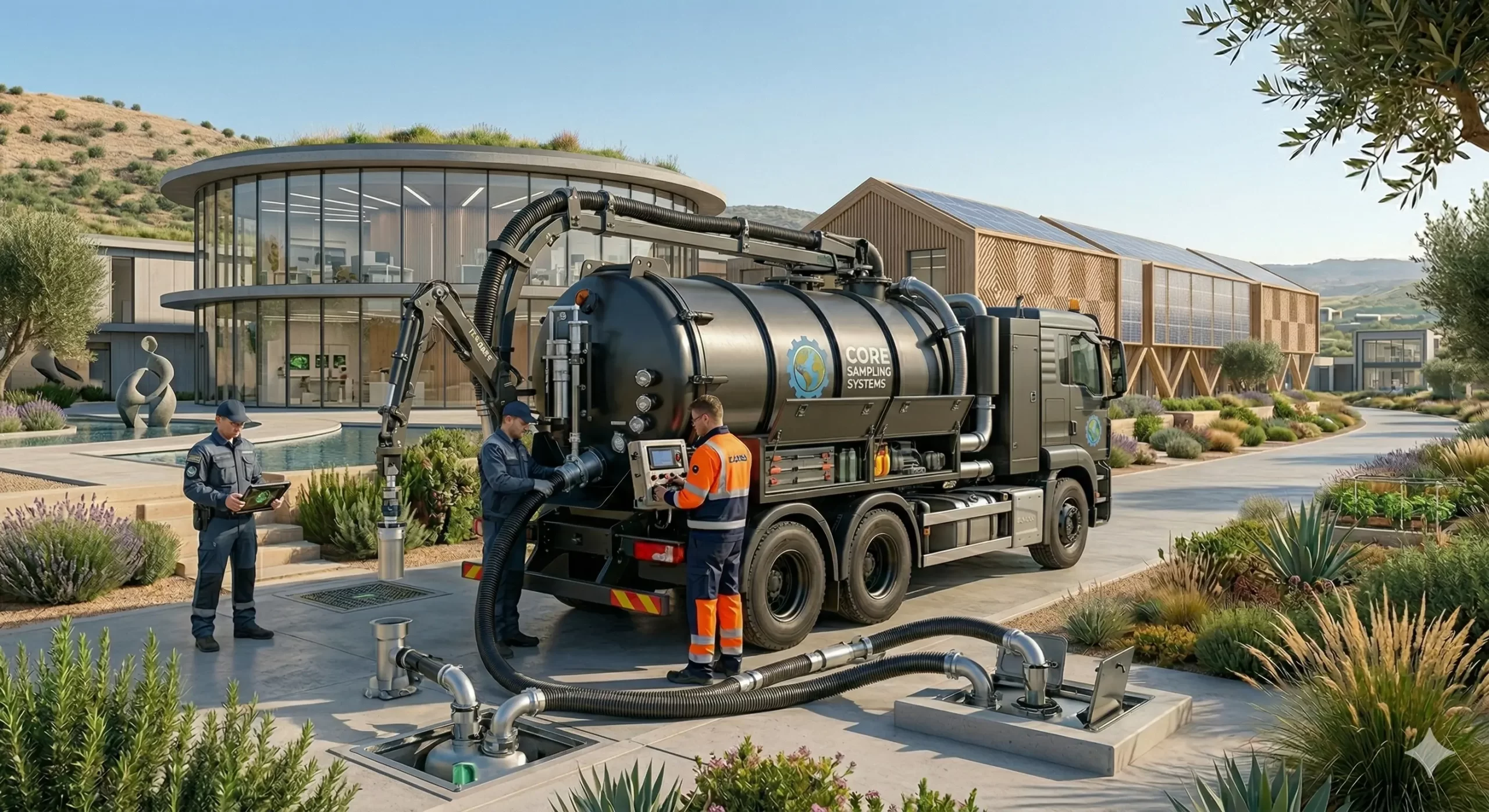
Absolutely. Let’s talk about the Clark family in Bucks County. This case is a textbook example of how a routine maintenance issue escalates into a costly emergency.
The Situation: The Clarks have a 4-bedroom home with a 1250-gallon tank. They’ve lived there for six years and have never had the tank pumped. They are planning a large graduation party for their son in two weeks. For homeowners nearby, we highly recommend calling our Dundee, FL wastewater professionals.
Initial Signs (2 Weeks Before Party): The washing machine drain in the basement starts to gurgle loudly at the end of its cycle. The downstairs toilet requires two flushes to clear completely. They dismiss it as an old house making noises.
The Escalation (1 Week Before Party): A distinct, foul odor appears in the backyard near their patio. After a heavy rainfall, the smell becomes unbearable. Drains throughout the house are now noticeably slow. They panic and buy several bottles of industrial-strength drain cleaner and pour it down every drain.
The Failure (3 Days Before Party): The worst happens. A house full of visiting relatives are taking showers and using facilities. The basement toilet overflows with raw sewage, and the shower drain backs up, flooding a portion of their newly finished basement. The party is in jeopardy, and the house is a biohazard. You can find more detailed pricing and local regulations on our dedicated Oakland Park, FL location page.
The Emergency Diagnosis & Cost: I get the call at 8 PM on a Friday. On arrival, the signs are obvious. The tank is long overdue. But the real problem is compounded. The years of neglect allowed solids to flow out and completely clog the outlet baffle filter. The drain cleaner they used killed the bacteria, turning the tank into a dead holding cesspool. The heavy clay soil of Bucks County, now saturated from the rain, isn’t absorbing any effluent, causing the system to back up into the house. If you reside in the area, you can learn more about our septic services in Tamarac, FL.
- Emergency After-Hours Call-Out Fee: $350
- Pumping the 1250-Gallon Tank: $600
- Excessive Digging Fee (Lids were 2.5 ft down): $200
- Hydro-jetting the Clogged Outlet Baffle & Line: $275
Total Septic Bill: $1,425. This does not include the thousands they spent on basement water damage restoration and sanitation. A routine, scheduled pump four years earlier would have cost them around $450. Their delay and incorrect actions cost them nearly ten times more than preventative maintenance.
What Our Pennsylvania Customers Are Saying
⭐⭐⭐⭐⭐ – Sarah K., Lancaster, PA
“We had a backup scare right before Thanksgiving. I called in a panic, and they had a technician out within 2 hours. He didn’t just pump the tank; he took the time to show me the inlet and outlet baffles, explained how our heavy clay soil affects the system, and set us up on a proper 3-year schedule. In a high-stress situation, his professionalism was a lifesaver. Worth every penny.”
⭐⭐⭐⭐⭐ – David M., Monroe County, PA
“Our property in the Poconos has incredibly rocky soil, and we were worried about the cost of even finding our septic lids. The crew arrived with the right equipment, located and uncovered the lids with minimal disruption to our lawn, and completed the pumping quickly. The final cost was exactly what was quoted. Honest, efficient, and highly skilled service.”
What Are Your Most Urgent Questions About Septic Pumping?
How often should I really pump my septic tank in Pennsylvania?
For most homes in Pennsylvania, the standard is every 3 to 5 years. However, this is a dangerous generalization. The correct frequency depends on three factors: 1) The size of your tank (e.g., 1000, 1250, 1500 gallons), 2) The number of people living in your home, and 3) Your water usage habits (e.g., garbage disposal, frequent laundry). A family of five with a 1000-gallon tank should pump every 2-3 years, period. A retired couple in the same home could go 4-5 years. Do not guess. Get a professional assessment.
Does cold Pennsylvania weather and frozen ground affect my septic system?
Yes, significantly. Heavy snow cover can insulate the system, which is good. However, if the ground freezes before a good snowpack develops, it can reduce the drainfield’s ability to absorb water. Furthermore, a lack of snow cover combined with very cold temperatures can cause the distribution lines to freeze, especially if you have leaky fixtures causing a constant, slow trickle of water. The most critical impact is on emergency service. Digging through frozen, rocky PA soil to access tank lids is extremely difficult and will substantially increase labor costs for an emergency pump-out.
What’s the difference between ‘pumping’ and ‘cleaning’ a septic tank?
This is a critical distinction. A cheap ‘pump-out’ might just involve a driver sticking a hose in the main lid and sucking out the liquid effluent, leaving the heavy, compacted sludge at the bottom. A proper ‘tank cleaning’ involves pumping out all liquids and solids, then often using a tool or back-flushing to break up and remove that hardened sludge layer at the bottom. Always ask your provider if their service includes removing all solids. A true professional cleans the tank; they don’t just pump the water off the top.
Can I legally pump my own septic tank in PA?
Absolutely not. It is illegal and incredibly dangerous. Septic waste is a biohazard that requires specialized equipment for handling and transport. In Pennsylvania, septage must be transported by a licensed hauler to a DEP-permitted facility for disposal. Beyond the legal issues, septic tanks contain toxic gases like hydrogen sulfide, which can be lethal in seconds. There are also significant risks of tank collapse or physical injury. This is a job that must be left to licensed, insured professionals.
Technically Reviewed By:
BlixBase Master Plumber Team
20+ Years Septic Industry Experience | Certified System Inspectors