
The Hydrogeological Imperative: Understanding On-Site Wastewater Treatment in Saturated Conditions
The successful operation of a conventional on-site wastewater treatment system (OWTS), colloquially known as a septic system, is predicated on a fundamental hydrogeological principle: the existence of a sufficient column of unsaturated, aerobic soil beneath the effluent dispersal field. In regions characterized by a high water table—defined as a seasonal high water table (SHWT) located less than 36 inches below the ground surface—this foundational prerequisite is nullified. Consequently, conventional gravity-fed trench or bed systems are not merely suboptimal; they are guaranteed to fail, leading to environmental contamination and public health risks. This analysis will deconstruct the physicochemical and biological processes governing OWTS function and delineate the engineered solutions required for high water table applications.
The critical failure mechanism is twofold. First, the hydraulic capacity of the soil is compromised. According to Darcy’s Law (Q = -KA(Δh/L)), the flow rate (Q) of effluent through a porous medium is proportional to the hydraulic conductivity (K) and the hydraulic gradient (Δh/L). When the receiving soil is saturated, the hydraulic gradient approaches zero, effectively halting the percolation of effluent away from the dispersal field. This leads to surface ponding of partially treated wastewater. Second, and more critically from a treatment perspective, is the shift from an aerobic to an anaerobic environment. The final, most crucial stage of wastewater treatment occurs in the unsaturated soil matrix surrounding the drainfield trenches, within a microbial layer known as the biomat. Here, aerobic bacteria metabolize dissolved organic compounds and pathogens. In a saturated, anoxic environment, this aerobic treatment is impossible, and the effluent’s Biological Oxygen Demand (BOD5) and Total Suspended Solids (TSS) are not adequately reduced before discharge into the groundwater. Navigating local soil conditions can be tricky. Consult our Stafford, TX septic pumping guide.

Troubleshooting Advanced Systems in Saturated Environments
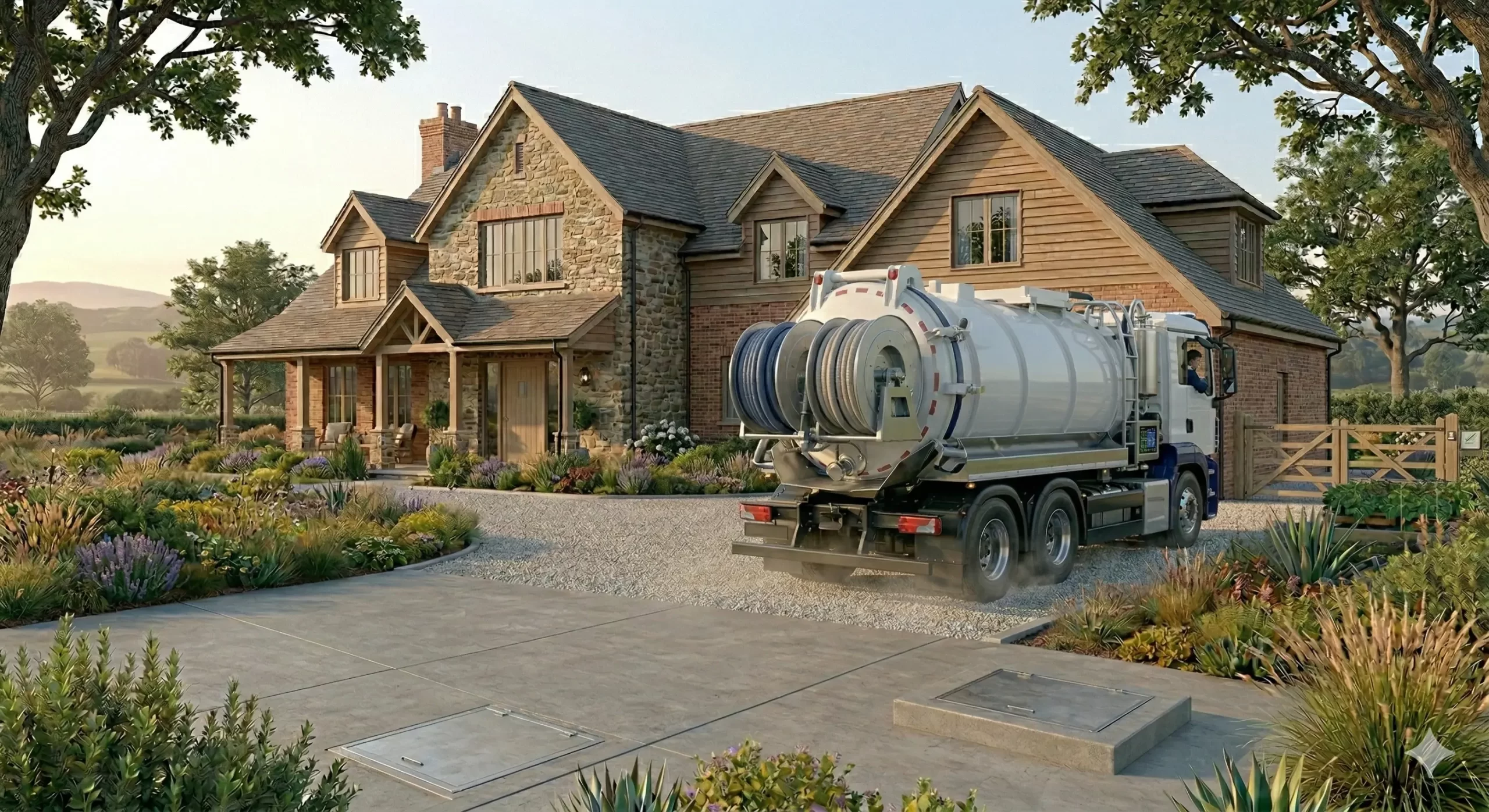
Even engineered systems are not impervious to operational faults. A systematic approach to diagnostics is required.
- Symptom: High-Level Alarm Activation. The most common issue. The cause is typically pump failure, a clogged effluent filter, or a saturated dispersal area. The immediate diagnostic step is to silence the alarm and check the circuit breakers. If power is supplied, the pump chamber must be opened. Verify pump operation by manually activating the float switch. If the pump runs but the water level does not drop, a blockage exists in the force main. If the pump does not run, it has failed and requires replacement.
- Symptom: Persistent Odor Near ATU or Dispersal Area. This indicates a failure in the treatment process. For an Aerobic Treatment Unit (ATU), the primary cause is often a failed aerator or air pump. Without a continuous supply of dissolved oxygen (target DO > 2.0 mg/L), the aerobic bacterial colony collapses, and the system reverts to an anaerobic state, producing hydrogen sulfide gas. A secondary cause could be a hydraulic overload or the introduction of prohibited chemicals (e.g., excessive bleach) that have killed the microbiome.
- Symptom: Saturated Ground Surface Above Dispersal Field. In a mound or drip irrigation system, this signifies a critical failure. Potential causes include: 1) A breach in the force main or drip tubing leading to a concentrated leak. 2) Complete biological clogging (biomat formation) of the dispersal media due to an upstream failure in the ATU (i.e., discharging high-BOD effluent). 3) Compaction of the receiving soil or mound fill material, severely reducing its hydraulic conductivity. Diagnosis requires excavating small test pits to determine the extent and depth of saturation.
Client Engineering Assessments ⭐⭐⭐⭐⭐
“Our property in coastal Florida presented a nightmare scenario: a water table at 22 inches and poor sandy loam. The team’s proposal for a NSF/ANSI 245 certified ATU coupled with a pressure-dosed shallow drip dispersal field was technically superior to all others. They provided full hydraulic calculations and a nutrient loading analysis. The installation was precise, using laser transits to ensure perfect grade. The system has performed flawlessly, protecting our sensitive local estuary.”
– Dr. Robert Jennings, P.E.
“After two failed conventional systems mandated by a less-informed builder, we were facing county fines. The expert consultation we received was a revelation. They performed a comprehensive soil profile analysis, identified the redoximorphic features, and engineered a Wisconsin-style mound system perfectly suited to our clay-heavy, high water table lot. The level of documentation, from the sand specification (ASTM C-33) to the pump curve verification, was exemplary. This is not just plumbing; it’s civil engineering.”
– Sarah and Tom Chen
Engineered Solutions for High Water Table Scenarios

To overcome the limitations imposed by a high SHWT, systems must be designed to either create the necessary unsaturated soil column or treat effluent to a much higher standard before dispersal. Protect your property value by working with certified septic inspectors in Mount Dora, FL.
- The Mound System: This is an above-ground drainfield. A precisely engineered bed of ASTM C-33 specification sand is constructed on top of the native topsoil. The depth of this sand medium is calculated to provide the required vertical separation distance (typically 24-36 inches) between the effluent dispersal laterals and the SHWT. Effluent from the septic tank is pumped under low pressure through a manifold into the sand mound. Treatment occurs as the effluent percolates downward through the sand and into the native soil. Mound systems are effective but have a large physical footprint and can be aesthetically challenging.
- Aerobic Treatment Units (ATUs): An ATU is a mechanical system that functions as a miniaturized wastewater treatment plant. It introduces a forced air supply into a secondary treatment chamber, cultivating a dense population of aerobic microorganisms. This process aggressively reduces BOD and TSS from typical septic tank effluent levels (BOD ~250 mg/L, TSS ~100 mg/L) to levels comparable to secondary municipal treatment (BOD < 30 mg/L, TSS < 30 mg/L). Because the effluent is so highly treated, it can be dispersed into less-than-ideal soil conditions, often through shallow pressure-dosed systems that do not require the same vertical separation as conventional systems.
- Drip Irrigation Dispersal: Often used in conjunction with an ATU, this method uses a network of small-diameter, pressure-compensating tubing buried 6-12 inches deep to slowly and uniformly dose the treated effluent into the root zone of vegetation. This maximizes evapotranspiration and absorption by plants, placing a minimal hydraulic load on the underlying soil. It is an ideal solution for sites with severe limitations.
Progression of Conventional System Failure in High Water Table Soil
| Timeframe | Status | Technical Observations |
|---|---|---|
| Year 1 (Wet Season) | Initial Functionality | System functions intermittently. Drainfield becomes partially saturated during peak SHWT. Minor reduction in percolation rate noted. |
| Year 2-3 | Intermittent Sluggishness | Drains slow during periods of heavy rain. Anoxic conditions develop in drainfield, leading to the formation of a dense, impermeable black biomat. Effluent ponding occurs below the surface. |
| Year 4 | Systemic Failure Imminent | Septic odors are noticeable after rain. Gurgling sounds in plumbing are frequent. The ground over the drainfield is persistently spongy and damp. Tank requires more frequent pumping. |
| Year 5+ | Total System Failure | Black, odorous effluent surfaces in the yard, posing a direct public health hazard. Drains back up into the structure. The drainfield is hydraulically and biologically dead. Complete replacement is the only option. |
Real-Life Case Study: Dare County, North Carolina Coastal Plain
Site Conditions: A residential lot located 500 yards from the Currituck Sound. Soil borings revealed a profile of loamy sand overlying poorly drained sand. Redoximorphic features (mottling) were identified at a depth of 18 inches, establishing the SHWT. A conventional system permit was denied by the county health department due to insufficient vertical separation (NC requires a minimum of 18-24 inches of unsaturated soil, depending on system type).
Initial Failed Design: A builder had illegally installed a conventional gravity trench system. Within 18 months, during the winter high water table season, the system failed catastrophically, with effluent surfacing in the backyard. We understand the specific environmental rules for your region. Learn more from our experts in Winter Springs, FL.
Engineered Solution: A comprehensive design was implemented. A 1,250-gallon two-compartment concrete septic tank was installed, followed by a Clearstream 500N ATU. This unit was selected for its NSF/ANSI 40 & 245 certifications, ensuring significant BOD, TSS, and Total Nitrogen reduction. The treated effluent, with a target quality of BOD5 <15 mg/L and TSS <15 mg/L, was directed to a 75-gallon pump tank. From there, a 1/2 HP high-head effluent pump delivered the water via a 1.25-inch SCH 40 PVC force main to a 4-zone drip irrigation dispersal field. The field utilized 1,200 linear feet of Netafim Bioline tubing, installed 8 inches below grade, with emitters dosed four times per day on a timed cycle to achieve a hydraulic loading rate of 0.25 gallons per day per square foot.
Outcome: The system has operated for over 10 years without failure. The highly treated effluent is safely assimilated by the topsoil and vegetation, and no contaminants have been detected in nearby groundwater monitoring wells. Need immediate assistance? Find trusted septic tank pumping in Livingston, TX right away.
Cost Breakdown: Conventional vs. Advanced Systems
The capital outlay for an engineered system is significantly higher than for a conventional system. This cost must be weighed against the certainty of conventional system failure and the subsequent cost of remediation and replacement. For a free consultation, simply reach out to our office serving Tarpon Springs, FL.
| Component | Conventional System (Ideal Lot) | Mound System (High Water Table) | ATU + Drip (High Water Table) |
|---|---|---|---|
| Engineering & Permitting | $800 – $1,500 | $2,500 – $4,000 | $3,000 – $5,000 |
| Septic Tank (1000-1250 gal) | $1,500 – $2,500 | $2,000 – $3,000 (inc. pump tank) | $1,500 – $2,500 |
| Treatment/Dispersal Components | $2,000 – $4,000 (gravel/chambers) | $8,000 – $15,000 (sand, pump, laterals) | $10,000 – $18,000 (ATU unit, pump, drip field) |
| Installation & Labor | $2,500 – $5,000 | $6,000 – $10,000 | $7,000 – $12,000 |
| Estimated Total | $6,800 – $13,000 | $18,500 – $32,000 | $21,500 – $37,500 |
Specialized Diagnostic & Installation Equipment
Professional installation and maintenance of these complex systems require tools far beyond a standard shovel and level. An expert’s toolkit will include:
- Laser Level Transit with Receiver: Absolutely critical for establishing the precise elevations and grades required for mound systems and pressure-dosed dispersal fields. An error of even 1/4 inch over distance can compromise hydraulic distribution.
- Soil Auger with Munsell Color Chart: Used during the site evaluation to extract soil cores. The Munsell chart allows for the precise, objective classification of soil color and the identification of redoximorphic features (mottles) that indicate the seasonal high water table.
- Sludge Judge Sampler: A clear, graduated tube used to measure the respective depths of the sludge and scum layers within a septic tank. This provides a quantitative assessment of tank performance and determines the required pumping interval, preventing solids carryover that can destroy a dispersal field.
- Digital Manometer: A highly sensitive pressure gauge used to test the pressure head and flow balance across a pressure-dosed or drip irrigation dispersal network. It ensures that all laterals and emitters are receiving the correct flow rate as specified by the engineering design.
- Dissolved Oxygen (DO) Meter: An electronic probe used to measure the concentration of dissolved oxygen (in mg/L) within the aeration chamber of an ATU. This is a primary diagnostic tool to verify the health and performance of the aerobic treatment process. A reading below 2.0 mg/L indicates a problem with the aeration system.
Mandatory Maintenance Protocols for Advanced Systems
Unlike passive conventional systems, engineered systems are active treatment plants that demand rigorous, scheduled maintenance. Non-compliance is not an option and will lead to system failure.
- Service Contracts: Most jurisdictions legally require a homeowner with an ATU to maintain a service contract with a certified maintenance provider. These contracts typically include semi-annual or quarterly inspections of all mechanical components (aerator, pumps), alarm systems, and effluent quality checks.
- Effluent Filter Cleaning: All systems with a pump should have an effluent filter in the outlet baffle of the final septic tank compartment. This filter must be cleaned every 6-12 months to prevent clogging, which can starve the pump and lead to backups.
- Pump and Float Switch Inspection: Annually, the pump must be removed from its chamber, cleaned, and inspected. Float switches must be checked for freedom of movement and proper activation points.
- Drip Field Flushing: Drip irrigation fields require periodic flushing of the laterals (typically annually) to remove accumulated sediment and biological growth, ensuring all emitters remain operational.
Frequently Asked Technical Questions
What is the minimum vertical separation, and why is it a non-negotiable parameter?
Vertical separation is the distance between the bottom of the effluent dispersal trench/component and the seasonal high water table (SHWT). This zone of unsaturated soil is where the final aerobic treatment of pathogens and organic compounds occurs. State and local health codes mandate specific minimums (e.g., 24 inches in many areas) to ensure adequate treatment time and prevent direct contamination of groundwater. It is a non-negotiable, legally-defined parameter because reducing this distance invalidates the entire premise of on-site soil-based wastewater treatment, posing a significant public health risk.
How are BOD5 and TSS metrics quantified, and what are the target reduction levels?
BOD5 (Biochemical Oxygen Demand, 5-day) is a laboratory measurement of the amount of dissolved oxygen consumed by aerobic bacteria to decompose organic matter in a water sample over a five-day period at 20°C. TSS (Total Suspended Solids) is the total amount of solid material that is suspended (not dissolved) in the water, measured by filtering a sample and weighing the dried residue. Typical raw residential wastewater has a BOD5 of 200-300 mg/L and TSS of 100-250 mg/L. A properly functioning septic tank reduces this to ~150 mg/L BOD5 and ~80 mg/L TSS. An NSF/ANSI 40 certified ATU must produce an effluent with an average BOD5 and TSS of less than 30 mg/L, representing a >85-90% treatment efficiency before the effluent even reaches the soil.
Can a homeowner ‘fix’ a high water table with French drains to enable a conventional system?
No. This is a critical and dangerous misconception. Installing French drains or curtain drains to artificially lower the water table in a specific area is not a permissible solution for enabling a conventional septic system. Health codes base their requirements on the natural, seasonal high water table (SHWT). Artificially lowering the water table is unreliable, can fail, and often simply redirects groundwater without solving the fundamental problem. Furthermore, if the drains were to collect contaminated effluent from a failing system, they would create a direct conduit for that effluent to discharge into surface waters or other areas, exacerbating the environmental damage. Regulatory bodies will not approve such a design.
Technically Reviewed By:
BlixBase Master Plumber Team
20+ Years Septic Industry Experience | Certified System Inspectors