

Real-Life Case Study: The Miller’s Sunken Trampoline Nightmare
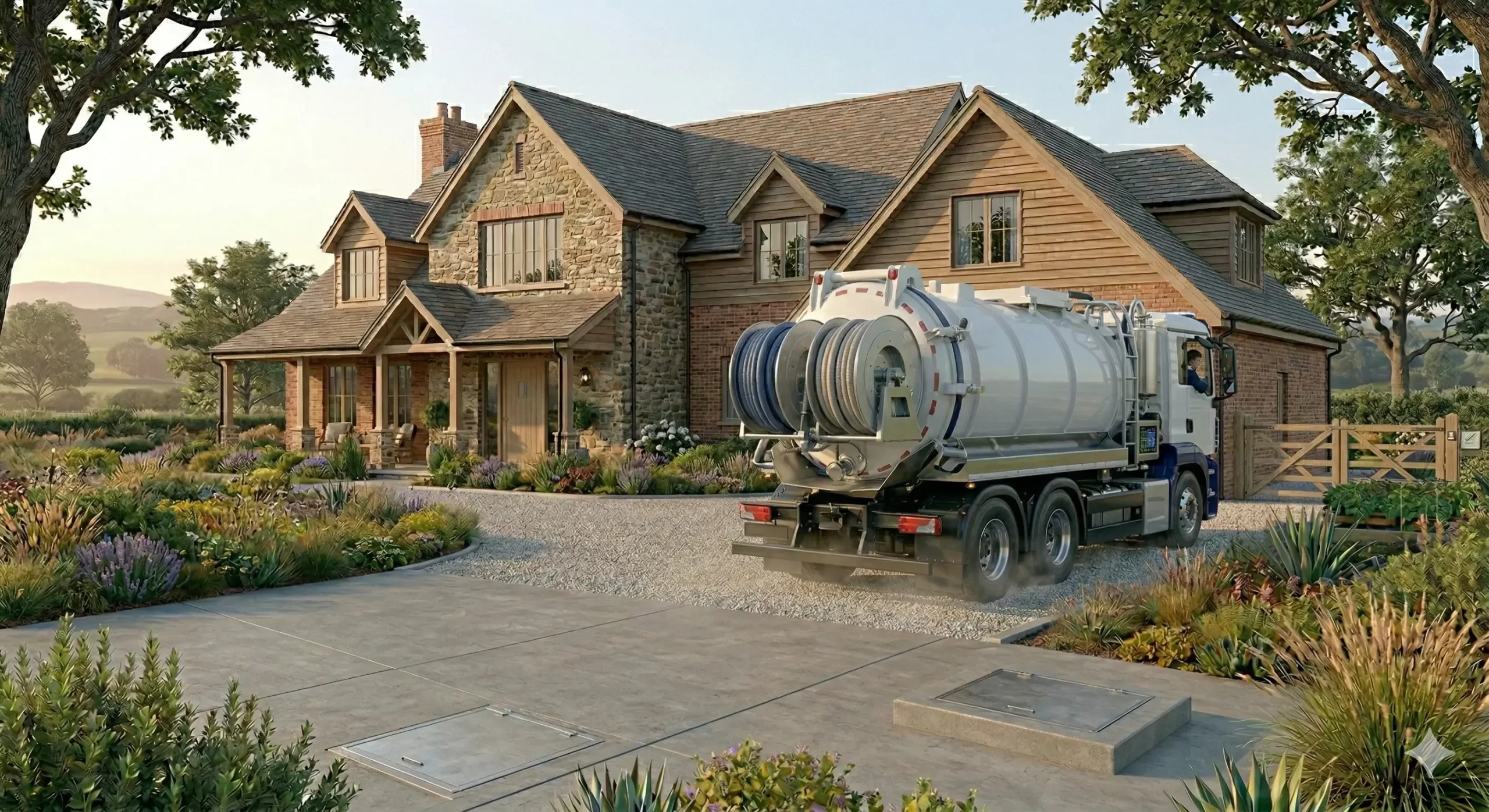
Let me tell you a story. It was a hot August day a few years back, the kind where the air in central Ohio is thick enough to drink. I get a call from a fella named Miller. Panicked. Says his basement toilet is gurgling and there’s a ‘funny smell’ in the backyard where the kids play. A funny smell. Right. I’ve been doing this for 30 years, and ‘funny’ is never good. I pull up to his nice suburban house, and the first thing I see is a big, 14-foot trampoline sitting right in the middle of a suspiciously green, spongy-looking patch of lawn. I didn’t even have to get out of my truck to know what the problem was. We also provide specialized local support—see our Dundee, FL service page for details.
We walked over, and my boots sank two inches into the muck. The ‘funny smell’ was raw effluent. The Miller kids had been bouncing on that thing for three straight years, right on top of their conventional trench drain field. The soil, a heavy clay common in these parts, was compacted into something resembling a brick. Each of the trampoline’s eight legs had become a piston, hammering the ground with every jump, systematically destroying the soil’s ability to breathe and percolate water. The biomat—that delicate layer of beneficial bacteria that digests the waste—was suffocated, and the perforated pipes two feet below were crushed flat in at least three spots. The final bill for the Miller family? A full drain field replacement to the tune of $17,500, plus the cost of reseeding their entire backyard. All because they wanted a convenient spot for a $400 toy.
The Cold, Hard Numbers: What You’re Really Risking
People see an empty patch of grass and think it’s free real estate. It’s not. It’s the most expensive and critical part of your property’s wastewater infrastructure. You wouldn’t park your car on your living room sofa, so why would you put a heavy, vibrating object on your septic system’s lungs? Below is a typical breakdown for a drain field replacement in a moderate-cost area. Prices vary, but the headache is universal.
| Service / Material | Description | Estimated Cost |
|---|---|---|
| County Permit & Inspection Fees | Non-negotiable government fees. Varies by county. | $400 – $1,000 |
| Soil Percolation Test | Required for new system design. Measures soil absorption rate. | $800 – $2,000 |
| Excavation & Old System Removal | Heavy machinery (excavator, dump truck) and labor. | $3,000 – $5,000 |
| Aggregate (Gravel/Sand) | Typically need 30-50 tons of certified septic gravel. | $1,500 – $3,000 |
| Piping & Distribution Box | Modern chamber systems or traditional pipe and gravel. | $1,200 – $2,500 |
| Labor & Installation | Skilled labor to install system to code specifications. | $4,000 – $7,000 |
| Final Grading & Landscaping | Topsoil, seed, and straw to restore the yard. | $1,000 – $2,000 |
| GRAND TOTAL | $11,900 – $22,500 | |
Progression of Failure: A Timeline of Trouble ⏳
This isn’t an overnight disaster. It’s a slow, creeping death for your septic system. The constant, focused pressure from the trampoline legs, combined with the vibrations from jumping, creates a predictable pattern of failure. Here’s what it looks like over time.
- Year 1: The Honeymoon Phase. You won’t notice much. The ground under the trampoline legs might seem a little firmer. The grass might even be greener from the extra moisture that isn’t percolating as quickly. Sub-surface damage is beginning as the soil’s macropores start to collapse.
- Year 3: The First Warning Signs. After a heavy rain, you’ll see standing water around the trampoline legs that takes a day or two longer to disappear than the rest of the yard. You might catch a faint septic odor on humid, still days. You’re now at about 40% efficiency loss in the compacted zones.
- Year 5: Obvious Problems. You have permanent soggy spots and the grass directly under the trampoline frame is dying or has been replaced by moss. You’ve had at least one or two slow-drain incidents in the house. The biomat is now overgrown and ‘sliming over’ due to anaerobic conditions, blocking effluent from ever reaching the soil. Some of the weaker perforated pipes may have started to crack or oval.
- Year 7-10: Catastrophic Failure. It’s over. You have surfacing effluent—that’s stinky, black water pooling on your lawn. It’s a biohazard. Your toilets won’t flush, your drains are backed up, and you’re likely getting a nasty letter from the local health department. Your only option now is the full, expensive replacement I detailed above.
Troubleshooting: So You’ve Already Messed Up ♂️
Alright, so you’re reading this article and your stomach is in a knot because your kid’s trampoline has been sitting on the drain field for the last four years. Don’t panic yet, but it’s time to act. First, get that trampoline off there. Right now. Don’t wait until the weekend. Give the area at least a 15-foot clearance from the edge of your drain field trenches.
Next, you need to assess the damage. After the trampoline has been moved for a week, grab a shovel. Go to one of the spots where a leg used to be. Attempt to dig a small hole, about one foot deep. Is the soil abnormally hard-packed compared to the surrounding yard? Is it wet and sour-smelling even if it hasn’t rained? If yes, you have significant compaction. You can also call a professional (like me) to run a camera scope through your distribution box and down the lateral lines. This service costs about $300-$500 and will tell you definitively if you have crushed or bellied pipes. This is far cheaper than guessing and waiting for a total system backup. Facing a drain field failure? Our team in Hearne, TX is ready to diagnose the problem.
Maintenance That Actually Matters (Not Fluff) ️
Why do you think they call it a ‘drain field’ and not a ‘recreation area’? Your septic system is a living, breathing ecosystem under your lawn, and it needs to be treated with respect. The single most important piece of maintenance is keeping everything except grass off of it. No trampolines, no pools, no sheds, no patios, no vegetable gardens, and for heaven’s sake, no driving on it. A single pass with a pickup truck can crush a lateral line and cost you thousands. Regular maintenance is crucial. Connect with our Bushnell, FL septic experts to schedule a check-up.
Beyond that, two things. First, install an effluent filter in the outlet baffle of your septic tank. This little $80 plastic part catches more solids than the tank alone and protects your drain field from premature clogging. I’ve seen filters extend the life of a field by 5 to 10 years. You just have to pull it out and hose it off every 6-12 months. Second, check your gutters. Make sure all your roof runoff is diverted far away from your drain field. A single heavy thunderstorm can dump 1,000 gallons of water onto your roof, and if that water floods your already-saturated drain field, it hydraulically overloads the system, pushing solids out of the tank and into your pipes. It’s a simple fix that prevents a catastrophic failure. Property owners in the region trust our Bay Minette, AL septic system services for long-term reliability.
Words From Folks Who Listened
⭐⭐⭐⭐⭐ – Saved Us a Fortune!
“We were about to buy a house and the inspector missed the fact that the previous owners had a massive swing set cemented into the middle of the drain field. Called this company for a second opinion. The old-timer who came out was grumpy as all get out but knew his stuff. He showed us the soil compaction and explained in no-nonsense terms that we were looking at a full replacement. His brutal honesty saved us from a $20,000 mistake. We passed on the house. Can’t thank him enough.” Don’t wait for a backup to flood your yard. Check out our local services in Jackson, LA.
– Brenda L., Michigan
⭐⭐⭐⭐⭐ – No-Nonsense and Correct
“I called to ask this exact question about our trampoline. The guy on the phone didn’t sugarcoat it. Told me to move it immediately and explained the science of PSI and soil pores. I was skeptical but moved it anyway. A year later, our neighbor two doors down (who also had a trampoline on his field) had his whole system fail. We dodged a bullet thanks to some crusty but wise advice. Pay attention to the pros, people.”
– Mark T., Ohio
Your Burning Questions, My Grumpy Answers
But what if my trampoline doesn’t have legs, like one of those ‘in-ground’ models?
Worse. That’s even worse. To install an in-ground trampoline, you have to excavate a massive pit, which means removing the crucial topsoil and aggregate layers of your drain field and likely damaging the pipes themselves. You’re also creating a giant bowl that will collect rainwater and flood the system. This is not a clever workaround; it’s an express ticket to a total system replacement. It’s probably against your local health code, to boot.
How far away does the trampoline need to be from the septic drain field?
Most local health codes have setback requirements. A common rule is a minimum of 10 feet from the edge of the outermost trench, but I tell my clients 20 feet to be safe. You need to know exactly where your field is. Don’t guess. If you don’t have the ‘as-built’ diagram from your home’s construction, you can sometimes get it from the county health department. A professional can also locate the trenches for you. The point is to give it a wide berth, preventing any ‘creep’ or soil disturbance near the active system.
Are there any other structures I should avoid putting on the drain field?
Yes. The list is long. Absolutely no swimming pools (above-ground or in-ground), sheds, gazebos, decks, patios, driveways, or parking areas. Don’t plant trees or large shrubs with invasive root systems—they will seek out the moisture in your pipes and choke them completely. Even a simple vegetable garden is a bad idea because you are tilling and compacting the soil, and you don’t want to be eating food grown in your own wastewater effluent. The only thing that should be on your drain field is grass with shallow roots.
What’s the difference between soil compaction and just ‘settling’?
‘Settling’ is the natural, minor compression of soil after it has been disturbed, like after a new system is installed. It’s usually minimal and happens over the first year. ‘Compaction’ is the artificial and destructive compression of soil from repeated pressure, like from a trampoline leg or a vehicle tire. Settling reduces volume slightly while maintaining porosity. Compaction squeezes the soil particles together, eliminating the air and water channels (pores) that are essential for the aerobic bacteria in your drain field to survive and for water to percolate. One is natural; the other is a man-made system killer.
Technically Reviewed By:
BlixBase Master Plumber Team
20+ Years Septic Industry Experience | Certified System Inspectors