

What Can Be Learned from a Title 5 Failure Case Study?
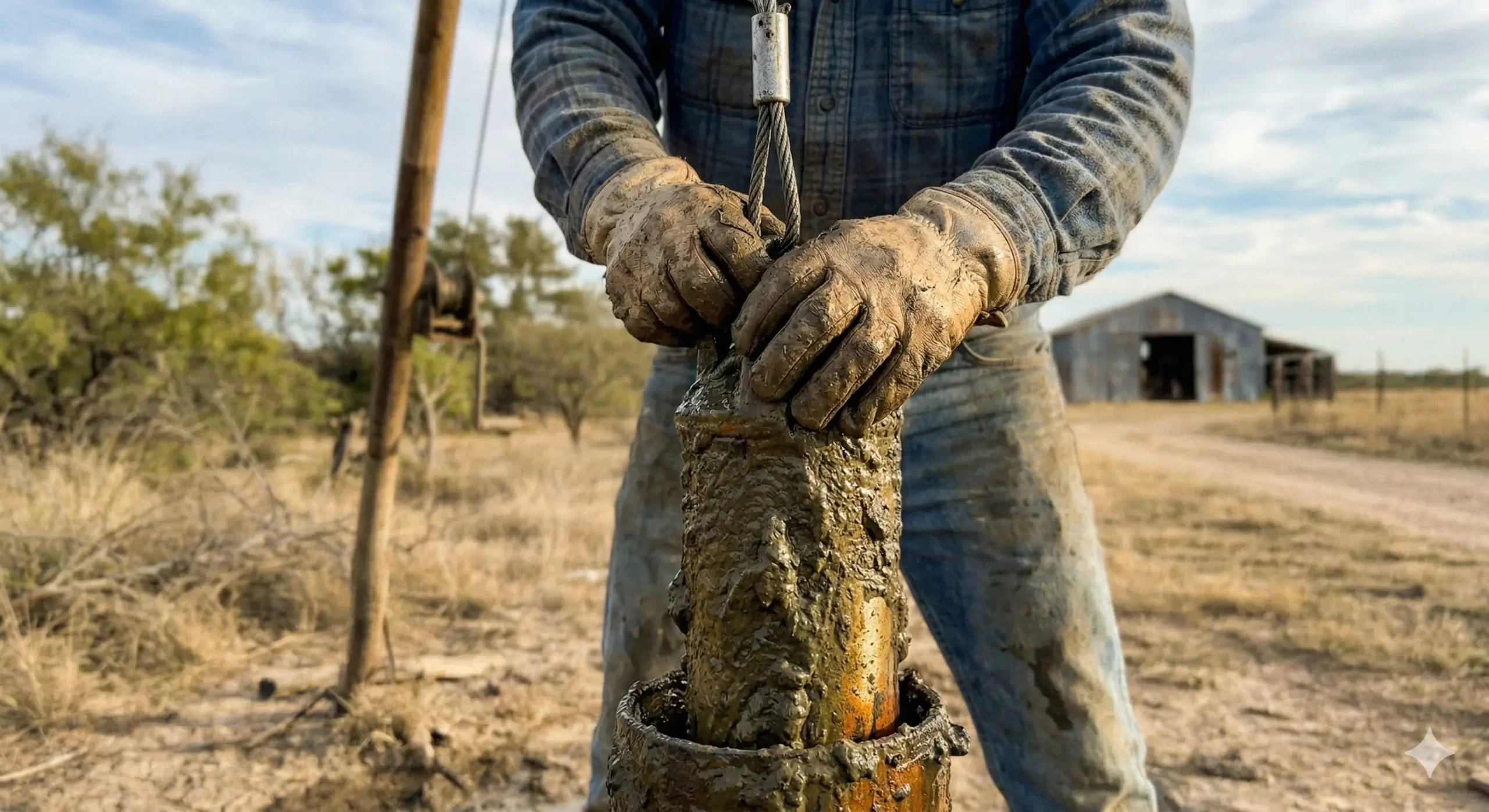
Let us examine a real-world scenario, anonymized for legal purposes, from Middlesex County, Massachusetts. Case #78-B4 involves a property transaction for a 1952 single-family residence. The seller, operating under the assumption they possessed a standard septic system, scheduled a mandatory Title 5 inspection as required by Massachusetts General Law. The inspection, however, revealed a catastrophic non-compliance issue.
The inspector located the main sewer line exit but found no evidence of a two-compartment tank or a distribution box. Instead, dye testing revealed direct discharge into a deep, unmortared concrete block pit approximately 25 feet from the foundation—a classic cesspool. Furthermore, soil borings indicated a high seasonal water table, placing the bottom of the cesspool well within the groundwater protection zone, a direct violation of 310 CMR 15.000.
The consequences were immediate and severe:
- Instantaneous Title 5 Failure: The property could not be legally sold or transferred until the system was brought into full compliance.
- Mandatory Upgrade Order: The local Board of Health issued a legally binding order for the design and installation of a new, compliant Title 5 septic system. This required extensive engineering plans, soil percolation tests, and heavy machinery.
- Financial Catastrophe: The initial quote for a standard gravity-fed system was over $35,000 due to challenging site conditions, including clay-loam soil with poor percolation and limited space for a proper leach field.
- Transaction Collapse: The prospective buyers, facing an indefinite delay and the potential for unforeseen costs, rescinded their offer. The seller was left with an unsellable property and a $35,000+ liability.
How Do You Perform a Preliminary Diagnostic Assessment of Your System?
A definitive system classification requires a licensed inspector. However, a property owner can conduct a preliminary investigation to gather critical data points. Adhere to the following diagnostic protocol with precision. ️
- Review Municipal and County Records: Your first action is not in the yard, but at the local health department or building department. Request all permits, as-built diagrams, and inspection records associated with your property’s address. Look for terms like “cesspool,” “seepage pit,” “dry well,” or a single-structure diagram. A compliant septic system will typically have a diagram showing a tank connected to a separate drain field or leach field.
- Analyze the System’s Age: The age of the dwelling is a primary indicator. Properties constructed before 1970, particularly in areas without stringent early zoning, have a significantly higher probability of containing a cesspool. Post-1980s construction almost universally required multi-stage septic systems.
- Conduct a Surface Topography Survey: Walk your property. A septic system’s leach field often creates a slight, broad mound or a series of parallel, subtle depressions in the yard. A cesspool, being a single, deep pit, typically leaves no significant surface evidence unless it is failing, in which case a single, often circular, soggy or lush patch of grass may be present.
- Locate System Components: Probe the ground gently with a thin metal rod (a soil probe is ideal) in the area where the sewer pipe leaves your foundation. A septic tank is a large, rectangular object, typically 8 to 10 feet long and 5 feet wide, and its lid or access risers are usually 1 to 3 feet below the surface. You will find a hard, flat surface. A cesspool cover is often a single, round concrete lid. If you locate one circular lid and no other components within a 20-foot radius, the probability of it being a cesspool increases dramatically.
- Observe Inlet/Outlet Pipe Configuration (If Accessible): If an access riser is present, a licensed professional can remove the cover. A septic tank will have both an inlet pipe from the house and an outlet pipe leading to the drain field. A cesspool has only an inlet pipe; there is no outlet for treated effluent.
What Are the Fundamental Structural and Functional Differences?
The distinction between a cesspool and a septic tank is not a matter of semantics; it is a fundamental engineering and public health dichotomy. Understanding these differences is paramount for regulatory compliance and environmental stewardship.
A cesspool is, in engineering terms, a rudimentary covered pit with a perforated or open-jointed lining. Wastewater (blackwater and greywater) flows directly into this pit. The liquid component (effluent) leaches into the surrounding soil through the perforations, while the solid waste (sludge) decomposes anaerobically at the bottom. It provides zero primary treatment and discharges raw, pathogen-rich effluent directly into the subsurface, often perilously close to groundwater tables. Our Demopolis, AL service technicians are fully licensed to handle these exact types of installations.
A septic system, conversely, is a multi-stage wastewater treatment facility in miniature. It consists of two primary components: the septic tank and the soil absorption system (leach field or drain field). Wastewater first enters the septic tank, a watertight container. Here, anaerobic digestion occurs in a controlled environment. Solids settle to the bottom to form a sludge layer, while fats, oils, and grease float to the top to form a scum layer. This process allows for primary treatment, reducing Biochemical Oxygen Demand (BOD) and Total Suspended Solids (TSS) by a significant margin. The partially treated effluent then flows from the tank to the leach field—a network of perforated pipes in gravel-filled trenches—where it is slowly and aerobically filtered and purified by the soil matrix before reaching groundwater. Proactive care saves money. See what our local experts in Selma, AL can do for your system.
| Parameter | Septic System (Compliant) | Cesspool (Non-Compliant/Obsolete) |
|---|---|---|
| Structure | Multi-component: Watertight tank, distribution box, and soil absorption system (leach field). | Single-component: A perforated pit lined with unmortared brick, block, or precast rings. |
| Wastewater Treatment | Primary treatment (anaerobic digestion) in tank, followed by secondary treatment (aerobic filtration) in soil. High pathogen and nutrient removal. | No treatment. Functions as a disposal pit for raw sewage. Direct discharge of untreated effluent. |
| Effluent Quality | Reduced BOD/TSS. Significantly lower pathogen load entering leach field. | Raw sewage quality. High concentrations of coliform bacteria, viruses, nitrates, and phosphates. |
| Regulatory Status | The mandated standard under EPA guidelines and all state environmental codes. | Illegal for new construction nationwide. Many states mandate removal upon property transfer or system failure. Classified as a Class V injection well by the EPA in some contexts, requiring strict regulation or closure. |
What Does the Progression of System Failure Look Like?
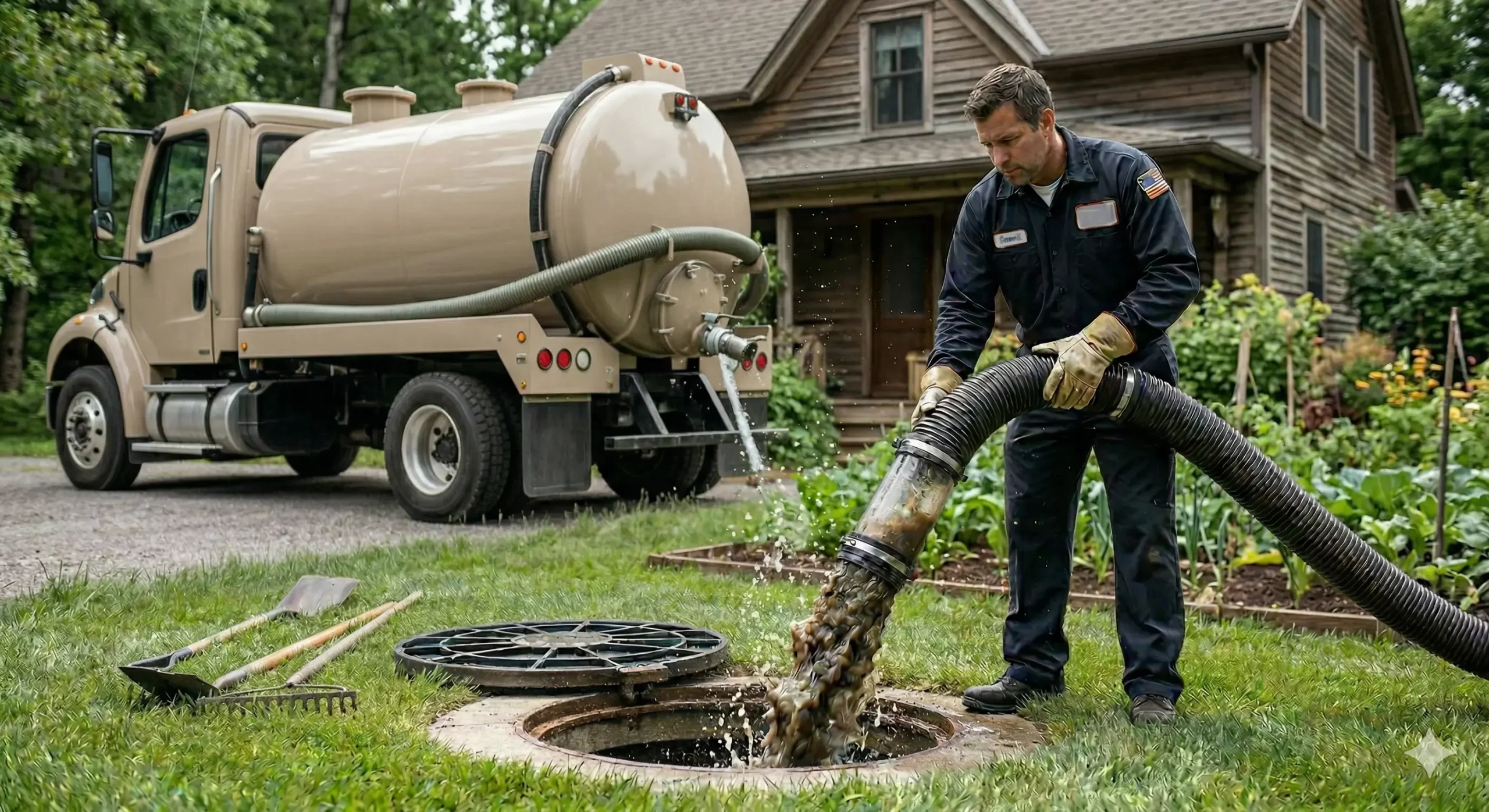
System failure is not an event; it is a process. The hydraulic and biological decline of an OWTS follows a predictable trajectory. Early detection is critical to mitigating catastrophic environmental contamination and financial liability. Below is the typical progression timeline for an unmaintained or antiquated system.
- Year 1-5 (Initial Stage): The system operates within design parameters. Minor sludge accumulation begins. Soil in the absorption area remains unsaturated and aerobic. No external indicators are present.
- Year 5-10 (Stressed Stage): Sludge and scum layers in the tank occupy >30% of the volume. Unmaintained systems begin passing suspended solids into the leach field. This initiates the formation of a biomat (a black, slimy layer) on the soil trench interface, reducing soil permeability. The first symptom may be intermittently slow drains inside the house.
- Year 10-15 (Impending Failure Stage): The biomat has become thick and impermeable, a condition known as “biomat clogging.” The soil can no longer accept the daily hydraulic load of effluent. Wastewater begins to pond in the leach field trenches. The grass over the field may become unusually green and spongy. Odors may be detectable after heavy rain. Drains are consistently slow, and gurgling sounds are common.
- Year 15+ (Catastrophic Failure Stage): The system is in a state of complete hydraulic failure. With nowhere else to go, raw or partially treated effluent surfaces on the lawn, creating a public health hazard rife with E. coli and other pathogens. Alternatively, the effluent backs up into the house through floor drains, showers, and toilets. This constitutes a “public health nuisance” under the law, triggering mandatory and immediate corrective action from the health department.
What Are the Non-Negotiable Maintenance Protocols for System Longevity?
An approved septic system is a decentralized wastewater treatment plant that you own. It demands rigorous, scheduled maintenance. Negligence is not an option and will result in premature failure. Adherence to these protocols is mandatory. ️
- Pumping Frequency: The septic tank must be pumped by a licensed professional every 3 to 5 years, per EPA recommendation. This frequency is non-negotiable and depends on tank size, household size, and total water usage. The purpose is to remove accumulated sludge and scum before they can migrate to and clog the leach field.
- Water Conservation: Your system is designed for a specific daily hydraulic load. Exceeding this load floods the system and prevents proper treatment. Repair all leaks, install high-efficiency fixtures (toilets, showerheads), and spread out laundry usage over the week. Do not discharge water softener backwash into the septic system due to its high salinity.
- Proper Waste Disposal: The septic system is designed to process human waste and standard toilet paper only. The following items must NEVER enter the system: cooking grease/oil, coffee grounds, dental floss, diapers, cigarette butts, cat litter, paper towels, harsh chemicals, gasoline, oil, pesticides, or paint. These can clog pipes, disrupt the anaerobic digestion process, and contaminate groundwater.
- Leach Field Protection: Do not drive or park vehicles on the leach field. Do not plant trees or shrubs with aggressive root systems near the leach field. Direct all roof drains and surface water runoff away from the leach field to prevent hydraulic oversaturation.
How Are the Financial Liabilities Calculated for Cesspools vs. Septic Systems?
The financial calculus associated with onsite wastewater systems is stark. Compliant systems represent a manageable maintenance cost, while non-compliant systems represent a significant and often unforeseen capital liability. Let’s quantify the expenditures. To get a customized pumping schedule, feel free to speak with our local representatives in Miami Gardens, FL.
- Routine Pumping: A standard septic tank pumping (1000-1500 gallons) costs between $300 and $600 every 3-5 years. A cesspool requires more frequent pumping (often annually) as it fills with solids, at a similar per-pump cost. The long-term cost is therefore higher.
- Minor Repairs: For a septic system, this might involve replacing a baffle ($400-$900) or installing a riser for easier access ($500-$1,500). Cesspools have fewer components, but a structural failure (cave-in) is catastrophic and requires full replacement.
- Leach Field Replacement: This is the most common major failure for septic systems. Depending on soil type, size, and location, a new leach field installation costs between $5,000 and $20,000.
- Full System Replacement / Cesspool Conversion: This is the most significant liability. Converting a failed cesspool to a modern, code-compliant septic system is a major construction project. The costs include:
- Engineering & Design: $2,000 – $4,000 for soil testing, system design, and permits.
- Installation: $15,000 – $40,000+. This figure can escalate dramatically on sites with poor soil, high water tables, steep slopes, or limited space, which may require advanced systems like mounded beds or aerobic treatment units (ATUs).
- Cesspool Decommissioning: The old cesspool must be properly abandoned by pumping it out and filling it with gravel or sand, costing an additional $1,000 – $2,500.
- Fines and Penalties: Intentionally neglecting a failing system that is actively polluting surface or groundwater can result in daily fines from the EPA or state agencies, potentially reaching thousands of dollars.
Field Inspection Reports & Homeowner Testimonials
⭐⭐⭐⭐⭐
Property: 14 Chestnut Lane, Billerica, MA
“During our pre-purchase inspection, the inspector identified our ‘septic’ as a non-compliant cesspool bordering on failure. His technical documentation was meticulous, citing specific Title 5 violations. This information allowed us to negotiate the full replacement cost, estimated at $38,000, from the seller. His adherence to code saved us from a financial disaster. This level of technical scrutiny is not just a service; it is a necessity.”
– Robert T., P.E.
⭐⭐⭐⭐⭐
Property: 211 River Road, Sudbury, MA
“Our system was backing up, and we suspected a clog. The diagnostic process was systematic. A fiber-optic sewer camera confirmed a crushed outlet pipe, but more importantly, the inspection of the tank itself revealed it was an undersized, single-chamber model from 1968 that was functionally a cesspool. We were provided a comprehensive remediation plan that met all Board of Health requirements. The process was explained in engineering terms, not sales talk. Absolute professionalism.”
– Dr. Susan Chen
What Are the Regulatory Mandates and Legal Repercussions?
The regulatory framework governing OWTS is unambiguous and punitive for non-compliance. The EPA provides overarching guidelines under the Clean Water Act, but enforcement is delegated to state and local health departments, which often implement more stringent codes.
Most modern environmental codes, such as Massachusetts Title 5 (310 CMR 15.000) or Pennsylvania Code Title 25, explicitly prohibit the installation of new cesspools. Existing cesspools are often “grandfathered” only until one of two events occurs: the system fails, or the property is transferred. At that point, a mandatory upgrade to a fully compliant septic system is triggered. A failing cesspool or septic system is not merely a plumbing issue; it is a violation of environmental law. Don’t wait for a backup to flood your yard. Check out our local services in Seabrook, TX.
A system is deemed to be in failure if it meets any of the following criteria:
- It has backup of sewage into the facility or any component of the OWTS is overflowing.
- It has a discharge of effluent directly to the surface of the ground or to a surface water body.
- The static liquid level in the distribution box rises to the level of the outlet pipe.
- The system is polluting a potable water supply, including a private well.
- A cesspool is located in a protected zone, such as a wellhead protection area or near a wetland.
The legal consequences of a failed system can include civil penalties, court-ordered upgrades at the owner’s expense, and liens placed on the property until compliance is achieved. In egregious cases of knowing and willful pollution, criminal charges are possible.
What Are the Most Common Compliance Inquiries?
Is my old cesspool ‘grandfathered’ in and legal to keep?
The concept of being “grandfathered” is widely misunderstood and dangerously applied. While a functioning cesspool may be allowed to remain under specific, limited conditions in some jurisdictions, this status is almost always voided upon system failure or property transfer. At that point, a mandatory, full upgrade to a code-compliant septic system is required. It is not a permanent legal status.
How can I determine the size and capacity of my unknown system?
Determining the exact capacity requires a professional inspection. A licensed inspector or pumper will locate the tank or cesspool, excavate the lid, and measure its dimensions. For septic tanks, the liquid capacity is calculated in gallons. For leach fields, the capacity is a function of the total square footage of the absorption trenches. This data is then compared against the required capacity based on the number of bedrooms in the dwelling, as stipulated by local health codes. ️
What is a ‘perc test’ and why is it required for a new system?
A percolation (perc) test is a mandatory soil evaluation procedure that measures the rate at which water disseminates through the soil. The test involves digging holes to the proposed depth of the leach field, pre-soaking them, and then measuring the time it takes for the water level to drop one inch. This rate, measured in minutes per inch (MPI), determines the soil’s suitability and dictates the required size of the leach field. Slow-percolating soils like clay require a much larger and more expensive system than fast-percolating sandy soils.
In conclusion, the differentiation between a cesspool and a septic system is a matter of critical importance for public health, environmental safety, and financial solvency. A cesspool is an archaic, non-compliant disposal pit. A septic system is an engineered treatment facility. As a property owner, your legal and ethical obligation is to identify, maintain, and if necessary, upgrade your system to meet current engineering and environmental standards. Proactive investigation and compliance are infinitely less costly than reactive remediation under regulatory duress. If you reside in the area, you can learn more about our septic services in Clute, TX.
Technically Reviewed By:
BlixBase Master Plumber Team
20+ Years Septic Industry Experience | Certified System Inspectors