
What Are the Component Costs for an Aerobic Compressor Replacement?
The total expenditure for replacing an aerobic septic system compressor, also known as an aerator, is a function of several quantifiable variables. It is not a monolithic figure but rather a summation of hardware, labor, and conditional surcharges. A precise cost analysis requires dissecting these components. Below is a detailed breakdown of expected costs, with a focus on systems typically found in regions with challenging soil conditions like the expansive clays of Texas. Our Melbourne, FL service technicians are fully licensed to handle these exact types of installations.
| Component / Service | Typical Cost Range (USD) | Technical Specification / Unit | Notes & Variables |
|---|---|---|---|
| Compressor Unit (Linear Diaphragm) | $350 – $600 | 40-80 LPM (Liters Per Minute) | Common for standard 500-600 GPD systems. Brand (Hiblow, Secoh) affects price. |
| Compressor Unit (Rotary Vane) | $550 – $900 | 1/4 to 1/2 HP | Specified for systems with high back-pressure or deeper tanks. More durable but higher initial cost. |
| Professional Labor | $150 – $300 | 1-2 Man-Hours | Includes removal of failed unit, installation, pressure testing, and system verification. |
| Service Call / Diagnostic Fee | $75 – $150 | Per Visit | Often waived if the replacement service is performed by the same technician. |
| Ancillary Parts (Hoses, Fittings, Wiring) | $25 – $75 | As Needed | Required if existing connections are degraded by UV exposure or physical damage. |
| Emergency Service Surcharge | $100 – $250+ | Flat Fee | Applied for after-hours, weekend, or holiday service calls. |
| Total Estimated Cost: | $575 – $1,325+ | ||
Therefore, the total project cost for a standard replacement under normal conditions typically falls within the $600 to $950 range. Complex installations or emergency situations can elevate this figure significantly.

How Can One Systematically Diagnose a Failing Aerobic Compressor?
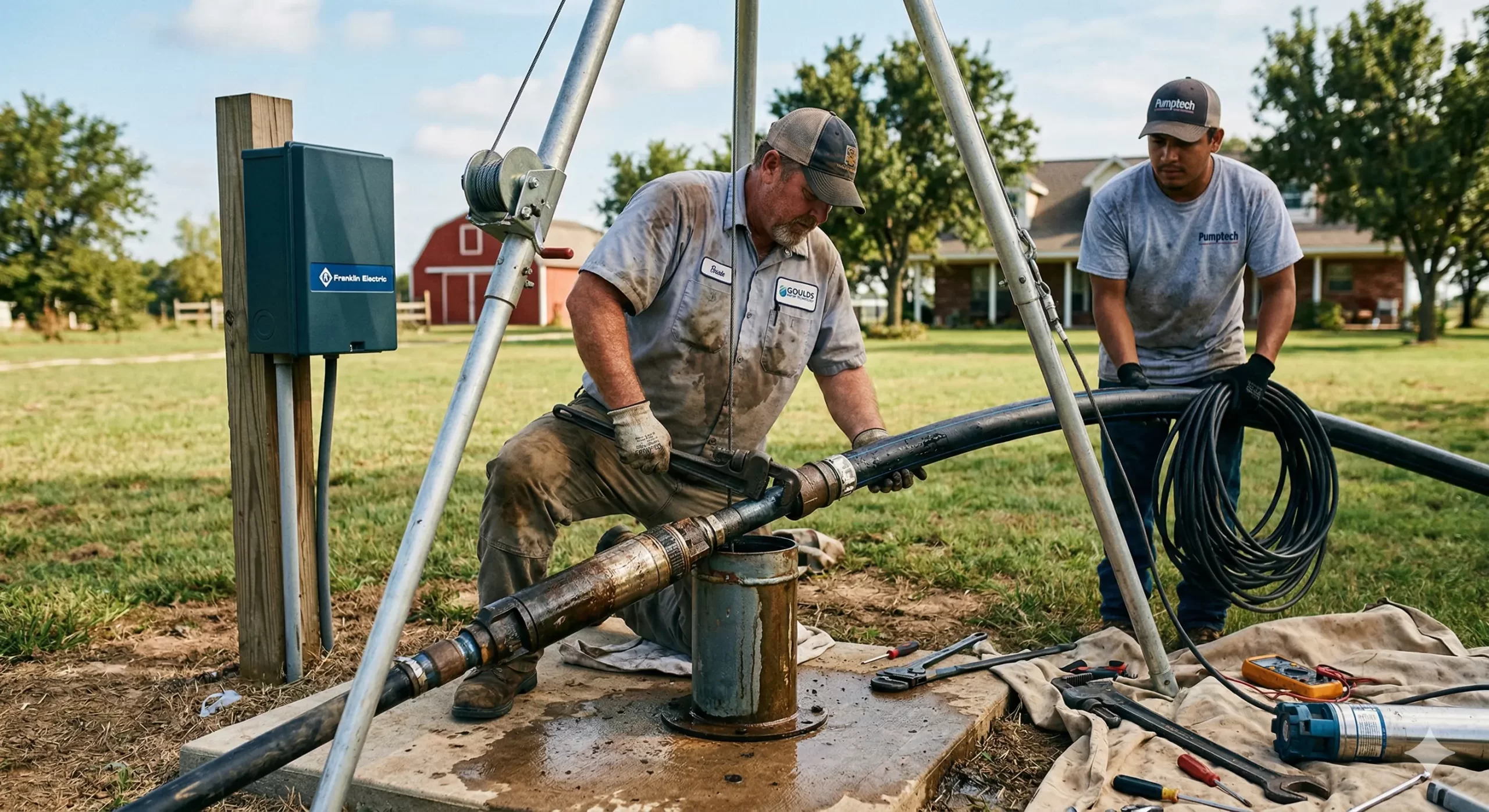
A definitive diagnosis of compressor failure is achieved through a logical, evidence-based troubleshooting sequence. Emotional reactions to alarms or odors must be superseded by methodical testing. The following diagnostic tree should be executed in order. Whether it’s a minor repair or a major overhaul, our Panama City, FL plumbing and septic crew has you covered.
- Initial Symptom: Control Panel Alarm (Visual/Audible)
- If the alarm is active, then first differentiate the alarm type. Most panels have separate indicators for ‘High Water Level’ and ‘Aerator Failure’.
- If the ‘Aerator Failure’ alarm is indicated, then this is a direct signal of low pressure or a complete lack of airflow from the compressor. Proceed to Step 2.
- If the ‘High Water Level’ alarm is indicated, then the primary issue is with the effluent pump or its float switches, not the compressor. However, a long-term compressor failure can lead to biomat clogging that eventually causes a high-water condition.
- Physical Inspection & Auditory Analysis
- If the compressor is completely silent, then verify the integrity of the electrical circuit. Use a multimeter to confirm 120V AC is present at the compressor’s power terminals. If voltage is present but the unit is inert, a catastrophic motor or coil failure has occurred. Replacement is the only viable option.
- If the compressor emits a low-frequency hum but produces no airflow, then the mechanism is seized. For linear pumps, this is often a failed diaphragm assembly; for rotary vane pumps, it could be seized vanes or bearings.
- If the compressor produces a loud, atypical grinding or knocking sound, then internal mechanical failure is imminent. This points to worn bearings, broken vanes, or a damaged magnetic shuttle assembly.
- Quantitative Air Pressure Measurement
- This is the most critical diagnostic step. Disconnect the air line from the compressor outlet and attach a low-pressure gauge (0-5 PSI range).
- If the pressure reading is below the manufacturer’s specified minimum operating pressure (typically 1.5 – 2.5 PSI), then the unit is incapable of overcoming the hydrostatic pressure in the aeration chamber. This is the definitive, quantifiable proof of a systemic failure originating from inadequate aeration.
- If the pressure is zero, then a complete failure of the pumping mechanism (e.g., ruptured diaphragms) is confirmed.
- Effluent Quality Analysis
- If odors of hydrogen sulfide (H₂S, rotten egg smell) are present at the treatment tank or spray heads, then the system has transitioned from an aerobic to an anaerobic state due to insufficient dissolved oxygen (DO). This is a direct consequence of compressor failure.
- If a sample of the effluent from the pump tank appears turbid, dark, or contains excessive suspended solids, then the aerobic microbial colony has collapsed. A properly functioning system produces a mostly clear, odorless effluent. Visual inspection of the effluent provides lagging but conclusive evidence of a long-term aeration problem. Use a Sludge Judge tool to check for sludge carryover into the clarifier, a common secondary symptom.
What is the Typical Failure Timeline for an Aerobic Compressor? ⏳
The operational lifespan of an aerobic compressor is finite and its degradation is predictable. The timeline below outlines the typical progression from optimal function to catastrophic failure, particularly in demanding climates like the southern United States.
- Year 1-3 (Optimal Performance): The unit operates within its specified pressure range (e.g., 2.0-2.5 PSI) and flow rate (LPM). Noise levels are minimal. The system effectively reduces Biochemical Oxygen Demand (BOD₅) and Total Suspended Solids (TSS) by over 95%. Effluent is clear and odorless.
- Year 3-5 (Incipient Wear): Internal components, primarily the EPDM rubber diaphragms, begin to lose elasticity due to thermal cycling and oxidation. Output pressure may drop by 10-15%. A marginal increase in operational hum is detectable. This is the ideal window for preventative maintenance (diaphragm replacement kits cost $50-$100).
- Year 5-7 (Significant Degradation): The compressor consistently fails to meet the minimum required back-pressure. Intermittent ‘Aerator Failure’ alarms may trigger. The unit’s housing temperature is noticeably elevated. The aerobic bacterial colony is stressed, leading to occasional malodors and a decline in effluent quality. The risk of cascading failure is high.
- Year 7+ (Catastrophic Failure): The diaphragms rupture, the motor seizes, or the safety switch fractures the magnetic rod. The unit becomes silent or trips its circuit breaker. The system rapidly turns septic, producing strong H₂S odors and dangerously undertreated effluent. This poses a public health risk and can cause irreversible damage to the dispersal field. Immediate replacement is mandatory.
What Does a Compressor Failure Look Like in a Real-World Scenario?
To contextualize the abstract data, consider this representative case study from a service call in Central Texas, a region dominated by aerobic systems due to shallow, impermeable clay soils.
- System Location: Williamson County, Texas.
- On-Site Sewage Facility (OSSF): Standard 500 GPD Aerobic Treatment Unit (ATU) with surface spray dispersal.
- Client Complaint: “My septic alarm has been screaming for a day, and the yard smells like a sewer. We have family coming this weekend.”
- Initial On-Site Findings: The control panel’s red ‘Aerator’ light was illuminated. A strong odor of hydrogen sulfide was present within a 30-foot radius of the ATU spray heads. The 7-year-old linear diaphragm aerator (Model: Hiblow HP-80) was silent.
- Diagnostic Procedure:
- Confirmed 120V AC power at the weather-proof receptacle and at the aerator’s terminals using a multimeter. Electrical supply was not the issue.
- Attached a 0-5 PSI pressure gauge to the aerator outlet; the reading was 0.0 PSI. This confirmed a total lack of air production.
- Opened the ATU access lid. The aeration chamber was quiescent, with no bubbling action, and the water was dark gray and septic.
- Root Cause Analysis: Disassembly of the HP-80 unit on-site revealed a complete rupture of both EPDM diaphragms. The safety screw, designed to break to protect the electromagnetic coils, was also fractured. The failure was attributed to material fatigue exacerbated by years of continuous operation in high ambient summer temperatures (often exceeding 100°F), which accelerates the degradation of rubber components.
- Resolution and Cost: The failed HP-80 was replaced with a new unit of the same model to ensure compatibility with the system’s design specifications. The air diffusers in the tank were checked for blockages. The system was re-energized and pressure-tested. Total time on-site was 1.5 hours.
- Final Invoice Breakdown:
- Hiblow HP-80 Compressor: $425.00
- Labor (1.5 hours @ $120/hr): $180.00
- Service Call Fee: $95.00
- Total Cost: $700.00
How Can Compressor Failure Be Prevented or Postponed? ️
Proactive maintenance is fundamentally more cost-effective than reactive replacement. Adherence to a strict maintenance protocol can extend compressor lifespan by 50-100%. To get a customized pumping schedule, feel free to speak with our local representatives in Callaway, FL.
- Scheduled Air Filter Maintenance: The intake air filter is the first line of defense. A clogged filter restricts airflow, forcing the compressor to work harder and increasing its internal temperature. Inspect quarterly and clean or replace every six months. A filter costs less than $10; a new compressor costs over $400. The economic calculus is simple.
- Preventative Rebuild Kit Installation: For linear diaphragm pumps, the diaphragms are a consumable component. Manufacturers sell rebuild kits containing new diaphragms and valve boxes. Proactively replacing these every 2-3 years, regardless of perceived condition, is the single most effective measure to prevent catastrophic failure.
- Ensure Maximum Ventilation: Heat is the primary enemy of any aerator motor. Ensure the compressor’s housing is clear of any vegetation, mulch, or debris that could impede airflow. In hot climates like Texas or Arizona, consider installing a small, solar-powered ventilation fan on the housing to actively dissipate heat.
- Annual Pressure Testing: Establish an operational baseline by measuring the output air pressure with a gauge when the unit is new or has been recently serviced. Record this value. Test annually. A gradual pressure drop is an early indicator of diaphragm wear or a developing clog at the diffusers.
What Are Clients Saying About Professional Compressor Replacement? ⭐
⭐⭐⭐⭐⭐ – Robert M., Houston, TX
“The alarm on our Clearstream system wouldn’t shut off. The technician arrived, diagnosed the failed compressor in under 10 minutes with a pressure gauge, and had the exact replacement model on his truck. He explained the technical reason for the failure—diaphragm fatigue—and showed me the ruptured parts. The transparency and efficiency were exceptional. The system was back to silent operation in an hour. Worth every penny for the peace of mind.” Navigating local soil conditions can be tricky. Consult our Phenix City, AL septic pumping guide.
⭐⭐⭐⭐⭐ – Susan G., Austin, TX
“After another company quoted me an astronomical price and suggested a whole system ‘upgrade,’ I got a second opinion. The expert here identified that only the aerator had failed, a common issue for its age. He presented three different compressor options (linear vs. rotary vane), explaining the engineering trade-offs of each for my property’s clay soil. The installation was clean, professional, and the final cost was exactly what was quoted. This is how technical service should be.” Need immediate assistance? Find trusted septic tank pumping in Dade City, FL right away.
What Are the Frequently Asked Technical Questions?
Can I install a larger compressor for “better” aeration?
Negative. This is a critical engineering misconception. Oversizing a compressor introduces excessive kinetic energy into the aeration chamber, creating turbulence that disrupts the sedimentation process in the adjacent clarifier chamber. This phenomenon, known as ‘scouring,’ prevents solid biosolids from settling, causing high Total Suspended Solids (TSS) in the effluent. This undertreated effluent will then clog the pores of a drain field or the emitters of a drip irrigation system, leading to a far more expensive system failure. Compressor sizing must be precisely matched to the Aerobic Treatment Unit’s (ATU) rated Gallons Per Day (GPD) and the manufacturer’s specified air flow requirements.
Is a linear diaphragm or rotary vane compressor superior?
Neither is inherently superior; their application is determined by system design parameters. Linear diaphragm pumps (e.g., Hiblow, Secoh) operate using electromagnetic oscillation, making them highly energy-efficient, quiet, and oil-free. However, they are sensitive to high back-pressure. Rotary vane pumps (e.g., Gast) use a motor-driven rotor with sliding vanes. They are more robust, can generate higher pressures to overcome deeper tanks or slightly clogged diffusers, but are louder, consume more energy, and require periodic vane replacement. For standard residential systems with shallow tanks and clean diffusers, a linear pump is often optimal. For systems in heavy clay soil where diffusers may become partially obstructed, a rotary vane pump provides a greater margin of operational safety.
What does the “PSI” rating on a compressor mean?
PSI, or Pounds per Square Inch, quantifies the air pressure generated by the compressor. This pressure must be sufficient to overcome the hydrostatic pressure exerted by the column of water above the air diffusers at the bottom of the aeration tank. Hydrostatic pressure is calculated as 0.433 PSI per foot of water depth. Therefore, for diffusers submerged at a depth of 4 feet, a pressure of at least 1.73 PSI (4 ft * 0.433 PSI/ft) is required just to begin forcing air out. A typical compressor is specified to run at approximately 2.0-2.5 PSI to ensure vigorous and consistent aeration against this pressure.
How does ambient temperature affect compressor lifespan?
Ambient temperature has a direct and significant impact on the operational lifespan of a compressor, governed by the principles of thermodynamics. Compressors generate heat internally from their electromagnetic coils and mechanical friction. This heat must be dissipated into the surrounding environment. In high-temperature climates (e.g., >95°F), the temperature differential between the unit and the air is reduced, impairing cooling efficiency. This elevated operating temperature accelerates the degradation of organic materials like EPDM rubber diaphragms and wire insulation, leading to premature failure. For every 10°C (18°F) increase in operating temperature, the expected lifespan of electrical insulation is effectively halved (Arrhenius’s Law). Therefore, ensuring adequate ventilation is not merely a recommendation; it is an engineering necessity.
Technically Reviewed By:
BlixBase Master Plumber Team
20+ Years Septic Industry Experience | Certified System Inspectors