
What Can I Do to Keep My Septic System Happy and Legal?
Alright folks, let’s have a little heart-to-heart. ️ Your septic system is like the silent, unsung hero of your home. It works hard, day in and day out, dealing with… well, you know what it deals with. And all it asks for in return is a little respect. The number one rule of Septic Club? We only flush the Three P’s: Pee, Poo, and (toilet) Paper. That’s it. That’s the secret handshake.
Those so-called “flushable” wipes? They are the number one enemy of your septic tank. They are imposters! Frauds! They don’t break down like toilet paper. Instead, they swirl around in your tank, weaving themselves together into a monstrous, clog-forming quilt of doom. Think of it like trying to digest a cotton t-shirt. Your gut can’t do it, and your septic tank can’t either.
So, what’s the proactive, smart-homeowner thing to do? It’s simple:
- ️ Trash the Wipes: Put a small trash can with a lid right next to every toilet. Make it a house rule. Wipes, dental floss, feminine hygiene products, cotton swabs – they all go in the bin. No exceptions!
- Be Mindful of Water Usage: Your septic system can only handle so much water at once. Spacing out laundry loads, installing water-efficient fixtures, and fixing leaks can make a huge difference.
- pumping schedule: Depending on your tank size and household size, you should have your tank pumped by a professional every 3-5 years. This is non-negotiable. It’s like an oil change for your house’s digestive system. Mark it on your calendar!
- No Grease or Harsh Chemicals: Pouring grease down the drain is like giving your septic system a heart attack. It solidifies and causes major blockages. Harsh chemical cleaners can also kill the beneficial bacteria that your system needs to break down waste.
Following these rules isn’t just about avoiding a costly repair. It’s about being compliant. The County Health Department doesn’t play games when a failing septic system is leaching untreated wastewater into the ground. Keeping your system healthy keeps you on the right side of the law. ✅

Ever Seen a Septic System Clog from ‘Flushable’ Wipes?
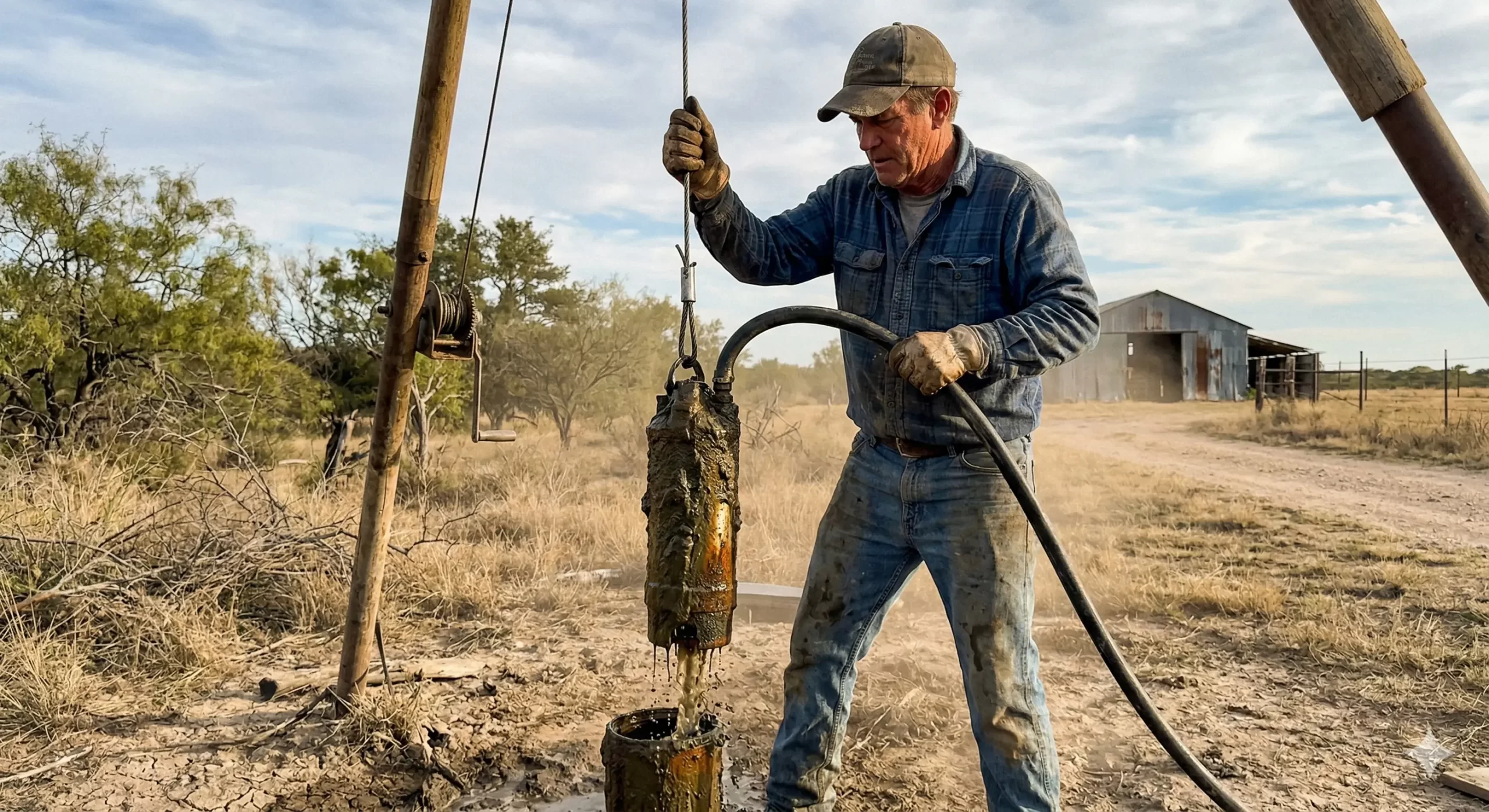
Let me tell you a story. It’s a tragedy in three acts. We got a call from a lovely family out in Forsyth County, Georgia. They had two young kids, a beautiful home, and a big problem. It started subtly: a gurgling toilet, a slow-draining shower. They figured it was just a simple clog and tried some drain cleaner (mistake #1).
A week later, the smell hit. That unmistakable, pungent odor of septic failure started wafting up in the backyard, right where the kids played. The grass over their drainfield was suspiciously green and swampy. That’s when they called us in a panic. For homeowners nearby, we highly recommend calling our Oakdale, LA wastewater professionals.
When we opened the lid to their septic tank, it was a sight I’ll never forget. It wasn’t just wastewater. It was a solid, churning mass of grayish-white gunk. We couldn’t even get the pump hose in. We had to manually break apart what we plumbers call a “wipe-berg” – a tangled, concrete-like monster woven from thousands upon thousands of “flushable” baby wipes. They had created an impenetrable dam inside their own tank. If you smell sewage or hear gurgling, contact our Mercedes, TX septic repair specialists immediately.
The blockage was so severe that effluent (the liquid waste) was being forced backwards into the house and out onto the surface of their yard. The family was heartbroken. They swore they only used the wipes that were marketed as “septic-safe.” I had to explain to them that “flushable” is a marketing term, not a scientific one. It just means it’ll clear your toilet bowl, not that it will safely break down in your septic tank.
The final act of this tragedy? While we were working, a truck from the County Health Department pulled up. A neighbor had reported the smell. The inspector was polite but firm. He handed the homeowner a “Notice of Violation,” citing local health codes. They were facing not only the massive cost of an emergency pump-out and jetting the lines to the drainfield, but also potential daily fines until the system was certified as repaired and no longer a public health risk. All because of a seemingly harmless wipe.
Is My Septic System Already Crying for Help?
Your septic system usually gives you warnings before it has a complete meltdown. It speaks a language of its own, and you need to listen! If you’re flushing wipes, you’re on borrowed time. Here are the tell-tale signs that your system is gagging on wipes and other non-degradables:
- Slow Drains: Is your shower drain making you stand in a puddle? Does your kitchen sink take forever to empty? If all the drains in your house are slow, the problem isn’t a local clog; it’s likely a system-wide backup originating from your septic tank.
- Gurgling Sounds: Your plumbing shouldn’t sound like a monster from a horror movie. Gurgling toilets, bubbling drains, and strange plumbing noises are the sounds of air being trapped and displaced by a blockage. It’s a cry for help! ️
- Foul Odors: If you can smell sewage in your backyard, or even worse, coming back up through your drains, you have a serious problem. This means sewer gases aren’t venting properly or raw sewage is surfacing.
- A Suspiciously Green Lawn: Is there one patch of grass over your drainfield that’s incredibly lush and green, even during a dry spell? You’re not a gardening genius; you’re watering your lawn with untreated wastewater. This is a classic sign of a failed or failing drainfield.
- Sewage Backup: This is the final, catastrophic stage. If sewage is coming back up into your tubs, showers, or toilets, it’s a code-red emergency. Get a professional out immediately.
Progression of Failure: The Wipe-Induced Timeline
This isn’t an overnight disaster. It’s a slow, creeping failure. Here’s what it looks like over time if you regularly flush wipes:
- Year 1-2 (The Honeymoon is Over): Wipes are accumulating at the bottom of the tank and in the sludge layer. They aren’t breaking down. Out of sight, out of mind… for now. The system seems to be working fine.
- Year 2-3 (The First Grumbles): The “wipe-berg” is forming. It’s trapping solids that should be breaking down. The outlet baffle, which is supposed to let only liquid pass to the drainfield, starts getting partially blocked. You might notice the occasional slow drain that resolves itself.
- Year 4-5 (The Cries for Help): The blockage is significant. Drains are consistently slow. You hear gurgling often. The tank is now so full of non-degradable wipes that it needs pumping far more frequently than normal. Some fibers may have already escaped and started clogging the drainfield.
- Year 5+ (Total System Failure): Catastrophe! The outlet is completely blocked. Sewage backs up into the house or bubbles up in the yard. The drainfield is clogged with fibers and biomat, requiring a full, multi-thousand-dollar replacement. You have a public health hazard and the county inspector is on his way.
What’s the Real Cost of Flushing That ‘Convenient’ Wipe?

People love the convenience of flushable wipes, but nobody thinks about the long-term cost. Let’s break it down in a way your wallet will understand. This isn’t just about plumbing; it’s about financial planning! For fast response times, get in touch with our septic professionals servicing Richardson, TX.
| Expense Item | Typical Cost | Notes |
|---|---|---|
| A few packs of “Flushable” Wipes | $15 – $20 | The bait. Seems cheap, right? |
| Emergency Septic Pump-Out (because of a wipe clog) | $450 – $900+ | Weekend/holiday rates are higher. They’ll charge extra for the difficulty of breaking up the wipe-berg. |
| Hydro-Jetting the Line to Drainfield | $600 – $1,500 | This is to clear the wipe fibers that escaped the tank and are clogging the pipes. |
| County Health Dept. Fines | $100 – $500 per day | For a surfacing septic failure. They don’t mess around with public health threats. |
| Complete Drainfield Replacement | $7,000 – $25,000+ | The big one. This involves excavation, new pipes, gravel, soil, and permits. The ultimate price for flushing wipes. |
So, you tell me. Is the convenience of that $15 pack of wipes worth a potential $25,000 bill and a legal notice from the government? I think we both know the answer to that. The math is simple and brutal. Just. Don’t. Flush. Them. Period.
Got Questions? Your Friendly Neighborhood Septic Pro has Answers!
Are ANY “flushable” wipes really safe for my septic system?
No. Absolutely, unequivocally, 100% no. ❌ Let me be crystal clear: There is no such thing as a septic-safe wipe. The organizations that test these products have standards that are, in my professional opinion, not strict enough for the real world of a septic tank. The wipes are often made of synthetic fibers like plastic or rayon that simply do not break down. They might be labeled “biodegradable,” but that can mean it biodegrades over 50 years, not in the 24-48 hours it spends in your tank. Don’t fall for the marketing.
What’s the difference between septic-safe toilet paper and a “flushable” wipe?
Great question! It all comes down to disintegration. Toilet paper is specifically designed to dissolve into tiny fibers almost immediately upon contact with water. You can test this yourself: put a square of TP in a jar of water and shake it. It’ll turn to mush. Now try that with a “flushable” wipe. Shake it all day long. You’ll still have a completely intact, and very clean, wipe. That strength is great for cleaning, but it’s precisely what makes it a septic system’s worst nightmare.
Can I really be fined by the county for a failed septic system caused by wipes?
Yes, you absolutely can, and it happens all the time. A failing septic system that leaks untreated effluent onto your property or into the groundwater is a serious public health hazard. It can contaminate wells and spread disease. Your local health department operates under state and EPA guidelines (like the Clean Water Act) to prevent this. They don’t care *what* caused the failure; they only care that it’s fixed. When they issue a Notice of Violation, a clock starts ticking, and if the issue isn’t resolved, fines can start piling up daily. They have the legal authority to enforce these codes to protect the community and the environment.
Why Does the EPA and My Local Health Inspector Care What I Flush?
Now I’m putting on my official inspector hat. This isn’t about me trying to sell you a service. This is about public health and federal law. Your septic system isn’t just a personal concrete box in your yard; it’s the first line of defense for protecting our groundwater, streams, and lakes. Don’t ignore the warning signs. Reach out to our septic maintenance crew in Stafford, TX today.
The U.S. Environmental Protection Agency (EPA) has extensive guidelines under the Clean Water Act because nearly one in four U.S. households rely on septic systems. When one fails, it’s not just your problem. It’s a community problem. A single failing system can release pathogens like E. coli, nitrates, and other pollutants into the groundwater that your neighbors might be drinking from their well.
This is where your local county health department comes in. They are the boots on the ground, enforcing these state and federal mandates. Their job is to ensure every on-site sewage management system is functioning correctly. When you flush a wipe, you are actively damaging this crucial piece of infrastructure. In the eyes of a regulator, knowingly flushing items that damage your system is equivalent to negligent pollution.
When an inspector is called out, they will perform a series of checks:
- Visual Inspection: They look for the obvious signs—soggy ground, surfacing effluent, foul odors.
- Dye Testing: They may flush a harmless, brightly colored dye down your toilet. If that dye shows up on the surface of your lawn or in a nearby ditch, you’ve got a confirmed failure.
- Record Review: They’ll check your property’s records. When was the system installed? When was it last pumped or serviced? A lack of maintenance is a huge red flag.
If your system fails inspection, you will be issued a legally binding order to repair it. You’ll be given a specific timeframe to get a licensed contractor (like me!) to diagnose and fix the issue. Ignoring this order is a very bad idea. It can lead to escalating fines, liens on your property, and in extreme cases, legal action. The regulations are strict for a reason: to keep everyone safe and our water clean. Don’t make yourself a test case.
Hear From Our Happy (and Clog-Free) Customers!
Brenda T. ⭐⭐⭐⭐⭐
“We had a nightmare backup on a holiday weekend. I was convinced we were doomed. The team came out, diagnosed the ‘flushable’ wipe monster in our tank, and worked tirelessly to clear it. They were professional, educational, and didn’t leave until everything was flowing perfectly. They saved us from a huge disaster and taught us a valuable lesson!”
Mark S. ⭐⭐⭐⭐⭐
“After getting a scary notice from the county, I called these guys in a panic. They were calming, incredibly knowledgeable about the local codes, and walked me through the entire repair process. They fixed the damage caused by years of flushing the wrong things and even helped me file the compliance paperwork with the health inspector. True lifesavers! ️ ” Need immediate assistance? Find trusted septic tank pumping in Del Rio, TX right away.
Technically Reviewed By:
BlixBase Master Plumber Team
20+ Years Septic Industry Experience | Certified System Inspectors