
Howdy, folks! Your friendly neighborhood septic expert here. So, you’ve found the perfect home in the beautiful Hoosier state. It’s got the big yard, the great schools, maybe it’s out near Brown County for those gorgeous fall colors. But before you sign on that dotted line, we need to have a little chat about what’s buried in that yard. I’m talking about the septic system – the unsung, underground hero of your home’s plumbing. In Indiana, buying a home with a private septic system without a proper inspection is like buying a used car without ever looking under the hood. You might be inheriting a money pit that’ll make you cry into your pork tenderloin sandwich.
Unlike a city sewer connection, you are the sole owner and operator of this mini wastewater treatment plant. That means you’re also the one footing the bill when it goes kaput. And trust me, it’s a bill you don’t want. Let’s walk through what you absolutely need to know to protect your investment and your sanity. We understand the specific environmental rules for your region. Learn more from our experts in Live Oak, FL.

What’s This Going to Cost Me?

Alright, let’s talk turkey. Nobody likes surprise costs, especially when you’re already hemorrhaging money buying a house. A septic inspection isn’t free, but it’s one of the best insurance policies you can buy. The cost in Indiana can vary based on how deep we have to dig (both literally and figuratively), but here’s a general breakdown of what to expect.
Think of it like a medical check-up for your system. You can get a basic screening, or you can get the full workup with all the tests. Here’s how it usually stacks up:
| Inspection Level | What’s Included | Typical Indiana Cost |
|---|---|---|
| Level 1: Visual Inspection (Basic) | A basic walk-over of the drainfield, flushing toilets, running faucets. Often done as part of a general home inspection. Not a true septic inspection. | $150 – $250 |
| Level 2: Full Diagnostic Inspection | Locating and opening the tank, checking sludge/scum levels, checking baffles, running a hydraulic load test, inspecting the drainfield for signs of failure. This is the minimum you should get. | $400 – $700 |
| Level 3: Advanced Inspection | Includes everything in Level 2, plus a sewer camera inspection of the main line and potentially a dye test to trace effluent flow. Recommended for older systems or if problems are suspected. | $700 – $1,200+ |
What If I Notice Problems During the Showing?
You’ve got your home-buying glasses on, but it’s time to put on your detective hat, too. Even before you hire a professional, you can spot potential red flags. This is your troubleshooting guide. Think of it as a ‘Choose Your Own Adventure’ for potential septic disasters.
Symptom: There’s a Funky Smell Outside…
IF you’re walking the property (especially near the backyard) and you smell something like rotten eggs or raw sewage, THEN your alarm bells should be screaming. This isn’t just ‘country air’. To get a customized pumping schedule, feel free to speak with our local representatives in Beeville, TX.
- Possible Cause 1: A Failing Drainfield. This is the big one. The soil in the absorption field (the drainfield) might be saturated with effluent that isn’t draining away. In Indiana, we have a lot of heavy clay soil, which doesn’t percolate well. Over time, it can get clogged with biomat, creating a stinky, mushy swamp.
- Possible Cause 2: A Cracked Tank or Lid. The septic tank itself might have a crack, or the riser lid might not be sealed properly, letting those sewer gases escape. This is less catastrophic than a failed drainfield but still needs immediate attention.
- Possible Cause 3: The Plumbing Vent is Blocked. Sometimes, the vent pipe on the roof can get clogged with leaves or a bird’s nest. This can cause sewer gas to build up and escape at the lowest point—often the septic tank area.
Symptom: The Ground Feels Squishy or Looks Greener Than Everywhere Else…
IF you see an area of the yard that is suspiciously lush, green, and maybe a bit spongy underfoot, THEN you’re likely looking at the final resting place of a failed drainfield. That ‘extra fertilizer’ is untreated wastewater pooling just below the surface.
- Diagnostic Step: The inspector will perform a hydraulic load test. This involves introducing a large volume of water into the system (often by running an outdoor hose into a drain) to see if it can handle a typical day’s usage. If that lush patch starts weeping water, you’ve found your problem.
- Root Cause Analysis: This is almost always a sign the drainfield has reached the end of its life. A complete drainfield replacement in Indiana can cost anywhere from $8,000 to $25,000+, depending on the soil and system type. This is a negotiation-killer or a massive price reduction point.
Symptom: The Drains Are Slow or Gurgling All Over the House…
IF the seller mentions that the ‘drains are a little slow sometimes’ or you hear a deep ‘glug-glug’ sound from the toilet after flushing, THEN the system is telling you it’s struggling to breathe.
- Diagnostic Tool: The Sludge Judge. When the inspector opens the tank, they’ll use a tool called a ‘Sludge Judge’. It’s basically a clear tube they lower to the bottom of the tank to pull up a core sample. This tells us the levels of the scum layer (top) and the sludge layer (bottom). If the sludge is too high, it means the tank hasn’t been pumped in a long, long time, and solid waste might be getting pushed out into your drainfield, clogging it permanently.
- Diagnostic Tool: The Sewer Camera. A full inspection should include running a camera from the house to the septic tank. We’re looking for cracks, roots, or ‘bellies’ in the pipe where waste can collect. In Indiana, our freeze-thaw cycles can be brutal on pipes, causing them to shift and crack over the years.
- Potential Outcome: It could be as simple as needing a tank pump-out ($300-$500). Or, it could be a sign that the outlet baffle in the tank is broken or the main line is compromised. The camera tells the whole story.
What Happens If I Skip the Inspection? A Cautionary Tale
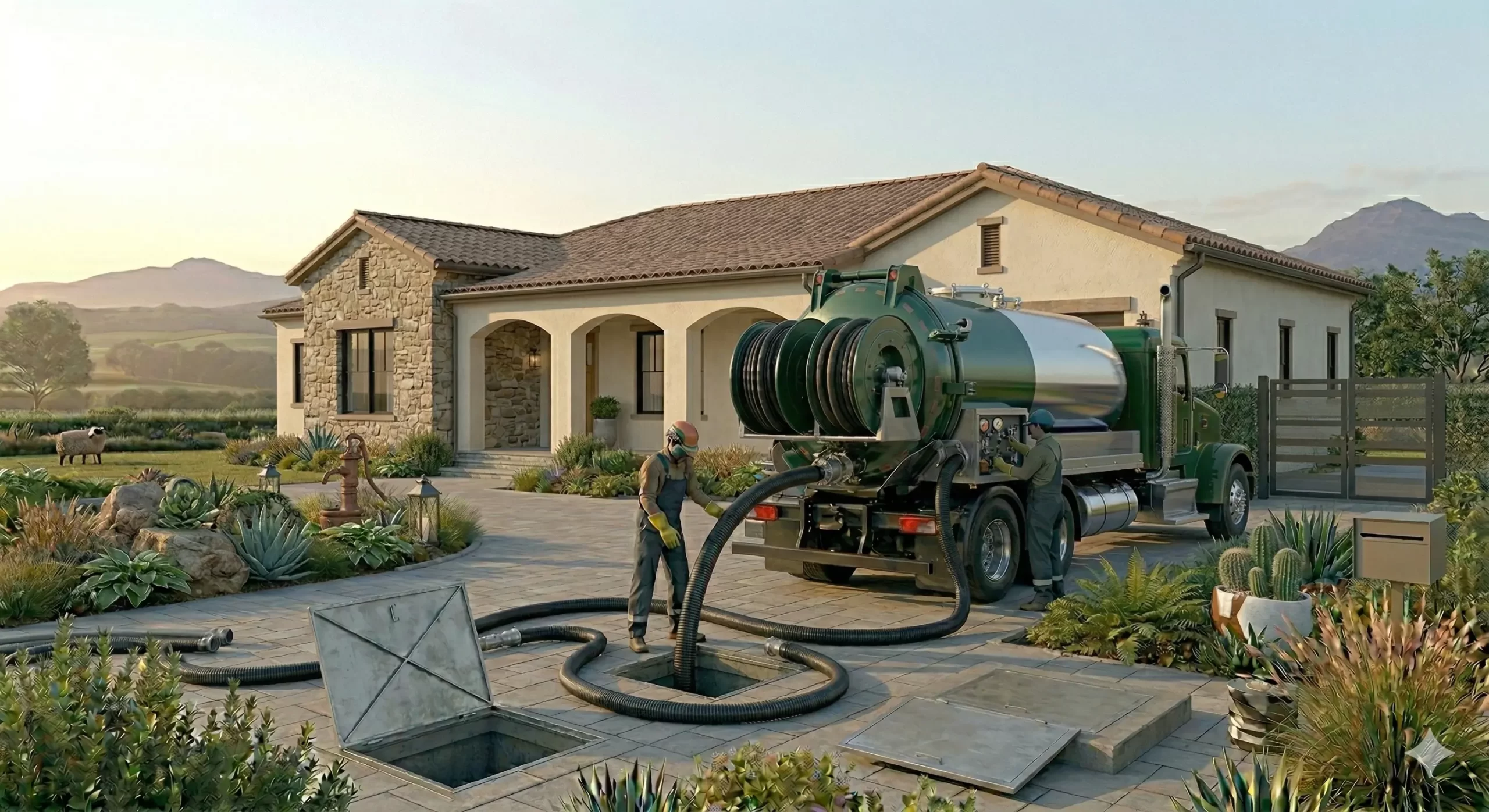
Let me tell you about the Miller family. They were buying a lovely farmhouse foreclosure just outside of Noblesville. It was a great deal, and in the rush to close, they waived the septic inspection to make their offer more attractive. The grass was green, everything seemed to flush fine during their 30-minute walkthrough. What could go wrong?
Fast forward three months. It’s a rainy Indiana spring. The Millers notice the downstairs toilet isn’t flushing right. Then the washing machine backs up into the shower. A plumber comes out, runs a camera, and breaks the news: the main line from the house is crushed. But the horror show was just starting.
When we were called in, we located and dug up the tank. It was an old steel tank that had completely rusted through on the bottom. For years, it had been leaking raw sewage directly into the ground. The ‘drainfield’ was just a soupy, contaminated mess. The previous owners had clearly known and just kept flushing.
The solution? A brand new, county-approved mound system (because the soil was terrible clay), which involved hauling in truckloads of special sand. The final bill, after excavation, permits, and installation, was just over $22,000. That ‘great deal’ on a house turned into a financial nightmare. A $600 inspection would have saved them from all of it.
What Our Customers Are Saying
⭐⭐⭐⭐⭐
“We were first-time home buyers in Johnson County and completely clueless about septic systems. The inspection report was incredibly detailed, with photos and clear explanations. They found a cracked baffle that the seller agreed to fix before closing. Saved us thousands! Can’t recommend them enough.” Navigating local soil conditions can be tricky. Consult our Cape Coral, FL septic pumping guide.
– Sarah P., Greenwood, IN
⭐⭐⭐⭐⭐
“The seller claimed the tank was ‘just pumped last year’. The inspection proved it hadn’t been touched in at least a decade and the drainfield was already showing signs of stress. This knowledge gave us huge leverage in negotiations. The most valuable $550 I spent during the entire home buying process.” Discover why so many neighbors recommend our septic tank services in Burnet, TX.
– Mark T., Zionsville, IN
How Do I Keep My System Healthy After I Buy? ✅
Congratulations, you’ve bought the house, the inspection passed, and now you’re a proud septic system owner! Your job isn’t over. Proper maintenance is the key to making sure that system lasts for 30 or 40 years, instead of failing in 10. It’s like changing the oil in your car—you just have to do it. Keeping your system healthy is easier when you partner with top-rated Rockwall, TX septic technicians.
The Progression of Septic Failure Timeline
Here’s what happens when a system is neglected over time. Don’t let this be you!
- Year 1-3 (The Honeymoon Phase): Everything works great. The tank is breaking down solids, the drainfield is happily absorbing liquids. You’re flushing without a care in the world. Maintenance: Be mindful of what goes down the drain (no grease, ‘flushable’ wipes, or harsh chemicals).
- Year 3-5 (The Warning Signs): The sludge and scum layers in the tank are building up. The system is still functioning, but it’s working harder. It’s time for its first pump-out. Maintenance: Get the tank pumped and inspected by a professional.
- Year 5-8 (The Danger Zone): If you skipped the pumping, the sludge level is now high enough that solids are starting to flow out into the drainfield pipes. This begins to clog the pores in the soil. You might notice occasional slow drains or faint odors after heavy rain.
- Year 8+ (Catastrophic Failure): The drainfield is now choked with solid waste. The soil can no longer absorb liquid. You have constant backups, sewage surfacing in your yard, and a system that has completely failed. The only fix is a full, expensive replacement.
Key Maintenance Tips:
- Get it Pumped: For a typical family of four in Indiana, you should have your tank pumped every 3-5 years. Set a reminder on your phone!
- Watch Your Water Usage: Septic systems are designed to handle a certain amount of water per day. Spacing out laundry loads and fixing leaky faucets makes a huge difference.
- Only Flush the 3 P’s: Pee, Poo, and (toilet) Paper. That’s it. Wipes, feminine products, paper towels, and dental floss belong in the trash.
- Protect Your Drainfield: Never drive or build anything over your drainfield. Don’t plant trees with aggressive root systems nearby. Keep gutters and sump pump discharge away from it to avoid saturating the soil.
Do You Have More Questions? We Have Answers!
Are septic inspections legally required to buy a home in Indiana?
This is a great question. Officially, the state of Indiana does not have a universal, statewide law mandating a septic inspection for property transfer. However, many individual counties (like Marion, Hamilton, and others in Central Indiana) DO have their own ordinances that require an inspection. Furthermore, many mortgage lenders, especially for FHA or VA loans, will absolutely require a septic inspection and certification before they will approve the loan. Regardless of the law, you should always, always get one for your own protection.
Who pays for the septic inspection – the buyer or the seller?
Typically, the buyer pays for the septic inspection as part of their due diligence, just like a general home inspection. However, this is entirely negotiable in the purchase agreement. Sometimes a seller will have a pre-listing inspection done to show transparency. If the inspection uncovers major issues requiring repair, the cost of those repairs often becomes a major point of negotiation between the buyer and seller before closing.
What is a ‘mound system’ and why are they common in Indiana?
You’ll see a lot of mound systems in certain parts of Indiana because of our soil. Much of the state has heavy clay soil that doesn’t drain well, or the water table is too high. A conventional drainfield won’t work in these conditions. A mound system is an engineered drainfield built above the natural ground surface using a specific type of sand. Effluent is pumped from a second chamber in the septic tank up to the mound, where it trickles down through the sand for treatment before reaching the native soil. They are effective but are significantly more expensive to install and require electricity to run the pump.
The seller says the house is on a ‘cesspool.’ Is that the same as a septic tank?
No, and this is a major red flag! A cesspool is essentially just a covered pit lined with porous brick or concrete that allows wastewater to leach directly into the surrounding soil. They do not treat waste the way a modern septic system does and are considered environmentally hazardous. Most counties in Indiana banned new cesspool installations decades ago. If a property still has one, it is almost certainly failing and will need to be decommissioned and replaced with a modern, code-compliant septic system, which is a very expensive undertaking.
Technically Reviewed By:
BlixBase Master Plumber Team
20+ Years Septic Industry Experience | Certified System Inspectors