

Real-Life Case Study: The Miller’s Nightmare in Athens, Georgia
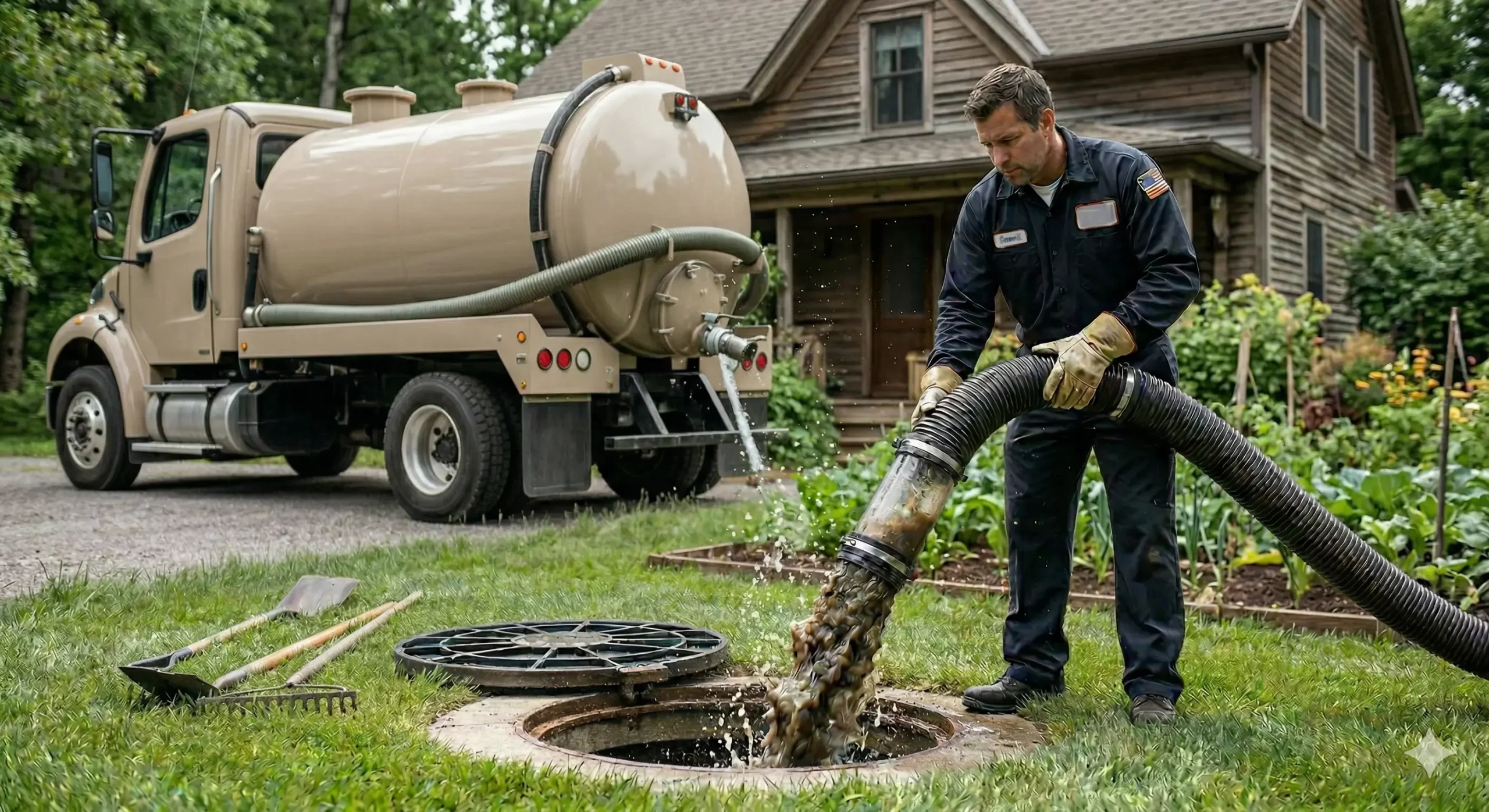
The phone rang. It was panic. “There’s… a smell. And the toilet is gurgling like a monster.” This was the Miller family. Their beautiful home, set in the rolling hills outside Athens, GA, had a septic secret. A dark one. They described slow drains for weeks, blaming the kids’ long showers. Now, the problem was undeniable. It was a system-wide failure in progress.
We arrived fast. The warning signs were there: a patch of suspiciously green grass over the drainfield, despite the dry Georgia summer. An immediate sign of untreated effluent surfacing. The first step was not to blindly start digging. The first step was to see. We deployed a high-resolution, self-leveling sewer camera down the main line cleanout.
The monitor flickered to life. For the first 20 feet, the PVC pipe looked good. Then, we saw it. A dark, tangled mass. Fine, hair-like intrusions that grew into thick, pipe-crushing pythons. A massive root ball from a nearby oak tree had breached the line. But that wasn’t all. Past the roots, the camera showed a ‘belly’—a sag in the pipe where solid waste and grease had collected, creating a dam. This partial blockage was starving the drainfield of liquid while simultaneously allowing sludge to creep past the tank’s outlet baffle.
This is where the local Georgia soil comes into play. The dense red clay has extremely slow percolation rates. It cannot absorb water quickly. The Miller’s system, already under pressure from the slow-draining soil, was being choked by the pipe blockage. Effluent was backing up, unable to reach the entire drainfield. The biomat—a black, slimy layer of anaerobic bacteria that naturally forms at the soil interface—was getting overloaded with solids and growing thick, effectively waterproofing the soil. The system was suffocating itself. Facing a drain field failure? Our team in New Smyrna Beach, FL is ready to diagnose the problem.
The solution was clear *because* we could see it. We used a high-pressure hydro-jetter to obliterate the root ball and scour the grease from the pipe belly. A follow-up camera inspection showed a perfectly clear pipe. We then treated the drainfield to help break down the concentrated biomat. The Millers avoided a full drainfield replacement, a repair that could have cost them over $20,000. Instead, they got a precise, effective repair. The gurgling stopped. The smell vanished. Their relief was palpable.
Progression of a Pipe Failure: A Danger Level Timeline
Septic failure isn’t an event; it’s a process. It starts silently and ends with a mess in your home. Here is how it typically unfolds.
- Year 1-3 (The Silent Stage): Your system is new or recently serviced. Flow is perfect. Inside the pipe, a tiny bit of grease or soap scum might coat the bottom, but it’s not an issue. Any root hairs near the pipe are microscopic. You have no symptoms.
- Year 4-7 (The Warning Stage): A slight sag in the pipe begins to trap debris. Roots have found a joint and are now inside the pipe, small but growing. You might notice a drain runs slow for a second, then clears itself. You dismiss it. The biological oxygen demand (BOD) of the effluent reaching the drainfield is slightly elevated, encouraging faster biomat growth.
- Year 8-10 (The Symptomatic Stage): The root mass or grease clog is now blocking 50-70% of the pipe. You hear gurgling from toilets and drains often. Bad odors appear after laundry or multiple showers. This is the critical window to act. Your drainfield is now receiving uneven, sludge-heavy effluent, which is rapidly destroying its ability to percolate water.
- Year 10+ (Catastrophic Failure): The pipe is 90-100% blocked. Sewage has nowhere to go but back into your house through the lowest drain (showers, floor drains). Outside, raw sewage may be pooling on the ground surface. This is a biohazard. Your system has failed. You’re now looking at emergency repairs, extensive cleanup, and potentially a full system replacement.
The Investment: Cost Breakdown for Septic Camera Inspection
Stop thinking of this as a cost. Think of it as an investment against a $20,000 disaster. The price for a video inspection is tiny compared to a drainfield replacement. Here’s what to expect.
| Service Component | Typical Cost Range (National Average) | Notes |
|---|---|---|
| Standard Video Inspection | $250 – $550 | Includes up to 1.5 hours of camera time from an accessible cleanout. |
| Pipe Location Services | $100 – $250 (add-on) | If the camera head has a sonde, we can pinpoint the exact location and depth of a problem from the surface. |
| Hydro-Jetting (if needed) | $400 – $900+ | Often performed after an inspection confirms a clog. Price varies by severity. |
| Total Potential Savings | $8,000 – $25,000+ | This is the cost of NOT doing an inspection and letting the drainfield fail completely. |
Factors that influence the price include the length and accessibility of your sewer line. A long, winding pipe or one with no cleanout access will take more time. But every dollar spent on diagnostics saves ten dollars on blind repairs.
The Science of Failure: What’s Happening Under Your Lawn?
Your septic system is a living, breathing ecosystem. A delicate biological and chemical machine. When it fails, it’s because this balance has been shattered. A camera inspection helps us see exactly where the breakdown occurred.
Inside the Tank: Anaerobic Digestion
All waste flows into the septic tank, a dark, oxygen-free environment. Here, a colony of anaerobic bacteria gets to work. They perform anaerobic digestion, breaking down organic solids. This process separates waste into three layers:
- Scum: Fats, oils, and grease float to the top.
- Effluent: The semi-clarified wastewater in the middle.
- Sludge: Heavy organic solids sink to the bottom.
This process is slow and imperfect. It reduces solids, but the effluent that flows out to the drainfield is still rich with suspended solids, chemicals, and pathogens. And it has a high Biological Oxygen Demand (BOD).
The Drainfield: Aerobic Breakdown and Soil Physics
BOD is a measure of how much oxygen is required for aerobic bacteria in the soil to decompose the organic matter in the effluent. Healthy effluent has a lower BOD. Sludge-filled effluent has a dangerously high BOD. When this high-BOD water hits your drainfield, the aerobic bacteria go into overdrive, consuming all available oxygen. This creates an anaerobic environment *in the soil itself*. If you smell sewage or hear gurgling, contact our Port Isabel, TX septic repair specialists immediately.
This is what creates the dreaded biomat. This thick, black, tar-like layer clogs the pores in the soil, a process called bioclogging. It stops water from percolating, or absorbing, into the ground. The physics are simple: the hydraulic conductivity of the soil drops to near zero. The drainfield can no longer accept water. It is biologically clogged. A simple pipe blockage, by allowing solids to escape the tank, can trigger this entire catastrophic chain reaction, dooming your drainfield. Upgrading your system? Let our Donna, TX installation experts walk you through the options.
Customer Raves: Straight from Georgia Homeowners
⭐⭐⭐⭐⭐ – The Roberts Family, Macon, GA
“We were days away from a major holiday with a house full of guests when everything started backing up. Their tech was here in hours. The camera found the problem—a crushed pipe section from a delivery truck—in minutes. They explained the whole process, showed us the screen, and had a plan immediately. Saved our holiday and saved us a fortune.”
⭐⭐⭐⭐⭐ – David Chen, Cumming, GA
“Buying a new house and the home inspector flagged the septic. We hired these guys for a camera inspection. Best money I’ve ever spent. They found a huge root clog that would have been my problem to fix. The seller had to pay for the repair before closing. The tech even took the time to explain the whole biomat and soil percolation thing to me. Felt like I got an education along with peace of mind.”
Keeping your system healthy is easier when you partner with top-rated Sachse, TX septic technicians.
Proactive Maintenance & Protecting Your Investment
Don’t wait for an emergency. A septic system, treated right, can last for decades. Treat it wrong, and it will fail. For a free consultation, simply reach out to our office serving Salado, TX.
- Pump Your Tank: Every 3-5 years, period. This removes the sludge and scum before they can reach the drainfield pipes. This is non-negotiable.
- Respect the Flush: Only human waste and toilet paper. No ‘flushable’ wipes, feminine products, paper towels, or grease. These cause clogs and kill the beneficial bacteria in your tank.
- Conserve Water: A high volume of water pushes effluent through the tank too quickly, before bacteria have time to work. This increases the BOD and stresses the drainfield. Fix leaks and install efficient fixtures.
- Protect the Field: Never drive or build anything over your tank or drainfield. Plant trees far away. Their roots are programmed to seek the nutrient-rich water in your septic lines.
FAQ: Your Urgent Questions Answered ❓
Why not just use a chemical drain cleaner?
This is the worst thing you can do. Harsh chemicals kill the beneficial anaerobic bacteria that your system relies on to break down waste. They do nothing to remove physical blockages like root intrusions or collapsed pipes, and can even damage older pipes. You are poisoning your system for a temporary, ineffective fix.
How long does a septic video inspection take?
For a typical residential property, the inspection itself takes about 1 to 2 hours. This includes setup, running the camera through the pipe, identifying any issues, and discussing the findings with you. The time can vary based on the length of the pipe and the complexity of any problems discovered.
Can the camera see the condition of my drainfield?
No, this is a common misconception. The camera inspects the single, solid pipe that runs from your house to the septic tank, and from the tank to the distribution box. The drainfield itself is a network of perforated pipes buried in gravel and soil. We assess drainfield health by other means, such as soil saturation tests, observing effluent levels in the d-box, and identifying surface pooling.
Is a camera inspection necessary before buying a home with a septic system?
Absolutely. A standard home inspection does not cover the condition of the underground sewer line. A camera inspection is the only way to verify the integrity of this line. Discovering a cracked or root-filled pipe before you buy a home can save you from an immediate, unexpected repair bill that could easily reach into the thousands or tens of thousands of dollars.
Technically Reviewed By:
BlixBase Master Plumber Team
20+ Years Septic Industry Experience | Certified System Inspectors