
Diagnose a yellow or orange gas water heater flame. This high-urgency issue indicates a clogged FVIR screen. Learn the pro-level steps to clean it safely.
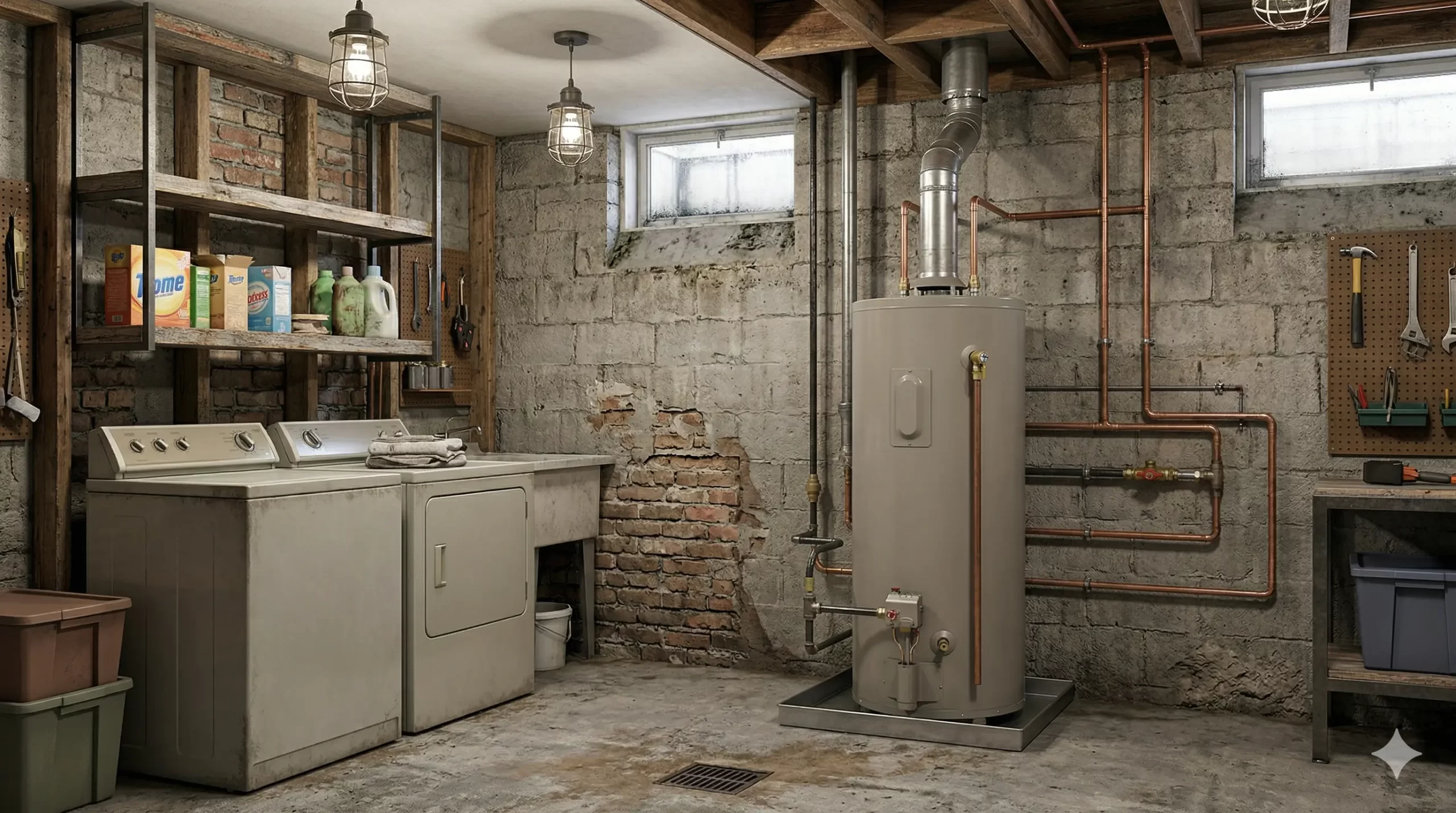
A persistent yellow or orange main burner flame is an unambiguous visual alarm indicating your appliance is failing to combust fuel properly and is actively producing elevated levels of Carbon Monoxide (CO). This is not a mere efficiency problem; it is an immediate life-safety hazard. Before attempting any diagnosis, ensure CO detectors in the home are functional. If you feel dizzy or nauseous, evacuate the area immediately and contact emergency services and your gas utility provider. Do not operate the water heater again until the combustion process is verified to be safe, characterized by a stable, crisp blue flame.
️ Repair Profile
Required Diagnostics Tools
FVIR Screen Cleaning Brush, Shop Vacuum with Crevice Tool, Phillips Head Screwdriver, Flashlight, Safety Glasses, Dust Mask
Financial Breakdown: Parts vs. Licensed Labor
The cost allocation is overwhelmingly weighted towards labor as this is a cleaning and diagnostic procedure, not a parts replacement job. The minimal parts cost reflects consumable materials or a specialized, single-use tool charge that may be included by the service provider.
Deep Technical Diagnosis: The Physics of the Failure
The observation of a yellow or orange main burner flame is a direct indication of incomplete combustion, a hazardous condition resulting from a deviation from the ideal stoichiometric ratio of fuel to air. For natural gas (methane, CH4), complete combustion requires approximately a 10:1 air-to-gas ratio to produce carbon dioxide (CO2) and water (H2O). When the flame is yellow, it signifies a fuel-rich, air-deficient mixture. This oxygen starvation forces the hydrocarbon fuel to break down into elemental carbon (soot), which then incandesces at high temperatures, emitting the characteristic yellow-orange light. The root cause in modern tank-style water heaters is almost invariably an obstruction of the primary air supply path. Since 2003, residential units are equipped with a Flammable Vapor Ignition Resistant (FVIR) system, which includes a flame arrestor screen at the base. This screen, designed to prevent external flame propagation, has a fine mesh that is highly susceptible to clogging.
An obstructed FVIR screen effectively reduces the volumetric flow rate of air into the sealed combustion chamber. As the gas orifice continues to deliver a fixed fuel rate, governed by the manifold pressure (typically 3.5″ W.C. for natural gas, verifiable with a manometer), the air-fuel mixture becomes critically imbalanced. This not only creates hazardous carbon monoxide (CO) but also deposits soot on the burner, thermocouple, and internal flue surfaces, further degrading performance. The thermocouple, which generates a small electrical current (typically 20-30 millivolts) to hold the main gas valve open, can become insulated by this soot, leading to a weaker signal and potential nuisance shutdowns. The fundamental problem is an environmental one that manifests as a critical combustion failure.
- Lint Accumulation: The most common cause, especially if the water heater is located near a clothes dryer. Fine airborne lint is easily drawn into the air intake.
- Dust and Debris: General household dust, sawdust from nearby woodworking, or drywall dust from renovations can create a dense mat on the screen.
- Pet Dander and Hair: Homes with pets experience accelerated clogging due to the constant shedding of hair and dander, which combines with dust to form a formidable barrier.
- Negative Air Pressure: In tightly sealed homes, powerful exhaust fans (e.g., kitchen hoods, bathroom fans) can create negative pressure, hindering the natural draft required for combustion air intake.
US Building Codes & Plumbing Regulations
The presence of a yellow or orange burner flame places a gas water heater in a state of non-compliance with the National Fuel Gas Code, NFPA 54. Specifically, this condition is a direct violation of the code’s foundational requirements for an adequate supply of combustion and ventilation air. The code mandates that appliances must be installed and maintained in a manner that ensures complete combustion. A clogged FVIR screen, by definition, creates an air-starved environment, directly contravening this mandate and resulting in the production of aldehydes and carbon monoxide, which the code is explicitly designed to prevent.
Furthermore, under the Uniform Plumbing Code (UPC), all appliances must be maintained in a safe and functional condition. A water heater exhibiting incomplete combustion due to a fouled flame arrestor is neither safe nor operating as designed. An inspector identifying such a condition would be required to red-tag the appliance, prohibiting its use until the deficiency is corrected and proper combustion is restored. The visual evidence of a yellow flame serves as prima facie evidence that the unit fails to meet the operational safety standards prescribed by both fuel gas and plumbing codes.
Professional Master Plumber Repair Sequence
- Safety First – Full System Shutdown: Locate the thermostat control knob on the front of the water heater and turn it to the ‘OFF’ position. Then, trace the gas line from the control valve back to the manual shutoff valve (typically a lever handle). Turn this handle 90 degrees so it is perpendicular to the pipe, cutting off all gas flow to the appliance.
- Prepare the Work Area: Put on safety glasses and a dust mask. The process will dislodge fine particulate matter that should not be inhaled. Ensure adequate lighting to clearly see the base of the water heater.
- Access the FVIR Screen: Most models have a small access cover or louvered panel at the very bottom of the unit. You may need a Phillips head screwdriver to remove one or two screws holding it in place. Set the cover and screws aside.
- Initial Visual Inspection: Use a flashlight to inspect the screen. You will likely see a visible layer of gray or white material, which is a combination of lint, dust, and hair, obstructing the mesh.
- Vacuum Surface Debris: Using a shop vacuum with a narrow crevice or brush attachment, carefully vacuum all visible debris from the exterior of the flame arrestor screen and the surrounding air intake area.
- Perform Deep Cleaning with FVIR Brush: Insert a specialized, long, flexible FVIR cleaning brush through the air intake openings. Methodically work the brush back and forth and side-to-side across the entire surface of the screen to dislodge impacted debris that the vacuum could not lift.
- Final Vacuum and Verification: After brushing, use the vacuum again to capture all the loosened debris. Shine your flashlight back onto the screen; you should now be able to see the clean, metallic mesh pattern clearly. Also, inspect the internal combustion chamber for any fallen debris.
- Reassemble and Restore Gas Supply: Securely reinstall the access cover. Turn the manual gas shutoff valve handle back to the ‘ON’ position (parallel to the pipe).
- Relight the Pilot and Observe: Follow the manufacturer’s specific instructions printed on the unit to relight the pilot light. Once the pilot is stable, turn the thermostat knob from ‘OFF’ to a desired temperature setting. This will engage the main burner.
- Confirm Flame Color: Observe the main burner flame through the sight glass. It may flicker orange for a few seconds as residual dust burns off. Within 30-60 seconds, it must stabilize into a crisp, predominantly blue flame with slight blue/white tips. If the flame remains yellow, a more severe blockage exists, and you should call a professional.
Expert Verdict: Is It Worth Repairing?
Evaluating the repair-versus-replace decision for a yellow flame caused by a clogged FVIR screen presents an exceptionally high Return on Investment (ROI) for repair. The solution—a thorough cleaning—requires no replacement parts and can often be completed in under an hour. The cost of a professional service call is typically between $100 and $300, a minimal expense compared to the $1,500 to $2,500+ cost of a new water heater installation. Opting to replace the unit for this specific issue would be a significant financial misstep, as you would be discarding an appliance that is likely 99% functional for a problem that is equivalent to cleaning a clogged filter. The repair not only resolves the immediate safety hazard of carbon monoxide production but also restores the unit’s combustion efficiency, leading to modest energy savings and extending the life of an otherwise healthy appliance. Therefore, repair is the only financially logical choice in this scenario.
Frequently Asked Questions (FAQ)
Q: Can I use compressed air to clean the FVIR screen instead of a brush?
A: It is strongly advised not to use compressed air. High-pressure air can forcefully embed fine dust and lint deeper into the mesh of the flame arrestor screen, making the clog worse and potentially damaging the delicate screen material. The proper method is to dislodge debris with a purpose-built brush and remove it with a vacuum.
Q: Why did my water heater flame turn yellow immediately after a nearby renovation?
A: Renovations, especially those involving drywall sanding or wood cutting, release vast amounts of fine particulate dust into the air. The water heater’s combustion air intake acts like a vacuum, drawing in this airborne debris and rapidly clogging the FVIR screen, leading to the yellow flame condition.
Q: Is a yellow flame less efficient and costing me more money?
A: Yes, absolutely. A yellow flame signifies incomplete, inefficient combustion. You are not extracting the maximum possible heat energy (BTUs) from the natural gas being consumed. The unit must run longer to heat the same amount of water, directly increasing your gas bill until the air supply issue is corrected.
Q: If the flame turns blue after cleaning, is the carbon monoxide danger gone?
A: Yes, a stable, crisp blue flame is the primary visual indicator of complete and proper combustion. This means the fuel-to-air ratio is correct, and the production of carbon monoxide has been reduced to safe, negligible levels as specified by the manufacturer’s design. It confirms the immediate hazard has been resolved.