

Top Septic Pumping in
Navarre
Navarre Pumping Costs & Data
Here are the critical statistics defining the current state of wastewater infrastructure in the area:
- Military Turnover & Inspections: Because of the proximity to Hurlburt Field, Navarre sees a massive volume of property turnover. Nearly 60% of these off-sewer transactions require strict, specialized VA loan septic inspections, catching many neglected systems.
- Elevated System Expansion: Because the high water table prevents traditional gravity drain fields from functioning safely near the sound, an estimated 80% of new or replacement septic installations are required to be complex ATUs or elevated mound systems.
- Weather-Related Failure Spikes: During Panhandle summer storms or passing tropical systems, local data indicates a 45% spike in emergency service calls. These are predominantly caused by sudden spikes in the water table hydraulically locking older gravity systems.
- The Maintenance Deficit: Despite the extreme environmental risks to the Sound, nearly 30% of homeowners fail to schedule their necessary 3-year trash tank pump-outs, leading directly to catastrophic drain field failure.
The mathematics of septic maintenance in coastal basin geography are unforgiving. Routine, scheduled vacuum pumping is the only scientifically valid method to protect your property and the watershed from a biohazard disaster.
The final invoice for your specific pump-out will be dictated by these localized variables:
- Wet Sand Excavation & Dewatering: Finding the tank and manually digging through heavy, wet sand to expose the access lids adds significant labor time. The sand often caves back into the hole near the water. We highly recommend paying for PVC surface risers to eliminate this expensive future cost.
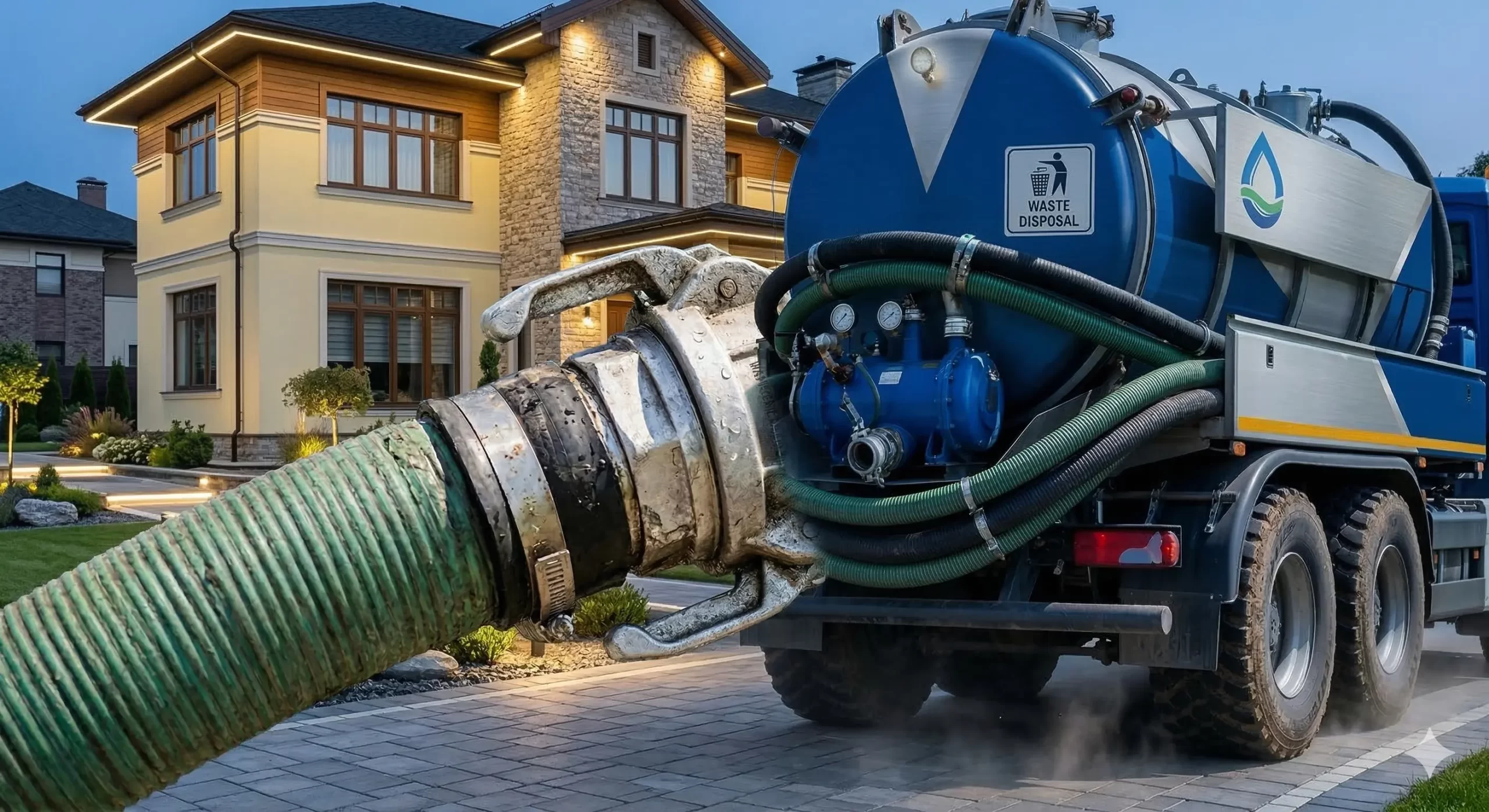
- Extended Hose Deployments: Pumping tanks located behind sprawling waterfront homes, across delicate lawns, or near seawalls requires staging the heavy vacuum truck on a paved road to prevent property damage. Technicians frequently deploy 100 to 200 feet of heavy industrial hose.
- System Complexity (Mounds/ATUs): To overcome the high water table near the sound, many renovated or rebuilt homes rely on elevated mound systems or advanced Aerobic Treatment Units. Servicing these requires pumping the primary tank, cleaning the dosing pump chamber, and verifying float switches.
- Corrosion Repair: Replacing rusted baffles, crumbling concrete lids, or shorted ATU compressors damaged by the Gulf salt air is a frequent add-on cost in coastal communities.
Furthermore, Santa Rosa County’s specific soil profiles dictate maintenance frequency:
| Navarre Terrain / Soil | Drainage Capacity | Impact on Septic Systems | Maintenance Need |
|---|---|---|---|
| Coastal Sand / Sound Edges | Poor (Seasonal/Tidal) | Groundwater rises during summer storms or storm surges, causing immediate hydraulic lock and home backups. | High (Strict 2-3 year pumping) |
| Inland Sandy Loam | Rapid | Drains fast, but vulnerable to catastrophic root intrusion from mature coastal pines and oaks. | High (Frequent visual checks) |
Cost Estimation by System Profile in Navarre:
| Service Description | Estimated Range | Primary Labor Factors |
|---|---|---|
| Legacy Conventional Pump-Out | $330 – $550+ | Manual excavation in wet caving sand, root extraction, thick crust density. |
| Elevated Mound / ATU Pump-Out | $360 – $650 | Multi-tank evacuation, filter sanitation, corrosion checks, and dosing pump diagnostics. |
| Extended Hose / Waterfront Access | +$75 – $250 | Deploying 150+ feet of heavy vacuum hose to protect fragile lawns and traverse deep coastal lots. |
Our platform guarantees that you connect with transparent, Florida-licensed professionals who understand the rugged, storm-tested demands of Santa Rosa County properties.
71°F in Navarre
🌱 Local Environmental Status
When an On-Site Sewage Facility (OSSF) is neglected in the Navarre area, the localized consequences are distinct and hazardous:
- Santa Rosa Sound Contamination: Properties located near the water are under intense environmental scrutiny. A saturated, overflowing septic tank releases raw human pathogens and high nitrogen/phosphorus loads directly through the porous sand into the waterways, contributing to toxic algae blooms and threatening local marine life and the Gulf Islands National Seashore ecosystem.
- Storm Surge & Hydraulic Lock: During intense Panhandle thunderstorms or tropical systems, the sandy soil saturates rapidly. If a septic tank is full of solid sludge, the high groundwater leaves the effluent nowhere to drain, causing raw sewage to instantly back up into the home. Low-lying drain fields are extremely vulnerable to storm surge inundation.
- Extreme Salt-Air Corrosion: The highly corrosive coastal environment aggressively accelerates the degradation of concrete tank lids, metal baffles, and aerobic compressor parts, leading to premature structural failures and subterranean leaks.
- Root Intrusion & Storm Shifting: Mature coastal pines and oaks, combined with the ground-shifting effects of major storms, can easily crush aging PVC lateral lines and breach the seams of decades-old concrete tanks.
To protect the Santa Rosa County coastal ecosystem, property owners must enforce uncompromising maintenance protocols:
- Strict Pumping Intervals: Schedule a professional vacuum pump-out every 2 to 3 years. Aging systems in coastal or high-water-table areas cannot forgive any solid sludge escaping into the lateral lines.
- Storm Preparation: Pumping your tank *before* hurricane season is critical to provide emergency holding capacity when the power goes out and the ground saturates.
- Protect the Biomat: Never allow heavy vehicles, boats, or construction equipment to cross the hidden drain field. The weight will instantly crush the PVC pipes in the soft, wet sand.
Consistent, weather-aware pumping is the absolute baseline of stewardship for homeowners in Navarre.
⚙️ Local Service Details
When a certified vac-truck arrives at your Santa Rosa County home, you can expect a rigorous, exhaustive service protocol:
- Electronic Tank Locating & Sand Navigation: Utilizing flushable sondes and ground-penetrating technology to locate buried tanks. Technicians then carefully hand-dig through wet, caving sand and dense tree roots to expose the lids safely without damaging your property.
- Low-Impact Equipment Staging: Strategically parking heavy 30,000-gallon vacuum trucks on solid ground (paved streets or stable driveways) and deploying up to 200 feet of industrial hose to protect soft yards and delicate coastal landscaping from sinking tires.
- Complete Sludge Evacuation & Root Removal: Engaging high-CFM vacuum power to entirely empty the tank. For severely neglected systems, technicians utilize hydro-jetting to physically extract invasive root masses from the inlet baffles.
- Filter & Lift Station Maintenance: Removing and power-washing the effluent filter, and checking dosing pump components (for mound systems) to ensure maximum operational efficiency and legal compliance.
- Structural Diagnostics: Performing a critical visual inspection of the emptied tank to detect structural fractures caused by shifting soil, storm surges, or root intrusion from mature trees.
This comprehensive, specialized approach guarantees that your Panhandle property is protected against catastrophic backups and costly premature drain field failures.
📍 Coverage & ZIP Codes
🏡 Real Estate Transactions
Navigating a property transfer involving a septic system in Navarre requires meticulous attention to documentation:
- VA/Military Loan Inspections: Given the heavy military presence, a massive percentage of transactions utilize VA loans, which have extremely rigorous requirements for septic functionality and health clearances. A failing system or lack of FDOH maintenance records will immediately halt the funding process.
- Waterfront Proximity Inspections: For properties near Santa Rosa Sound, appraisers demand a full vacuum pump-out and a structural inspection to guarantee the tanks are completely sealed against groundwater leaks and storm infiltration to protect the watershed.
- FDOH Upgrades (Mound Systems): Because traditional gravity fields frequently fail in the high water tables near the coast, modern Florida Department of Health (FDOH) code often requires replacement systems to be elevated Mound Systems. Proving the old system is healthy is critical to avoid a forced upgrade before closing.
- Appraisal Value Protection: A failed leach field on a tight coastal lot can cost $12,000 to $20,000+ to replace due to extreme excavation difficulty, dewatering requirements, and engineered sand fill. Providing a potential buyer with a flawless 5-year pumping log neutralizes their ability to demand massive price concessions.
Protect your Panhandle property’s equity. Securing a professional pump-out and a clean bill of health from our vetted technicians is the most profitable step you can take before listing your Navarre home.
Local Environmental Threat
Current soil and weather impact on septic systems in Florida.
High saturation prevents drain fields from absorbing effluent.
The Cost of Neglect in FL
Why routine pumping is the smartest financial decision.
Data reflects average contractor estimates in Florida.
Pumping Frequency Calculator
Select household size for Florida.
⚠️ Local Regulatory Warning
Homeowners are legally bound by the following uncompromising mandates:
- FDOH State Laws: The Florida Department of Health (FDOH) dictates that all septic pumping must be performed exclusively by state-licensed sludge transporters. The waste must be legally manifested and disposed of at approved treatment facilities.
- Coastal Setbacks & Compliance: Property owners must adhere to strict local health codes regarding the installation and maintenance of OSSFs, particularly ensuring adequate setbacks from the sound and the proper installation of elevated drain fields in high water table zones.
- Surface Discharge Penalties: Failing drain fields that leak raw effluent onto neighboring properties, public roads, or into the waterways trigger immediate municipal health citations and forced system condemnation.
- System Expansion Permitting: Upgrading a drain field, adding a home addition, or building a pool without filing engineered blueprints with the Santa Rosa County Health Department will result in massive retroactive fines and stop-work orders.
Consequences of Regulatory Non-Compliance in Navarre:
| Environmental Violation | Enforcing Agency | Potential Penalty |
|---|---|---|
| Illegal Surface Discharge / Sound Threat | FDOH / DEP | Emergency fines up to $500 per day until mitigated; forced system condemnation. |
| Unpermitted System Expansion | Santa Rosa County Health | Stop-work orders, forced removal of plumbing, blockage of property sales. |
| Using Unlicensed “Gypsy” Pumpers | State Police / DEP | Homeowner liability for illegal dumping, massive environmental restitution fees. |
Protect your finances and your legal standing. Our network only provides access to elite, fully insured, and FDOH-compliant professionals who protect your property legally and environmentally.
Homeowner Feedback



Reliable Septic Services in
Navarre, FL
Septic Intelligence AI: Navarre, FL
Is there a risk of my drinking water well getting contaminated by my septic tank?
Understanding the Risk: Septic Tank Contamination of Drinking Water Wells in Navarre, FL
As a global expert in wastewater management, I can definitively state that, yes, there is a risk of your drinking water well becoming contaminated by your septic tank. However, it is a risk that can be effectively managed and significantly mitigated through proper system design, diligent maintenance, and adherence to local regulations. Given your location in Navarre, Florida, certain environmental factors amplify the importance of these preventative measures.
How Septic Contamination Occurs
A properly functioning septic system treats wastewater by separating solids in the tank and then allowing effluent to flow into a drain field (also known as a leach field or soil absorption field). The soil in the drain field provides the final treatment, filtering out pathogens (bacteria, viruses), nutrients (nitrates, phosphates), and other contaminants before the water recharges the groundwater. Contamination of a drinking water well typically happens when:
- System Failure: The septic tank leaks, the drain field becomes oversaturated or clogged, or the system is hydraulically overloaded, preventing adequate treatment.
- Inadequate Separation: The well and septic system are too close together, or the soil's filtration capacity is insufficient for the existing separation distance, allowing contaminants to reach the well prematurely.
- Poor Well Construction/Integrity: The well casing is cracked, the wellhead is not properly sealed, or the well is too shallow, allowing contaminated surface water or shallow groundwater to enter.
- High Water Table: In areas like Navarre with sandy soils and high water tables, the drain field may periodically be submerged, preventing aerobic treatment and facilitating the direct movement of untreated effluent into groundwater.
Critical Homeowner Maintenance and Emergency Prevention in Navarre, FL
Your role as a homeowner is paramount in preventing well contamination. Here's a practical guide:
- Regular Septic Pumping: This is arguably the most crucial maintenance task. Solids accumulate in your septic tank, forming a sludge layer at the bottom and a scum layer on top. If these layers build up too much, they can flow into and clog your drain field, leading to system failure.
- Frequency: For an average household (e.g., 3-4 people) with a 1,000-1,500 gallon tank, pumping is typically needed every 3-5 years. However, this varies based on household size, water usage, and the amount of solids entering the tank. In Navarre's environment, maintaining system efficiency is critical, so a professional inspection will determine the precise schedule.
- What to Expect: A licensed professional will pump out the accumulated sludge and scum, inspect the tank's integrity, and check inlet/outlet baffles.
- Professional Inspections: Beyond pumping, have your entire septic system (tank, drain field, and all components) inspected by a qualified professional every 1-3 years. They can identify minor issues before they become expensive failures and assess the system's overall health relative to local conditions like soil saturation.
- Water Conservation: Reducing your household's water usage lightens the load on your septic system, giving the drain field more time to adequately treat effluent. Fix leaky faucets, install low-flow fixtures, and space out laundry loads.
- Proper Waste Disposal: What goes down your drains impacts your septic system.
- DO NOT FLUSH: Non-biodegradable items (wipes, feminine hygiene products), harsh chemicals (paint thinners, excessive bleach, pesticides), excessive grease/fats, coffee grounds, cat litter, or medications. These can kill beneficial bacteria, clog pipes, or contaminate the soil.
- Use Moderately: Drain cleaners, antibacterial soaps, and food waste from garbage disposals should be used sparingly, as they increase the solids load and can disrupt the bacterial balance in the tank.
- Drain Field Care:
- Avoid Compaction: Do not drive or park heavy vehicles, machinery, or even direct foot traffic over your drain field. Compaction can crush pipes and reduce soil porosity, hindering absorption.
- Strategic Planting: Plant only grass or shallow-rooted plants over the drain field. Avoid planting trees, shrubs, or dense gardens near the drain field or septic tank, as their roots can aggressively seek out and clog pipes.
- Direct Runoff Away: Ensure downspouts, sump pumps, and other drainage systems direct water away from the drain field to prevent oversaturation.
- Wellhead Protection: Ensure your drinking water well has a sealed cap and a proper sanitary seal to prevent surface water runoff and contaminants from entering directly into the well casing. The well casing should extend adequately above ground level.
- Regular Well Water Testing: If you rely on a private well, test your water annually for coliform bacteria and nitrates, especially if you have an older septic system or are near potential sources of contamination.
Local Relevance for Navarre, FL (Year 2026)
Navarre, situated in Santa Rosa County along the Florida coast, presents unique challenges and considerations for septic system owners:
- Sandy Soils and High Water Tables: The prevalent sandy soils can allow effluent to travel faster, potentially reducing the filtration time if not managed correctly. High seasonal or permanent water tables mean that drain fields can become saturated or even submerged, significantly impairing their function and increasing the risk of groundwater contamination.
- Regulatory Compliance: The Florida Department of Health and the Santa Rosa County Health Department regulate septic system design, installation, and setback requirements. These regulations (e.g., minimum distances between a septic system and a well, often 75-100 feet for private wells) are critical for minimizing risk. Ensure your system was installed to current codes and that any well on your property meets these setbacks.
- Storm and Flood Impact: Coastal areas are prone to heavy rainfall and potential flooding from tropical storms or hurricanes. Flooding can submerge drain fields, causing sewage to back up into homes or pushing untreated effluent directly into the saturated ground and groundwater, including your well. Post-storm inspections are often critical.
Recognizing System Failure
Be vigilant for signs of septic system distress, which could indicate an imminent risk to your well water:
- Sewage Odors: Foul odors inside your home, in your yard, or near the septic tank/drain field.
- Slow Drains or Backups: Toilets flushing slowly, drains gurgling, or sewage backing up into sinks and tubs.
- Lush, Green Patches: Abnormally green, spongy, or wet areas over your drain field, especially during dry weather, indicate untreated wastewater reaching the surface.
- Pooling Water: Puddles of smelly water over or near the drain field.
- Elevated Nitrate Levels in Well Water: If you test your well water and find elevated nitrates, it's a strong indicator of septic or agricultural contamination.
If you observe any of these signs, contact a licensed septic professional immediately.
Conclusion
The risk of your drinking water well in Navarre, FL, becoming contaminated by your septic tank is real, but it is highly manageable. Proactive, regular maintenance, adherence to proper waste disposal practices, and awareness of your system's condition—especially considering Navarre's coastal environment with sandy soils and high water tables—are your best defenses. Always consult with licensed local professionals and the Santa Rosa County Health Department for specific guidance tailored to your property and the most current local regulations.
Expert Septic FAQ
We are military and buying a home with a VA loan. Do we need a special septic inspection?
Why do some homes near the water have those large mounds of dirt in the yard?
My yard is flooded after a massive summer thunderstorm or storm surge. Should I have my septic tank pumped immediately?
Are “flushable” wipes safe for my septic system?
Only human waste and rapid-dissolving toilet paper should ever enter your OSSF.