
Diagnosis: A Franklin Electric X-Drive Fault 1 indicates an overvoltage condition on the DC bus, typically caused by a power surge or lightning. The initial fix is to perform a power cycle reset, but if the fault recurs, a professional should inspect the system and install a Surge Protective Device (SPD) to prevent damage to the drive and motor.
In this Guide:
What Causes the Franklin Electric Fault 1 Issue?
An Overvoltage Fault (Fault 1) on a Cerus X-Drive is a protective trip designed to safeguard the drive’s sensitive power electronics. The Variable Frequency Drive (VFD) works by converting incoming AC power to a high-voltage DC link (the DC bus) and then using Insulated-Gate Bipolar Transistors (IGBTs) to synthesize a variable AC output for the motor. A significant power surge from the utility grid or a nearby lightning strike can elevate the incoming AC line voltage dramatically. This transient voltage overwhelms the input rectifier stage and causes the DC bus voltage to exceed its maximum design threshold (e.g., over 410 VDC on a 240V system). To prevent catastrophic failure of the bus capacitors and IGBTs, the drive’s control logic immediately shuts down the output and flags a Fault 1. This is not a failure of the drive itself, but rather the drive successfully protecting itself from a damaging external event.
While the drive may protect itself, the high-voltage transient can still pass through to the submersible pump motor with damaging consequences. The motor’s windings are insulated with a thin lacquer coating, rated for a specific dielectric strength. An extreme voltage spike can exceed this rating, causing micro-arcing between adjacent windings or from a winding to the motor’s steel case (ground). This process, known as dielectric breakdown, creates carbonized pinholes in the insulation. While a single event may not cause immediate failure, repeated surges create cumulative damage, weakening the insulation until a full short-circuit occurs, resulting in a dead motor. This damage is often invisible from the surface and can only be reliably diagnosed with a megohmmeter insulation test.
The mechanical components of the pump and motor are also at risk. The voltage spike seeking a path to ground can arc across the motor’s ball bearings, a phenomenon called Electrical Discharge Machining (EDM). Each arc vaporizes a microscopic piece of metal from the bearing race and the ball itself, creating tiny pits. Over time, thousands of these pits lead to a frosted or fluted appearance on the bearing surfaces, causing increased vibration, audible noise, and ultimately, premature bearing seizure. Furthermore, the abrupt shutdown of the motor by the VFD during an overvoltage event can create a powerful water hammer effect in the drop pipe, sending a mechanical shockwave through the system that can stress the pump’s internal seals and check valves.
DIY Troubleshooting Steps
- Safety First – De-energize the System: Before any inspection, locate the circuit breaker dedicated to your well pump in the main electrical panel. Switch it to the full OFF position. Verify there is no power at the X-Drive controller using a non-contact voltage tester or a multimeter.
- Perform a Hard Reset: With the power off, wait at least five full minutes to allow the capacitors inside the VFD to completely discharge. Then, switch the circuit breaker firmly back to the ON position. This power cycle will often clear a fault caused by a temporary grid event.
- Visual Inspection at the Controller: Carefully examine the Cerus X-Drive and any nearby disconnect boxes. Look for any signs of arcing, such as black scorch marks on the enclosure or terminals. Note any acrid smell, which could indicate burnt electronic components.
- Measure Incoming Line Voltage (Advanced Users Only): If you are trained and comfortable working with live 240V circuits, set your multimeter to AC Volts. Carefully measure the voltage across the L1 and L2 terminals where power enters the drive. The reading should be stable and within the drive’s specified range, typically 208-240V +/- 10%. A reading significantly higher than 255V confirms a power quality issue.
- Observe a Full Pumping Cycle: After a successful reset, force the pump to run by opening a faucet. Listen intently for any unusual noises from the wellhead, such as humming, grinding, or rapid cycling. Watch the pressure gauge on your tank to ensure it builds pressure smoothly and consistently.
- Check for Fault Recurrence: Pay close attention to the X-Drive’s display. Does the Fault 1 reappear immediately upon startup, during the run, or when the pump shuts off? The timing of the recurring fault is a critical clue for a professional technician.
- Inspect Existing Surge Protection: Look at your main electrical panel for a Surge Protective Device (SPD). Many have status indicator lights (typically green). If the light is off or red, the SPD may have sacrificed itself during a surge and requires replacement.
When to Call a Professional Well Service
Upon arrival, a certified technician’s first priority is a comprehensive electrical diagnosis at the surface. They will begin by verifying the homeowner’s voltage readings with a professional-grade true-RMS multimeter to confirm power quality from the utility. The technician will then interrogate the X-Drive’s fault log, which stores a history of events. This log reveals the frequency of the overvoltage faults and provides critical data, such as the exact DC bus voltage recorded at the moment of the trip. This data helps differentiate between a minor, transient spike and a chronic high-voltage supply issue from the utility. If the drive is functioning, they will analyze its output to the motor, checking for proper amperage draw and phase balance to ensure the VFD is commanding the motor correctly.
If the surface diagnostics are inconclusive or suggest downhole damage, the next step is to test the integrity of the motor and its wiring. This requires a specialized instrument called a megohmmeter, often referred to by the brand name ‘Megger’. After following strict lockout/tagout (LOTO) procedures to de-energize the circuit, the technician disconnects the motor leads from the VFD. The megohmmeter applies a high DC voltage (typically 500V or 1000V) to the motor wiring to measure insulation resistance to ground. A healthy motor will show very high resistance (many megohms). A low reading indicates that the winding insulation has been compromised by the voltage surge, confirming the motor must be pulled from the well for replacement.
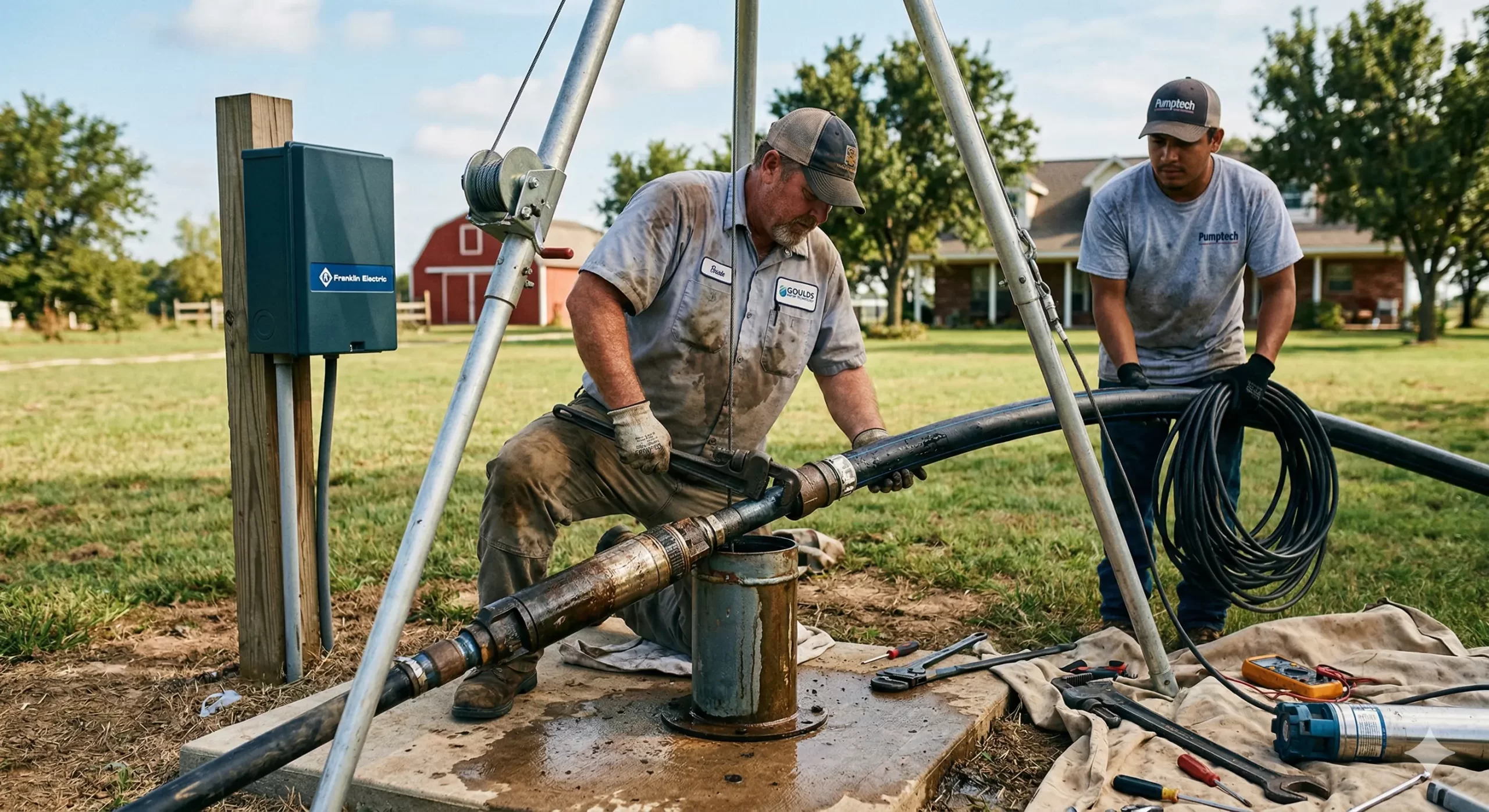
Pulling a submersible pump is a hazardous and equipment-intensive task. A typical 4-inch submersible pump, with hundreds of feet of water-filled pipe and heavy gauge wire, can weigh over 500 pounds. This absolutely requires a dedicated pump hoist or a boom truck rig. Safety Protocol: The wellhead area is first secured. The technician wears appropriate Personal Protective Equipment (PPE), including safety glasses and steel-toed boots. After LOTO is confirmed, a pitless adapter key is used to engage the assembly inside the casing, allowing it to be safely disconnected and lifted by the rig without risk of dropping it down the well. The immense weight and potential energy make this a job exclusively for trained professionals with the right equipment. Once on the surface, the damaged motor is replaced, a new waterproof heat-shrink splice is installed, and the entire assembly is carefully lowered back into the well.
Repair Cost & Time Assessment
The cost to resolve a Fault 1 can vary dramatically based on the underlying cause. For a simple diagnosis where the fault is reset and a one-time utility surge is identified as the culprit, a standard service call fee will apply. This typically ranges from $175 to $400, covering 1-2 hours of a master electrician’s diagnostic time and travel. If the solution is to install a robust Type 1 or Type 2 Surge Protective Device (SPD) at the service panel or well disconnect to prevent future occurrences, the total cost, including the professional-grade device and labor, will be between $600 and $1,300.
If the diagnostic tests, particularly a failed megohmmeter test, determine the submersible motor was damaged by the surge, the cost escalates significantly. A full pump pulling operation is a major job. The cost will typically range from $1,800 to $5,000+. This higher price reflects several factors: a higher labor charge for 2 technicians working 4-8 hours; a specific fee for bringing and using the pump hoist rig (crane usage); the cost of the new submersible motor (which can be $500 to $2,000+ alone, depending on horsepower and brand); and associated materials like a new heat-shrink splice kit and potentially sections of drop cable. If the X-Drive itself was also fried, replacing it could add another $800 to $2,000 to the final invoice.
Fast Local Service & Diagnostics
Calls are routed to a licensed local well professional.