
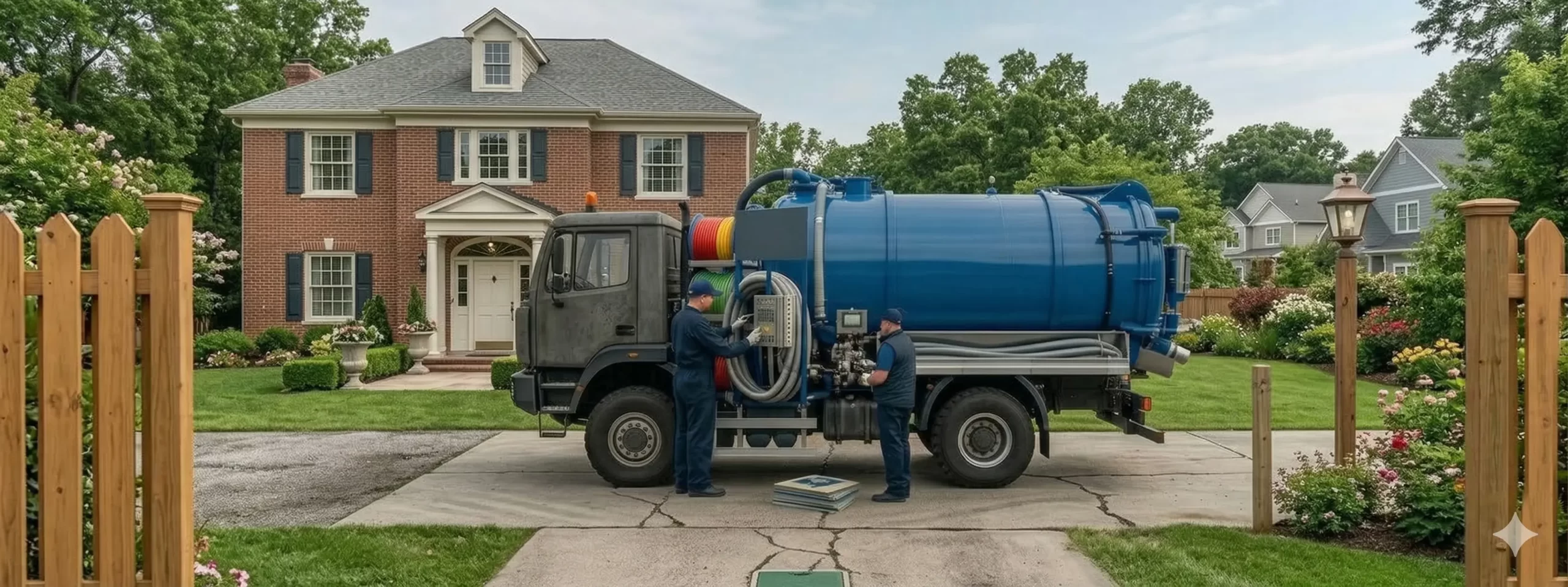
Top Septic Pumping in
Alexandria
Alexandria Pumping Costs & Data
Here are the critical statistics defining the current state of wastewater infrastructure in the area:
- Clay Pan Failure Rates: Properties with systems in dense red clay zones experience a 35% higher rate of temporary backups during the spring wet season due to poor soil percolation (perched water tables).
- Root Intrusion Spikes: In the city’s older, heavily wooded neighborhoods near the national forest, invasive pine and oak roots account for nearly 40% of all emergency tank seal breaches and crushed PVC pipes reported locally.
- USDA/VA Inspection Volume: Nearly 65% of all property sales in the county outskirts require a strict OSSF health inspection for government-backed rural loans, leading to a higher rate of proactive maintenance during sales.
- The Rural Maintenance Deficit: Because systems are often located out of sight on large acreage, nearly 30% of rural homeowners fail to schedule their necessary 3-to-5 year trash tank pump-outs, leading directly to catastrophic drain field failure.
The mathematics of septic maintenance in dense clay and agricultural zones are unforgiving. Routine, scheduled vacuum pumping is the only scientifically valid method to protect your property and the local waterways from a biohazard disaster.
The final invoice for your specific pump-out will be dictated by these localized variables:
- Dense Red Clay Excavation: Finding the tank and manually digging through heavy, sticky alluvial clay to expose the access lids adds significant manual labor time compared to sandy soils. We highly recommend paying for PVC surface risers to permanently eliminate this grueling future cost.
- Extended Hose Deployments (Rural Access): Pumping tanks located deep on wooded acreage, on steep slopes, or behind sprawling farmhouses requires staging the heavy vacuum truck carefully to prevent it from getting stuck in mud. Technicians frequently deploy 100 to 250+ feet of heavy industrial hose.
- Historic Root Intrusion Remediation: Aggressive old-growth pine and oak roots frequently breach the seams of legacy concrete tanks. Extracting these dense root balls from the inlet baffles and hydro-jetting the lines adds a significant manual labor surcharge.
- Advanced ATU Maintenance: To meet strict watershed protection laws in poor-draining areas, many homes now rely on mechanical Aerobic Treatment Units (ATUs). Servicing these requires cleaning multiple specialized chambers and verifying aeration pumps.
Furthermore, Rapides Parish’s specific soil profiles dictate maintenance frequency:
| Alexandria Terrain / Soil | Drainage Capacity | Impact on Legacy Systems | Maintenance Need |
|---|---|---|---|
| Red River Clay / Lowlands | Very Poor | Creates a perched water table during heavy rains. Neglected sludge permanently seals the already slow-draining biomat. ATUs often required. | High (Strict 3-4 year pumping) |
| Wooded Sandy Loam (Piney Woods) | Moderate | Drains better, but highly vulnerable to catastrophic root intrusion from mature pines and oaks. | Standard (3-5 years) |
Cost Estimation by System Profile in Alexandria:
| Service Description | Estimated Range | Primary Labor Factors |
|---|---|---|
| Legacy Conventional Pump-Out | $330 – $550+ | Manual excavation in dense red clay, major pine root extraction, long rural hose deployments. |
| Aerobic Treatment Unit (ATU) Pump-Out | $360 – $590 | Multi-tank evacuation, mechanical checks, diffuser cleaning, and dosing pump sanitation. |
| Hydro-Jetting / Root Removal | +$150 – $350 | Deploying high-pressure water to obliterate scale and severe pine root blockages in aging lines. |
Our platform guarantees that you connect with transparent, elite professionals who understand the rugged, clay-heavy demands of Rapides Parish properties.
44°F in Alexandria
🌱 Local Environmental Status
When a legacy septic system is neglected in the Alexandria area, the localized consequences are distinct and hazardous:
- Clay Pan Hydraulic Lock: Unlike the sandy soils of the coast, much of Rapides Parish features dense layers of red clay. During intense Louisiana thunderstorms, water cannot drain downward through this clay, creating a “perched” water table that instantly floods the drain field. If a tank is full of sludge, raw sewage backs up directly into the home.
- Red River & Lake Contamination: Properties near the Red River, Buhlow Lake, or local bayous are under intense environmental scrutiny. An overflowing septic tank releases raw human pathogens and high nutrient loads into the watershed, fueling toxic algae blooms and threatening local ecology.
- Catastrophic Pine Root Intrusion: The region is heavily wooded with native Southern pines and mature oaks. Their aggressive root systems relentlessly seek out the continuous moisture of septic tanks, easily crushing aging PVC lateral lines and breaching the seams of legacy concrete tanks.
- Agricultural Compaction: As Alexandria blends into rural farmland, older systems are often subjected to immense pressure. Accidental driving of heavy tractors, livestock trailers, or logging equipment over shallow drain fields instantly crushes the PVC lines against the hard clay pan.
To protect their properties and the fragile Rapides Parish ecosystem, homeowners managing legacy systems must enforce uncompromising maintenance protocols:
- Strict Pumping Intervals: Schedule a professional vacuum pump-out every 3 to 5 years. Aging systems in clay-heavy areas cannot forgive any solid sludge escaping into the lateral lines, as the soil’s natural percolation rate is already incredibly low.
- Protect the Biomat: Clearly mark your drain field to ensure that agricultural vehicles and heavy equipment never cross it. The weight will instantly destroy the system.
- Mechanical System (ATU) Maintenance: If your property sits in poor-draining clay or near a water body, routine pumping and mechanical inspections for advanced Aerobic Treatment Units (ATUs) are legally mandated by the state.
Consistent, environment-aware pumping is the absolute baseline of stewardship for homeowners in Alexandria.
⚙️ Local Service Details
When a certified vac-truck arrives at your Rapides Parish home, you can expect a rigorous, exhaustive service protocol:
- Low-Impact Equipment Staging: Strategically parking heavy 30,000-gallon vacuum trucks on solid driveways or paved roads, deploying up to 200 feet of industrial hose to protect delicate landscaping, wooded pathways, and lawns from crushing weight in soft mud.
- Electronic Tank Locating & Clay Excavation: Utilizing flushable sondes to locate buried tanks. Technicians then carefully hand-dig through sticky river clay and dense tree roots to expose the lids safely without damaging your property.
- Complete Sludge Evacuation & Root Removal: Engaging high-CFM vacuum power to entirely empty the tank. For severely neglected systems, technicians utilize hydro-jetting to physically extract invasive root masses from the inlet baffles.
- Filter & ATU Maintenance: Removing and power-washing the effluent filter, and checking advanced aeration system components to ensure maximum operational efficiency and compliance with health codes.
- Structural Diagnostics: Performing a critical visual inspection of the emptied tank to detect structural fractures caused by shifting clay soils, heavy agricultural equipment, or root intrusion from mature pines.
This comprehensive, specialized approach guarantees that your Central Louisiana property is protected against catastrophic backups and costly premature drain field failures.
📍 Coverage & ZIP Codes
🏡 Real Estate Transactions
Navigating a property transfer involving a legacy system in Alexandria requires meticulous attention to documentation:
- USDA Rural & VA Loan Inspections: A massive percentage of transactions on the rural outskirts utilize USDA rural housing or VA loans. These have extremely rigorous requirements for septic functionality and health clearances. A failing system or lack of Louisiana Department of Health (LDH) pumping records will immediately halt the funding process.
- Clay Soil (Percolation) Scrutiny: Appraisers pay close attention to soil types. If an old gravity system in dense red clay is failing, the parish may require the installation of an expensive, engineered mechanical system (Aerobic Treatment Unit) before a sale can proceed.
- Historic & Rural System Diagnostics: Because operating septic systems on older farmsteads are likely decades old, appraisers will demand a full vacuum pump-out and a high-definition structural camera inspection to ensure the concrete tank is not actively collapsing from massive pine root intrusion.
- Appraisal Value Protection: A failed drain field requiring a mechanical ATU upgrade can cost $10,000 to $18,000+ to replace. Providing a potential buyer with a flawless 5-year pumping log neutralizes their ability to demand massive price concessions.
Protect your Rapides Parish property’s equity. Securing a professional pump-out and a clean bill of health from our vetted technicians is the most profitable step you can take before listing your Alexandria home.
⚠️ Local Regulatory Warning
Homeowners and farmers are legally bound by the following uncompromising mandates:
- LDH State Laws: The Louisiana Department of Health (LDH) dictates that all septic pumping must be performed exclusively by state-licensed sludge transporters. The waste must be legally manifested and disposed of at approved treatment facilities. Hiring an unlicensed contractor makes you complicit in illegal dumping.
- Aerobic Plant (ATU) Mandates: In areas where traditional drain fields fail (often in Alexandria’s heavy clay soils), mechanical treatment plants must be used. Operating these systems legally requires a continuous, active maintenance contract with a certified provider.
- Surface Discharge Penalties: Failing drain fields that leak raw effluent onto neighboring properties, public roads, or agricultural land trigger immediate municipal health citations and forced system condemnation.
- System Expansion Permitting: Upgrading a drain field, adding a home addition, or building an agricultural workshop with plumbing without filing engineered blueprints with the Rapides Parish Health Unit will result in massive retroactive fines and stop-work orders.
Consequences of Regulatory Non-Compliance in Alexandria:
| Environmental Violation | Enforcing Agency | Potential Penalty |
|---|---|---|
| Illegal Surface Discharge (Raw Sewage) | LDH / DEQ | Emergency fines up to $500 per day until mitigated; forced system condemnation. |
| Unpermitted System Expansion | Rapides Parish Health | Stop-work orders, forced removal of plumbing, blockage of property sales. |
| Using Unlicensed “Gypsy” Pumpers | State Police / DEQ | Homeowner liability for illegal dumping, massive environmental restitution fees. |
Protect your finances and your legal standing. Our network only provides access to elite, fully insured, and LDH-compliant professionals who protect your property legally and environmentally.
Local Environmental Threat
Current soil and weather impact on septic systems in Louisiana.
High saturation prevents drain fields from absorbing effluent.
Pumping Frequency Calculator
Select household size for Louisiana.
The Cost of Neglect in LA
Why routine pumping is the smartest financial decision.
Data reflects average contractor estimates in Louisiana.
Homeowner Feedback



Reliable Septic Services in
Alexandria, LA
Septic Intelligence AI: Louisiana
What is a cesspool and how is it different from a modern septic tank?
Understanding Cesspools vs. Modern Septic Tanks: A Global Expert's Perspective for Louisiana Homeowners (2026)
Greetings from your global expert in wastewater management. Your inquiry regarding cesspools and modern septic tanks is critically important, especially for homeowners in regions like Louisiana where unique environmental factors and evolving regulatory landscapes, such as those anticipated in 2026, necessitate precise understanding and proactive management of your household wastewater system. Let's delineate these two systems definitively.
What is a Cesspool?
Historically, a cesspool served as a rudimentary wastewater disposal system. Imagine a simple, excavated pit in the ground, often lined with loose stones or bricks, or sometimes completely unlined. Its primary function was to collect all household wastewater – solids and liquids alike – allowing the liquid portion to gradually seep into the surrounding soil while the solids accumulated at the bottom.
- Lack of Treatment: Crucially, a cesspool offers virtually no effective wastewater treatment. It's essentially a holding pit that facilitates direct discharge of untreated or minimally filtered wastewater into the ground.
- Environmental & Health Risks: This direct discharge poses significant risks of contaminating groundwater, soil, and surface waters with pathogens, nitrates, and other pollutants. In 2026, with heightened environmental awareness and regulatory enforcement, the public health and ecological implications of cesspools are more pronounced than ever.
- Legality in Louisiana (2026): In Louisiana, as in most modern jurisdictions, the installation of new cesspools has been prohibited for decades. By 2026, existing cesspools are increasingly under scrutiny by the Louisiana Department of Health (LDH) and parish health units, with strong recommendations, and often mandates, for their replacement due to their inherent health and environmental hazards. They are considered obsolete and non-compliant systems.
What is a Modern Septic Tank?
A modern septic tank is the cornerstone of an on-site wastewater treatment system, designed for efficiency, environmental protection, and longevity when properly maintained. It is a watertight, underground container, typically made of concrete, fiberglass, or polyethylene, engineered to provide primary wastewater treatment before discharge to a drain field.
- Primary Treatment Process: When wastewater enters a septic tank, it undergoes a crucial separation and anaerobic digestion process:
- Scum Layer: Lighter solids, oils, and grease float to the top, forming a scum layer.
- Effluent Layer: The clarified liquid wastewater, known as effluent, resides in the middle.
- Sludge Layer: Heavier solids settle to the bottom, forming a sludge layer.
- Anaerobic Digestion: Anaerobic bacteria, thriving in the oxygen-free environment of the tank, naturally break down a significant portion of the organic matter in the sludge and scum.
- Drain Field Integration: Unlike a cesspool, the treated effluent from a septic tank does not simply seep directly into the general soil. Instead, it flows out to a drain field (also known as a leach field or absorption field). Here, it is further treated as it percolates through layers of gravel and soil, where a complex biological process involving aerobic bacteria provides secondary treatment, effectively removing remaining pathogens and nutrients before the water rejoins the groundwater table.
Key Differences: Cesspool vs. Modern Septic Tank
The distinction is fundamental and critical for any homeowner:
- Treatment Mechanism:
- Cesspool: Offers negligible treatment, relying solely on passive seepage.
- Septic Tank: Provides primary treatment (solids separation, anaerobic digestion) followed by secondary treatment in the drain field.
- Environmental Impact:
- Cesspool: High risk of direct groundwater and soil contamination, posing severe public health and ecological threats.
- Septic Tank: Significantly reduces environmental contamination risk through controlled, multi-stage treatment.
- Design & Construction:
- Cesspool: Simple, often unlined or poorly lined pit, allowing direct uncontrolled seepage.
- Septic Tank: Engineered, watertight tank with baffles or multiple chambers, integrated with a purpose-built drain field.
- Legality & Compliance (Louisiana, 2026):
- Cesspool: Obsolete, non-compliant with modern wastewater regulations, and likely targeted for mandatory replacement.
- Septic Tank: The standard, compliant on-site wastewater treatment system when properly designed, installed, and maintained according to Louisiana Department of Health (LDH) regulations.
Homeowner Maintenance, Emergency Prevention, and Local Relevance for Louisiana (2026)
Identifying a Cesspool on Your Property:
If you own an older home in Louisiana, especially one built prior to the 1970s, it is prudent to investigate your wastewater system. Signs of a cesspool might include chronic plumbing backups, unexplained wet spots or lush vegetation in your yard (indicating surfacing wastewater), foul odors, or historical property records mentioning "cesspit" or similar. If you suspect you have a cesspool, it is imperative to contact a licensed wastewater professional in Louisiana immediately for a thorough inspection and to understand your options for replacement. Continued use of a failing cesspool in 2026 could lead to significant fines and health department mandates.
Septic Pumping:
- For Cesspools (if you still have one): Pumping will be required much more frequently, potentially annually or even semi-annually, as they fill rapidly with solids and offer no treatment. This is a temporary measure, merely emptying a holding tank, and does not address the fundamental environmental issues. Replacement remains the only long-term solution.
- For Modern Septic Tanks: Regular pumping is the single most critical maintenance task. For an average household in Louisiana, a septic tank should be pumped by a licensed professional every 3 to 5 years, depending on tank size, household occupancy, and water usage. This removes the accumulated sludge and scum layers, preventing them from overflowing into and damaging your expensive drain field, which can cost tens of thousands of dollars to repair or replace.
Emergency Prevention and Best Practices for Your Septic System (Louisiana):
- Water Conservation: Excessive water use can overload your system, reducing the time for solids to separate and potentially pushing solids into the drain field. Be mindful of appliance usage (e.g., staggering laundry loads).
- "Don't Flush" List: Never flush non-biodegradable items (wipes, feminine hygiene products, cat litter), grease, harsh chemicals (paint thinners, excessive bleach), or pharmaceuticals. These items disrupt the bacterial action in the tank and can clog the system.
- Protect the Drain Field: Do not drive or park heavy vehicles over the drain field. Avoid planting trees or shrubs with invasive root systems near or on the drain field, as roots can clog and destroy the lines.
- Routine Professional Inspections: Beyond pumping, annual inspections by a licensed Louisiana septic professional are highly recommended. They can identify potential issues early, check baffles, and ensure your system is functioning optimally, saving you from costly emergencies.
- Local Regulations (Louisiana, 2026): Be aware that the Louisiana Department of Health (LDH) and your parish's health department oversee on-site wastewater systems. Their regulations ensure public health and environmental protection. Always use licensed, bonded, and insured professionals for any septic work in Louisiana, as they are knowledgeable about local soil conditions, water tables, and permitting requirements.
Understanding the distinction between a cesspool and a modern septic tank is not just academic; it's fundamental to safeguarding public health, protecting Louisiana's unique environment, and preserving your property value. Proactive maintenance and swift action if you have an outdated system are paramount in 2026.