
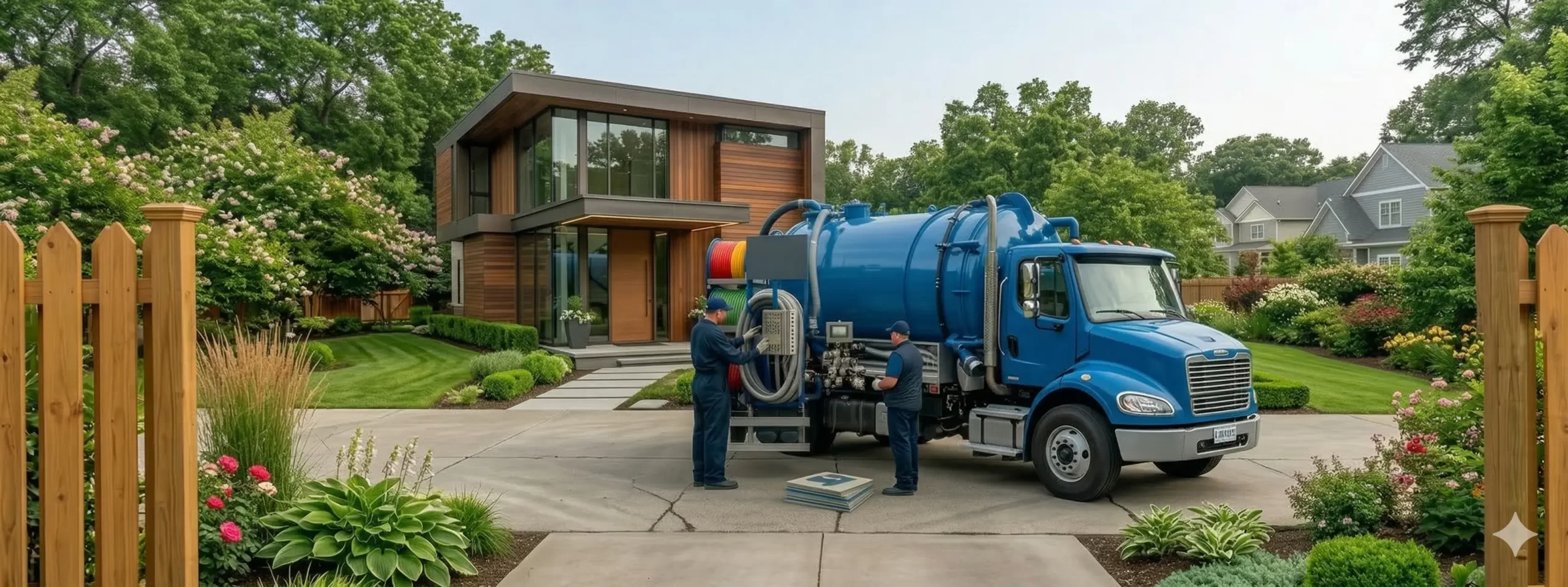
Top Septic Pumping in
Sulphur
Sulphur Pumping Costs & Data
Here are the critical statistics defining the state of infrastructure in the area:
- ATU Reliance: Due to the incredibly poor percolation rates of the local coastal clay and high water tables, nearly 75% of new or replacement decentralized systems in Calcasieu Parish are mandated to be mechanical Aerobic Treatment Units (ATUs).
- Hurricane & Storm Failure Spikes: During Louisiana’s intense hurricane season, local data indicates a massive 45% spike in emergency service calls. These are predominantly caused by power failures shutting down ATU pumps, combined with hydraulically overloaded soils from heavy rains.
- Decommissioning Trends: As major home rebuilds occur and municipal sewer lines expand, 100% of discovered legacy septic tanks are mandated to be professionally pumped and decommissioned to connect to the municipal grid.
The mathematics of septic maintenance in dense clay and flood-prone coastal zones are unforgiving. Routine, scheduled vacuum pumping and mechanical maintenance is the only scientifically valid method to protect your property from a biohazard disaster.
The final invoice for your specific pump-out will be dictated by these localized variables:
- Advanced ATU Maintenance (Mechanical Plants): Because the dense clay forces the use of ATUs, servicing in Sulphur is generally more complex than pumping a simple gravity tank. Technicians must evacuate multiple chambers, clean the diffusers, verify the aeration compressor, and check the chlorinator systems. This comprehensive service commands a specialized rate.
- Wet Clay & Coastal Loam Excavation: Finding the tank and manually digging through incredibly heavy, sticky, or saturated clay to expose the access lids adds significant manual labor time. We highly recommend paying for PVC surface risers to permanently eliminate this grueling future cost.
- Extended Hose Deployments: Pumping tanks located in deep backyards or across delicate property lines requires staging the heavy vacuum truck carefully in the street. Technicians frequently deploy 100 to 150 feet of heavy industrial hose to ensure access without sinking into soft, wet yards.
- System Decommissioning: If a property is connecting to city sewer or being rebuilt after a storm, the strict process of completely sanitizing and filling the old tank with sand per Calcasieu Parish codes requires specialized equipment and custom quoting.
Furthermore, Calcasieu Parish’s specific soil profiles dictate maintenance frequency:
| Sulphur Terrain / Soil | Drainage Capacity | Impact on Wastewater Systems | Maintenance Need |
|---|---|---|---|
| Heavy Coastal Clay / Lowlands | Extremely Poor | Forces the use of mechanical ATUs. Gravity drain fields fail rapidly. Severe hydraulic lock during storms. | High (Strict ATU servicing schedules) |
| Inland Sandy Loam | Moderate | Drains slightly better, but highly vulnerable to root intrusion from native pines and oaks. | Standard (3-5 years) |
Cost Estimation by System Profile in Sulphur:
| Service Description | Estimated Range | Primary Labor Factors |
|---|---|---|
| Aerobic Treatment Unit (ATU) Pump-Out | $380 – $630 | Multi-tank evacuation, mechanical checks, diffuser cleaning, and dosing pump sanitation. |
| Legacy Conventional Pump-Out | $350 – $550+ | Manual excavation in dense clay, root extraction, tight lot deployments. |
| System Decommissioning Prep | Custom Quote | Complete evacuation and sanitation of an abandoned tank prior to filling with sand per parish codes. |
Our platform guarantees that you connect with transparent, elite professionals who understand the uncompromising demands, complex mechanical ATUs, and heavy clay geology of Calcasieu Parish.
66°F in Sulphur
🌱 Local Environmental Status
When an On-Site Sewage Facility (OSSF) is neglected in the Sulphur area, the localized consequences are distinct and hazardous:
- Hurricane Surge & Hydraulic Lock: Southwest Louisiana is highly vulnerable to intense tropical weather. During a hurricane or severe storm, the coastal clay soils saturate instantly, and storm surges can physically inundate low-lying drain fields. If a septic tank is full of sludge, raw sewage backs up immediately into the home.
- Aerobic Plant (ATU) Failure: Because of the poor soil drainage, a massive percentage of homes in Calcasieu Parish utilize mechanical Aerobic Treatment Units (ATUs). If these complex systems are not regularly pumped and mechanically serviced, the motors burn out, and raw, untreated sewage is discharged directly into local ditches.
- Coastal Watershed Contamination: Properties located near the river or the surrounding marshlands are under intense environmental scrutiny. An overflowing septic tank releases raw human pathogens and high nutrient loads directly into the watershed, threatening local ecology and public health.
- Post-Storm Structural Damage: Shifting, saturated ground following major flooding events can crack aging concrete tanks or shear off PVC lateral lines, leading to invisible subterranean leaks.
To protect their properties and the fragile coastal ecosystem, homeowners managing legacy systems or ATUs must enforce uncompromising maintenance protocols:
- Strict Pumping & ATU Maintenance: Schedule a professional vacuum pump-out every 2 to 4 years. If you operate an ATU (mechanical plant), state law requires active maintenance to ensure the aeration motors and chlorinators are functioning properly.
- Hurricane Preparation: Pumping your tank *before* hurricane season provides critical emergency holding capacity when the power grid fails and your ATU pump stops working in saturated ground.
- Decommissioning Compliance: As homes are rebuilt or connected to expanding sewer grids, old tanks MUST be legally pumped and abandoned per strict Louisiana Department of Health (LDH) codes.
Consistent, storm-aware pumping is the absolute baseline of stewardship for homeowners in Sulphur.
⚙️ Local Service Details
When a certified vac-truck arrives at your Calcasieu Parish home, you can expect a rigorous, exhaustive service protocol:
- Low-Impact Equipment Staging: Strategically parking heavy 30,000-gallon vacuum trucks in the street or on solid driveways, deploying up to 150 feet of industrial hose to navigate tight lot lines and protect delicate landscaping from crushing weight in soft mud.
- Electronic Tank Locating & Clay Excavation: Utilizing flushable sondes to locate forgotten buried tanks. Technicians carefully hand-dig through heavy coastal clay and roots to expose the lids safely without damaging your property.
- Complete Evacuation & ATU Servicing: Engaging high-CFM vacuum power to entirely empty the tank. For Aerobic Treatment Units (ATUs), technicians evacuate all chambers, clean the aeration diffusers, verify compressor function, and check the chlorination systems to ensure strict LDH compliance.
- Decommissioning Preparation (If Applicable): Completely sanitizing the interior of the tank and providing the necessary LDH documentation to your contractor or investor so the tank can be legally filled and abandoned.
- Structural Post-Storm Diagnostics: Performing a critical visual inspection of the emptied tank to detect structural fractures caused by shifting clay soils, heavy equipment, or the violent hydrostatic pressure of a recent storm.
This comprehensive, specialized approach guarantees that your Southwest Louisiana property is protected against catastrophic backups and environmental code violations.
📍 Coverage & ZIP Codes
🏡 Real Estate Transactions
Navigating a property transfer involving a septic system or ATU in Sulphur requires meticulous attention to documentation:
- Aerobic Plant (ATU) Compliance: Because traditional drain fields fail in the local heavy clay, many homes operate mechanical treatment plants. Appraisers and lenders demand proof of an active maintenance contract and recent LDH pumping records to ensure the expensive motors and chlorinators are fully functional. A failing ATU will immediately halt a title transfer.
- Post-Storm System Diagnostics: Because the region frequently experiences severe hurricanes, appraisers will demand a full vacuum pump-out and a structural camera inspection to ensure the concrete tank is not actively collapsing from shifting, saturated coastal soils.
- Flood Zone Clearances: Inspectors must rigorously verify the system’s resilience against the area’s notoriously high water table and storm surges, ensuring electrical components for ATUs are properly elevated.
- Appraisal Value Protection: A failed drain field requiring a mandatory upgrade to an ATU can cost $10,000 to $18,000+ to replace. Providing a potential buyer with a flawless pumping log neutralizes their ability to demand massive price concessions.
Protect your Calcasieu Parish property’s equity. Securing a professional pump-out and a clean bill of health from our vetted technicians is the most profitable step you can take before listing your Sulphur home.
⚠️ Local Regulatory Warning
Homeowners, flippers, and developers are legally bound by the following uncompromising mandates:
- Aerobic Plant (ATU) Mandates: The Louisiana Department of Health (LDH) dictates that in areas where traditional drain fields fail (most of Sulphur’s clay soils), mechanical treatment plants must be used. Operating these systems legally requires a continuous, active maintenance contract with a certified provider to ensure the motors and chlorinators are working.
- LDH Pumping Regulations: All septic and ATU pumping must be performed exclusively by state-licensed sludge transporters. The waste must be legally manifested and disposed of at approved treatment facilities. Hiring an unlicensed “gypsy” pumper makes you complicit in illegal dumping.
- Decommissioning Codes: If a home is rebuilt or connecting to the city sewer, any existing tank cannot simply be abandoned. Parish codes strictly require the tank to be completely pumped out by a licensed professional, the bottom fractured for drainage, and filled with clean sand.
- Surface Discharge Penalties: Failing systems that leak raw effluent into public drainage ditches or local wetlands trigger immediate municipal health citations and forced system condemnation.
Consequences of Regulatory Non-Compliance in Sulphur:
| Environmental Violation | Enforcing Agency | Potential Penalty |
|---|---|---|
| Illegal Surface/Ditch Discharge | LDH / DEQ | Emergency fines up to $500 per day until mitigated; forced system condemnation. |
| Expired Aerobic Maintenance Contract | Calcasieu Parish Health | Permit revocation, Class C Misdemeanor, blockage of property sales. |
| Improper Tank Abandonment | Calcasieu Parish | Severe fines, forced re-excavation, and blockage of property sales or renovation permits. |
Protect your finances and your legal standing. Our network only provides access to elite, fully insured, and LDH-compliant professionals who protect your property legally and environmentally.
The Sulphur Maintenance Shift
Avoid emergency holiday fees. Servicing your tank at this exact time guarantees a better year.
Emergency Index
Local septic trucks are booking up fast. This visualizes the growing local service needs in Sulphur.
Underground Stress Tracker
Monitor what your septic pipes fight daily in Sulphur. Heavy soil offers profound resistance to wastewater.
Transit Time Insight
The physical distance your rescue team needs to travel. Mapped specifically for Sulphur zip codes.
Post-Weekend Tank Levels
Don't let a house party ruin your yard. Based on Sulphur's average usage, here is your strain goal.
Money Lost Calculator
Adjust the slider to your years without maintenance. You will be shocked at the financial risk in Sulphur.
Base Drain Field Replacement in Sulphur: $14,822
Homeowner Feedback




Reliable Septic Services in
Sulphur, LA
Sulphur Septic Expert AI
What are the specific septic tank regulations, typical soil drainage characteristics, and the local permitting authority for the Sulphur area?
Expert Guidance on Residential Septic Systems in Sulphur, Louisiana (2026)
As a Senior Environmental Health Inspector and Septic Regulatory Expert for Louisiana, I can provide you with the precise information you need regarding residential septic systems in the Sulphur area of Calcasieu Parish.1. Specific Septic Tank Regulations (Louisiana Administrative Code)
In Louisiana, all individual wastewater systems, commonly known as septic systems, are regulated by the Louisiana Department of Health (LDH) under the authority of the Louisiana Sanitary Code.
The primary governing regulation is Louisiana Administrative Code (LAC) 51:XIII. Individual Wastewater Systems. Key aspects of these regulations relevant to residential systems in Sulphur include:
- Permitting Requirement: A permit from the LDH is mandatory before any individual wastewater system can be constructed, installed, altered, extended, or repaired. This is explicitly stated in LAC 51:XIII.301.A.
- Design Requirements: All systems must be designed by a Louisiana-licensed Professional Engineer (PE) or a certified individual wastewater system designer. The design must be based on a comprehensive site evaluation, including soil characteristics, water table depth, and proposed wastewater flow.
- Tank Sizing: Minimum septic tank liquid capacities are strictly defined based on the number of bedrooms in the residence (LAC 51:XIII.503.A):
- Up to 2 Bedrooms: 750 gallons
- 3-4 Bedrooms: 1000 gallons
- 5-6 Bedrooms: 1250 gallons
- 7-8 Bedrooms: 1500 gallons
- Treatment and Disposal Field Requirements: The type and size of the wastewater treatment and disposal field (e.g., drain field, mound system, aerobic treatment unit with spray/drip irrigation) are determined by the soil evaluation. Systems must meet specific hydraulic loading rates and separation distances from wells, property lines, buildings, and surface waters (LAC 51:XIII.Subpart 2, Chapter 7 & 9).
- Maintenance: Systems, particularly aerobic treatment units (ATUs), require regular maintenance. For ATUs, a valid maintenance contract with an LDH-approved service provider is generally required for the life of the system (LAC 51:XIII.905).
- Inspection: The LDH conducts inspections during various stages of construction to ensure compliance with approved plans and state regulations.
2. Typical Soil Drainage Characteristics in Sulphur (Calcasieu Parish)
Sulphur, located in Calcasieu Parish, sits within the Gulf Coastal Plain, characterized by predominantly flat topography, a high seasonal water table, and heavy, poorly draining clay soils. Common soil series in this area include Lake Charles clay, Beaumont clay, and various other silty and clay loamy soils.
- Characteristics: These soils typically exhibit low permeability, meaning water percolates through them very slowly. The high water table, often just a few feet below the surface, further exacerbates drainage challenges.
- Impact on Drain Field Design: Due to these unfavorable conditions, conventional gravity-fed drain fields are rarely suitable or permitted in the Sulphur area. The poor absorption capacity of the soil and the proximity to the water table prevent adequate treatment and dispersal of effluent.
- Common System Types: Consequently, advanced treatment systems are almost universally required. These often include:
- Aerobic Treatment Units (ATUs): These systems use aeration to treat wastewater to a higher quality than conventional septic tanks before dispersal.
- Spray or Drip Irrigation Fields: Effluent from an ATU is often dispersed through a spray field (above ground) or drip irrigation system (sub-surface), allowing for evaporation and slow absorption into the uppermost soil layers. These systems are designed to minimize reliance on the soil's natural percolation rates.
- Mound Systems: Less common than ATU with spray/drip in this specific area but still a possibility, these systems create an elevated drain field using imported fill material to provide adequate separation from the natural ground and water table.
- Mandatory Soil Evaluation: A detailed site-specific soil evaluation, including percolation tests or soil borings by a qualified professional, is a critical first step for any new septic system design in Sulphur. This evaluation dictates the appropriate system type and sizing.
3. Local Permitting Authority for the Sulphur Area
For residential septic systems in Sulphur, the permitting authority is the Louisiana Department of Health (LDH). Specifically, you will work with the local branch office responsible for Southwest Louisiana, which is the LDH Region 5 Office.
This office is responsible for:
- Reviewing all permit applications and design plans.
- Issuing construction permits for approved systems.
- Conducting site inspections during and after installation to ensure compliance.
- Enforcing state sanitary code regulations related to individual wastewater systems.
4. Realistic 2026 Cost Estimates for Pumping and Installation in the Sulphur Market
These estimates are for 2026 and reflect the typical market conditions and specific challenges (soil types, advanced systems) in the Sulphur area. Costs can vary significantly based on site-specific factors, system complexity, and contractor.
- Septic Tank Pumping (Cleaning) - Standard Residential (1000-1250 Gallons):
Expect to pay between $400 and $700. This service should be performed every 3-5 years for conventional tanks or as recommended by the ATU manufacturer/service provider.
- New Septic System Installation - Residential:
Given the prevalent soil conditions in Sulphur, conventional gravity drain fields are rarely an option. The costs reflect advanced systems typically required:
- Aerobic Treatment Unit (ATU) with Spray or Drip Irrigation System:
This is the most common and often required system type. Costs generally range from $12,000 to $25,000+. Factors influencing this range include the specific ATU model, size of the system (number of bedrooms), complexity of the irrigation field, amount of excavation, and site accessibility. This estimate usually includes the tank, aerobic unit, pump, spray/drip field components, and initial setup/permitting fees.
- Mound System (Less Common but Possible):
If a mound system is designed due to extreme site constraints, costs can range from $18,000 to $35,000+, depending on the volume of fill material required and the system's overall footprint.
- Permit Fees: In addition to installation costs, expect to pay separate permit application fees to the LDH, typically a few hundred dollars.
- Engineering/Design Fees: The cost for a licensed professional engineer or certified designer to conduct the site evaluation and create the system design plans typically ranges from $800 to $2,500+, depending on the complexity of the site.
- Aerobic Treatment Unit (ATU) with Spray or Drip Irrigation System:
It is highly recommended to obtain multiple bids from LDH-licensed and insured contractors and to ensure all proposals clearly outline what is included (e.g., excavation, backfill, specific components, electrical work, final grading, permitting assistance, initial maintenance contract).
Expert Septic FAQ
Why is the state requiring me to install an expensive mechanical aerobic system (ATU)?
We have massive trees in our yard. Are they a threat to the septic lines?
My yard is flooded after a massive hurricane or storm surge. Should I have my septic tank pumped immediately?
Are “flushable” wipes safe for my aerobic plant or city sewer?
Only human waste and rapid-dissolving toilet paper should ever enter your OSSF.