
Diagnosis: The Pentair Intellidrive E-07 error code indicates a ‘Dry Run’ or underload condition, where the pump is pumping air instead of water. This is a protective shutdown to prevent catastrophic pump damage. The primary causes are a drop in the well’s water level, a major leak in the system, or incorrectly calibrated Underload protection parameters within the VFD controller.
In this Guide:
What Causes the Pentair Код E-07 Issue?
From an engineering perspective, the E-07 fault is a sophisticated protective function rooted in the fundamental physics of motor load. A Variable Frequency Drive (VFD) like the Pentair Intellidrive constantly monitors the amperage drawn by the submersible motor. The amount of current required is directly proportional to the workload—the ‘heaviness’ of the fluid being moved. Water is dense and viscous, creating a significant hydraulic load that requires a specific amount of current (amperage) to pump. Air, being approximately 800 times less dense, presents virtually no resistance. When the pump evacuates water and begins pumping air, the workload plummets, causing a sharp, detectable drop in motor amperage. The Intellidrive’s firmware interprets this drop below a pre-set ‘Underload’ threshold as a dry-run condition and immediately trips the E-07 fault to de-energize the motor, preventing a thermal meltdown.
The consequences of a sustained dry run on the pump and motor assembly are severe and progressive. Submersible pumps rely entirely on the flow of water for both lubrication and cooling. The pump-end, often constructed with Noryl or polycarbonate thermoplastic impellers and diffusers, will rapidly overheat. Without cooling water, these components can exceed their glass transition temperature within minutes, causing them to warp, melt, and seize against each other, completely destroying the hydraulic stack. Simultaneously, the mechanical shaft seal, typically a precision-mated set of carbon-ceramic or silicon carbide rings, will overheat and fracture. This failure breaks the seal between the pump-end and the oil-filled motor housing, allowing well water to intrude and contaminate the motor.
While the VFD’s primary protection is for the pump’s wet end, the motor itself is also at risk from repeated dry-run events. The motor windings are designed to operate within a specific temperature range, cooled by the surrounding water flow. Even short bursts of dry operation cause heat spikes that degrade the winding’s enamel insulation. Over time, this thermal stress can lead to micro-fractures in the insulation, creating a high-resistance short or a direct path to ground, ultimately causing motor failure. Furthermore, the motor’s thrust bearings and journal bearings are water-lubricated. Running dry starves these critical components of lubrication, leading to accelerated wear, galling, and eventual seizure of the motor’s rotating assembly. The E-07 fault is not just an alert; it is the system’s last line of defense against a complete mechanical and electrical failure.
DIY Troubleshooting Steps
- System Reboot and Observation: Begin with a controlled power cycle. Turn off the double-pole breaker supplying the Intellidrive, wait a full 60 seconds for the internal capacitors to discharge, then turn it back on. Watch the drive’s display intently as the pump attempts to start. Note the frequency (Hz) and amperage (Amps) displayed just before the E-07 fault appears. A very low amperage reading confirms an underload condition.
- Pressure Tank Pre-Charge Verification: Check the air pressure in your bladder-style pressure tank. Turn off the pump and open a faucet to drain the system pressure to zero. Use a reliable tire pressure gauge on the tank’s Schrader valve. The pre-charge pressure should be set to exactly 2 PSI below the VFD’s programmed cut-in pressure. An improperly charged tank can cause rapid pump cycling, which can sometimes lead to a temporary loss of prime or drawdown issues that trigger the fault.
- Review Drive Fault History: Navigate through the Intellidrive’s menu to access the fault log. Confirm that E-07 is the recurring or most recent fault. If you see other codes like Overcurrent (E-02), Overvoltage (E-01), or Ground Fault (E-09), it may indicate a more complex electrical problem with the motor, drop cable, or power supply that requires immediate professional diagnosis.
- Visual Inspection for Major Leaks: Thoroughly inspect all accessible plumbing from the wellhead to the house, including the pitless adapter connection at the casing, any yard hydrants, and the main entry point. A significant underground leak can cause the pump to run continuously without satisfying the pressure setting, eventually lowering the dynamic water level in the well below the pump intake.
- Static Water Level Measurement: If you have an electronic well sounder or a simple weighted line and are comfortable removing the well cap, attempt to measure the static water level (the level when the pump is off). Measure the distance from the top of the casing to the water surface. Compare this measurement to your well driller’s report or pump installation record. A substantial drop from the original static level is a clear indicator of aquifer depletion or a well performance issue.
- Amperage Draw Confirmation (Qualified Personnel Only): If you are trained and equipped to work safely with live 240V circuits, use a true RMS clamp-on ammeter on one of the motor leads (T1, T2, or T3) exiting the VFD. With the pump running, compare the measured amperage to the Full Load Amps (FLA) listed on the motor’s nameplate. A reading that is 30% or more below the FLA rating is a definitive sign of an underload condition.
When to Call a Professional Well Service
Upon arrival, a certified pump technician initiates a systematic, multi-step diagnostic process. The first phase involves interfacing directly with the Intellidrive controller. Using high-precision multimeters, they will verify the incoming L1/L2 voltage for stability and check for any phase imbalance. They will then use a clamp meter to confirm the low amperage readings that triggered the fault. The technician will access the drive’s advanced diagnostics menu to review the fault log, noting the exact operating parameters (frequency, voltage, current, DC bus voltage) at the moment of the E-07 trip. This data helps differentiate between a true hydraulic problem and a potential issue with the VFD’s current-sensing transducer or control board. They will then evaluate the Underload protection settings, comparing the programmed trip point and delay time against the motor’s specific performance curve and the well’s known characteristics.
If surface diagnostics confirm the VFD is functioning correctly, the investigation moves to the well and pump assembly. The primary tool for this is an electronic water level sounder (e-tape), which is lowered into the well to get a precise measurement of both the static water level and the dynamic (pumping) water level. The difference between these two is the drawdown. Excessive drawdown indicates the pump’s flow rate exceeds the well’s yield, a common cause of dry running. The next critical test is performed with a megohmmeter. This instrument applies a high voltage (500V or 1000V DC) to the motor leads to measure the insulation resistance between the motor windings and ground. A reading below 1-2 megohms indicates a compromise in the drop cable, motor lead, or motor windings, which can cause erratic VFD behavior and eventual failure.
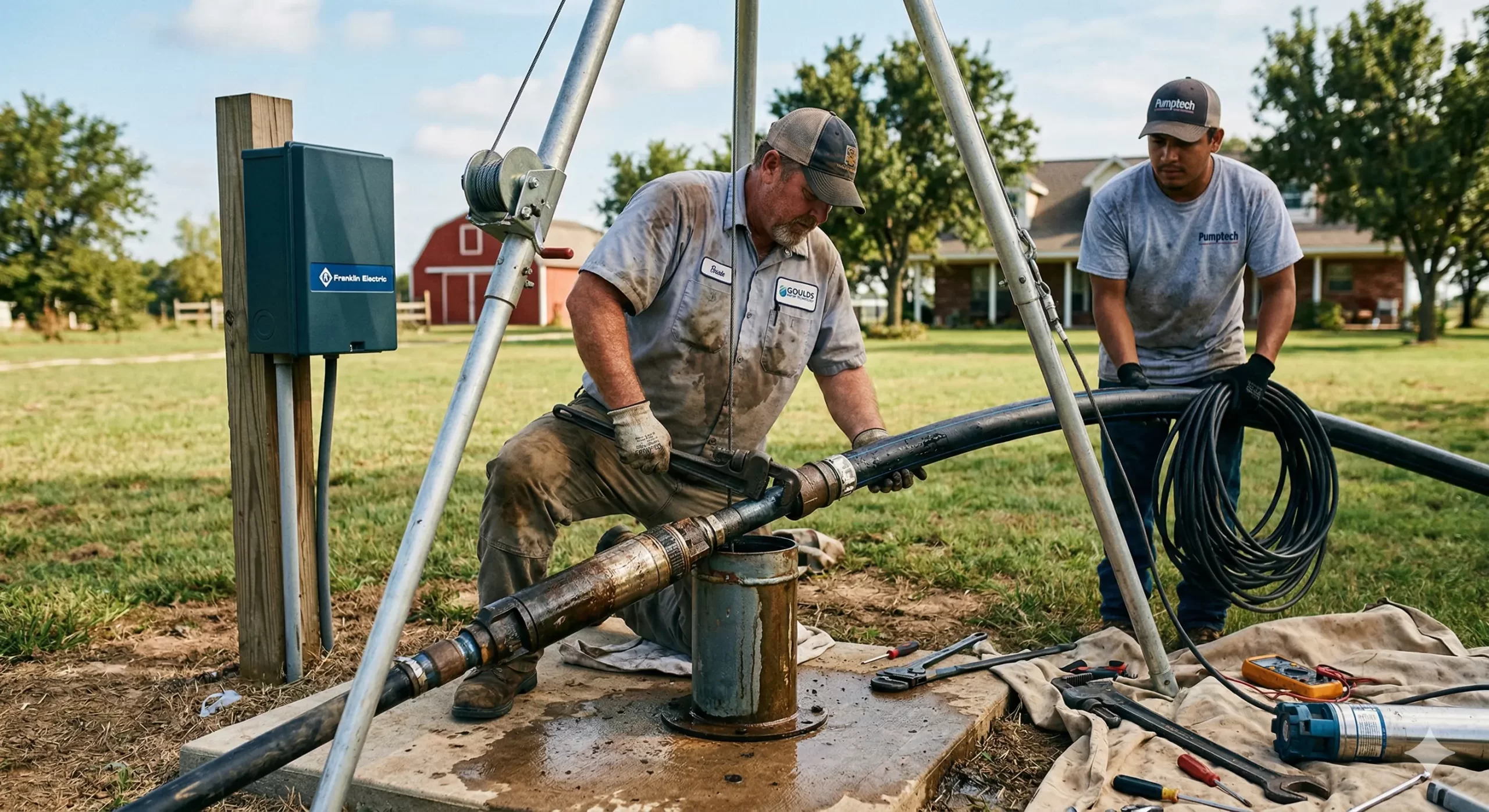
If the megohmmeter test fails, or if the water level data proves the pump intake is too high for the current well conditions, the pump assembly must be pulled from the well. Safety Protocol: This procedure is hazardous and strictly for professionals. The technician will perform a lock-out/tag-out (LOTO) on the circuit breaker to ensure the system cannot be energized. A specialized pump pulling rig or hoist is positioned over the wellhead. Attempting to pull a pump, which can weigh over 500 pounds with hundreds of feet of pipe and wire, by hand is extremely dangerous and risks dropping the entire assembly, potentially destroying the well. The technician uses a pitless adapter key—a long T-handle tool—to securely engage and disengage the pump assembly from the pitless adapter inside the casing, allowing it to be safely hoisted for inspection, repair, or replacement.
Repair Cost & Time Assessment
The financial outlay for resolving an E-07 fault code has a wide range, contingent on the root cause. The initial diagnostic service call from a qualified pump contractor will typically range from $250 to $500. This fee covers the technician’s travel time and the first 1-2 hours of on-site labor, which includes testing the VFD, checking the pressure tank, and performing surface-level electrical diagnostics. If the problem is simply a matter of recalibrating the Underload parameters in the drive’s software, the total cost will likely remain within this initial service call fee.
However, if diagnostics determine that the pump must be pulled from the well, the costs escalate substantially. Mobilizing a two-person crew with a dedicated pump hoist rig for a half-day job typically incurs labor and equipment charges between $900 and $1,800. This fee covers the complex and labor-intensive process of safely extracting and later reinstalling the pump. If the pump itself is damaged beyond repair—due to melted impellers or a failed motor—the cost of a replacement high-quality 4-inch submersible pump assembly (motor and wet end) can range from $1,200 to $2,500+, depending on the horsepower, stage count, and brand. Additional parts like new heat-shrink splices, torque arrestors, and potentially sections of drop pipe will add to the final invoice. Consequently, a worst-case scenario involving a full pump replacement can result in a total project cost between $2,100 and $4,300, with the work typically completed in one day.
Fast Local Service & Diagnostics
Calls are routed to a licensed local well professional.