
Guide to fixing a gas water heater’s piezo igniter when the spark arcs to the chassis due to a cracked ceramic electrode. Learn the pro solution and costs.
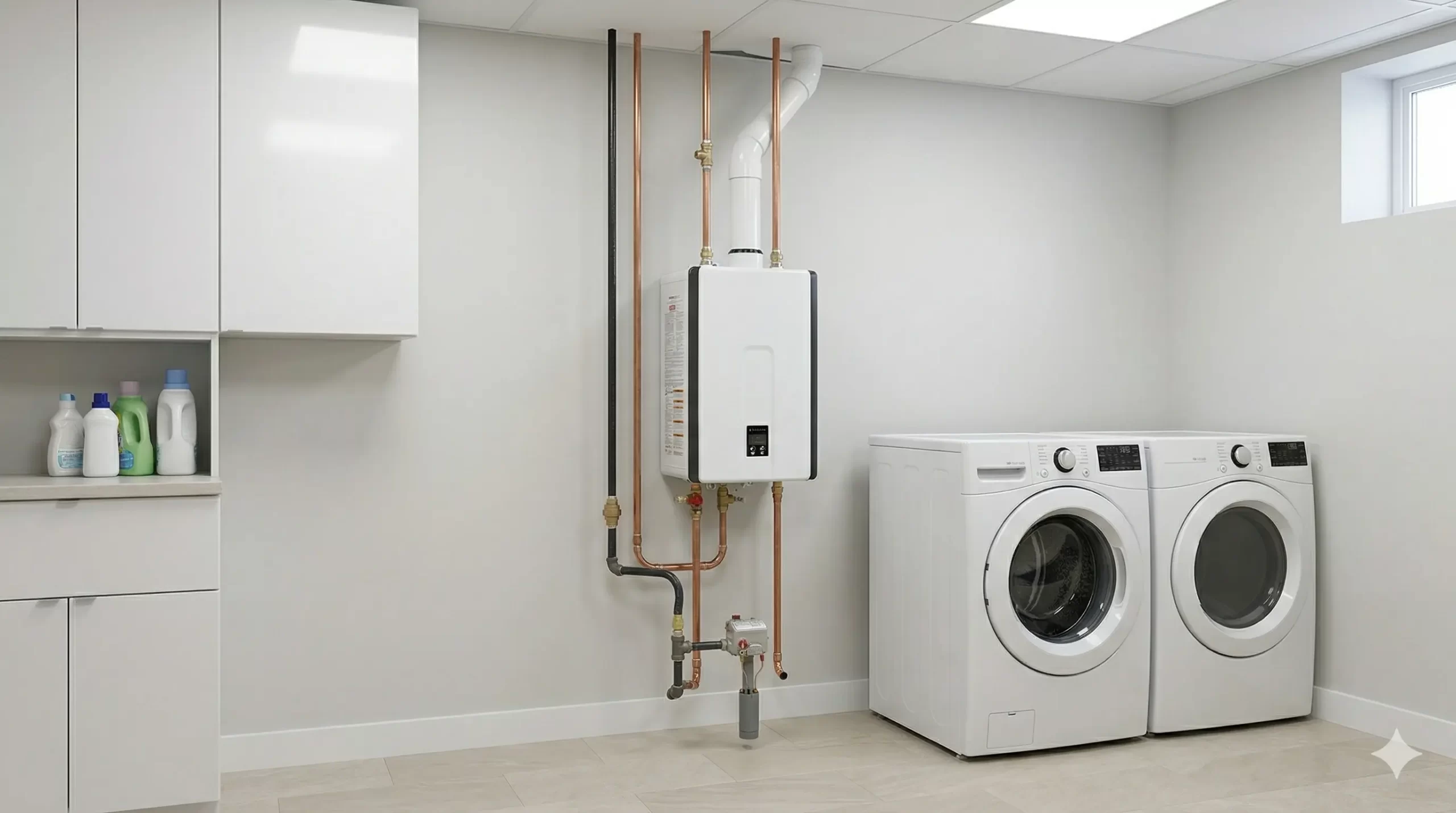
A critical hazard specific to a misdirected igniter spark is the potential for delayed ignition. Each unsuccessful spark attempt allows a small volume of unburnt fuel gas to accumulate within the sealed combustion chamber. When the spark eventually finds the correct path, it can ignite this accumulated gas mixture, causing a violent hard light-off or flame rollout. This concussive event can damage the burner assembly, dislodge the thermocouple, crack the combustion chamber viewport, and pose a significant fire and burn risk to anyone nearby. Do not repeatedly operate the igniter if the pilot fails to light immediately.
️ Repair Profile
Required Diagnostics Tools
Adjustable wrench set, Phillips and flathead screwdrivers, nut driver set, flashlight, soapy water solution in a spray bottle, digital multimeter (for millivolt test), feeler gauge or 1/8 inch drill bit
Financial Breakdown: Parts vs. Licensed Labor
The cost is heavily weighted towards labor because the replacement part is relatively inexpensive, but its installation requires precise positioning and comprehensive safety checks. The technician’s time is spent on disassembly, careful component handling, and post-repair verification, including gas leak detection and pilot flame analysis.
Deep Technical Diagnosis: The Physics of the Failure
The underlying failure mechanism for a misdirected piezo spark is a compromise in the dielectric integrity of the electrode’s ceramic insulator. This high-alumina ceramic is designed to withstand thousands of volts, forcing the electrical potential to discharge only at the electrode tip. When a micro-fracture develops, it creates an alternative path of lower electrical resistance. The high-voltage potential, seeking the most immediate ground, will ionize the air within this crack and arc directly to the nearest grounded metal component, typically the pilot bracket or burner chassis, instead of bridging the engineered 1/8-inch air gap to the pilot hood.
This condition is often exacerbated by environmental factors within the combustion chamber. An improper gas-air mixture, deviating from ideal stoichiometry, can lead to carbonization (soot buildup). This soot, being conductive, can infiltrate the crack, further reducing its resistance and making the errant path even more favorable for the spark. Similarly, condensation and ambient humidity can introduce moisture into the fracture, creating a conductive electrolytic path. The failure of the ceramic itself can be traced to several root causes:
- Thermal Shock: Rapid, repeated temperature cycling from pilot flame ignition and extinction can create differential expansion rates between the ceramic and the metal electrode, inducing stress that leads to fracturing.
- Mechanical Stress: Vibrations from the appliance or accidental impacts during previous servicing can inflict hairline cracks that are not immediately apparent but propagate over time.
- Material Fatigue: After tens of thousands of ignition cycles, the ceramic material can simply reach the end of its operational lifespan, becoming brittle and susceptible to cracking under normal operating pressures.
- Contamination: Corrosive agents from the combustion process or household chemicals stored near the unit can chemically attack the ceramic surface, creating weak points that eventually develop into structural failures.
A technician confirming this diagnosis would observe a visible spark arcing away from the pilot hood, often accompanied by an audible ‘snap’ from the wrong location. Verifying the integrity of the pilot flame and subsequent millivolt generation from the thermocouple becomes impossible, as the pilot cannot be established without a correctly placed ignition source.
US Building Codes & Plumbing Regulations
In accordance with NFPA 54, the National Fuel Gas Code, any replacement ignition component must be listed and labeled for the specific make and model of the water heater being serviced. Section 9.6.5 implicitly requires that the ignition system be restored to its original manufacturer-approved specifications. Using a generic, non-OEM igniter assembly can alter the spark characteristics and positioning, which constitutes a modification of the appliance’s certified design and is a code violation. The repair must ensure the electrode’s placement maintains the precise 1/8-inch gap, as this is critical for prompt and reliable ignition as tested by the certifying agency.
Furthermore, the Uniform Plumbing Code (UPC) Section 508.0 mandates that appliances shall be maintained in a safe and operative condition. An ignition system with a cracked electrode insulator fails this standard, as it creates a predictable risk of delayed ignition and gas accumulation. The code requires that upon completion of the repair, the entire pilot and burner assembly be inspected for integrity and that all gas connections, specifically the pilot tube fitting at the gas control valve, be meticulously leak-tested before the appliance is returned to service, ensuring the repair itself has not introduced a new hazard.
Professional Master Plumber Repair Sequence
- Isolate the Appliance: Turn the gas control valve knob to the ‘OFF’ position. Shut off the gas supply completely at the manual shutoff valve located on the gas line leading to the water heater.
- Disconnect Gas Lines: Using an appropriate wrench, carefully disconnect the main burner supply line, pilot tube, and thermocouple (or thermopile) from the gas control valve. Note the position of each line for reassembly.
- Remove Burner Assembly: Remove the screws securing the burner assembly access cover (the door on the bottom front of the tank). Gently slide the entire burner and pilot assembly out of the combustion chamber. Be mindful not to damage the components.
- Inspect and Document: Place the assembly on a stable work surface. Visually inspect the ceramic insulator on the piezo electrode for obvious cracks or carbon tracking. Take a photo to document the original position and orientation of the electrode relative to the pilot hood.
- Remove Old Igniter Assembly: Disconnect the igniter wire from the electrode. Unfasten the screw or clip holding the electrode bracket to the pilot assembly and remove the old component entirely.
- Install New Assembly: Mount the new piezo igniter and electrode assembly, ensuring it is seated correctly and secured. Do not overtighten the mounting screw, as this can stress and crack the new ceramic insulator. Reconnect the igniter wire.
- Set Electrode Gap: Using a feeler gauge or the shank of a 1/8-inch drill bit, verify the gap between the electrode tip and the pilot hood is precisely 1/8 inch. Adjust the bracket carefully if needed to achieve this exact spacing.
- Reinstall Burner Assembly: Carefully slide the entire assembly back into the combustion chamber, ensuring it is properly aligned and seated. Reinstall the access cover.
- Reconnect and Leak Test: Reconnect the thermocouple, pilot tube, and main burner line to the gas control valve. Ensure fittings are snug but not overtightened. Turn the manual gas shutoff valve back on. Using a soapy water solution, spray every connection you touched and look for bubbling, which indicates a gas leak. If a leak is found, shut off the gas and tighten the connection.
- Test Operation: Follow the manufacturer’s lighting instructions. Turn the gas control valve to ‘PILOT’, depress the knob, and press the piezo igniter. Confirm a strong, blue spark is now arcing directly across the 1/8-inch gap to the pilot hood, resulting in immediate pilot ignition. Hold the knob for 60 seconds, release, and confirm the pilot remains lit before turning the knob to the desired temperature setting.
Expert Verdict: Is It Worth Repairing?
Evaluating the repair of a faulty piezo igniter versus a full water heater replacement presents a clear financial argument. This specific repair targets a small, inexpensive component whose failure is not indicative of the overall health of the tank or gas control system. The part itself typically costs between $20 and $50. The total repair cost, including professional labor, is minimal compared to the $1,500-$2,500+ expense of a new water heater installation. Opting for this repair provides an extremely high return on investment, effectively extending the service life of an otherwise functional appliance for a fraction of the replacement cost. Unless the water heater is already leaking, is well past its expected lifespan (12+ years), or shows signs of advanced corrosion, replacing the entire unit for this isolated ignition fault would be an unnecessary and financially imprudent decision.
Frequently Asked Questions (FAQ)
Q: Can I just use a long match to light the pilot instead of fixing the igniter?
A: While technically possible on some older models, this is strongly discouraged as a long-term solution. It bypasses a key safety feature and requires defeating interlocks, increasing the risk of burns or uncontrolled ignition. Modern sealed-chamber units make this nearly impossible and extremely dangerous to attempt.
Q: Why is the 1/8-inch gap between the electrode and pilot hood so critical?
A: This precise spacing is an engineering specification known as the spark gap. It’s calibrated to ensure the voltage from the piezo igniter can reliably ionize the air and jump the gap, carrying enough thermal energy to ignite the natural gas/air mixture efficiently. Too wide, and the spark won’t jump; too narrow, and the spark may be too weak for reliable ignition.
Q: Could a weak push on the piezo button cause the spark to jump to the wrong place?
A: No, the location of the spark is determined by the path of least electrical resistance, not the force applied to the button. A weak push generates a lower voltage spark, which might not jump the gap at all, but it will not cause a properly insulated electrode to arc to the chassis. The misdirection is a definitive symptom of insulation failure.
Q: Will cleaning a soot-covered electrode fix the problem?
A: Sometimes. Heavy carbon (soot) buildup can become conductive and create an alternate path for the spark, mimicking a cracked insulator. It is a standard diagnostic step to first thoroughly clean the electrode and pilot hood. If the spark still jumps to the chassis after cleaning, the ceramic insulator is confirmed to be cracked and requires replacement.