
Your power vent has electricity but won’t start up? The wall outlet’s reversed polarity or missing ground is the likely culprit. A simple plug tester can fix it.
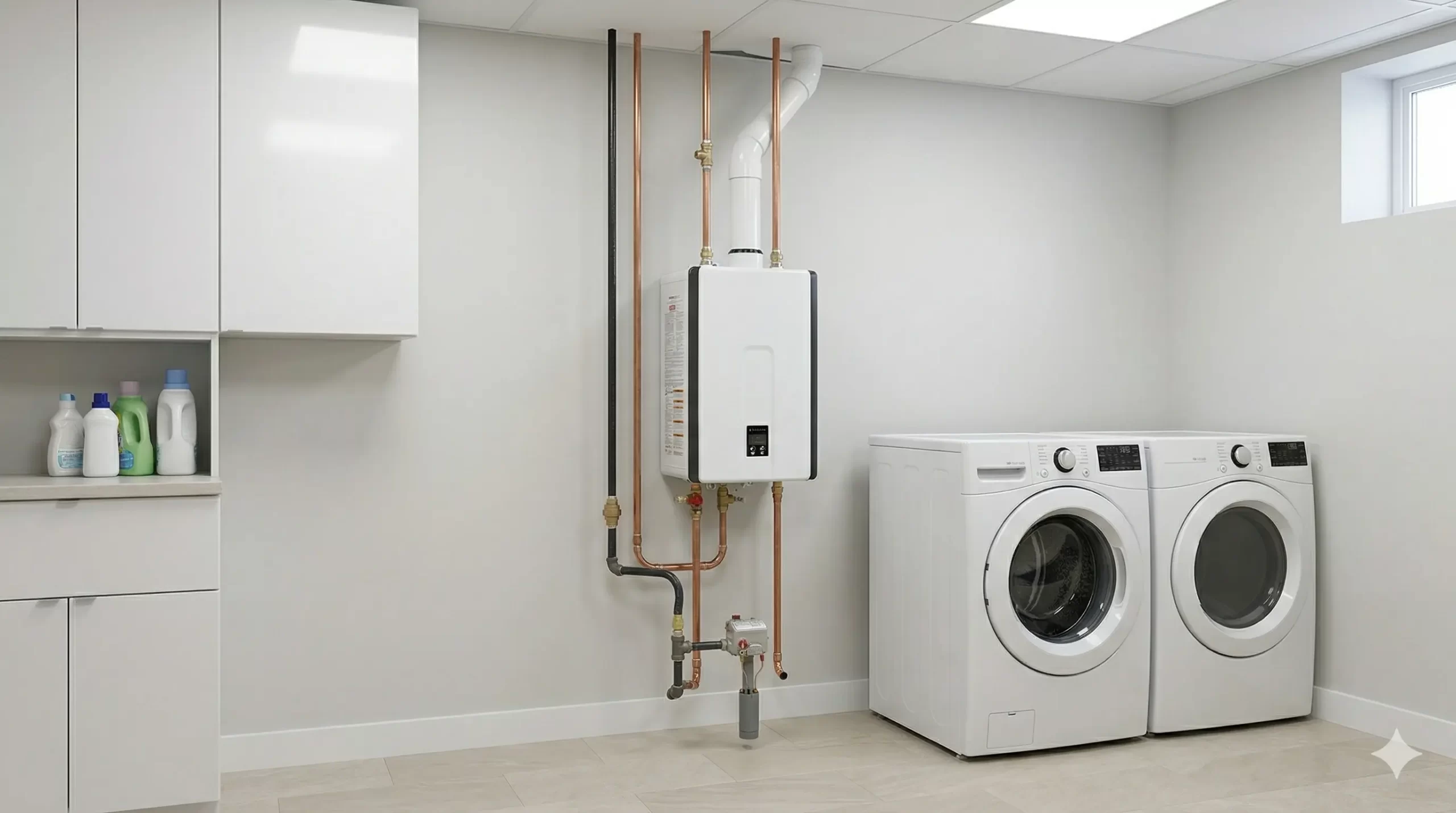
This condition presents a dual, non-obvious hazard. An improperly wired receptacle can energize the appliance chassis, creating a severe electric shock risk upon contact. Furthermore, the control board’s failure to initiate the vent motor is a designed safety lockout. Attempting to bypass this lockout or force the unit to run without correcting the root electrical fault could lead to the unvented release of flue gases, including lethal carbon monoxide, into the living space.
️ Repair Profile
Required Diagnostics Tools
Receptacle Tester, Multimeter, Non-Contact Voltage Tester, Insulated Screwdriver Set, Wire Strippers
Financial Breakdown: Parts vs. Licensed Labor
The cost allocation is heavily weighted towards labor because the diagnosis requires specialized electrical testing equipment and the solution involves correcting potentially hazardous home wiring, a task demanding certified expertise. The physical part, often just a new receptacle, represents a minimal fraction of the total expense.
Deep Technical Diagnosis: The Physics of the Failure
The failure of a power vent blower motor to initialize, despite the presence of line voltage, is frequently rooted in the sophisticated logic of its integrated control board, which is critically dependent on proper electrical supply characteristics. These microprocessor-based controllers utilize the earth ground not merely as a safety path for fault current, but as a stable 0V reference plane for their sensitive logic-level circuits. When AC line polarity is reversed (hot and neutral conductors are swapped), 120VAC is supplied to circuit traces designed to be at or near neutral potential. This can prevent the internal rectifier circuits from establishing the correct DC voltages needed to power the microprocessor and relays, causing an immediate startup failure. The board essentially detects a non-nominal power condition and enters a self-preservation lockout.
Similarly, a missing or high-resistance ground connection (an ‘open ground’) deprives the board of its essential reference. This ‘floating ground’ condition makes the control board highly susceptible to common-mode noise and electromagnetic interference (EMI) from the blower motor and other nearby sources. The board’s firmware is designed to interpret these stray millivolt potential differences as critical faults, assuming a compromised system. It cannot differentiate between EMI and a genuine component failure, so it defaults to a safe state: no operation. The startup sequence, which includes checks for pressure switch continuity and flame sensing, is halted before the induction motor is even commanded to start. Verifying the integrity of the electrical supply is therefore the primary diagnostic step before suspecting component failure.
- Reversed Polarity: The hot and neutral wires are incorrectly terminated on the receptacle’s brass and silver screws, respectively.
- Open Ground: The ground wire is disconnected, broken, or was never present in the circuit, leaving the control board without its required electrical reference plane.
- High-Resistance Grounding: Corrosion or loose connections in the grounding path back to the service panel create enough resistance to disrupt the control board’s sensitive logic.
- Bootleg Ground: A hazardous and illegal wiring configuration where the ground terminal is jumped to the neutral terminal at the receptacle, which can be detected by sophisticated control boards.
- Voltage Drop: While power is present, insufficient voltage under load due to undersized wiring or a faulty circuit can prevent the motor’s high-inrush current from being satisfied.
US Building Codes & Plumbing Regulations
According to NFPA 54, the National Fuel Gas Code, all gas-fired appliances must be installed in strict accordance with the manufacturer’s installation manual. These manuals universally mandate connection to a dedicated, properly grounded 120VAC electrical receptacle. A circuit with reversed polarity or a non-existent ground constitutes a direct violation of the manufacturer’s certified installation requirements. This non-compliance not only creates an immediate operational failure but also voids the manufacturer’s warranty and can introduce significant liability in the event of an incident, as the unit is not being operated within its specified design parameters.
Furthermore, the Uniform Plumbing Code (UPC) requires that all installations be performed in a workmanlike manner, ensuring the safe operation of all components. While the UPC defers to the National Electrical Code (NEC) for wiring specifics, it holds the plumbing installation accountable for electrical integrity. NEC Article 406.4(D) explicitly requires that receptacles be wired in a specific configuration (hot, neutral, ground). An outlet with reversed polarity or an open ground is a clear violation of the NEC. Therefore, a plumbing installation that relies on such a non-compliant electrical connection is, by extension, in violation of the UPC’s mandate for safe and proper installation.
Professional Master Plumber Repair Sequence
- Initial Safety Protocol: Unplug the power vent water heater’s cord from the wall receptacle. Do not proceed if you are not comfortable working with electrical circuits.
- Tool Preparation: Acquire a standard three-prong plug-in receptacle tester. This is a non-negotiable diagnostic tool for this specific issue.
- Outlet Diagnosis: Insert the receptacle tester firmly into the suspect wall outlet. The tester has three lights that will illuminate in a specific pattern.
- Interpret the Results: Observe the light pattern and compare it to the legend printed on the tester. The legend will clearly indicate conditions such as ‘CORRECT’, ‘OPEN GROUND’, ‘REVERSED POLARITY’, or ‘HOT/GRD REVERSED’. If it indicates anything other than ‘CORRECT’, you have found the problem.
- De-energize the Circuit: Proceed to the main electrical panel and shut off the circuit breaker that supplies power to the water heater’s outlet. The breaker should be clearly labeled.
- Confirm Zero Power: Return to the outlet and use a non-contact voltage tester to verify that there is no power present in the receptacle slots before touching any wires. This is a critical safety verification step.
- Correct the Wiring (If Competent): Remove the faceplate and the two screws holding the receptacle in the box. Carefully pull the receptacle out. Verify the black wire is connected to the brass-colored screw (Hot), the white wire is connected to the silver-colored screw (Neutral), and the bare copper or green wire is connected to the green screw (Ground). If they are incorrect, use insulated screwdrivers to loosen the terminals, move the wires to their correct positions, and tighten them securely.
- Address Missing Ground: If you discover there is no ground wire present in the electrical box, stop immediately. You must contact a licensed electrician to run a proper grounding conductor to the outlet. This is not a DIY repair.
- Reassembly and Final Test: Carefully push the receptacle back into the box, secure it with its screws, and replace the faceplate. Turn the circuit breaker back on.
- Verification: Insert the receptacle tester again to confirm the light pattern now indicates ‘CORRECT’. Once verified, you may safely plug the power vent water heater back in and observe its startup sequence.
Expert Verdict: Is It Worth Repairing?
The return on investment (ROI) for repairing a miswired outlet versus replacing the water heater is exceptionally high. The repair addresses a fundamental infrastructure fault for a cost typically under a few hundred dollars, restoring a fully functional, and often new, appliance to service. Replacing the entire water heater, which can cost over $2,000, would be a complete financial loss, as the new unit’s sensitive control board would immediately exhibit the identical failure when plugged into the same faulty outlet. The ‘repair’ in this scenario is not on the water heater itself, but on the home’s electrical system that supports it. Neglecting this simple electrical fix in favor of a premature appliance replacement is a fiscally unsound decision. Correcting the outlet wiring protects the current appliance and any future appliance that will use that circuit.
Frequently Asked Questions (FAQ)
Q: Can I use a cheater plug (two-prong adapter) for my power vent water heater?
A: Absolutely not. These adapters eliminate the ground connection, which is a critical reference point for the control board’s logic and safety circuits. Using one will cause this exact ‘power but no start’ symptom and creates a serious electrical shock hazard by defeating the primary safety ground.
Q: My outlet tester shows ‘correct,’ but the power vent still won’t start. What’s next?
A: If the outlet is confirmed to be wired correctly, the fault lies within the water heater. The diagnostic sequence should then focus on the pressure switch. Check that the sensing tube is clear of debris and properly connected. Then, use a multimeter to test for continuity across the pressure switch terminals; it should be an open circuit at rest and closed when vacuum is applied.
Q: Why did my old water heater work on this outlet but the new one doesn’t?
A: Older power vent models often used simpler analog or electromechanical controls that were less sensitive to electrical grounding quality. Modern units use microprocessor-based control boards that perform rigorous self-diagnostics upon startup. These boards require a stable earth ground as a reference plane and will enter a safety lockout if they detect improper polarity or a floating ground.
Q: Is it dangerous to leave an outlet with reversed polarity?
A: Yes, it is a significant and latent hazard. Reversed polarity energizes the neutral pathways within an appliance. This means surfaces and components that are designed to be at a zero-volt potential, such as the metal chassis, could become energized to 120V, creating a severe risk of electric shock for anyone who touches it.