
A Rheem water heater’s 1 flash (3 sec pause) code indicates normal operation. If water is cold, the issue is not the valve but demand or settings.
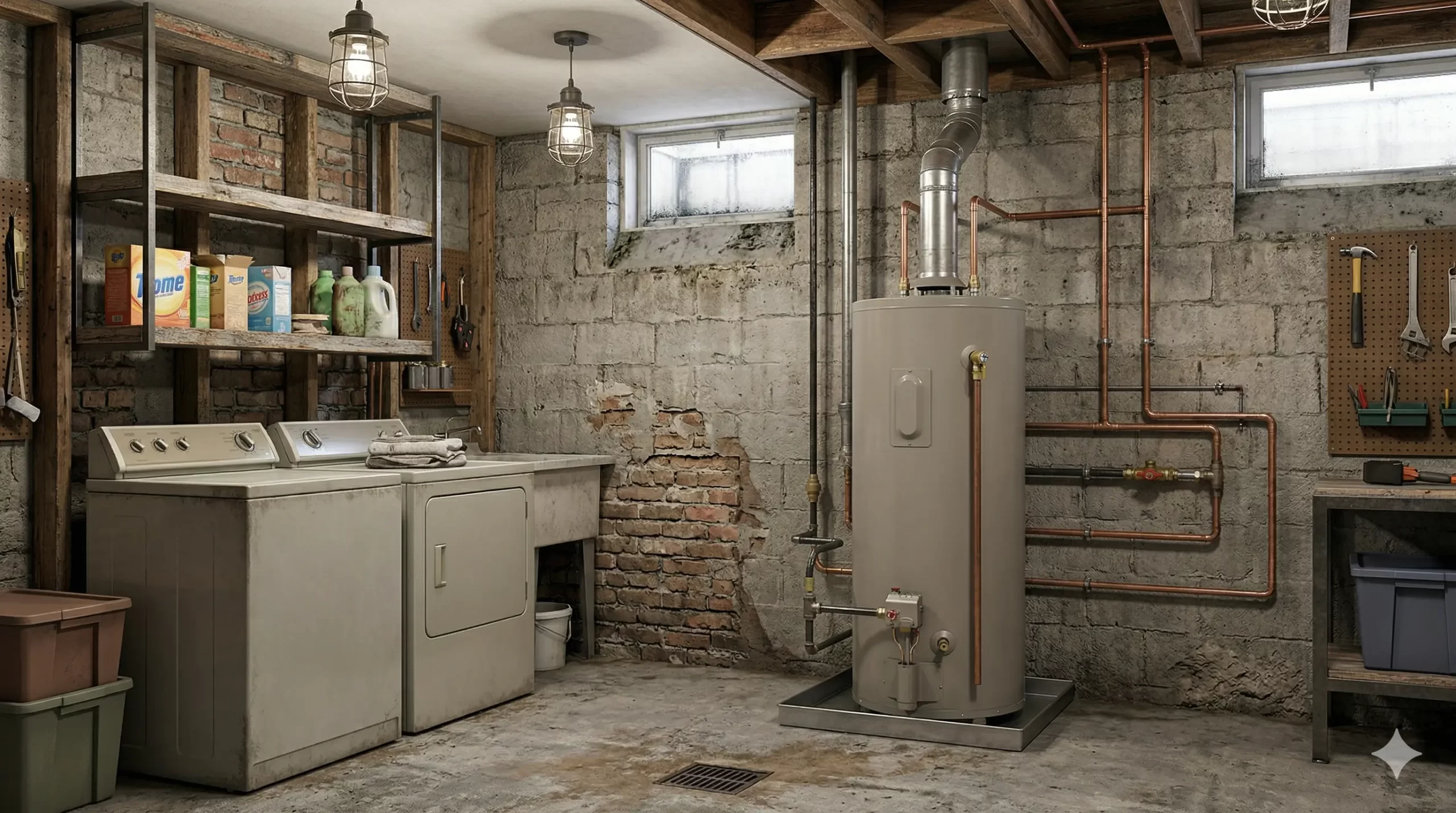
A ‘1 Flash’ code signifies normal operation, which can create a deceptive sense of security. The primary danger lies in misdiagnosis. Do not attempt to disassemble the gas control valve or bypass any sensors assuming they are faulty. The actual issue (e.g., severe sediment causing superheated pockets of water at the tank bottom) can lead to pressure buildup or delayed ignition events. Ignoring the true root cause of cold water, such as an undersized unit, and compensating by setting the thermostat to a dangerously high temperature, poses a direct and immediate scalding risk. This error’s risk is not in the component, but in the incorrect human response to it.
️ Repair Profile
Required Diagnostics Tools
Digital Manometer, Multimeter (mV setting), Phillips Head Screwdriver, Flashlight
Financial Breakdown: Parts vs. Licensed Labor
The cost allocation is heavily skewed towards labor because a ‘1 Flash’ code indicates no component has failed; therefore, no parts are required for the ‘fix’. The expense covers a professional’s diagnostic time to verify correct gas pressure, check for underlying thermal inefficiencies, and accurately assess system sizing.
Deep Technical Diagnosis: The Physics of the Failure
The single LED flash, followed by a three-second pause, on a Rheem gas water heater’s control valve is not an error code but a status indicator for ‘Normal Operation – Call for Heat.’ This signal is initiated by the integrated Microcontroller Unit (MCU) within the Robertshaw or White-Rodgers gas control valve when a specific sequence of conditions is met. First, the thermopile, which is constantly engulfed by the pilot flame, must be generating a sufficient electrical potential, typically in the range of 350-750 millivolts (mV), to power the valve’s logic circuits without external power. Concurrently, the water thermistor, a negative temperature coefficient (NTC) resistor, detects that the stored water temperature has dropped below the user-defined setpoint. Once the MCU confirms both the adequate thermopile voltage and the temperature differential, it initiates the call for heat, indicated by the single flash.
Upon signaling, the MCU actuates the main gas solenoid, allowing fuel to flow to the main burner assembly. The gas pressure at the manifold, which must be verified with a manometer and calibrated to the manufacturer’s specification (e.g., 3.5″ Water Column for Natural Gas), is critical for achieving correct stoichiometric combustion. If the unit flashes normally but fails to produce sufficiently hot water, the investigation must pivot away from the control valve’s logic. The root cause is likely mechanical or environmental, not electronic. A qualified technician would analyze factors beyond the control board’s diagnostic scope.
- Severe Sediment Buildup: A thick layer of calcified sediment at the bottom of the tank acts as a thermal insulator, preventing efficient heat transfer from the flue tube to the surrounding water. The burner will cycle normally, but the heat is not effectively absorbed.
- Undersized Unit: The heater’s First Hour Rating (FHR) is insufficient for the household’s peak demand, leading to rapid depletion of stored hot water. The unit is operating correctly but is simply too small for the load.
- Broken Dip Tube: A fractured or disintegrated dip tube allows cold inlet water to discharge near the top of the tank, mixing immediately with the hot water outlet and drastically lowering the delivery temperature at the tap.
- Thermostatic Mixing Valve Failure: An external anti-scald mixing valve, if installed, may be stuck or improperly calibrated, mixing too much cold water into the hot water line before it reaches the fixtures.
- Incorrect Setpoint: The temperature dial on the gas control valve may be inadvertently set to a low or ‘Vacation’ setting, causing the call for heat to satisfy at a much lower water temperature.
US Building Codes & Plumbing Regulations
When a professional is dispatched for a ‘no hot water’ complaint and observes a normal ‘1 Flash’ code, their diagnostic process is directly governed by NFPA 54, the National Fuel Gas Code. Specifically, section 8.1.2 mandates that appliances be installed and operated as intended by the manufacturer. A normal flash code confirms the control is functioning, shifting the compliance focus to the gas supply itself. The technician is obligated to verify that the gas pressure at the inlet test port of the control valve is within the specified range (e.g., 5.0″ to 10.5″ WC for natural gas). An out-of-spec pressure, even with a ‘normal’ code, constitutes a non-compliant installation that can lead to inefficient combustion or sooting, and must be rectified at the source.
Furthermore, if the investigation determines the root cause is an undersized water heater, the principles of the Uniform Plumbing Code (UPC), specifically Chapter 5 concerning water heaters, become paramount. The UPC provides sizing tables and methodologies to ensure a water heater’s capacity and recovery rate are adequate for the number of fixtures and occupants in a dwelling. A plumber concluding that the unit is undersized, despite its electronic ‘health,’ must recommend a replacement that complies with these sizing requirements. This isn’t merely a performance upgrade; it is a code-compliance issue designed to ensure functionality and prevent unsafe practices, such as setting a small tank’s temperature excessively high to compensate for its lack of volume, which directly violates UPC guidelines on scalding prevention.
Professional Master Plumber Repair Sequence
- Initial Safety Verification: Before any interaction with the unit, carefully smell the air around the water heater for the odor of natural gas (mercaptan). If any gas odor is detected, evacuate the area immediately and contact your gas utility provider. Do not proceed.
- Confirm the Diagnostic Code: Observe the LED status light on the gas control valve for at least 30 seconds. Confirm you are seeing a consistent pattern of one single flash, followed by a three-second pause. Document this observation.
- Check the Temperature Setpoint: Locate the temperature dial on the gas control valve. Ensure it is not set to ‘PILOT,’ ‘LOW,’ or ‘VAC’ (Vacation). A common setting is between ‘A’ and ‘B,’ or approximately 120°F. Adjust if necessary.
- Listen for Main Burner Ignition: As the LED flashes, listen carefully for a distinct ‘whoosh’ sound followed by a rumbling, which indicates the main burner has ignited. If you see the flash but never hear the burner, it points to a secondary issue.
- Assess Recent Hot Water Demand: Consider the home’s recent usage. Have multiple showers, laundry, and a dishwasher been run concurrently? A normal flash code with lukewarm water may simply indicate the tank’s First Hour Rating has been exceeded and it needs time to recover.
- Inspect Combustion Air Vents: Visually inspect the base of the water heater and any intake vents in the room. Ensure they are not obstructed by lint, dust, storage boxes, or other debris that would starve the burner of necessary oxygen for proper combustion.
- (Advanced) Perform a Dip Tube Test: With the burner running, carefully touch the hot water outlet pipe (typically on the right) near the top of the heater. Then, touch the cold water inlet pipe (typically on the left). If the outlet pipe is only slightly warm while the burner is firing, it strongly suggests a failed dip tube is allowing cold water to mix at the outlet.
- (Advanced) Check for Sediment: Turn off the gas control valve. Connect a hose to the drain valve at the bottom of the tank and run it to a floor drain or bucket. Open the valve for 10-15 seconds. If the water is milky, rusty, or contains sandy particles, severe sediment buildup is likely insulating the tank bottom and impeding heat transfer.
- Consult Manufacturer’s Documentation: Locate the manual for your specific Rheem model. Review the sections on operation and sizing to confirm the unit’s capacity (gallons) and First Hour Rating (FHR) are appropriate for your home.
- Professional Gas Pressure Measurement: If the above steps do not resolve the issue, contact a licensed plumber. They will use a manometer to test the gas pressure at the control valve’s inlet and outlet ports to ensure it meets the manufacturer’s specifications, a critical step that cannot be performed without specialized tools.
Expert Verdict: Is It Worth Repairing?
The ‘1 Flash’ code itself requires no repair, so the financial analysis pivots to addressing the underlying cause of unsatisfactory hot water. If diagnostics reveal heavy sediment buildup in an older tank (8+ years), the ROI on a professional flush is low. While a flush might temporarily improve performance, the damage to the tank’s interior lining and the likelihood of anode rod depletion mean you are investing labor into a unit nearing the end of its service life. In this case, replacement is the financially prudent long-term solution.
Conversely, if the unit is relatively new (under 5 years) and the issue is a failed dip tube, a repair is highly economical. The part is inexpensive and the labor is straightforward for a professional. Replacing the entire unit would be an unnecessary expense. The critical decision point arises when the diagnosis is an undersized heater. Investing in any repair—even a minor one—on a fundamentally undersized unit is a poor return on investment. The core problem of insufficient capacity will persist. The correct action is to replace the unit with a properly sized model, solving the performance issue permanently and improving home energy efficiency and value.
Frequently Asked Questions (FAQ)
Q: Does the 1 flash code on my Rheem mean the pilot light is out?
A: No. A single flash specifically indicates the system is powered by a healthy pilot flame and is actively calling for heat. A failed pilot light or thermopile issue would result in no flash or a different diagnostic code, typically related to ignition failure (like 7 or 8 flashes).
Q: Can a dirty flame sensor cause a 1 flash code but no hot water?
A: This is highly unlikely. The 1 flash code is a ‘call for heat’ signal that occurs *before* the main burner ignites. A dirty flame sensor would only become a factor *after* ignition, causing the burner to shut down prematurely and triggering an ignition failure or ‘flame not sensed’ error code, not the normal operation flash.
Q: Why is my water only lukewarm if the heater shows a normal 1 flash code?
A: This classic symptom, despite a normal operating signal, often points to a broken or deteriorated dip tube inside the tank. The dip tube is designed to direct incoming cold water to the bottom of the tank. When it fails, cold water mixes directly with the hot water at the top, drastically lowering the temperature at your faucets even as the unit heats properly.
Q: If my Rheem is flashing once, is it safe to turn the temperature dial all the way up?
A: While the unit itself is operating normally, turning the temperature to its maximum setting is a significant safety risk that can cause severe scalding in seconds. If your water is not hot enough, the root cause is almost certainly an issue with demand exceeding the tank’s capacity (sizing) or an internal problem like sediment or a bad dip tube. Address the actual cause rather than creating a dangerous scalding hazard.