
Diagnose the Rheem 3-flash error code, a critical pressure switch or vent fault. This guide details vent inspection, hose checks, and switch replacement.
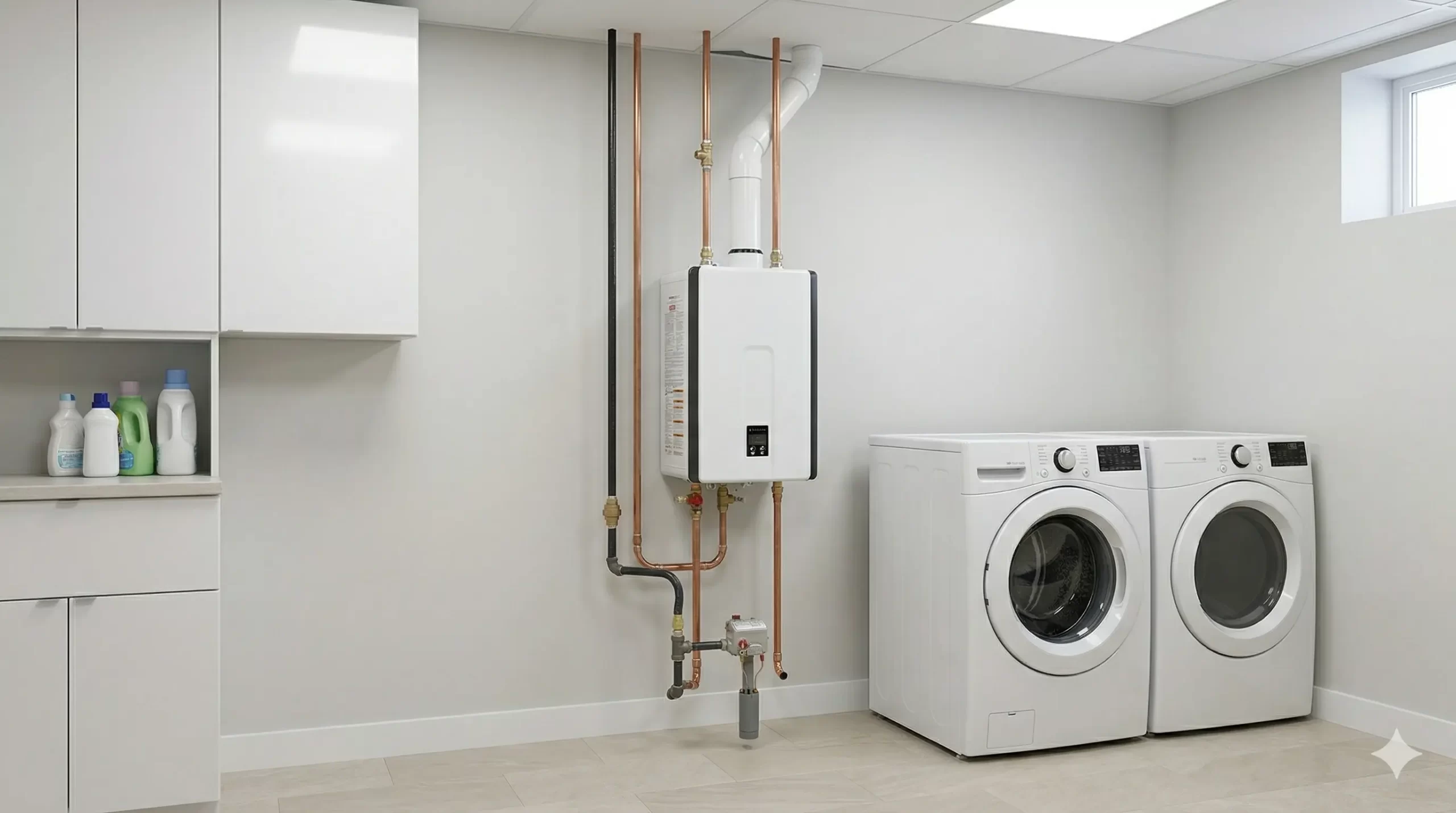
A 3-Flash error indicates the water heater’s primary safety system for venting has engaged. Under no circumstances should you bypass, jumper, or otherwise disable the pressure switch. Doing so defeats the mechanism that prevents flue gas, containing lethal carbon monoxide (CO), from entering your living space. This error is a direct warning of insufficient draft. Forcing the unit to fire without resolving the underlying blockage or component failure creates an immediate and severe poisoning hazard. All diagnostic steps involving electrical components must be performed with the circuit breaker off to prevent electrocution.
️ Repair Profile
Required Diagnostics Tools
Digital Multimeter (with continuity setting), Digital Manometer, Nut Driver Set, Pliers, Flashlight, Safety Glasses, Gloves
Financial Breakdown: Parts vs. Licensed Labor
The cost allocation is heavily weighted towards labor because the primary task is accurate diagnosis, not part replacement. The expense reflects a technician’s expertise in using a manometer to verify negative static pressure against the switch’s specific water column rating, ensuring the actual fault is identified rather than just treating a symptom.
Deep Technical Diagnosis: The Physics of the Failure
The ‘3 Flashes’ fault on a Rheem power vent control board signifies a failure within the combustion air proving sequence. This sequence is a critical safety interlock designed to ensure that products of combustion can be safely exhausted before the main burner is permitted to ignite. The sequence begins with the control board energizing the draft inducer blower motor. As the blower wheel spins, it creates a negative static pressure (a vacuum) within the blower housing and connected heat exchanger. This pressure differential is monitored by a normally open (NO) pressure switch, a sensitive diaphragm-actuated switch calibrated to close its internal contacts at a specific negative pressure, typically rated in inches of water column (e.g., -1.10″ W.C.).
When the control board registers that the blower is running but does not receive the expected closed-circuit signal (typically a 24V or millivolt signal) from the pressure switch within a predetermined time frame, it aborts the ignition sequence and flashes the 3-code error. This indicates the switch is ‘stuck open’ despite the blower’s operation. The failure to achieve proper draft can compromise the stoichiometric combustion process, leading to the formation of aldehydes and carbon monoxide. Therefore, this fault code is not merely an operational issue; it is a fundamental safety lockout.
The root causes are varied and require systematic diagnosis:
- Exhaust/Intake Vent Blockage: The most common cause. Debris such as leaves, animal nests, or ice accumulation at the PVC vent termination point physically obstructs airflow, preventing the inducer from establishing the required negative pressure.
- Condensate Drainage Impairment: In high-efficiency models, condensate can collect in the vent piping or the inducer housing itself if the drain lines are clogged or improperly sloped. This water accumulation creates a blockage that impedes airflow.
- Pressure Switch Tubing Failure: The silicone or rubber vacuum hose connecting the inducer housing port to the pressure switch can become cracked, disconnected, or blocked with debris, preventing the negative pressure from actuating the switch’s diaphragm.
- Degraded Inducer Motor Performance: Worn motor bearings or a damaged blower wheel can cause the inducer to spin at a lower RPM, failing to generate a pressure differential sufficient to meet the switch’s actuation threshold.
- Internal Switch Failure: The diaphragm inside the pressure switch can rupture, or the electrical contacts can become corroded or pitted, preventing the circuit from closing even when adequate vacuum is present. This is a definitive component failure.
- Vent Sizing/Layout Exceeding Specifications: An installation with PVC vent runs that are too long or have an excessive number of elbows can create too much static pressure loss for the inducer fan to overcome, leading to a chronic 3-flash fault.
US Building Codes & Plumbing Regulations
The National Fuel Gas Code, NFPA 54, is directly implicated by a 3-flash error. Specifically, section G2427.8 (or its local equivalent) mandates that vent terminations be located and shielded to prevent blockage from foreign material, a primary cause of this fault. A bird’s nest or ice buildup causing this error signifies a condition non-compliant with code requirements for termination protection. Furthermore, the very existence and operation of the pressure switch as a safety interlock are mandated by standards ensuring appliances do not operate under hazardous venting conditions, which could lead to spillage of flue gases as outlined in the principles of Chapter G2425.
Per the Uniform Plumbing Code (UPC), particularly sections governing venting and combustion air for fuel-burning appliances, the entire vent system must be installed to manufacturer specifications. A 3-flash error resulting from an overly long vent run or excessive elbows points to a direct violation of the manufacturer’s certified installation instructions, which are incorporated by reference into the code. The code also requires proper pitch on condensate-producing appliance vents; a blockage due to trapped condensate that triggers this error indicates an installation that fails to meet these critical drainage requirements, rendering the system non-compliant and unsafe.
Professional Master Plumber Repair Sequence
- Initiate Safety Lockout: Turn off the electrical power to the water heater at the circuit breaker or disconnect switch. Shut off the gas supply by turning the handle on the gas valve perpendicular to the pipe.
- Inspect Vent Terminations: Thoroughly examine the exterior PVC intake and exhaust vent terminations. Look for obstructions such as leaves, snow, ice, or animal nests. Ensure any protective screens are clear.
- Analyze Vacuum Tubing: Carefully inspect the small diameter rubber or silicone tube running from the draft inducer blower housing to the pressure switch. Check for cracks, kinks, loose connections at either end, or blockages within the tube itself.
- Verify Blower Port Integrity: Disconnect the vacuum tube from the port on the blower housing. Gently use a small wire or paperclip to ensure the port itself is not clogged with debris or corrosion.
- Test Pressure Switch Manually (Continuity Check): Disconnect the two wires from the pressure switch terminals. Set your multimeter to the continuity setting (audible beep). With the heater off, the probes on the terminals should show no continuity. Gently apply light suction to the switch’s vacuum port (NEVER blow into it). You should hear a faint ‘click’ and the multimeter should now indicate continuity. If it clicks but shows no continuity, or fails to click, the switch is defective.
- Measure System Draft with Manometer (Professional Step): Reconnect all wiring. Disconnect the vacuum tube from the pressure switch and connect it to a digital manometer. Restore power to the water heater to initiate an ignition cycle. As the inducer fan runs, the manometer will display the negative pressure in inches of water column (W.C.). Compare this reading to the value printed on the pressure switch (e.g., ‘-1.10″ W.C.’). If the measured draft is stronger than the switch’s rating but the 3-flash error persists, the switch is definitively faulty. If the draft is insufficient, the problem lies with a blockage or the blower motor.
- Replace Defective Pressure Switch: With power and gas off, disconnect the wires and vacuum tube from the old switch. Unscrew the mounting screws. Install the new, OEM-specified pressure switch, ensuring it is oriented correctly. Reattach the screws, wires, and vacuum tube securely. Use only the exact replacement part; pressure ratings are not interchangeable.
- Commission and Verify Operation: Restore gas and electrical power. Initiate a call for hot water. Observe the operational sequence: the inducer blower should start, the control board should recognize the pressure switch has closed (no 3-flash error), and the igniter and main burner should proceed to fire. Allow the unit to complete a full heating cycle to confirm a stable repair.
Expert Verdict: Is It Worth Repairing?
When faced with a 3-flash error on a Rheem power vent water heater, the return on investment (ROI) for a repair is exceptionally high. The most common failure point, the pressure switch, is an inexpensive component (typically $30-$80). The overall repair cost, including professional diagnosis and labor, is a small fraction of the $1,800+ cost of a new power vent unit installation. Opting for replacement solely due to this error is financially unsound unless the unit is nearing the absolute end of its service life (12+ years) and exhibits concurrent signs of critical failure, such as a leaking tank or major burner corrosion. A successful repair of the pressure switch or clearing of a vent blockage restores the unit to its original safety and operational standards, extending the life of your initial investment for a minimal cost. The repair addresses a single, non-catastrophic component failure within the safety circuit, making it a targeted and cost-effective solution.
Frequently Asked Questions (FAQ)
Q: Can I temporarily bypass the pressure switch on my Rheem heater to get hot water?
A: Absolutely not. Bypassing the pressure switch is extremely dangerous. This switch is a critical safety device that confirms the toxic exhaust gases are being vented properly. Forcing the unit to run without this confirmation could allow lethal carbon monoxide to fill your home.
Q: My Rheem’s PVC vent pipe seems perfectly clear, why do I still get the 3 flash error?
A: If the exterior vent is clear, the issue may be more subtle. A cracked blade on the internal inducer fan wheel, a failing blower motor that isn’t reaching full RPM, or a blockage from condensate water trapped in a low point of the vent pipe can all prevent the necessary draft from being created, even with a clear termination.
Q: Can very cold weather or high winds cause the 3 flash error?
A: Yes. In freezing temperatures, condensation can form ice and block the vent termination. Additionally, extreme winds can create unusual pressure conditions at the vent termination, which can intermittently interfere with the pressure switch’s ability to get a stable and accurate reading of the system’s draft, triggering the fault code.
Q: Is a pressure switch a universal part I can buy at any hardware store?
A: No, pressure switches are not universal. Each switch is precisely calibrated by the manufacturer for a specific negative pressure, measured in inches of water column (e.g., -1.10″ W.C.). Using a switch with the wrong rating can either prevent the heater from running or, more dangerously, allow it to run under unsafe venting conditions. You must use the exact OEM-specified part for your Rheem model.